eBook - ePub
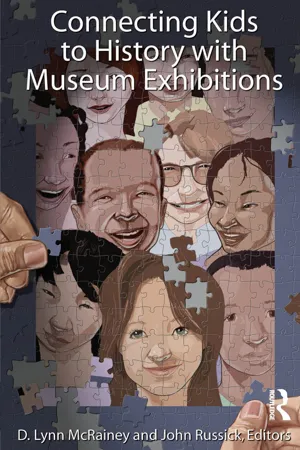
Connecting Kids to History with Museum Exhibitions
- 334 pages
- English
- ePUB (mobile friendly)
- Available on iOS & Android
eBook - ePub
Connecting Kids to History with Museum Exhibitions
About this book
Kids have profound and important relationships to the past, but they don't experience history in the same way as adults. For museum professionals and everyone involved in informal history education and exhibition design, this book is the essential new guide to creating meaningful and memorable connections to the past for children. This vital museum audience possesses many of the same dynamic qualities as trained historian—curiosity, inquiry, empathy for the human experience—yet traditional history exhibitions tend to focus on passive looking in the galleries, giving priority to relaying information through words. D. Lynn McRainey and John Russick bring together top museum professionals to present state-of-the-art research and practice that respects and incorporates kids' developmental stages and learning preferences and the specific ways in which kids connect to history. They provide concrete tools for audience research and evaluation; exhibition development and design; and working with kids as "creative consultants." The only book to focus comprehensively on history exhibits for kids, Connecting Kids to History With Museum Exhibitions shows how to enhance the experiences of a vitally important but frequently the least understood museum audience.
PART I
Valuing Kids
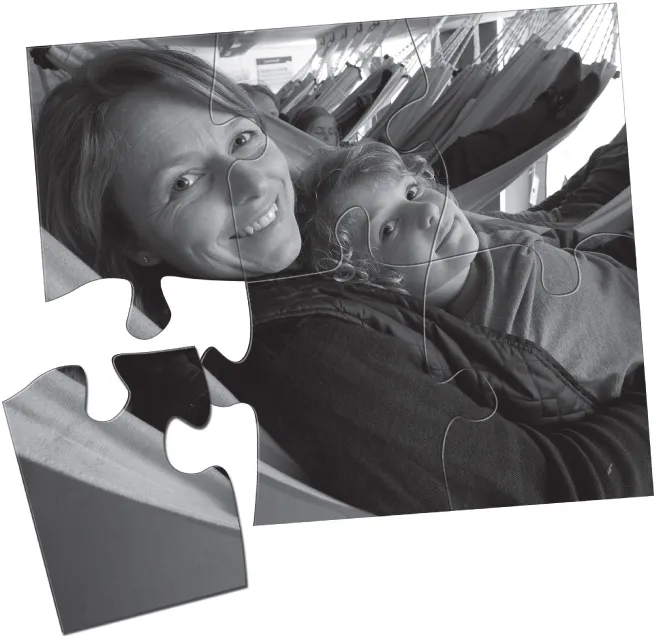
Why kids? In 2001, the American Association of Museums publication Excellence in Practice challenged museum professionals to explore the dimensions of accessibility to “provide multiple levels and points of entry into content, including intellectual, physical, cultural, individual, group, and intergenerational.”1 History museums have made considerable strides over the past two decades to break down barriers—mental, physical, psychological, and emotional—for ever-increasing subsets of the museum’s potential audience. However, when it comes to kids, many history museums have failed to grapple with a host of formidable barriers that limit accessibility. We tend to justify why kids are not a fit for history exhibitions rather than exploring ways to make them feel welcome; we blame schools for giving history its bad reputation of being boring rather than taking a hard look at how our approach to interpreting history in exhibitions might engage younger audiences.
In “Interactivity and Social Inclusion,” Jocelyn Dodd writes about museums shifting to a more equitable approach to serving diverse audiences: “As museum professionals we are not well placed to understand the feeling of being excluded from museums, because of our professional interest, knowledge, and experience. Yet understanding this is an important step in meeting the needs of those who are socially excluded.”2 Although we all would like to think our museums are “socially inclusive” of children, our practices, as Phyllis Rabineau noted in her foreword to this book, depend on the adult companion to do the “heavy lifting” in providing access for children in their groups through identifying points of engagement and connection. The height of cases, length of labels, and even content selection weigh heavily in favor of adult visitors. Even our rhetoric when referring to children contributes to this dismissive attitude toward a younger audience. Perceptions that developmentally appropriate content is “dumbed down” and that interactive, whole-body experiences are not suitable formats for addressing serious subject matter and will lead to inappropriate museum behavior foster a culture in which children are not valued or taken seriously as a core audience. When staff members, confronted with the challenge of developing meaningful exhibitions about history for kids, claim “it will never work here,” they allow the museum to take a pass on kids, to rationalize why accessibility for younger audiences is not a priority. In short, by not challenging ourselves to create inviting environments and engaging experiences for children, we are telling kids and families, “there’s nothing for you here.”
Appropriately enough, the chapters in this part of the book put kids first. Making history accessible to kids is no different than providing access to other audiences. To be successful with any audience we have to know them, understand them, engage them, and most importantly respect them. We were all kids once, have memories of being kids, and in some cases live with kids, but these personal associations should not lead us to make uninformed decisions or craft quick solutions to serving younger audiences. Instead, our approach to understanding kids must be driven by research, literature reviews, developmental frameworks, and audience studies. Although children’s visits to museums are always defined in terms of a group experience (family, school, and youth), younger visitors are complex individuals who come with their own set of needs, expectations, interests, and desires that warrant experiences beyond the printed handout or the occasional flip label.
In turning to children, we can discover how they learn, explore, and understand the world around them, and the role history plays in their lives. The chapters in this part offer exhibition team members new approaches and models for making kids an institutional priority. Research into educational theories, designing developmental frameworks, and collaborating with kids are critical steps toward a more equitable approach for connecting kids to history. Children are part of the continuum of the past, present, and future and should be seen as active participants in the unfolding dialog and story that are at the heart of history. As the subsequent chapters will reveal, children have an active and logical sense of the past.
Recognizing the unique characteristics of children, in Chapter 1, “Never Too Young to Connect to History: Cognitive Development and Learning,” Sharon Shaffer challenges us to consider two important questions: Are children required to understand history in the same manner as adults? Do children have critical cognitive abilities relevant to understanding history that remain unrecognized? This chapter encourages us “to know them” by examining the educational theories on how children learn that apply to our field. All exhibition team members will benefit from this review, because it exposes learning as a dynamic process of personal meaning making through experiences, social interaction, and multiple intelligences. This chapter provides a context for familiar terms within the museum field—constructivism, learning by doing, and multiple learning styles—allowing practitioners to revisit these terms and their applications for connecting kids to history. Kids emerge demystified as an eager, viable, and desired constituency for history.
In Chapter 2, “It’s about Them: Using Developmental Frameworks to Create Exhibitions for Children (and Their Grown-ups),” Elizabeth Reich Rawson challenges readers to know their younger audiences as well as they know their content. Her charge, “to understand them,” puts theories into practice as projects shift from being about something to being for someone. With a commitment to audience, a developmental framework provides an exhibition team with the knowledge and insight to make choices that will empower kids during their museum visit. Rawson advocates for the rigor and discipline to research, design, and apply a developmental framework for every project. Through benchmarking kids’ social, cognitive, and physical milestones, exhibition teams can more effectively match experiences and content to desired messages and affective outcomes.
All team members become audience advocates as museums reach even farther from exhibitions developed for someone to exhibitions developed with someone. In Chapter 3, “Experts, Evaluators, and Explorers: Collaborating with Kids,” Anne Grimes Rand and Robert Kiihne advocate for museum professionals to reach out to children and involve them in every stage of the planning and development of exhibitions, “to engage them.” From focus groups to prototypes, kids are given a voice to inform and define exhibition concepts, object selection, and design. This new model welcomes children as active agents as they inform and influence the creation of more meaningful and engaging exhibitions. Team members realize that planning does not occur behind closed doors but rather out in the galleries and in classrooms as they seek opportunities to observe, converse, and interact with kids, and to learn from and be inspired by them.
We must value kids. By knowing, understanding, and engaging kids, staff members become more skilled at creating experiences for them. In turn, the process gives kids a voice and a stake in our work, and our products become environments that provide them with physical, cognitive, and emotional access to history.
Why kids? The answer lies in a museum’s commitment to accessibility for diverse audiences and requires individual and institutional commitment to a process that puts children at the forefront of exhibition research and development. By focusing on children, museums are extending an invitation to children; an invitation to be engaged, to make discoveries, to contribute, and to feel welcome. By knowing, understanding, and engaging children, museums can fully embrace a practice that welcomes and expects kids, values diverse learning styles, seeks collaborations with kids, and makes content accessible through interactive experiences.
NOTES
1. American Association of Museums Standing Professional Committee on Education, Excellence in Practice: Museum Education Principles and Standards (Washington, DC: American Association of Museums, 2002, revised 2005), 7.
2. Jocelyn Dodd, “Interactivity and Social Inclusion” (Conference Proceedings: Interactive Learning in Museums of Art, Victoria and Albert Museum, May 17–18, 2002), www.vam.ac.uk/res_cons/research/conferences/learning/index.html (accessed January 31, 2009), 1.
CHAPTER 1
Never Too Young to Connect to History: Cognitive Development and Learning
Sharon Shaffer
American museums are recognized around the world as places of learning that have contributed to the educational landscape of our society. Most American museums were established on a commitment to subject or collections, and some even considered audience at their inception, but few recognized children as a discrete segment of that audience. In recent years, museum professionals have sought to develop exhibits and programs to address the interests and needs of children. With this increased commitment on the part of museums to reach a young audience, exhibition project teams are looking for best practices that will serve as models.
To engage a younger audience in a meaningful way, more museums need to embrace approaches to exhibition development that are grounded in what we know about how children perceive and construct meaning about their world, or what is often thought of as cognitive developmental theory. A strong theoretical foundation in child development and cognitive theory, which have been important tools in the development of models for learning in museums, increases the likelihood of developing effective educational experiences for this audience. This chapter reviews key theorists and concepts, setting the stage for subsequent chapters, which bring these ideas into museum practice.
A child’s ability to connect to the past and construct meaning about history requires an understanding of the development of concepts of time, sequence, categorization, and classification as well as exploration of the role of experience, language, and culture in the learning process. Educators grounded in learning theory acknowledge that a child’s understanding is qualitatively different from that of an adult. In making connections to the past there is a need to categorize and integrate information in a meaningful way, as well as think abstractly, skills not always identified as strengths of children. We ponder important questions: Are children required to understand history in the same manner as adults to be viewed as learning history? Do children have critical cognitive abilities relevant to understanding history that are currently underutilized? To consider these questions, we must both revisit how we define and understand history and become familiar with how children think about and construct meaning of the past.
The Power of History
History is not simply an abstract concept. It is important to most individuals in daily life. Researchers Roy Rosenzweig and David Thelen conducted a survey about Americans’ interest in history.1 Their findings suggest that ordinary people are deeply engaged with the past and that the connection to the past develops through personal experience, interests, and family culture. What is this connection to the past and the role of history in the lives of ordinary people? Are the connections similar for children?
Historians recognize that history is socially constructed and that there is seldom consensus in interpretation. An individual’s interests, experiences, and culture play a pivotal role in constructing meaning about the past. History is never a simple record of the past, recounting details of ideas or events in time, but rather an interpretation from different points of view, often with varying degrees of clarity. “The fabric and design of history, like the threads of experience in our own lives, are woven in intricate and complex patterns.”2
From a child’s perspective, history is envisioned as everything that has already happened. It is seen initially in the broad context of the past and the relationships to people, places, and events that have occurred, rather than through a detailed sequence of events across a continuum of time. This ability to recognize and categorize events as present, past, or future is an early framework for a child’s capacity to think about history and typically is grounded in personal history. As children gain the ability to organize ideas about the past cognitively, a relationship to history is born. More nuanced appreciations develop as children see connections or common links among everyday experiences, thus creating an infrastructure for organizing ideas. It is through social interactions and everyday encounters with stories, customs, holidays, places, and even mainstream media that ideas about the past are introduced, later to be sorted and classified.
Educational Theory
For centuries, humans have pondered the wonders of the mind and posited theories of learning that continue to influence practice today. As we entered the twentieth century, the examination of learning theory expanded from the arena of philosophy to include psychology and education, bringing together perspectives of philosophers, psychologists, and educators to shape our current understanding of learning and advance our knowledge of cognition and effective teaching practice.
Within the museum field and history museums in particular, we seek a common language to discuss ideas relevant to informal learning and refer to the writings of respected theorists in an effort to shape practices for creating meaningful and memorable connections to the past for children.
Cognitive Theory: Biology or Environment
Theorists have long pondered the origins of learning and wondered whether an individual’s capacity to learn is most influenced by genetics or by experience. This discussion of nature and nurture continues to evolve. There is a strong indication by cognitive theorists that a blend of biological (nature) and environmental (nurture) circumstances...
Table of contents
- Cover Page
- Half Title page
- Title Page
- Copyright Page
- Dedication
- Contents
- List of Illustrations
- Foreword
- Preface
- Introduction
- Part I Valuing Kids
- Part II Connecting Kids to History
- Part III Creating History Exhibitions for Kids
- List of Contributors
- Selected Bibliography
- Index
Trusted by 375,005 students
Access to over 1.5 million titles for a fair monthly price.
Study more efficiently using our study tools.
Frequently asked questions
Yes, you can cancel anytime from the Subscription tab in your account settings on the Perlego website. Your subscription will stay active until the end of your current billing period. Learn how to cancel your subscription
No, books cannot be downloaded as external files, such as PDFs, for use outside of Perlego. However, you can download books within the Perlego app for offline reading on mobile or tablet. Learn how to download books offline
Perlego offers two plans: Essential and Complete
- Essential is ideal for learners and professionals who enjoy exploring a wide range of subjects. Access the Essential Library with 800,000+ trusted titles and best-sellers across business, personal growth, and the humanities. Includes unlimited reading time and Standard Read Aloud voice.
- Complete: Perfect for advanced learners and researchers needing full, unrestricted access. Unlock 1.5M+ books across hundreds of subjects, including academic and specialized titles. The Complete Plan also includes advanced features like Premium Read Aloud and Research Assistant.
We are an online textbook subscription service, where you can get access to an entire online library for less than the price of a single book per month. With over 1.5 million books across 990+ topics, we’ve got you covered! Learn about our mission
Look out for the read-aloud symbol on your next book to see if you can listen to it. The read-aloud tool reads text aloud for you, highlighting the text as it is being read. You can pause it, speed it up and slow it down. Learn more about Read Aloud
Yes! You can use the Perlego app on both iOS and Android devices to read anytime, anywhere — even offline. Perfect for commutes or when you’re on the go.
Please note we cannot support devices running on iOS 13 and Android 7 or earlier. Learn more about using the app
Please note we cannot support devices running on iOS 13 and Android 7 or earlier. Learn more about using the app
Yes, you can access Connecting Kids to History with Museum Exhibitions by D Lynn McRainey, John Russick, D Lynn McRainey,John Russick in PDF and/or ePUB format, as well as other popular books in Business & Museum Administration. We have over 1.5 million books available in our catalogue for you to explore.