eBook - ePub
Mysterious Lands
- 263 pages
- English
- ePUB (mobile friendly)
- Available on iOS & Android
eBook - ePub
Mysterious Lands
About this book
Mysterious Lands covers two kinds of encounters. First, encounters which actually occurred between Egypt and specific foreign lands, and second, those the Egyptians created by inventing imaginary lands. Some of the actual foreign lands are mysterious, in that we know of them only through Egyptian sources, both written and pictorial, and the actual locations of such lands remain unknown. These encounters led to reciprocal influences of varying intensity. The Egyptians also created imaginary lands (pseudo-geographic entities with distinctive inhabitants and cultures) in order to meet religious, intellectual and emotional needs. Scholars disagree, sometimes vehemently, about the locations and cultures of some important but geographically disputed actual lands. As for imaginary lands, they continually need to be re-explored as our understanding of Egyptian religion and literature deepens. Mysterious Lands provides a clear account of this subject and will be a stimulating read for scholars, students or the interested public.
Chapter 1
Introduction: Mapping the Unknown in Ancient Egypt
David O’Connor and Stephen Quirke

‘Mystery’
The 'mysteries' reviewed in this volume arise in the gap between what we think we know of the world from archaeology, geography and astronomy, and what we have found in Egyptian written and pictorial accounts of the world. The mismatch begins with the concept of mystery itself. An Egyptian word commonly translated into English as 'secret' or 'mystery' is sštȝ, related to the word štȝ, 'difficult'; the initial's' is generally a prefix with causative meaning, indicating that the meaning of sštȝ should be 'caused to be difficult', 'obscured'. This is terrain unknown and, more importantly, rendered inaccessible because it involves what humans should not know. Excessive thirst for knowledge is an ancient Egyptian as well as a modern theme; the god Thoth governed knowledge, and especially communication by writing, and two ancient tales in particular indicate that he was not expected to share all his knowledge with human beings or even with the king. In the 'Tale of Setne Khamwase', known from Roman period manuscripts, the protagonist is a prince who almost destroys himself in his quest for a sacred book (Lichtheim 1980: 125-137); a second tale, 1,800 years earlier, seems to imply criticism of the king for desiring to know the location of chambers of Thoth (Lichtheim 1976: 219).
The lands inhabited by human beings were not part of this deliberately inaccessible terrain; a foreign land at the margin of ancient Egyptian knowledge might be ‘land of god’, and reaching it might require superhuman effort, but it does not seem that such efforts were considered impious excess. By contrast, otherworld and underworld lands outside living human experience required special access, just as special conditions applied to access by petitioners to the king, or even to his high officials, and as only specially designated individuals were permitted to enter inner parts of temples. From the mid-eighteenth Dynasty, the walls of the royal burial chamber were covered with the Amduat, a cycle of captioned images given the overall title ‘writings of the hidden chamber which is in the underworld’. The opening phrases specify the content of this composition as knowledge (Forman and Quirke 1996: 117):
- To know the powers of the underworld, to know their duties;
- to know their transfigurations for Ra;
- to know the secret powers, to know what is in their hours, and their gods;
- to know his (the sun god’s) summoning of them;
- to know the doors and the road travelled by this great god (the sun god);
- to know the course of the hours and their gods;
- to know those who sing praises and those who are destroyed.
The European expansionist claim to possess time and space is alive here in the 15th century BC, but as knowledge appropriate to divine kingship. In the 'King as Priest of the Sun god', the detailed intimacy with the cosmos is a cardinal feature of the character and power of the king (Assmann 2001: 64—67). Exclusion formulae on the model 'let no-one see this' recur throughout New Kingdom funerary literature, emphasizing that not everyone should have this knowledge. In the trio sky-earth-underworld, the features and movements of sky and underworld carry too much power to be shared. In their domain the Egyptian writings readily assign the word sštȝ 'secret' or 'mysterious', whereas the landscapes and the seasons of earth may merely be štȝ 'difficult'. Evidently our mysterious lands are not the same as those of the ancient Egyptians, and this difference reveals essential differences between our thirst for knowledge, our experience of the world, and the ancient Egyptian experience of being in, knowing, and not knowing the world. A self-critical historiography with archaeological method at its fore requires keen observation of the potential and the limitations of sources. Along with written and pictorial sources, this introduces the vast modern academic literatures of textual criticism and art history.
Lands and languages
The mapping of the world has been one of the primary expressions of European expansion since the high Middle Ages, when Genoa and Venice competed across the Mediterranean for knowledge of lucrative trade routes to the east, secrets as closely guarded as the highest technology of the 21st century. European ‘science’ has taken as if its birthright the exploration of all time and space; any obstacle to this quest, any mystery, is at once a defiant and enticing challenge to power, and a comforting reminder that human beings cannot always expect to have all the answers, that there are worlds that we cannot reach. In the archaeology of literate societies, any ancient name of a land beyond our (current) knowledge attracts at once scrutiny and, as can be seen in the scholarly arguments over unlocated lands, a passion that seems far from the claims of ‘science’ to objectivity. Those literate societies have left written evidence articulating in words their own perspectives on their world (see Allen, Chapter 2), and here modern preconceptions find good testing grounds.
In all human societies, landscapes involve acquired or cultural experience (Layton and Ucko 1999). Relation to the land is developed not only by the physical conditions and by individual psychologies, but especially by the methods developed in preceding generations for life, and more essentially for survival, in those landscapes. Language may illustrate something of the range of possible different personal and social relationships with the land. The syntax and vocabulary of landscape varies from one language to another; different languages offer different methods of appropriation, resistance or empathy – English, without syntactically gendered nouns, cannot deliver quite the same feeling of kinship as a language where the word for earth is syntactically masculine (as in ancient Egyptian), or feminine (as in modern French or modern German). This is just one part of the complex web of factors informing the way each human being experiences place. Local patterns of shelter and sustenance introduce the fundamental and historically specific conditions of any relation with landscape. Ways of inhabiting space, obtaining food, and communicating with one another and the world, are all so basic to life that it can too easily be forgotten how much historical conditioning goes into each, and how specific and, as is the fate of historically developed conditions, how unnecessary each modern way may be. In examining ancient space, the modern enquirer may have to travel farther than might be expected.
Lands in archaeology: the curse of writing
Egyptian writings provide plentiful references to foreign lands and peoples at all periods; and distinctively attired ‘foreigners’ are a recurrent feature in Egyptian art, both formal and informal. Surprisingly, however, some countries or peoples of considerable importance (to judge from what the Egyptians said about them) are documented only in Egyptian sources, and the same is true of many others mentioned, but not allotted particular significance, by the Egyptians. These circumstances are tantalizing to historians of Egypt, Africa and even the Near East and the Aegean, but also challenging and exciting. Archaeological fieldwork in relevant areas will surely locate some, maybe all, of the major ‘missing’ lands, and the cultures of their inhabitants, and any day hitherto undiscovered, or overlooked, texts and scenes from Egypt may also provide vital new data about some. A primary source of information is the archaeological record for foreigners settled and buried in Egypt itself. Such data have already been recovered about certain Nubian populations, specifically Medjayu – nomads from Nubia (‘Pan-Grave’ culture; Bietak 1966); C-Group people from northern Nubia (Friedman 2001); and even representatives of the Middle Bronze Age Kerma culture of central or Upper Nubia (Trigger 1976: 97). However, several other major groups of foreigners present in Egypt at various periods remain unidentified as yet in the Egyptian archaeological record.
During the Bronze Age in Egypt, ca. 3000–1000 BC, the lands and peoples who seem to have been most important to Egypt were, in a clockwise progression, located around the Aegean; in Anatolia and the Near East; to the south (Nubia, along the Nile) and south-east (between Nubia and the Red Sea, and perhaps across to Arabia); and finally to the west, primarily the better watered coastal regions such as Cyrenaica but also apparently regions further south, involving less hospitable regions of the Sahara (Figure 1:1). In the first millennium BC, Egyptian geographical knowledge expanded further as part of the Hellenistic, then Roman ‘world systems’, and one groundbreaking pharaoh – Necho II (ca. 610–595 BC) of the twenty-sixth Dynasty – purportedly sponsored the first known circumnavigation of Africa (Drioton and Vandier 1962: 584, 678). However, the main focus of this book is on the Bronze Age.
In terms of opportunity for identification on the ground, these lands are divided in two by the presence or absence of writing. As far as the Aegean, Anatolia and the Near East are concerned, many of the relevant regions are locatable because they are documented in other written sources as well as Egyptian ones, and their cultures have been revealed by archaeologists. The Minoan and Mycenaean cultures of the Aegean were well known to Egyptians of the Late Bronze Age (ca. 1500–1000 BC) and, as regards the former, in at least indirect contact much earlier (Cline 1994; Kemp 1983: 147–149). Anatolia and the Tigris-Euphrates region appear to be terra incognita to Egypt prior to the Late Bronze Age, when they play a dominant role in the international relations for which correspondence survives in the form of the Amarna Letters of the 14th century BC and similar material (Cohen and Westbrook 2000; Moran 1992). Closer to Egypt, the lands of the Levant (today Syria, Lebanon, Israel-Palestine and Jordan) were in constant contact with Egypt throughout historic times and earlier (Matthews and Roemer 2003b; Redford 1992). Here, many of the states, places and peoples referred to in Egyptian writing and art can be located with a high degree of probability. Conversely, the available written sources in the Aegean and Near Eastern world refer to Egypt more or less in proportion to the Egyptian references to each land. The world of the written sources seems consistent in itself. The problems of identification multiply when the only relevant writing has come from one source, Egypt.
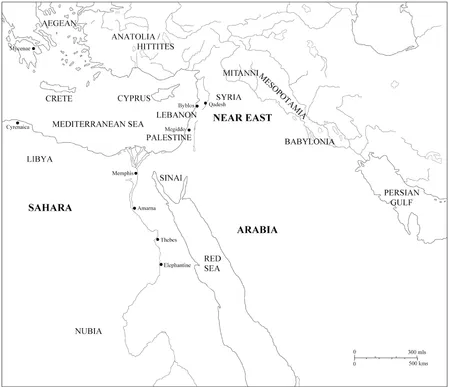
Figure 1:1 Map showing Egypt and its world.
In the regions to the north-west, west, south and south-east of Egypt, no indigenous inscriptions were produced, or at least survive, until after the Bronze Age. More seriously, most of these areas have been little explored archaeologically, if at all. Among countries or peoples featuring in Egyptian sources, perhaps the three most glaring examples of the ‘missing’ are Punt, apparently somewhere on the African or Arabian shores of the Red Sea (Meeks, Chapter 4; Harvey, Chapter 5), Irem, a substantial African land upstream of Wawat (northern Nubia) and Kush (central Nubia) (both Wawat and Kush are well known to ancient Egyptians and modern archaeologists alike; Adams 1977: chs. 6–9; O’Connor 1993: chs. 3–5), and finally Libya to the west, which presents a historically complex picture. Originally, the Egyptians referred to ‘Libyans’ as simply the Tjehenu and the Tjemehu, terms originally distinct but often used interchangeably. From about the 14th century BC, however, a medley of names of peoples appears relatively abruptly in the Egyptian records – the Ribu or Libu (ancestral to the Greek name Libya), Meshwesh and others (see Snape, Chapter 6).
Returning to the north, at the time that the Libyan ‘tribes’ begin to feature in Egyptian inscriptions, so do references to what modern historians call the Sea Peoples, identified by the Egyptians as inhabitants of foreign lands ‘of the sea’ or those who are ‘in their islands’ (Cline and O’Connor, Chapter 7). With names such as Shardana, Eqwosh, Teresh, Washosh and Lukki, these peoples joined Libyans in an invasion of Egypt in ca. 1209 BC. This onslaught was driven back, but 20 years later mainly new groups formed a migrating coalition that, some scholars believe, led to the collapse of the Late Bronze Age polities of Anatolia and the Levant, and a determined if unsuccessful attack upon Egypt itself. The homelands of these peoples remain mysterious; they may have extended as far west as Sicily and Sardinia, and may have been scattered through the Aegean and along the Mediterranean coast of Anatolia. Some have been identified as ancestral Greeks, the Danuna or the Danaians, a term later applied to Greeks in general (Redford 1992: 252) and the Eqwosh as the Achaeans of Mycenaean Greece (Gardiner 1961: 270–271). As a group, they seem to break abruptly onto the historical record, and equally abruptly drop out of it. Only one can be identified reasonably certainly with a later people, the Peleset being ancestral to the Philistines, a historically and archaeologically attested people of biblical fame (Machinist 2000). Otherwise, the available Near Eastern writings include only references to the Lukki, as seafarers and sometimes as enemies in the records from Hittite Anatolia and north-west Syria. This is fertile ground for speculation, but with mainly negative evidence in the archaeological record. As a result, there has arisen a rival school for interpretation of the ‘Sea Peoples’, according to which they are not a cause but a symptom of the collapse of the Hittite empire; according to this view, groups of island and coastal seafarers took advantage of the failure in security across Anatolia and the Levant, until the disappearance of the empire on which they had preyed (Kuhrt 1995). These elusive groups highlight the source of the mystery – a gap between the archaeological map and the written sources for it.
Topographical lists
References to foreign lands occur as early as the third millennium BC, and in the early second millennium BC detailed lists of names of foreign lands and rulers were written out on small clay figurines used in cursing rituals to protect the king and country (Ritner 1993: 136–142). However, foreign place names are most impressively assembled together in ‘topographical lists’. The earliest of these, the stela of general Mentuhotep from Buhen, dates to the early years of Sesostris I in the Middle Kingdom, ca. 1950 BC. There is then a gap in the record, until the inscription of the great majority of surviving examples in the New Kingdom and later periods.
In their longest versions, the lists are typically displayed upon temple pylons or external wall faces of temples, and consist of long series of place or people names, arranged in vertical columns or along horizontal registers. Each name is set in a cartouche-shaped oval which is a conventionalized representation of a fortified city wall, even if the people in question are non-urbanized nomads. Often, the top of the enclosure sprouts the upper part of a human figure, arms bound at the elbows behind its back, and representing the inhabitants of each place named. Topographical lists in these contexts are usually placed below, or adjacent to, emblematic representations of pharaoh preparing to smite a helpless group of pinioned foreign foes and hence are a statement about the ‘world dominion’ allotted each pharaoh by Egypt’s deities and asserted by the military campaigning such emblematic scenes imply, with or without a basis in historical events (Figure 1:2). Shorter versions of such lists appear in a variety of other contexts...
Table of contents
- Cover
- Half Title
- Title
- Copyright
- Series Editor's Foreword
- Contents
- Contributors
- List of Figures
- A note on transliteration from ancient Egyptian
- 1 Introduction: Mapping the Unknown in Ancient Egypt
- 2 The Egyptian Concept of the World
- 3 Travel and Fiction in Egyptian Literature
- 4 Locating Punt
- 5 Interpreting Punt: Geographic, Cultural and Artistic Landscapes
- 6 The Emergence of Libya on the Horizon of Egypt
- 7 The Mystery of the 'Sea Peoples'
- 8 "As for them who know them, they shall find their paths": Speculations on Ritual Landscapes in the 'Book of the Two Ways'
- 9 Measuring the Underworld
- 10 The 'Book of the Fayum': Mystery in a Known Landscape
- 11 Mysterious Lands - The Wider Context
- References
- Index
Trusted by 375,005 students
Access to over 1.5 million titles for a fair monthly price.
Study more efficiently using our study tools.
Frequently asked questions
Yes, you can cancel anytime from the Subscription tab in your account settings on the Perlego website. Your subscription will stay active until the end of your current billing period. Learn how to cancel your subscription
No, books cannot be downloaded as external files, such as PDFs, for use outside of Perlego. However, you can download books within the Perlego app for offline reading on mobile or tablet. Learn how to download books offline
Perlego offers two plans: Essential and Complete
- Essential is ideal for learners and professionals who enjoy exploring a wide range of subjects. Access the Essential Library with 800,000+ trusted titles and best-sellers across business, personal growth, and the humanities. Includes unlimited reading time and Standard Read Aloud voice.
- Complete: Perfect for advanced learners and researchers needing full, unrestricted access. Unlock 1.5M+ books across hundreds of subjects, including academic and specialized titles. The Complete Plan also includes advanced features like Premium Read Aloud and Research Assistant.
We are an online textbook subscription service, where you can get access to an entire online library for less than the price of a single book per month. With over 1.5 million books across 990+ topics, we’ve got you covered! Learn about our mission
Look out for the read-aloud symbol on your next book to see if you can listen to it. The read-aloud tool reads text aloud for you, highlighting the text as it is being read. You can pause it, speed it up and slow it down. Learn more about Read Aloud
Yes! You can use the Perlego app on both iOS and Android devices to read anytime, anywhere — even offline. Perfect for commutes or when you’re on the go.
Please note we cannot support devices running on iOS 13 and Android 7 or earlier. Learn more about using the app
Please note we cannot support devices running on iOS 13 and Android 7 or earlier. Learn more about using the app
Yes, you can access Mysterious Lands by David O'Connor, David O'Connor,Stephen Quirke, David O'Connor, Stephen Quirke in PDF and/or ePUB format, as well as other popular books in History & Egyptian Ancient History. We have over 1.5 million books available in our catalogue for you to explore.