- 231 pages
- English
- ePUB (mobile friendly)
- Available on iOS & Android
eBook - ePub
Understanding Contemporary Social Problems Through Media
About this book
Goldberg uses a multi-media approach to critically examine the most significant and volatile issues of our times: the environmental crisis, upheavals in the developing world, health, terrorism, and technology. The book is unique in its in-depth coverage of these pressing social concerns and its use of extensive media resources through a companion website. An introductory section reviews basic sociological concepts and theories, including the sociological imagination and class, gender, and race stratification all of which are revisited in each chapter. The book helps students appreciate the magnitude of the problems of the twenty-first century as they develop the intellectual tools to understand them sociologically and personally.Features of the text: "
Information
Part I
Understanding Social Problems as Social Crises
The Basics
Chapter 1
A Sociological Look at Social Crises
Figure 1.1 The Sociological imagination. Source: April Milne
I have watched my children grow up under the pall of 9/11 and the wars in Iraq and Afghanistan. They watched Hurricane Katrina on television. Oil prices, the economy, and their health care are mysteries about which they have little understanding and seemingly no control. The information technology they are so adept at using brings them information so rapidly that it is hard to digest. As a parent and a sociologist, I am amazed at the problems their generation faces, and I try to imagine how these problems look to them. Similarly, I look at my students, eager to face the world, but burdened by their time and place. How do they make sense of their world?
While there are many social problems worthy of examination, this book focuses on some of the most significant social crises we face in the twenty-first century. What constitutes a social crisis? Several components help us define a social problem as a crisis. First, a crisis constitutes both an immediate and a long-term challenge that, left unaddressed, is likely to have significant negative consequences for large numbers of people. Natural disasters such as earthquakes and floods come to mind. But crises are also man-made. The impact of war, oil spills, disease, and terrorism are examples of crises we address in this book. There is a need to examine these problems, but also to understand that solving them means committing resources both immediately and over the long term.
Second, people will experience crises differently depending on geographic location, cultural factors, political dynamics, or unequal access to resources. For example, responses to flooding in the American Midwest will differ from responses to flooding in Pakistan based on available resources and other economic and political considerations. The 2010 earthquake in Haiti resulted in a great humanitarian crisis, while the 2011 earthquake in Japan layered a nuclear crisis on top of human suffering. It was not only the natural disaster that determined the outcomes in these two countries. The degree of development and wealth, the sources of energy, and the overall social dynamics of each society were major factors in determining the impact of the earthquakes. The global nature of these crises means they cannot be addressed solely by local solutions, and that a solution in one area may not be appropriate in another. Cooperation within and between nations is required to address the problems adequately. The need for cooperation contributes to the complexity of the crises and recognizes that any crisis may be experienced and understood differently in different social locations. It is important that individuals learn more about these crises in order to address them directly in their own lives, hence their relevance to today’s college students. These are not just distant problems but matters that affect people in their everyday lives. Sociology is uniquely able to connect personal experiences to larger social issues by applying the sociological imagination, discussed later in this chapter and throughout the book.
In Part II of this book we explore five specific social problems that fit the definition of social crisis. They are among the most pressing concerns we face, though not the only ones. Within each crisis we focus on specific issues that are not intended to represent the full range of the problem but rather to provide concrete examples of the nature of each problem and how it impacts individuals and society. Briefly, the social problems addressed in the book are
- The environmental crisis: focus on climate change and energy issues.
- Conflicts in the developing world: focus on global inequalities, child soldiers, human trafficking, and genocide.
- Health and health care: focus on obesity, HIV/AIDS, and health-care reform.
- Terrorism: focus on the aftermath of 9/11 and the ramifications of the responses to terrorism.
- Technology: focus on issues of privacy and identity.
Among the characteristics that these topics share is that they are fluid. The conditions affecting the crises addressed in this book can change rapidly. Political, economic, and social factors create a dynamic situation in which keeping up with information is a challenge. Nearly every problem covered in this book has been impacted by recent and sometimes unanticipated events. Consider these:
- The oil spill in the Gulf of Mexico in 2010 has shaped our understanding of the relationship of oil to energy and natural habitats.
- The “Arab Spring” of 2011 had a significant impact on global politics and economics and has spilled over into violent conflicts, most notably in Syria.
- The unresolved political debate about health-care reform raises important questions about the future of health care in the United States.
- Our understanding of terrorism has been impacted by the killing of Osama bin Laden in 2011 and the unprecedented growth of national and international security programs.
- The growth of international cyberattacks demonstrates how technology can supersede traditional political dynamics globally.
By applying sociological concepts and theories we have a basis for analysis that can be applied to these problems even as they continue to evolve.
The remainder of this chapter introduces the sociological perspective through concepts and theories, starting with the sociological imagination. Sociological research methods are introduced as well. We also look at the role of media in our culture and how media affects our exposure to and understanding of our social world. Chapter 2 then addresses social inequalities that impact the experiences people have in relation to these crises.
Developing a Sociological Perspective
Most of us see the world around us through our individual experiences. How we see our place in the world and the decisions we make accordingly are colored by these experiences. Consider these concerns: As a college student you may wonder if you have enough money to stay in college. Or perhaps you experience discrimination because of your race or ethnicity or your sex. Will you drive or take public transportation to school or work? Do you know anyone who has died in a war or in a terrorist attack? Are you HIV-positive or do you know someone who is? Have you ever had your identity stolen? These are personal problems, but they have their origins in social situations. Although individuals may have various ways of dealing with these problems, there is a social context to each that takes them out of the purely personal into the larger social world. If you do not examine your personal problem in relation to social forces, you miss an opportunity to address the problem in an effective way. If you do not reflect on the problems of others, even if you don’t experience them yourself, you also miss an important component of sociological thinking. This is one of the most difficult tasks college students must master. Your own experience may or may not seem unique, or may or may not look like the experiences of others. Either way, you must reach beyond your comfort zone to think sociologically. It is important to understand that everything you experience personally has a social context that is bigger than you, and sociology can help you gain that perspective.
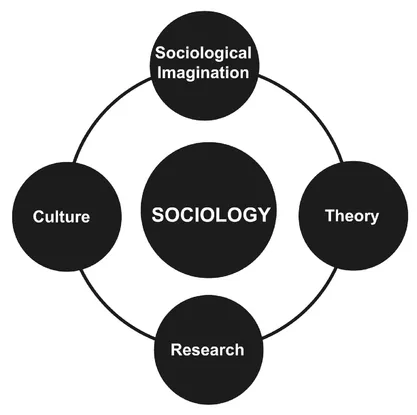
Figure 1.2 Components of a sociological perspective. Source: Raymond Lee
The Sociological Imagination
One of the classic books in sociology, The Sociological Imagination by C. Wright Mills (1959), helps us explore the connections between our individual experiences and the larger social world. Mills demonstrates how sociology can help us tie our personal problems to social circumstances and events. To use the sociological imagination, Mills asks us to look at how structural changes in
Web Exercise 1.1 What Is the Sociological Imagination?

Read "Chapter One: The Promise" from The Sociological Imagination online (https://socialsciences.nsula.edu/assets/Site-Files/The-Promise.pdf).
- Briefly summarize the ideas in your own words.
- Describe a personal problem you face and explain how you can apply the sociological imagination to better understand your situation.
- Does this exercise change your perspective on the problem? Why or why not?
Access the live/updated links at http://www.paradigmpublishers.com/resources/go1dbergmedia.aspx
society impact our individual lives and the lives of others. Developing a global view of history will help us see the context in which we must make decisions that may be life altering. If we cannot do that, we will likely have the experience that our “private lives are a series of traps” (Mills 1959, 3). These traps may seem inescapable, and our own fault, because of our inability to perceive the greater circumstances that shape our lives. Mills challenges our tendencies to see our lives as purely psychological experiences overwhelmed by forces out of our control. Thus sociology enables us to step out of our personal cocoons and connect our personal lives to larger social structures and historical trends. This process helps us understand that individuals alone are not entirely responsible for the circumstances of their lives. When we understand the role social forces play in our lives, we get closer to being able to influence those social forces in hopes of bettering our own lives and those of others. We will use the sociological imagination throughout this book to help us understand our own experiences in the context of the larger crises around which this book is formed.
What Is Culture?
Culture is a way of experiencing and seeing the world from the perspective of the people sharing it, a society. The essence of social experience is culture, and while cultures differ from society to society, all cultures share some common characteristics as they meet the needs of their members. There are two basic types of culture: material culture and non-material culture. Material culture refers to tangible aspects of the lives of people in a society. It emerges from the ways in which people meet basic needs for food, shelter, and overall sustainability. Housing, clothing, forms of transportation, food, and technology are some of the most important aspects of material culture. Non-material culture is more abstract. It represents ideas about the world around us. What we think of as justice, honor, morality, religion, and beauty—our values and attitudes, along with the skills and knowledge necessary to meet our needs—make up our non-material culture. For example, in American society the preference for driving cars over taking public transportation links material culture (cars) and non-material culture (the values regarding individual choices about transportation). As gas prices soared in the United States through the first de...
Table of contents
- Cover
- Half Title
- Title
- Copyright
- Dedication
- Contents
- List of Figures, Tables, Boxes, and Photographs
- Preface
- Acknowledgments
- PART I UNDERSTANDING SOCIAL PROBLEMS AS SOCIAL CRISES: THE BASICS
- PART II TWENTY-FIRST-CENTURY CRISES
- Glossary
- References
- Index
- About the Author
Trusted by 375,005 students
Access to over 1.5 million titles for a fair monthly price.
Study more efficiently using our study tools.
Frequently asked questions
Yes, you can cancel anytime from the Subscription tab in your account settings on the Perlego website. Your subscription will stay active until the end of your current billing period. Learn how to cancel your subscription
No, books cannot be downloaded as external files, such as PDFs, for use outside of Perlego. However, you can download books within the Perlego app for offline reading on mobile or tablet. Learn how to download books offline
Perlego offers two plans: Essential and Complete
- Essential is ideal for learners and professionals who enjoy exploring a wide range of subjects. Access the Essential Library with 800,000+ trusted titles and best-sellers across business, personal growth, and the humanities. Includes unlimited reading time and Standard Read Aloud voice.
- Complete: Perfect for advanced learners and researchers needing full, unrestricted access. Unlock 1.5M+ books across hundreds of subjects, including academic and specialized titles. The Complete Plan also includes advanced features like Premium Read Aloud and Research Assistant.
We are an online textbook subscription service, where you can get access to an entire online library for less than the price of a single book per month. With over 1.5 million books across 990+ topics, we’ve got you covered! Learn about our mission
Look out for the read-aloud symbol on your next book to see if you can listen to it. The read-aloud tool reads text aloud for you, highlighting the text as it is being read. You can pause it, speed it up and slow it down. Learn more about Read Aloud
Yes! You can use the Perlego app on both iOS and Android devices to read anytime, anywhere — even offline. Perfect for commutes or when you’re on the go.
Please note we cannot support devices running on iOS 13 and Android 7 or earlier. Learn more about using the app
Please note we cannot support devices running on iOS 13 and Android 7 or earlier. Learn more about using the app
Yes, you can access Understanding Contemporary Social Problems Through Media by Roberta Goldberg in PDF and/or ePUB format, as well as other popular books in Social Sciences & Criminology. We have over 1.5 million books available in our catalogue for you to explore.