eBook - ePub
Wrapping and Unwrapping Material Culture
Archaeological and Anthropological Perspectives
- 245 pages
- English
- ePUB (mobile friendly)
- Available on iOS & Android
eBook - ePub
Wrapping and Unwrapping Material Culture
Archaeological and Anthropological Perspectives
About this book
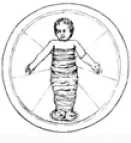
This innovative volume challenges contemporary views on material culture by exploring the relationship between wrapping materials and practices and the objects, bodies, and places that define them. Using examples as diverse as baby swaddling, Egyptian mummies, Celtic tombs, lace underwear, textile clothing, and contemporary African silk, the dozen archaeologist and anthropologist contributors show how acts of wrapping and unwrapping are embedded in beliefs and thoughts of a particular time and place. Employing methods of artifact analysis, microscopy, and participant observation, the contributors provide a new lens on material culture and its relationship to cultural meaning.
Information
Part I: Introduction
1 Wrapping and Unwrapping, Concepts and Approaches
DOI: 10.4324/9781315415659-1
What Is Wrapping?
In everyday English, to wrap is to cover or enclose in soft materials (Oxford English Dictionary). The term conjures up ideas of gifts wrapped in colourful paper, of fresh towels or loose garments wrapped around the body; of being warmly wrapped up against the cold weather. The action of wrapping creates a relationship between the wrapping materials (or wrappers) and their contents. These contents may be bodies, objects, or places (Hendry 1993, 26). The wrappings that are used to cover and enclose their contents may be made from a wide range of malleable materials, typically paper, textiles, or leather, or thin sheets of plastic. These materials share certain properties: they can all be wrapped, folded, shaped, and tied (Harris 2008, 225–27). However, bodies, objects, or places may also be wrapped in a stiffer material: special items, for example, may be wrapped in boxes to preserve them, or, at the other end of the scale, a person may be, metaphorically, wrapped in love or care through language (Hendry 1993, 21–26, 52–69). Wrapping can be distinguished from other forms of adornment or covering in that it can be removed. Typically, what is wrapped can be unwrapped. It is here that Gell distinguished the oth-erwise similar practices of tattooing and wrapping the body in cloth; cloth can be removed from the body, whereas tattoos cannot and so provide a contrasting form of wrapping (Gell 1993, 87–91). To unwrap is not simply to reverse wrapping; the act of unwrapping is significant in itself and has its own outcomes. Unwrapping may refer either to a physical or a conceptual revelation (Wieczorkiewicz 2005), whereby knowledge is gained or secrecy exposed. The removal of wrappings and their application elsewhere may be a device to accumulate and store the power of their contents (Gell 1993, 89). As investigated in this volume, wrapping is the act of covering, enclosing, and containing with a wide range of materials, patterns, and metaphysical or conceptual devices. Unwrapping is seen as equally significant; the removal of wrappings is potentially an arena of revelation and finding out, the exposure of secrets, an act of disclosure of withheld knowledge, or the creation of an emotional response such as surprise or awe. The intention and purpose of wrapping and unwrapping becomes, therefore, the subject of contextual enquiry.
Through covering, enclosing, and containing, wrapping materials have properties and efficacy that act on their contents or the perception of their contents. Wrapping materials are acted on in order to be applied to surfaces, bodies, objects, and places. They may shape, cover, and form their content every bit as much as the contents can be transformed by them. Through texture and surface, wrapping may adorn and decorate. As a cultural and technical act, wrapping is a form of containment that can be used to conceal and reveal, camouflage or highlight, transform and exhibit, conserve and preserve. In Warnier’s work the experience and practice of containment are revealed through multiple media such as skins, container forms, and envelopes that are used as technologies of power (Warnier 2007, 154). As intentional acts, wrappings are put in contact with their contents and enable actions to be performed; they may also be perceived as boundaries to create interfaces between objects, subjects, and the world. There is also an ambivalence in the act of wrapping; the relationship between the content and wrapping is questionable. Wrapping may make the contents clearer or conceal them to the extent that they cease to exist. To unwrap may reverse these outcomes or create an entirely new state of existence.
From such a perspective, wrappings bestow specific materialities that are also forged through human agency. Following Ingold’s definition, materiality is considered to be a combination of ‘the “brute materiality” of the physical world’ and ‘the ways this world is appropriated by human projects’ (Ingold 2012, 435). These materials and processes are worked through techniques. This volume examines wrapping by placing emphasis on the materials, techniques, and processes by which the lived world is created and transformed. From this perspective, materials are acted on (Lemonnier 1992, 5–6) as they are cut, crushed, woven, or assembled before being finally transformed into a wide surface or a structure that can in turn be wrapped and unwrapped. The concept of materiality emerges from material practice, as a transformative potential, and plays a role in the construction of an individual’s social and material world (Kuechler 2003, 2008, 266).
Through the chapters in this volume we bring together twelve contributors from archaeology, anthropology, and conservation who develop these concepts to present contextually specific studies of wrapping. The topic has wide applicability as people across the world in the past and present have engaged in wrapping and unwrapping practices as a means of creating and transforming themselves. However, it is also specific, because these wrapping practices are embedded in beliefs and thoughts belonging to a particular time and place. In this introduction, we present wrapping as material action and review the theories and methodologies of investigating wrapping that have developed in archaeology and anthropology. What follows seeks to present the methods and contributions made to a topic that is rooted in excavation, artefact analysis, participant observation, and conservation practice.
Wrapping as Material Action
Through investigating the act and intentions of wrapping, we recognise the subtle yet potent role that wrapping and unwrapping have played in different societies. The addition of a particular wrapper can be used to alter the content it enwraps, to manipulate its perception by others, and to provide a surface with which to contain or convey emotions. Wrappers can take a simple form but convey profound messages, as for example the square Korean wrapping cloths (pojagi) of the Chosŏn dynasty between 1392–1910 c.e. (Kumja Paik 2003, 10). Used by royalty and poor alike, and made by women from specially procured silk, scraps of left-over cloth, or oiled paper, these wrapping cloths played a prominent role in the daily lives of the Koreans, who used them to cover, store, and carry objects (Kumja Paik 2003, 11, 14). Whether covering a table of food, an altar, a bridal gift, bedding, cutlery or clothes, there was an “unspoken folk belief that by wrapping an object, pok (good fortune) could be enclosed or captured within a pojagi’ (Kumja Paik 2003, 12–15). Made exclusively by women, who at that time were confined to work alone in the inner court of the household, blessing and happiness were stitched into the pojagis’ very fabric (Kumja Paik 2003, 20–21; Songmi 2003, 24). These cloths remind us of the relationships, creativity, intentions, and emotions that are involved in the act of wrapping.
As material action, wrapping may be temporary or permanent; it may also involve psychological, symbolic, and physical transformations of objects, place, and people. For instance, the practice of foot binding in China demonstrates the complex interplay between bandages, skin, flesh, and bones— and emotions. Throughout its long history, foot binding in China had many forms and a rich and varied significance (for details: Ko 2001, 2005; Wang 2000). Young girls had their feet bound with cloth bandages by their mothers, the aim of this painful process being to reduce the size of their feet and to prepare young girls for marriage, sexuality, and reproduction (Wang 2000, 4–20). Small bound feet in tiny socks and shoes were an object of beauty and a taboo for the male gaze and touch; in literature and art, they were portrayed as objects of desire and the centre of erotic symbolism (Wang 2000, 24–28). Through shape and posture, the practice differentiated male and female bodies and, indeed, separated women with bound feet from those with unbound feet (Ko 2005, 136–39; Wang 2000, 32). Resulting in the permanent transformation of the bones and flesh of the feet, binding created social boundaries and opportunities; it was a process through which girls were prepared for their ideological role in life.
While wrapping applies layers, unwrapping takes them off and has its own particular significance. According to studies of Christmas-giving in America, wrapping gifts adds the giver’s personal sentiment to the contents; it also acts to transform the shop-bought commodity inside into a personal gift through the act of its wrapping in mass-produced paper (Caplow 1984; Carrier 1993, 60). Unwrapping of gifts, especially from family, is often accompanied by some kind of formal ritual. A gift will perhaps be opened by the recipient on or around Christmas day in the company of friends or family. Before being unwrapped, these gifts may be displayed with other similarly wrapped gifts below a Christmas tree or in a pile in a living room (Caplow 1982, 389). By contrast, on other occasions unwrapping gifts may be a spontaneous act that takes place in front of the giver. The unwrapping process brings an element of surprise and excitement to the act of giving; and it heightens the emotions. An ostensibly similar practice of wrapping and unwrapping gifts is found in Japan. However, there are different signals embodied in what appear to be the familiar materials and practice of unwrapping. In Japan, the intention of wrapping is not so much about concealing followed by unwrapping to create a surprise as about separating the recipient from potential pollution from the donor (Hendry 1990, 1993, 14). Rather than unwrapping the gift immediately, one is supposed to put it aside. Immediate opening is impolite, because it removes the focus away from the sentiment and toward an unseemly interest in the content (Hendry 1993, 14). Indeed, the recipient may not open the gift at all but, instead, make an assessment of its value while it is still wrapped and then pass it on as a gift to someone else. Hendry points out how misunderstandings between Japanese and British forms of gift giving, wrapping, and unwrapping can lead to the breakdown of social relationships (Hendry 1993, 14).
Moving beyond the close relationship of wrapping to malleable textile and paper materials, we recognise the enclosing, covering, and enveloping aspect of wrapping in other media. In his study of body tattoos in the Pacific, Gell recognised the potency of pigment and pattern to wrap the body in social identities and a protective layer (Gell 1993). Although distinct from the cloth wrappings, which can be removed (Gell 1993, 87), there is nevertheless a relationship between clothes and tattoos that is recognised through language. The word pulu in Samoa is associated with back tattoos and, used with the compound ta, it means to strike or wrap and can therefore be taken to mean that the design is wrapped around the body (Gell 1993, 96). Other verbs associated with tattooing are caulking, a process rather like sealing a canoe with breadfruit gum or the protective layer of a coconut husk, and interposing, which is associated with the idea of creating a defensive screen between a person and the world (Gell 1993, 96). The relationship between, on the one hand, wrapping as the application of material layers that can be removed and, on the other hand, the metaphorical and metaphysical forms of wrapping is worthy of investigation—and, here, context becomes all important. The concept of wrapping should not be so rigidly defined in the name of academic rigour that it excludes other, interrelated, aspects of a culture.
By covering, enclosing, and enveloping, wrapping can be understood as an act of grouping, a gathering process or a means of quantifying to achieve control over things and people. In Gell’s example, for instance, people are grouped together in hierarchies through tattooing (Gell 1993, 300–03), albeit a permanent form of wrapping. In other cultural contexts, grouping is also true for objects. In the North American Plains, ceremonial bundles are made by North American/Plains Indians and are composed of two or more small objects, such as animal or plant parts and mineral or manufactured objects, and these are grouped together through being wrapped in cloth or skins (Zedeño 2008, 363–64). These bundles represent more than a simple collection of objects: they are repositories of knowledge, powerful in their own right and as potentially powerful as people with their own life histories, personalities, and social positions (Zedeño 2008, 364–65). It is through the effect of being in a bundle with other potent objects that the individual collection becomes more than a sum of its parts (Zedeño 2008, 364). In this and other instances we see the role of wrapping to group, gather, and enclose, with the potential to transform the contents within.
Consequently, the concept of wrapping used in this book is based on the principle that wrapping is the act of enclosing, binding, enveloping, or covering. Unwrapp...
Table of contents
- Cover Page
- Half-title Page
- Series Page
- Title Page
- Copyright Page
- Table of Contents
- List of Illustrations
- Preface
- Part I: Introduction
- Part II: Wrapping and Unwrapping the Living
- Part III: Wrapping and Unwrapping the Dead
- Part IV: The Materiality of Wrapping: Materials, Places, and Objects
- Index
- About the Authors
Trusted by 375,005 students
Access to over 1.5 million titles for a fair monthly price.
Study more efficiently using our study tools.
Frequently asked questions
Yes, you can cancel anytime from the Subscription tab in your account settings on the Perlego website. Your subscription will stay active until the end of your current billing period. Learn how to cancel your subscription
No, books cannot be downloaded as external files, such as PDFs, for use outside of Perlego. However, you can download books within the Perlego app for offline reading on mobile or tablet. Learn how to download books offline
Perlego offers two plans: Essential and Complete
- Essential is ideal for learners and professionals who enjoy exploring a wide range of subjects. Access the Essential Library with 800,000+ trusted titles and best-sellers across business, personal growth, and the humanities. Includes unlimited reading time and Standard Read Aloud voice.
- Complete: Perfect for advanced learners and researchers needing full, unrestricted access. Unlock 1.5M+ books across hundreds of subjects, including academic and specialized titles. The Complete Plan also includes advanced features like Premium Read Aloud and Research Assistant.
We are an online textbook subscription service, where you can get access to an entire online library for less than the price of a single book per month. With over 1.5 million books across 990+ topics, we’ve got you covered! Learn about our mission
Look out for the read-aloud symbol on your next book to see if you can listen to it. The read-aloud tool reads text aloud for you, highlighting the text as it is being read. You can pause it, speed it up and slow it down. Learn more about Read Aloud
Yes! You can use the Perlego app on both iOS and Android devices to read anytime, anywhere — even offline. Perfect for commutes or when you’re on the go.
Please note we cannot support devices running on iOS 13 and Android 7 or earlier. Learn more about using the app
Please note we cannot support devices running on iOS 13 and Android 7 or earlier. Learn more about using the app
Yes, you can access Wrapping and Unwrapping Material Culture by Susanna Harris, Laurence Douny, Susanna Harris,Laurence Douny in PDF and/or ePUB format, as well as other popular books in Social Sciences & Archaeology. We have over 1.5 million books available in our catalogue for you to explore.