![]()
Part 1
Underpinnings of eHealth
![]()
1
Introducing eHealth
Lisette (J.E.W.C.) van Gemert-Pijnen, Hanneke Kip, Saskia M. Kelders and Robbert Sanderman
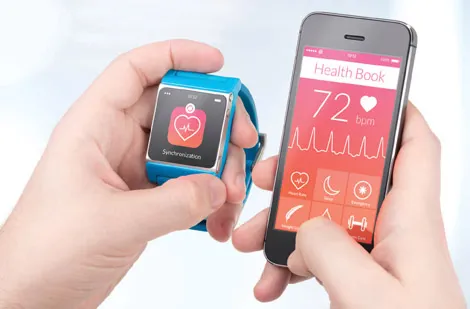
eHealth, the use of technology to improve health, well-being and healthcare is increasing rapidly, see Figure 1.1 for an example. More and more innovative technologies have been introduced in healthcare and consumer practice, and are being studied by researchers. In this chapter, you will see that eHealth can have many advantages, like cost-effectiveness, process optimization and an increased reach and impact. It can improve the quality of care, for example, by significantly improving health and well-being, by enabling healthcare professionals to adhere more to guidelines and by resulting in higher satisfaction of patients. However, despite these advantages, eHealth has not yet reached its full potential. Many eHealth technologies are not used as much or in the way as was intended, the intended goals on efficiency and effectiveness are not achieved or problems with financing the technology are encountered. From this it becomes clear that there is room for improvement in the development, implementation and evaluation of eHealth.
In this chapter, we introduce eHealth and describe its emergence, the visions on eHealth in improving health and well-being and making healthcare more efficient and effective. We describe in what ways eHealth has been used in practice and what the added value of eHealth can be, showing observed benefits and barriers. Furthermore, the chapter introduces a participatory development approach, a holistic approach to guide the development, implementation and evaluation of eHealth technologies and interventions. The chapter ends with an outline of the book. After completing this chapter, you will be able to:
- explain the relationship between technology, psychology and health, and connect them to this book’s vision of eHealth.
- state several areas of application of eHealth and provide accompanying examples.
- name several benefits and barriers of eHealth in development, implementation, evaluation and use in practice.
- explain what a holistic vision of eHealth entails and why it is required to overcome the barriers and achieve the benefits.
- name and explain the importance of the five pillars of holistic eHealth development.
Figure 1.1 An example of how technology can be used to support our health and well-being
Why eHealth?
The essence of healthcare is to provide the best care possible that meets the needs of patients and their caregivers. However, due to declines in birth rates and longer life expectancies, the number and proportion of older people in our developed society is growing. An ageing population implies an increase in the chances of age-related illnesses like coronary heart disease, diabetes, and/or lung diseases. These chronic diseases cannot be cured, but they can be self-managed to maintain an acceptable quality of life. Older people may have more than one of these conditions (called ‘multi-morbidity’), which makes the demand for successful care even more complex. It is important to support these older people so that they can manage their own chronic disease(s) as best as possible.
At the same time, fewer working-age adults are available to support the increasing number of older people. Preserving high standards of patient-centred care will, therefore, be a challenge in the near future. Not surprisingly, all this leads to the concern that a healthcare system with an acceptable quality of care will become too expensive to sustain. In most countries, the delivery of the necessary care with fewer resources is considered to be a major political challenge. The healthcare system is in great need of innovation.
Figure 1.2 Examples of technologies that can be used to improve health and well-being
A particular trend in the world today is that patients and their ‘informal caregivers’ (such as family members) are more in the lead of their own healthcare. This is in contrast to the traditional model, in which a professional caregiver is in the lead and makes most of the decisions. This enhanced status and empowerment of patients and their informal caregivers increases the involvement of patients in the management and treatment of their health and well-being. A cooperative model of healthcare encourages and expects active involvement of all the parties involved – the patient, caregivers and healthcare professionals alike. This concept of ‘participatory health’ is also applicable to prevention, physical fitness, nutrition, mental health, end-of-life care, homecare and other fields related to an individual’s health. This increasing importance of participatory health requires innovative ways of support.
Researchers and policy makers from all over the world are looking for these innovative solutions, and many have been thought of and tried out in practice. Serious future options include: de-hospitalization, organizing healthcare into regional networks, adequate homecare, and the concentration of highly specialized, complex care in one location. Since a large proportion of the population has access to and uses the Internet in their daily lives (via, for example, a PC, tablet, wearables and/or smartphone; see Figure 1.2), the role of technology is emphasized in such solutions, both within and outside of healthcare.
Ways of looking at using technology to support health
With the introduction of the Internet, eHealth became popular as an instrument for communication between patients and caregivers and for providing health-related information instead of paper-based information and telephone-guided communications. In 2001, an influential paper by Eysenbach called ‘What is eHealth’ started a discussion about it which resulted in many views and definitions (Oh, Rizo, Enkin, & Jadad, 2005). These definitions all described eHealth as a way to communicate via technology but failed to address the reasons for doing this and the implications of using technology in healthcare.
Beyond the emerge of several definitions, different taxonomies appeared which represent different ways of looking at eHealth (van Gemert-Pijnen, Peters, & Ossebaard, 2013):
- Categorizing eHealth technologies according to their place in the healthcare continuum: describing services to support care delivery (diagnostics, therapy, treatment, etc.), to manage care (personal health records, portals, etc) or to promote prevention and education as part of public health self-management programmes.
- Categorizing eHealth technologies according to the characteristics of the technology: describing the capacities of devices and systems to support human-computer interactions, to monitor and coach people and to develop tailored and personalized health interventions. For example, robotics, domotics, wearable devices, virtual reality, personal health records or web-based applications.
- Categorizing eHealth technologies according to their influence on the healthcare system: describing the infrastructure for healthcare, emphasizing the possibilities of technologies to innovate or disrupt healthcare. Examples include social media, wearables and collaborative decision-making support systems to develop an infrastructure that breaks through traditional care with patient-centric care models.
What this shows is that the field of eHealth is very broad and, more importantly, that eHealth has an impact on many aspects related to healthcare and well-being. We have seen that the Internet created new opportunities for exchange of information and for interactions among patients and between patients and caregivers. These opportunities empowered patients because they have become more active participants in management of their health and well-being, and this has impacted the healthcare infrastructure, for example, by providing care that is affordable and accessible everywhere and anytime, and by sharing knowledge to everyone who has access to the Internet. As Eysenbach already stated in 2001, eHealth is more than just introducing technology in healthcare (Eysenbach, 2001):
eHealth is an emerging field in the intersection of medical informatics, public health and business, referring to health services and information delivered or enhanced through the Internet and related technologies. In a broader sense, the term characterizes not only a technical development, but also a state-of-mind, a way of thinking, an attitude, and a commitment for networked, global thinking, to improve healthcare locally, regionally, and worldwide by using information and communication technology.
The Eysenbach statement is beyond defining eHealth merely as a tool or a device to change information or to facilitate communication. eHealth disrupts the healthcare infrastructure and delivery, and it implies that people should have the capacities and capabilities to use technology to support self-care and to create novel ways of healthcare delivery; affordable, accessible and feasible for all. eHealth is a process to transform healthcare, taking into account the whole human being in the context of living and working. This context is continuously changing due to demographics, changes in roles and role-players in healthcare and the growing capacities of technology to generate and communicate data.
Box 1.1 eHealth terminology
Within this book, several terms that are used in the field of eHealth interventions are used. Many of them can be used interchangeably, but they all have their specific meaning, as is explained below.
- eHealth: The use of technology to support health, well-being and healthcare.
- eHealth technology: The actual technological instrument via which health, well-being and healthcare are supported, often information or communication technology.
- eHealth intervention: An eHealth technology specifically focused on intervening in an existing context by changing behaviour and/or cognitions.
- Health informatics: The interdisciplinary study of the design, development, adoption and application of IT-based innovations in healthcare services delivery, management and planning. Also called ‘medical informatics’.
- Behaviour change interventions: Behavioural change interventions are interventions designed to affect the actions that individuals take with regard to their health.
Throughout this book, the term eHealth will be used in multiple forms. Box 1.1 provides a brief overview of the terminology used.
eHealth: technology and psychology
eHealth: technology
eHealth and technology are inseparable, since the first is not possible without the second one. Therefore, well-functioning technology is a necessary precondition for a good eHealth intervention, and a good design that appeals to users is beneficial as well. Because of this, it seems logical to pay attention to the role of technology within eHealth, but unfortunately this is often overlooked.
Developments in the domain of eHealth are dependent on the development of technologies. The first eHealth technologies were websites with plain text, mainly because the technology back then did not offer many more options. However, soon eHealth became increasingly interactive, making it possible to communicate with its users. Since then, new ways for technology to monitor and communicate with us are always emerging. Technology also offers users the possibility to communicate with each other, for example, enabling patients to contact their physicians or other patients, and the possibilities in this area are still evolving. At this point, technology is increasingly becoming part of us and our daily lives. This humanizing technology is very relevant for eHealth: the 24/7 monitoring of our physical state and behaviour offers many options for coaching health and well-being. However, this raises several ethical concerns about how far we can go in this, how reliable feedback of technology should be, and who the owner of all of the collected data is. Another important issue for eHealth is the balance between following the newest trends and innovations in technology, which might have unknown effects, or using well-researched but less state-of-the-art technologies.
An important point with respect to technology is, regardless of the type of technology, the fit with the user and context. If the users feel like the technology does not match their needs and preferences, or cannot be embedded in their routines, it will not be used. A technology should fit the way people live and work, their socio-economic backgrounds and the way they make decisions about their health and well-being (Beerlage-De Jong, 2016; Wentzel, 2015). This match is important for concepts like user engagement, adherence, trust and involvement, that will be fully explained later in the book (see Chapter 13). To put it bluntly: the better the fit with user and context, the more likely it is that a technology will be used and is effective. In order to achieve this, a good development process is essential. For instance, system design models for technology design are not always suitable for eHealth development, since a focus on matters like the user perspective, the context and financing is also needed. To conclude: technology is essential for eHealth, and developers should always make sure that there is a good fit between the technology, the user and the context (van Gemert-Pijnen et al., 2013).
eHealth: psychology
eHealth aims to improve health and well-being, using technologies. Often, a change in people’s cognitions and behaviours is required to achieve this, but changing behaviour via interventions has proven to be very difficult. Merely using a well-functioning and nice-looking technology doesn’t suffice: theories and approaches from psychology should be used to create technologies that can enable behaviour change.
Research has shown that eHealth interventions that use psychological behaviour change theories are more effective in changing behaviour than those that do not (Webb, Joseph, Yardley, & Michie, 2010). Consequently, approaches such as behaviour change techniques (Michie et al., 2013) or persuasive features (Oinas-Kukkonen & Harjumaa, 2009) should be used in eHealth interventions. Behaviour change techniques are derived from abstra...