Essentials of Modeling and Analytics illustrates how and why analytics can be used effectively by loss prevention staff. The book offers an in-depth overview of analytics, first illustrating how analytics are used to solve business problems, then exploring the tools and training that staff will need in order to engage solutions. The text also covers big data analytical tools and discusses if and when they are right for retail loss prevention professionals, and illustrates how to use analytics to test the effectiveness of loss prevention initiatives. Ideal for loss prevention personnel on all levels, this book can also be used for loss prevention analytics courses. Essentials of Modeling and Analytics was named one of the best Analytics books of all time by BookAuthority, one of the world's leading independent sites for nonfiction book recommendations.
eBook - ePub
Essentials of Modeling and Analytics
Retail Risk Management and Asset Protection
- 328 pages
- English
- ePUB (mobile friendly)
- Available on iOS & Android
eBook - ePub
Essentials of Modeling and Analytics
Retail Risk Management and Asset Protection
Chapter One
Introduction
Why is Analytics Important in Loss Prevention?
What Problems Can Be Addressed with Analytics in Loss Prevention?
Overview of This Book
The explosion of data in the past two decades has transformed our world. According to research done in 2013, 90% of the data in the world at that time had been collected in the prior two years (Dragland, 2013). This explosion of information has created a vacuum for analytics applications. Analytics professionals, computer scientists, and data enthusiasts have quickly moved to fill this void with applications that help us locate our destination, market products to us more efficiently, catch terrorists, track credit card fraud, control the temperature in our house, recommend products, movies, and music, drive our cars, and support retail loss prevention.
Retail loss prevention has adopted many technologies during this information explosion, with such tools as exception reporting, automated fraud detection, predictive models, facial recognition, crime indices, organized retail crime detection, and many more. Even with these advances, retailers are constantly under attack by an ever-evolving population of criminals and unscrupulous employees, and need the latest technology to keep up. Analytics, in all of its varieties, is the engine that helps retailers fight the growing and continuous threats they face every day.
If all occurrences of shoplifting were reported to the police, it would constitute the largest single crime committed in the United States (Bellur, 1981). According to the National Retail Security Survey, in 2015, retail loss totaled $44.2 billion dollars (Moraca et al., 2015). That is more than the gross domestic product of Jamaica, Albania, and Mongolia combined. Why is retail loss so large? Well, for two reasons: there will always be opportunities for crime and people willing to commit those crimes. That being said, retail loss can be reduced effectively with data and analytics and there are numerous studies that prove this point. Many such cases will be explored throughout this book.
It is not just data that is exploding. The use of technology within loss prevention is growing rapidly as well. New tools and technology are flooding loss prevention personnel and every year there are more and more tools available to help them do their jobs. This growth is astonishing and includes an impressive list of tools to analyze data, warehouse and access video footage, track customers through a store, monitor aberrant employees, and so on. Over the last 10 to 15 years, there has been a shift from a very manual process where closed circuit television cameras (CCTVs) were watched by store loss prevention personnel to apprehend, interview, and possibly arrest potential shoplifters, toward a digital age drenched in data, where a room full of analysts watch the movements and digital signatures of employees, customers, suppliers, stores, products, and any other item that can be tracked and monitored. At the center of the technology is an increased focus on data and analytics. Close to 100% of loss prevention professionals today use data or analytics in some form or another to perform their day-to-day jobs.
Billions of automated decisions from analytical systems are being made daily to prevent and detect crime:
- Exception reporting tools are used to analyze point of sale data and catch employees (or customers) who are stealing from retailers.
- Real-time credit card fraud detection systems are monitoring all of the transactions at the point of sale or online to look for stolen credit cards or fraudulent transactions.
- Real-time predictive models monitor returned merchandise to look for fraudulent returns.
- Crime indices are compiled using data from multiple crime reporting systems to create an index that can be used to allocate loss prevention resource.
- Facial recognition systems are monitoring patrons at the store to detect when persons of interest enter a store.
- Experimental design methods are implemented to scientifically measure the impact of loss prevention programs.
- And there are many more examples.
All of the solutions listed require data and analytics to make them function. Therefore, organizations such as the Loss Prevention Research Council at the University of Florida have formed to encourage the application of good scientific processes and analytics to loss prevention.
Data does not analyze itself. Combining trained investigators and experienced loss prevention staff with analytical personnel is necessary to integrate more analytics into loss prevention. The ability to assess patterns in data and make decisions in real time is fundamental in solving complex issues related to customers, employees, sales, and loss. As potential offenders become more sophisticated, they seek targets that increase reward and minimize risk. They target areas of weakness in vulnerable retailers (i.e., those lacking an aggressive analytical strategy for detection and prevention of loss). Adopting strategies requires the right knowledge and expertise within loss prevention departments.
In the past few decades, with improvements in computer processing, data collection, and storage, analytics has increasingly played a more central role in loss prevention. However, the use of analytics in loss prevention is much earlier in its development than several other business verticals. In other sectors, like insurance, finance, telecommunications, and even retail marketing, analytics has been used since the 1960s and 1970s. In loss prevention, analytics has slowly evolved over the last 10 to 20 years, with much of the growth in the past 10 years. In this period, however, there are countless examples to show how data and analytics have been used by loss prevention teams to save their companies money and catch nefarious employees or customers. Most retail loss prevention teams are already evolving toward a more analytical infrastructure and recognize that data and advanced statistical methods will lie at the heart of loss prevention in the future. In particular, data and analytics are critical in:
- Making decisions regarding store operations and resource allocation;
- Testing the effectiveness of loss prevention tools and programs;
- Identifying fraudulent transactions, checks, or credit cards;
- Identifying shoplifters;
- Making decisions regarding the best use of loss prevention tools;
- Correctly estimating costs and benefits for multiple loss prevention programs;
- Determining policies that reduce loss.
Various analytic techniques can be used to assess these topics. Techniques include basic trend and frequency analysis, A/B testing (test-and-learn), graphical methods to visualize data, correlations, outlier detection, and predictive modeling. Correct use of analytics can aid loss prevention in detecting which employees are stealing, identifying which customers are exploiting coupon loopholes, determining which stores need more security, identifying and linking organized retail crime groups, analyzing video analytics, and investigating numerous other loss prevention issues.
Why is Analytics Important in Loss Prevention?
The popularity of analytics and the reason for using it within any line of business is simple; money. When thousands upon thousands of decisions are made each day, or analysis of a large number of items is required, any change in procedure that improves efficiency or effectiveness will save the retailer money. Analytics helps you insert intelligence into a procedure; the savings come from applying that change over and over to the many decisions or items.
To apply analytics effectively, the practitioner must begin by carefully defining an objective. Identifying what problems you are trying to solve or what you are trying to improve leads to the method of attack. For example, you may want to identify whether shrink will increase or decrease next year for a store. Once you have established your objective, you need to decide whether the model is used for inference or prediction. Inference models generally answer questions regarding the relationship between variables, whereas predictive models predict an outcome. For example: is employee morale related to shrink? Is the presence of cameras related to shrink? An inferential model can answer these. Other examples: what is the shrink likely to be the next time I measure the inventory? What are the expected number of robberies in a geographic area next quarter? A predictive model is the right approach here. In either case, predictive or inferential, once you have defined your model and objective, you can intuitively create a list of predictor variables (e.g., missed shipments, lost inventory, or manager turnover) and begin the data extraction process.
What Problems Can Be Addressed with Analytics in Loss Prevention?
In today’s typical loss prevention team, the methods shown in Figure 1.1 are used by many (if not all) loss prevention teams. The reason each method has been employed is that it generates value for the retailer.
A limited number of loss prevention teams and vendors are pushing the envelope and are using more advanced methods (Figure 1.2). As the methods become better defined, and the value proposition can be well articulated to a retailer’s management, it is likely that these methods will become more commonplace.
We will explore many of these methods in this book, as well as the underlying methodology used to execute them.
Overview of This Book
This book contains material essential for anyone in crime or loss prevention, anyone interested in data and analytics and how to apply them to real-world issues, and anyone interested in research and statistics. The motivation for this book is the lack of practical fact-based analytical handbooks in retail loss prevention. We are passionate about this particular subject matter and have applied other industries’ best practices and statistical knowhow to retail loss prevention. We have analyzed, modeled, and deterred fraud and risk in the insurance, healthcare, telecommunication, direct marketing, and banking industries prior to our work in retail. We have also spent several years interviewing active and apprehended shoplifters (i.e., the target audience of loss prevention programs) to better understand their strategies and reactions to loss prevention techniques. Furthermore, regardless of the industry, one must apply similar analytical techniques to study trends and spot data abnormalities. Our combined 40+ years of experience in analyzing data for over 100 companies has taught us a valuable lesson: crime is crime and data is data. In other words, once you start thinking like a data analyst or a data scientist you will start to assess the risk more accurately, regardless of industry or work sector.
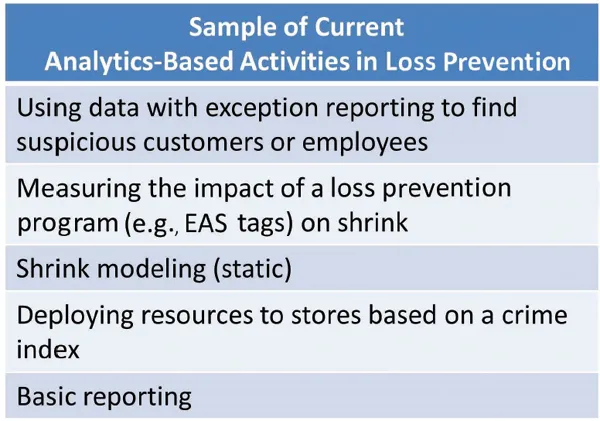
Figure 1.1: Common Loss Prevention Analytics-Based Activities
Loss prevention is rooted in finding and stopping criminal activity. For that purpose, we included a chapter on popular criminology theories. Understanding why a person is targeting your store is half the battle. Using data and analytics, along with criminology-based knowledge, will help loss prevention professionals direct their analysis and more accurately interpret results.
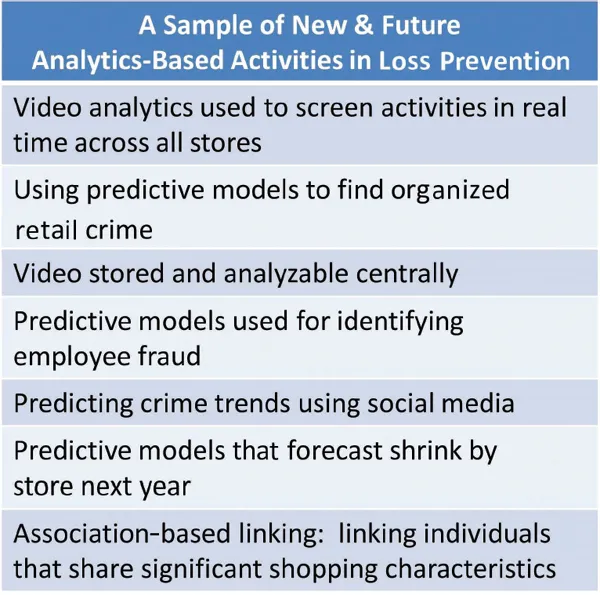
Figure 1.2: New and Future Loss Prevention Analytics-Based Activities
This book will cover the application of analytics used to identify loss prevention problems, address them, and improve your loss prevention strategies. We will help you develop loss prevention objectives as they relate to analytics and help you determine which analytical tools would be appropriate to analyze your data. For example, you may want to identify: (1) whether shrink will increase or decrease next year for a given store; (2) whether employee turnover is related to shrink; or (3) whether the presence of enhanced public view monitors or security guards is related to shrink.
In this book, you will learn how to prepare, clean, and transform data. Additionally, you will learn how to assess relationships, build models, and report results. For this, we will provide many examples related to loss prevention. The book is organized around real-world examples, together with the necessary formulas, as well as applicable statistical software examples (i.e., SPSS and SAS). We will cover the importance of variable transformations for optimal use in modeling. We will make it clear what we mean by fitting a model, which will be presented to you, with statistical software examples and formulas.
Analytics can also be applied to build a business case for loss prevention procedures and tools (e.g., assessing return on investment and impact on key metrics). In this book, we will provide examples of how to write up the results of your analysis in a comprehensible way. With this in mind, you will learn how to interpret results and, ultimately, apply them to real-world situations. Moreover, you will be more confident in your decision making and garner the support of other teams.
Access to data is critical for analytics and building predictive models. There may be many sources of data from various systems within an organization. Data sources may include point of sale data, an employee database, shipment and stock data, or surveys to determine employee or manager performance. With that said, integrating the right technologies to assess and analyze the data, and acquiring the expertise that most loss prevention teams currently do not possess, can take time. We encourage loss prevention leaders to begin preparations, internally and externally, now in order to create an analytical infrastructure that can bring significant value through the use of data and analytical methods.
The use of big data and predictive modeling is a critical component in the future of loss prevention. Therefore, in this book, we will devote a chapter to the importance of integrating analytics in your loss prevention function. This chapter will: (1) provide answers to the questions we regularly receive on the new advances of big data; (2) explain its conjunction with predictive analytics techniques; and (3) offer loss prevention leaders best practices learned from working with more than 35 national retailers on how to take advantage of this technology directly or with knowledgeable vendors as your partners. We will outline how you can create a big data infrastructure within your loss prevention organization and how to acquire the right people. This chapter will also outline the data management software (e.g., Oracle, SQL Server, and Netezza), analytics hardware (e.g., Hadoop, Hive, and Teradata) and analytics software (e.g., SAS, SPSS, and R) required to build a big data infrastructure.
This book will also cover new and future trends in loss prevention analytics; for example, predicting crime trends using social media, associations based linking, building score-based models, and using predictive models to find organized retail crime. Thus, this book is intended to help you be more proactive in your loss prevention strategies.
In summary, statistics is playing a growing role in how retailers approach loss prevention issues and solutions. Data and analytics are important in any economic climate; but in a mixed economy where profit margins are uncertain, it is imperative for retailers to have a clear-cut picture of their business that is rooted in solid data analytics.
In this book, we will teach you how to better harness the data you already have, analyze it, and use fact-based proactive decisions to improve loss prevention. Our goal, through data and analytics, is to contribute to the understanding of the different types of loss, how to better detect loss, how to predict it, and, ultimately, how to prevent it.
The material in this book is intended to be a how-to handbook for business and loss prevention analytics. This book may also be used by anyone interested in better understanding data and analytics. The danger is to p...
Table of contents
- Cover
- Title
- Copyright
- Contents
- About the Authors
- About the Book
- Acknowledgments
- 1 Introduction
- 2 Criminology Theory and Crime Prevention
- 3 Retail Theft and Security
- 4 Basic Statistical Analysis
- 5 Graphical Representation
- 6 Inferential Statistics and Hypothesis Testing
- 7 Common Statistical Hypothesis Tests
- 8 Testing and Deploying Loss Prevention Programs
- 9 Introduction to Modeling
- 10 Linear Regression
- 11 Logistic Regression
- 12 Advanced Techniques and Machine Learning Models
- 13 Integrating Analytics into Loss Prevention Teams
- 14 Conclusion
- Appendix A: Common Statistical Distributions
- References
- Index
Trusted by 375,005 students
Access to over 1.5 million titles for a fair monthly price.
Study more efficiently using our study tools.
Frequently asked questions
Yes, you can cancel anytime from the Subscription tab in your account settings on the Perlego website. Your subscription will stay active until the end of your current billing period. Learn how to cancel your subscription
No, books cannot be downloaded as external files, such as PDFs, for use outside of Perlego. However, you can download books within the Perlego app for offline reading on mobile or tablet. Learn how to download books offline
Perlego offers two plans: Essential and Complete
- Essential is ideal for learners and professionals who enjoy exploring a wide range of subjects. Access the Essential Library with 800,000+ trusted titles and best-sellers across business, personal growth, and the humanities. Includes unlimited reading time and Standard Read Aloud voice.
- Complete: Perfect for advanced learners and researchers needing full, unrestricted access. Unlock 1.5M+ books across hundreds of subjects, including academic and specialized titles. The Complete Plan also includes advanced features like Premium Read Aloud and Research Assistant.
We are an online textbook subscription service, where you can get access to an entire online library for less than the price of a single book per month. With over 1.5 million books across 990+ topics, we’ve got you covered! Learn about our mission
Look out for the read-aloud symbol on your next book to see if you can listen to it. The read-aloud tool reads text aloud for you, highlighting the text as it is being read. You can pause it, speed it up and slow it down. Learn more about Read Aloud
Yes! You can use the Perlego app on both iOS and Android devices to read anytime, anywhere — even offline. Perfect for commutes or when you’re on the go.
Please note we cannot support devices running on iOS 13 and Android 7 or earlier. Learn more about using the app
Please note we cannot support devices running on iOS 13 and Android 7 or earlier. Learn more about using the app
Yes, you can access Essentials of Modeling and Analytics by David B. Speights,Daniel M. Downs,Adi Raz in PDF and/or ePUB format, as well as other popular books in Business & Decision Making. We have over 1.5 million books available in our catalogue for you to explore.