Developed for the Ultimate Introductory Engineering Course
Introduction to Engineering: An Assessment and Problem-Solving Approach incorporates experiential, and problem- and activity-based instruction to engage students and empower them in their own learning. This book compiles the requirements of ABET, (the organization that accredits most US engineering, computer science, and technology programs and equivalency evaluations to international engineering programs) and integrates the educational practices of the Association of American Colleges and Universities (AAC&U). The book provides learning objectives aligned with ABET learning outcomes and AAC&U high-impact educational practices. It also identifies methods for overcoming institutional barriers and challenges to implementing assessment initiatives. The book begins with an overview of the assessment theory, presents examples of real-world applications, and includes key assessment resources throughout.
In addition, the book covers six basic themes:
Use of assessment to improve student learning and educational programs at both undergraduate and graduate levels
Understanding and applying ABET criteria to accomplish differing program and institutional missions
Illustration of evaluation/assessment activities that can assist faculty in improving undergraduate and graduate courses and programs
Description of tools and methods that have been demonstrated to improve the quality of degree programs and maintain accreditation
Using high-impact educational practices to maximize student learning
Identification of methods for overcoming institutional barriers and challenges to implementing assessment initiative
A practical guide to the field of engineering and engineering technology, Introduction to Engineering: An Assessment and Problem-Solving Approach serves as an aid to both instructor and student in developing competencies and skills required by ABET and AAC&U.
After completing this chapter, students will be able to
1. Define fundamental concepts and terminologies used in computer-aided design.
2. Create engineering drawings using computer-aided design software. [ABET outcome g, see Appendix C]
3. Demonstrate competencies with solid modeling, different views, units, and drawing standards. [ABET outcome j, see Appendix C]
4. Modify, update, and analyze drawings using different tools and techniques. [ABET outcome j, see Appendix C]
4.1Introduction
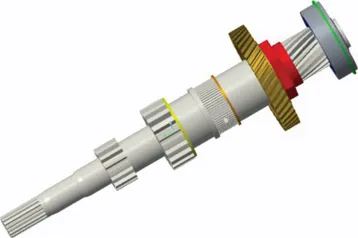
Computer-aided design (CAD) is the use of computer programs to develop two- or three-dimensional (2D or 3D) graphical representations of physical objects (Figure 4.1). CAD software is used by architects, engineers, drafters, artists, and others to create precision drawings or technical illustrations. The software performs calculations for determining an optimum shape and size for a variety of products and industrial design applications. CAD is also used throughout the engineering process from conceptual design and layout of products, through strength and dynamic analysis of assemblies, to the definition of manufacturing methods. This allows an engineer to both interactively and automatically analyze design variants, to find the optimal design for manufacturing while minimizing the use of physical prototypes.
4.2Advantages of CAD
CAD software may be used to reduce product development costs, increase productivity, improve product quality, and save time. The objects and features developed in a CAD original part were created. You can consider this as being a perfect world representation of the component.
FIGURE 4.1 CAD of a power transmission shaft.
If a design engineer develops an assembly of a part, the manufacturing engineer or user needs to assemble it according to the design engineer’s intent. Assembling the part from an arbitrary point without carefully considering how the part will be used or assembled may pose challenges during assembly, operation, and maintenance of the part.
3D modeling software may be parametric or direct (nonparametric). Parametric modeling enhances seamless update of the overall design and makes it easier to reuse parts and assemblies as well. During the modeling process, when a parameter of a part, such as a dimension, is altered, the entire model will be updated incorporating the change made to a part in the assembly. Parametric modeling helps establish an association between parts, drawings, and assemblies and helps with the manufacturing process. The associativity between parts and their drawings makes the modeling process robust. All the dimensions related to the part are translated in the drawings of the parts through a set of relationships and constraints. Additionally, changing a dimension of a feature such as a hole diameter can be performed from the model tree, which keeps track of every step the engineer performed during the modeling process. Therefore, a change in a hole diameter or the shape of an extruded feature will be immediately reflected in the drawing as well as the entire assembly. Nonparametric modeling, on the other hand, is dependent on the geometry of a form. Rules and constraints are not influential and the nonparametric approach does not store the history of modeling steps. Some of the benefits of CAD are listed as follows:
Visualization: Ability to visualize the final product, subassemblies, and constituent parts in a CAD system speeds the design process. The CAD software helps the designer in visualizing the final product that is to be manufactured. The product can also be animated for better representation of how the functionality of the product is going to perform, thus helping the designer to immediately make modifications if required.
Error: CAD software offers greater accuracy, thereby reducing errors and leading to better design. CAD improves the quality of the design. With CAD software, designing professionals are offered a large number of tools that help in carrying out a thorough analysis of the part using simulations. Among the most common types of simulation, testing for response to stress and modeling the process by which a part might be manufactured or the dynamic relationships among system parts. In stress tests, model surfaces are shown by a grid or mesh that distorts as the part comes under simulated physical or thermal stress. Additionally, simulation allows an engineer to visually inspect the machining process, and catch costly tool gauges and collisions before the parts reach the computer numerical control machine. Simulation also provides detailed information about the toolpath, cycle times, part deviation analysis, the ability to create simulation presentations, and so on.
Database: CAD software helps in better documentation of the design, fewer drawing errors, and greater legibility. The documentation of designing includes geometries and dimensions of the product, its subassemblies and its components, material specification for the components, bill of materials (BOMs)...
Table of contents
Cover
Half Title
Title Page
Copyright Page
Table of Contents
Preface
Acknowledgments
Author
Section I Engineering Education
Section II Engineering Fundamentals
Section III Product Design and Development
Section IV Engineering Profession
Appendix A: Unit Conversion
Appendix B: Rubrics and Key Performance Indicators
Appendix C: ABET Outcomes for Each Chapter
Appendix D: Equation and Graph
Appendix E: Z-Tables
Index
Trusted by 375,005 students
Access to over 1.5 million titles for a fair monthly price.
Study more efficiently using our study tools.
Frequently asked questions
Yes, you can cancel anytime from the Subscription tab in your account settings on the Perlego website. Your subscription will stay active until the end of your current billing period. Learn how to cancel your subscription
No, books cannot be downloaded as external files, such as PDFs, for use outside of Perlego. However, you can download books within the Perlego app for offline reading on mobile or tablet. Learn how to download books offline
Perlego offers two plans: Essential and Complete
Essential is ideal for learners and professionals who enjoy exploring a wide range of subjects. Access the Essential Library with 800,000+ trusted titles and best-sellers across business, personal growth, and the humanities. Includes unlimited reading time and Standard Read Aloud voice.
Complete: Perfect for advanced learners and researchers needing full, unrestricted access. Unlock 1.5M+ books across hundreds of subjects, including academic and specialized titles. The Complete Plan also includes advanced features like Premium Read Aloud and Research Assistant.
Both plans are available with monthly, semester, or annual billing cycles.
We are an online textbook subscription service, where you can get access to an entire online library for less than the price of a single book per month. With over 1.5 million books across 990+ topics, we’ve got you covered! Learn about our mission
Look out for the read-aloud symbol on your next book to see if you can listen to it. The read-aloud tool reads text aloud for you, highlighting the text as it is being read. You can pause it, speed it up and slow it down. Learn more about Read Aloud
Yes! You can use the Perlego app on both iOS and Android devices to read anytime, anywhere — even offline. Perfect for commutes or when you’re on the go. Please note we cannot support devices running on iOS 13 and Android 7 or earlier. Learn more about using the app
Yes, you can access Introduction to Engineering by Quamrul H. Mazumder in PDF and/or ePUB format, as well as other popular books in Technology & Engineering & Evaluation & Assessment in Education. We have over 1.5 million books available in our catalogue for you to explore.