Managing Risk in Projects
eBook - ePub
Available until 25 Jan |Learn more

Managing Risk in Projects

  1. 126 pages
  2. English
  3. ePUB (mobile friendly)
  4. Available on iOS & Android
eBook - ePub
Available until 25 Jan |Learn more

Managing Risk in Projects

About this book

Projects are risky undertakings, and modern approaches to managing projects recognise the central need to manage the risk as an integral part of the project management discipline. Managing Risk in Projects places risk management in its proper context in the world of project management and beyond, and emphasises the central concepts that are essential in order to understand why and how risk management should be implemented on all projects of all types and sizes, in all industries and in all countries. The generic approach detailed by David Hillson is consistent with current international best practice and guidelines (including 'A Guide to the Project Management Body of Knowledge' (PMBoK) and the 'Project Risk Management Practice Standard' from PMI, the 'APM Body of Knowledge' and 'Project Risk Analysis & Management (PRAM) Guide' from APM, 'Management of Risk: Guidance for Practitioners' from OGC, and the forthcoming risk standard from ISO) but David also introduces key developments in the risk management field, ensuring readers are aware of recent thinking, focusing on their relevance to practical application. Throughout, the goal is to offer a concise description of current best practice in project risk management whilst introducing the latest relevant developments, to enable project managers, project sponsors and others responsible for managing risk in projects to do just that - effectively.

Frequently asked questions

Yes, you can cancel anytime from the Subscription tab in your account settings on the Perlego website. Your subscription will stay active until the end of your current billing period. Learn how to cancel your subscription.
No, books cannot be downloaded as external files, such as PDFs, for use outside of Perlego. However, you can download books within the Perlego app for offline reading on mobile or tablet. Learn more here.
Perlego offers two plans: Essential and Complete
  • Essential is ideal for learners and professionals who enjoy exploring a wide range of subjects. Access the Essential Library with 800,000+ trusted titles and best-sellers across business, personal growth, and the humanities. Includes unlimited reading time and Standard Read Aloud voice.
  • Complete: Perfect for advanced learners and researchers needing full, unrestricted access. Unlock 1.4M+ books across hundreds of subjects, including academic and specialized titles. The Complete Plan also includes advanced features like Premium Read Aloud and Research Assistant.
Both plans are available with monthly, semester, or annual billing cycles.
We are an online textbook subscription service, where you can get access to an entire online library for less than the price of a single book per month. With over 1 million books across 1000+ topics, we’ve got you covered! Learn more here.
Look out for the read-aloud symbol on your next book to see if you can listen to it. The read-aloud tool reads text aloud for you, highlighting the text as it is being read. You can pause it, speed it up and slow it down. Learn more here.
Yes! You can use the Perlego app on both iOS or Android devices to read anytime, anywhere — even offline. Perfect for commutes or when you’re on the go.
Please note we cannot support devices running on iOS 13 and Android 7 or earlier. Learn more about using the app.
Yes, you can access Managing Risk in Projects by David Hillson in PDF and/or ePUB format, as well as other popular books in Business & Business General. We have over one million books available in our catalogue for you to explore.

Information

Publisher
Routledge
Year
2017
eBook ISBN
9781351920322
Edition
1

CHAPTER 1

Uncertainty and Risk

Current Sources of Uncertainty

There can be little doubt that we live in a world characterised by uncertainty. It was not always so, at least in some important aspects. While the natural environment has always been uncertain (earthquakes, volcanoes, hurricanes, floods and other so-called ‘acts of God’), the social environment in which we live has changed dramatically in many respects, particularly in the industrialised (Western) world, and the old certainties of previous generations no longer exist. In living memory, as little as two or three generations ago, people lived in stable communities where they knew everyone else. Each person understood and (for the most part) accepted their position in society, and their relation to others. For most individuals, their job choices were prescribed by their family position, and the concept of ‘career’ was alien to many. The choice of marriage partners was limited and sometimes even absent. It was possible for the majority of people living in that society to look ahead for 2, 5, 10 years or more, and predict with reasonable certainty where they would be living and what they would be doing. Boundaries were fixed, horizons were limited, and both were largely known, understood and accepted.
Even beyond the local community, there was stability in large areas of the world, reinforced by the international power bases of the British Empire and Commonwealth, the United States of America, NATO, and the USSR and Warsaw Pact. Technology was slow-moving, and business practices and structures remained largely stable, with business planning cycles typically looking ahead by 5–10 years.
While these societal characteristics can still be found in some parts of the globe, it is not the case in the developed world today. We are experiencing unprecedented volatility, with huge degrees of flexibility and choice in all levels of society, including families, local communities, businesses and nations. Individuals have very few fixed points, and the degrees of freedom and mobility for many have increased dramatically (though not for everyone of course, since all advanced societies still have their underclasses). Asking someone where they think they might be in 2, 5 or 10 years is likely to be met with puzzlement – how could we know?
Technological change has quickened to a rapid pace, with inventions being widely adopted in a very short timescale. Some innovations have become all-pervasive to a degree where it is hard to imagine life without them (for example, accessible computing, the Internet, wireless connectivity, mobile telephony), but they have arrived very recently and the take-up time has been very short. It is almost impossible to predict where technology might go next, with the possible outputs of R&D departments resembling science fantasy rather than realistic products. The business planning cycle has reduced dramatically, with typical horizons of 1 or 2 years at maximum, and often less.
Other aspects of modern society are characterised by new types of uncertainty that did not previously exist, leading to new unpredictabilities. For example, disease patterns used to be well understood two or three generations ago, and today we have sophisticated models for many of these diseases. However we now face previously-unforeseen challenges from new types of pathogens that did not exist before, such as genetic hybrids or nanobiotechnology. Pandemics have re-emerged as a real possibility. Financial markets are experiencing volatility on a massive scale, with implications for ordinary people having mortgages, savings or pensions. International power blocs are fluid and emergent, with the old masters giving way to new challengers such as the BRIC economies of Brazil, Russia, India and China (or perhaps the CHIME countries of China, India and the Middle East gulf states). Other non-national or supranational groupings are also influential on the world stage, including both ethnic groups and multinational corporations, competing with the nation-state. Terrorism has become a major concern for many, and the implications of climate change and global warming remain unclear.
This rapid rise in uncertainty in so many dimensions of modern life has led to a crisis of confidence, with many believing that the world (or at least their world) is both out of control and uncontrollable. The concept of the ‘Black Swan’ as popularised by Taleb (2007) is an attempt to provide some structure to these concerns. Taleb defines Black Swans as events which are very rare, with extreme impacts, and which people try to rationalise post hoc into retrospective predictability. He contends that such events have shaped all of human history, and that they should be expected even though they cannot be predicted.

Responding to Uncertainty

Previous societies have used religion, science and law in an attempt to impose predictability on the uncertainties they faced. These frameworks gave some sense of order and meaning to life, setting events in a wider context. Each provided an external authority which sat above and beyond the individual, family, community or nation. By referring to these, it was possible to treat the world as more certain than it might have been in reality, resulting in a degree of stability and contentment.
In today’s post-modernist world such external sources of authority are challenged, and people are left to make their own sense of their surroundings as best they can. The drive for certainty seems to be inherent in human nature, and we look for it where perhaps it cannot be found. For example, the rise in government regulations designed to minimise risk is an indication of how citizens expect their rulers to protect them from uncertainty and its effects, instead of taking responsibility for their own lives and choices and recognising that uncertainty is inherent in life. We demand certainty and precision from our scientists and we complain when they are unable to quantify risks from sources such as mobile phones, genetically-modified foods or climate change. This fails to acknowledge that science is based on hypothesis and experimentation, knowing that the current state of human knowledge is incomplete and provisional, only approximating to reality and truth.
images
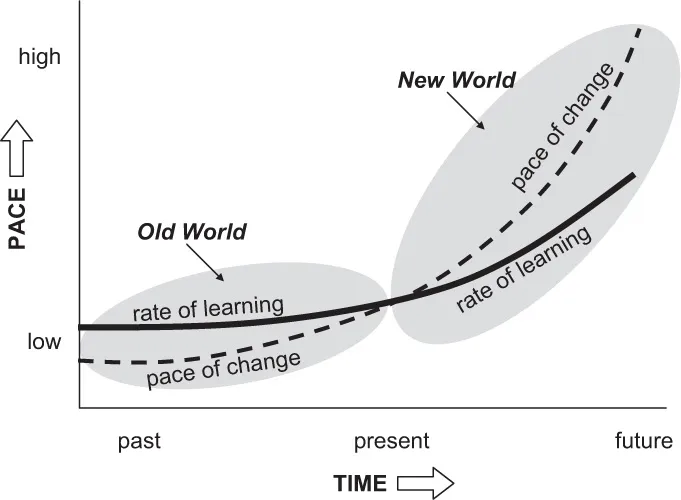
Figure 1.1 Old World – New World (adapted from Obeng, 1997)
In the business world, organisations seek to predict change and respond to it, but the pace of change is in danger of overtaking the rate of learning, as illustrated in Figure 1.1. In what Obeng (1997) calls the ‘Old World’, businesses were able to stay ahead of the curve by learning faster than their competitors and adapting to change as it occurred. In the ‘New World’ of rapid change, gaps appear as the ability of organisations to respond falls behind the pace of change. Here the winners will be those who are able to evolve and adapt, innovate and respond. Obeng contends that we are today at the turning point between the Old World and the New World, and that businesses need to change their paradigm in order to survive and prosper.
Clearly, some aspects of life today are more uncertain than ever before. This fact is inescapable. The only question is how we will cope with it. While individuals may implement a range of strategies for dealing with uncertainty, business looks to the discipline of risk management to address this question. In order to understand how risk management might meet the challenge of uncertainty, we first need to clarify the relationship between uncertainty and risk.

Distinguishing Between Uncertainty and Risk

If risk management is to help to tackle the challenges posed by an uncertain world, it must be properly focused and effectively implemented. This depends on having a definition of risk which is clear, unambiguous and widely accepted. The definition debate is not an abstruse irrelevance of interest only to academics and pedants. If we are unable to define a risk, we will not be able to undertake risk management effectively.
So the first question is whether we need the word ‘risk’ at all? At first sight the terms ‘uncertainty’ and ‘risk’ seem similar. But how similar? Are they mere synonyms, able to be interchanged without confusion or loss of meaning? Or is there any real and useful distinction between the two?
Contrary to expectation, a dictionary or thesaurus will not help here (see Table 1.1). The disparate range of options for both terms does not support a clear understanding of their relationship. It seems that we need to look elsewhere to determine whether risk is the same as uncertainty.
Fortunately, others have already attempted to clarify a distinction between ‘uncertainty’ and ‘risk’ without resorting to a dictionary. Knight (1921) addressed this in the field of economics, separating insurable risk from true uncertainty. His approach drew on basic mathematical theory, that ‘risk’ arises from randomness with knowable probabilities, whereas ‘uncertainty’ reflects randomness with unknowable probabilities. The terms ‘aleatoric’ (from the Latin word alea meaning dice) and ‘epistemic’ (from the Greek word episteme meaning knowledge) are sometimes used to distinguish between these two. Decision-theorists take a similar approach, separating ‘decisions under risk’ where the probabilities of different outcomes are known (or at least knowable) from ‘decisions under uncertainty’ where probabilities are unknown (and maybe unknowable). Some philosophers suggest that as a result ‘uncertainty’ belongs to the subjective realm of belief, while ‘risk’ has an objective component based in fact or truth.
Table 1.1 Dictionary and thesaurus definitions of uncertainty and risk
TERM
UNCERTAINTY
RISK
Dictionary (Collins, 1979)
Lacking certainty; not able to be accurately known or predicted; not precisely determined, established or decided; liable to variation; changeable.
Possibility of incurring misfortune or loss; hazard; involving danger, perilous.
Thesaurus (Roget, 2008)
Ambiguity, ambivalence, anxiety, changeableness, concern, confusion, conjecture, contingency, dilemma, disquiet, distrust, doubtfulness, guesswork, hesitancy, hesitation, incertitude, inconclusiveness, indecision, irresolution, misgiving, mistrust, mystification, oscillation, perplexity, qualm, quandary, query, reserve, scruple, scepticism, suspicion, trouble, uneasiness, unpredictability, vagueness.
Accident, brinksmanship, contingency, danger, exposure, fortuity, fortune, gamble, hazard, jeopardy, liability, luck, openness, opportunity, peril, possibility, prospect, speculation, uncertainty, venture, wager.
In theory this type of distinction may seem useful and clear, but in reality probabilities are rarely known with any precision or certainty. Throwing unbiased dice or flipping fair coins are idealised cases of risky situations, but any real-world example will not behave in so straightforward a manner. In most cases we cannot be sure that estimates of probability are correct, so even ‘risk’ is uncertain!
If we are to find a clear role for risk management in relation to meeting the challenge of uncertainty, discussions based in mathematics or philosophy are unlikely to yield usable solutions. A more pragmatic approach is required, which is useful in practice, and which supports effective risk management and good decision-making when conditions are not certain. Looking again at the definitions in Table 1.1, it appears that ‘uncertainty’ is a generic term, while ‘risk’ seems to be more s...

Table of contents

  1. Cover-Page
  2. Managing Risk in Projects
  3. Copyright Page
  4. Content Page
  5. List of Figures
  6. List of Tables
  7. Foreword by Simone Wray
  8. Author’s Preface
  9. Chapter 1  Uncertainty and Risk
  10. Chapter 2  Risk and Projects
  11. Chapter 3  Managing Risk in Practice
  12. Chapter 4  Risk and People
  13. Chapter 5  Integrating Risk Management With Wider Project Management
  14. Chapter 6  The Bigger Picture
  15. Chapter 7  Making Risk Management Work
  16. References and Further Reading
  17. Index