- 169 pages
- English
- ePUB (mobile friendly)
- Available on iOS & Android
eBook - ePub
About this book
Many pupils experience difficulty in controlling their strong feelings and in managing conflict in both school and home settings. This programme aims to help young people: * avoid or manage situations of conflict * understand that they can create change * realise that it is possible to resolve difficulties and achieve a positive outcome. In this thoughtful approach to anger management, the authors suggest a teaching and learning model and use 'story' as the focus of pupil engagement. The book uses eight newspaper articles to help pupils to develop emotional literacy through subjects such as: * Road rage * racist incidents * Happy slapping * street fights. During the 10 session programme young people will: * understand anger in a variety of situations * learn about physiological and behavioural aspects of anger * rehearse coping strategies * plan positive responses to provocative situations. This book offers teachers and non-teaching staff a practical, exciting and well-designed resource with full facilitator notes and all handout materials printable from the downloadable resources.
Information

Controlling Anger
Session 1
Introduction
Resources to photocopy or print from the CD-ROM
Group Rules
Circle Time Tags
How Do I Feel?
The Assault Cycle
Keeping Calm
My Strong Feelings Diary: Week 1
Session 1: Introduction
Group session – 45 minutes to 1 hour
Setting the scene
In order for the programme to run smoothly it is essential to establish a set of group rules and to briefly examine the main objectives of the course. It will be important to create a positive atmosphere and to ensure that all students involved in this course understand the primary objective of the sessions: to provide them with useful and practical strategies to effect positive changes and manage themselves more effectively within a range of potentially volatile contexts.
The facilitator can briefly outline the main aims and purpose of the course. This includes helping pupils to:
• identify and understand anger triggers and triggers to other strong emotions
• understand consequences of expressing strong feelings in an inappropriate manner
• become more aware of physical reactions to expressing strong feelings
• identify methods they may use to calm themselves after becoming angry, upset or stressed
• identify how they feel once they have managed to calm down
• identify methods they may use or be aware of to prevent uncontrolled loss of temper.
Activity One – Group rules
To enable students to claim ownership of the group rules it is extremely important that they are given enough time to discuss and agree their own set of rules. By ensuring that students have ownership of their rules it will help considerably towards establishing a workable code of conduct that they will adhere to in each of the sessions.
The group rules may include ideas from the following:
• An undertaking to keep all discussions within the group private – this will build upon the Circle Time rules that are operating within many schools.
• To allow everybody to contribute equally within every group session.
• An agreement to avoid criticising or putting each other down.
• To try and respect each other’s point of view.
• An undertaking to try to work together co-operatively.
• An undertaking to be kind and supportive towards each other.
• A promise that all within the group will try to maintain a positive solution focused attitude and problem solve rather than be negative.
Once the group have decided upon the rules that they feel are essential to the smooth running of the sessions, the facilitator can record them on the appropriate activity page provided in this session plan. Alternatively, students could design and illustrate their own activity pages or work co-operatively as a group to create a poster that illustrates the agreed rules.
It is essential that these rules are reinforced throughout this session. Allow a little time at the beginning of each subsequent session to revisit the group rules and reinforce the importance of abiding by them.
Activity Two – Circle Time Tags
This can be organised with the facilitator acting as a scribe for the students ideas and thoughts. Students may like to conduct this aspect of the session verbally within a Circle Time style. This method requires a much more ‘hands on’ approach from the facilitator, who introduces the question and then models the answer for the students. Once the facilitator has modelled the question or answers, she can provide students with opening sentences that they are required to finish:
• When I get mad, it’s usually because…
• When I get mad, I want to…
• When I get mad, my body feels…
• When I get mad, it helps me to calm down if I…
• When I get mad, it helps to talk to…
• After I’ve been mad, I feel…
• To prevent getting mad, I could…
Activity Three – How do I feel?
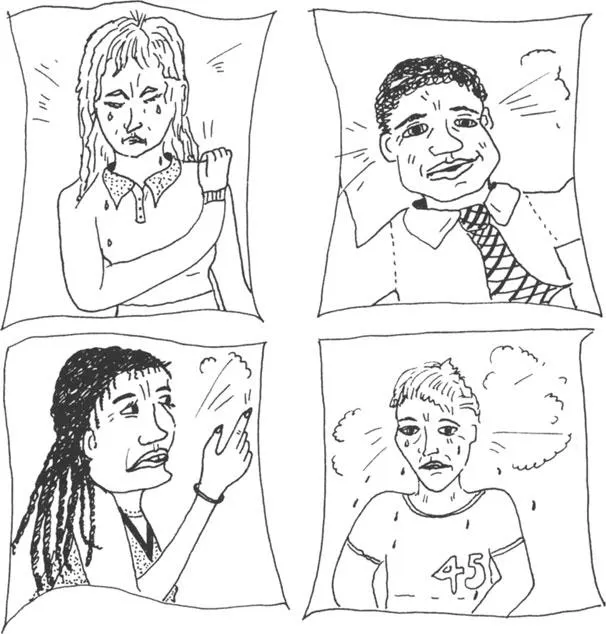
The next aspect of this session is to get students to recognise and examine the physical signs/reactions they experience as their anger escalates.
Seated in a circle, students can discuss the provided activity page and identify their own physical indicators and reactions to escalating anger:
• I feel hot.
• My hands start to sweat.
• I find it difficult to stay still, I get fidgety.
• My mouth gets dry.
• My hands go into fists.
• My body feels tense.
• My heart races.
• I breathe more quickly.
• I feel panic...
Table of contents
- Cover
- Half Title
- Title Page
- Copyright Page
- Table of Contents
- My Anger Poems
- Pre-course Assessment
- Letters to Parents/Carers
- Session 1: Introduction
- Session 2: Road Rage
- Session 3: Exclusion
- Session 4: Supermarket Battle
- Session 5: A Racist Incident
- Session 6: Foul Footballer
- Session 7: Happy Slapper
- Session 8: Property Matters
- Session 9: Street Fight
- Session 10: Review and Evaluation
Trusted by 375,005 students
Access to over 1.5 million titles for a fair monthly price.
Study more efficiently using our study tools.
Frequently asked questions
Yes, you can cancel anytime from the Subscription tab in your account settings on the Perlego website. Your subscription will stay active until the end of your current billing period. Learn how to cancel your subscription
No, books cannot be downloaded as external files, such as PDFs, for use outside of Perlego. However, you can download books within the Perlego app for offline reading on mobile or tablet. Learn how to download books offline
Perlego offers two plans: Essential and Complete
- Essential is ideal for learners and professionals who enjoy exploring a wide range of subjects. Access the Essential Library with 800,000+ trusted titles and best-sellers across business, personal growth, and the humanities. Includes unlimited reading time and Standard Read Aloud voice.
- Complete: Perfect for advanced learners and researchers needing full, unrestricted access. Unlock 1.5M+ books across hundreds of subjects, including academic and specialized titles. The Complete Plan also includes advanced features like Premium Read Aloud and Research Assistant.
We are an online textbook subscription service, where you can get access to an entire online library for less than the price of a single book per month. With over 1.5 million books across 990+ topics, we’ve got you covered! Learn about our mission
Look out for the read-aloud symbol on your next book to see if you can listen to it. The read-aloud tool reads text aloud for you, highlighting the text as it is being read. You can pause it, speed it up and slow it down. Learn more about Read Aloud
Yes! You can use the Perlego app on both iOS and Android devices to read anytime, anywhere — even offline. Perfect for commutes or when you’re on the go.
Please note we cannot support devices running on iOS 13 and Android 7 or earlier. Learn more about using the app
Please note we cannot support devices running on iOS 13 and Android 7 or earlier. Learn more about using the app
Yes, you can access Controlling Anger by Tina Rae,Sara Daly in PDF and/or ePUB format, as well as other popular books in Education & Behavioural Management. We have over 1.5 million books available in our catalogue for you to explore.