- 337 pages
- English
- ePUB (mobile friendly)
- Available on iOS & Android
eBook - ePub
About this book
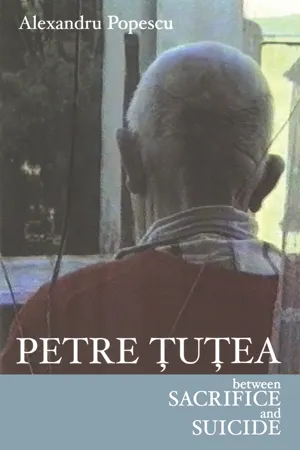
Petre Tutea (1902-91) was one of the outstanding Christian dissident intellectuals of the Communist era in Eastern Europe. Revered as a saint by some, he spent thirteen years as a prisoner of conscience and twenty-eight years under house arrest at the hands of the Securitate. This book explores his unique response to the horrors of torture and 're-education' and reveals the experience of a whole generation detained in the political prisons. Tutea's understanding of human needs and how they can be fulfilled even amidst extreme adversity not only reflects huge learning and great brilliance of mind, but also offers a spiritual vision grounded in personal experience of the Romanian Gulag. Following the fall of the Ceausescus, he has begun to emerge as a significant contributor to ecumenical Christian discourse and to understanding of wider issues of truth and reconciliation in the contemporary world. As Tutea's pupil and scribe for twelve years, as a psychiatrist, and as a theologian, Alexandru Popescu is uniquely placed to present the work of this twentieth-century Confessor of the faith. Drawing on bibliographical sources which include unpublished or censored manuscripts and personal conversations with Tutea and with other prisoners of conscience in Romania, Popescu presents extensive translations of Tutea, which make his thought accessible to the English-speaking reader for the first time. Through his stature as a human being and his authority as a thinker, Petre Tutea challenges us to question many of our assumptions. The choice he presents between 'sacrifice' and 'moral suicide' focuses us on the very essence of religion and human personhood. Resisting any ultimate separation of theology and spirituality, his work affirms hope and love as the sole ground upon which truth can be based. At the same time, hope and love are not mere ideal emotions, but are known and lived in engagement with the real world - in politics, economics, science, ecol
Information
Chapter 1
Introduction
In a life that spanned almost the entire twentieth century, Petre Ţuţea experienced the formation of the modern Romanian State in 1918, both World Wars, the traumatic decades of the Communist ‘experiment’, and the ‘Stolen Revolution’1 of 1989. For much of his adult life he was in political prisons or under city arrest. His influence in post-revolutionary Romania has been considerable. His works are widely published, and his sayings quoted. His experience of prison and torture stands as a paradigm of the experiences endured by hundreds of thousands of people of many different faiths and world views. His death in 1991 was national news. The BBC Romanian Section broadcast a special programme in his memory, and the English papers the Independent and the Guardian published obituaries.2 All this despite the fact that his books were published posthumously, and until now there has been no detailed study, either in Romania or abroad, of his life and thought.
The sources for this present study include, as well as his published works, his unpublished and censored manuscripts (for example the third volume of his five-volume Treatise on Christian Anthropology and the second volume of Religious Reflections on Human Knowledge), cassettes, and notes from my personal conversations with him and with people who knew him In this way I hope to offer a substantial exposition of his thinking.
Ţuţea’s works have, implicitly and often explicitly, a polemical character engendered by the political circumstances of his life. He is one of those thinkers whose oeuvre is to be read not only in his writings, but also in the unwritten suffering and oppression which he, with so many, courageously endured. Thus it is helpful to refer to wider unpublished material and conversations both with members of Ţuţea’s circle and with others who experienced political imprisonment. As general background I have particularly used material about the experiment of re-education in Stalinist Romania (see the ‘Interviews’ section of the Bibliography).
This book is the first attempt at an analytical examination of Ţuţea’s life and work as a whole, and seeks to establish his significance both to Romania and to the wider world of faith and intellectual development in ‘post-Communist’ society. I believe that his witness as a confessor of the Christian faith – in the traditional sense of ‘confessor’ as one who testifies to Christ through a martyrdom of sacrificial living – can contribute to ecumenical dialogue and reconciliation.
Specifically, in ecumenical terms, he can bring new insight and inspiration to the discussion of the place of Orthodox Christianity within Europe. Brought up ‘living and breathing’ traditional Orthodoxy, he also came to be able to express those ideas in the terms of the Western philosophical tradition and of Latin Christian culture. This, together with his ability to integrate personal experience with informed intellectual argument, represents an important contribution to Orthodoxy’s ‘Tradition’ of living Christian faith.
In this respect he offers Orthodoxy a new path by which it may broaden and deepen its own self-understanding. His writings, interviews, and personal stature as a man of courage, humour, compassion, and integrity also have a crucial message for Romania as a nation. They show that honest and loving acknowledgement of even the most terrible experiences of the twentieth century can be redemptive.
At the same time, through his exceptional understanding of Western culture and his confidence in using its language to reflect on his own culture, he has much to say both to Europe as a continent in process of redefinition, and to Churches throughout the world struggling, in cross-cultural engagement with ‘the West’, to obey the Gospel imperative for Christian unity. Equally important, he also challenges ‘the West’ to engage in this cross-cultural obedience to the Gospel.
Ţuţea as a Teacher
Ţuţea’s style is at once laconic, controversial, eclectic, apologetic, and subversive. He was the product of the age of samizdat, and lived much of his life outside the academic establishment. Some of his work has been published, although unsatisfactorily edited; much is in the form of interviews, or left only as notes; much remains unpublished. In the circumstances his phenomenal memory was the arena in which he developed his ideas. His was a compelling intellect, at once irritating and stimulating. He gave interviews, but disliked being ‘intelligent to order’. His intellectual methodology was largely oral and dialogic, and in this sense Socratic. This was not just the result of political circumstances. It also, in a specific way, expressed what he was trying to do – namely to bring a less rigidly systematic approach into contemporary academic life.
I first met Ţuţea in 1980 at the Bucharest Municipal Hospital, when he was a patient and I a first-year medical student. He had been allocated to my care by the professor, who had mistaken me for a more senior student. So off I went proudly to see ‘my’ patient. At first, the Securitate minder by Ţuţea’s bed would not allow me to talk to him Eventually, out of curiosity, I went to see him during a night shift, when there was no guard and I was able to speak to him At first I thought he was slightly deranged: he talked relentlessly about philosophers and famous names known to me from my school studies, as though they were his own relatives or contemporaries. He would talk of Kant or Aristotle just as I would talk about my mates in the volleyball team. Gradually, however, I realised he was not simply fantasising about these people.
I once lent him, for less than a day, a newly published book written in French (a ‘decadent’ book about Teilhard de Chardin’s Le Milieu Divin which, as a young Romanian in the 1980s, I was very proud to possess). By the time he returned it to me he had not only learnt it by heart, but was also able to explain the difficulties which I had encountered in it. I realised at this point that, far from being someone who needed my psychiatric interest, he was in all respects my master. His mind was literally full of books and ideas, and he had an extraordinary gift as a teacher, able to convey complex arguments clearly and simply.
It will thus be clear that my relationship with Ţuţea was very personal. In this book I have worked in the tradition of the disciple who seeks to record both the master’s teaching and his life. I could have given the raw text of Ţuţea’s writings without contextual evidence and personal interpretation, leaving readers to make their own assessment. However, the more personal approach which I have adopted is itself inspired by Ţuţea’s maieutic3 intellectual method and anagogic purpose.4
Ţuţea’s Theology of Experience
‘If you are a theologian, you will pray truly. And if you pray truly, you are a theologian.’5 The life and work of Petre Ţuţea gives a thoroughly contemporary interpretation of this famous epigram of Evagrios of Pontos (disciple of the Cappadocians and of the Desert Fathers, d. AD 399). To Ţuţea, as to the Church Fathers, theology means more than a systematic exposition and development of Christian doctrine through God-given reason. It involves – indeed in a sense it is – a Trinitarian vision of God, experienced not through the reasoning mind alone, but through the wholeness of ‘human being’. Theology is a gate to an eschatological, salvific reality: ‘The experience of truth as mystery is redemptive.’6 It is a revealed ‘science of Transcendence’ (ştiinţă a Transcendenţei), which ‘receives and communicates God as unique Truth’; it is handed on by ‘sacred history and tradition’, and is experienced during liturgical ritual, in prayer, and through evangelical catechesis; it is also, crucially, experienced in theophany and ecstasy, for God’s manifestation of Himself ‘can be revealed to the (chosen) saints at any time and in any place’.7
A focus on ‘transcendence’ perhaps inevitably risks leading to either fundamentalism or abstracted formalism. Ţuţea’s originality is in the way in which he restates transcendence in contemporary language, shying away from neither the intense personal claim of the mystic nor the intellectual complexities of systematics. His life led him to an understanding of the Gospel which cuts across the common dividing lines of theological and denominational differences. He does not provide ‘a theology of this’ or ‘a theology of that’. Rather, as I said above, quoting Evagrios of Pontos, he provides ‘theology’.
While in prison, he rediscovered his Christian faith. This became the focus of his whole being, underpinning his actual physical survival no less than his intellectual and spiritual consciousness. In the Communist world, where Christian confession sometimes became attenuated through compromise, his integrity made him a ‘fool for Christ’s sake’ (1 Cor. 4:10). Yet the ‘folly’ of his sacrificial witness to Christ reveals the wisdom of God, and the example he offers inspires others.
In this inspiring martyrion of faithful discipleship, testifying to transcendent grace against the extreme brutality of materialism, three key concepts may be identified: revelation, anamnesis, and theosis. Let us briefly examine each of these, to help chart the way in understanding this particular life of ‘folly’.
Revelation
Under Communism, Christian belief was dismissed as superstition. The Christian lived in a world that proclaimed the ‘self-evident’ superiority of matter over spirit, based on ‘new’ (secular) values constructed in an atmosphere of revolutionary excitement. Ţuţea had lived in the Western world in which this secular creed had taken shape. Indeed, in his youth he had doubted the value of his own Christian culture. He had later, however, after a period of study in Berlin, become disillusioned by Communism, which he finally rejected after his visit to Moscow in 1940.8 Then, in prison, he saw the Communist system for what it was, inhuman and manifestly untrue – revolution did not bring about a new humanity. Through his experiences in prison he came to a very particular understanding of Christian revelation: ‘Dogma is mystery revealed.’9 The real revolution is that of repentance, metanoia, that ‘change of mind’ without which ‘there can be no new life, no salvation, no entry into the kingdom’.10 Repentance, at the very heart of the Christian kerygma – the self-revelation of God’s Word in the person of Jesus – enables martyrs11 to experience Christ as divine strength in their human weakness: ‘My grace is sufficient for you, for My strength is made perfect in weakness’ (2 Cor. 12:9).
Anamnesis
This was a unifying principle in Ţuţea’s life and theological thought – not in its Platonic sense, that is, the recollection (ἀνάμνησις) of a previous acquaintance with the Forms or Ideas,12 but in its traditional theological meaning of making Christ’s sacrifice on the Cross, as it relates to human suffering, present in the world. The liturgical anamnesis of the Eucharist is the efficacious sacrament of divine truth. Ţuţea came to a very personal understanding of how Christ’s call for people to take up their Cross daily (Luke 9:23) is to be fulfilled in the individual life of every disciple. All are called to bear witness to the way of the Cross, entering into ...
Table of contents
- Cover
- Half Title
- Title Page
- Copyright Page
- Dedication
- Table of Contents
- List of Plates
- Foreword
- Preface
- Acknowledgements
- A Note on Ţuţea’s Use of Language
- Chronological Table
- List of Abbreviations
- 1 Introduction
- 2 Biography and Intellectual Formation
- 3 From Philosophy to Christian Commitment
- 4 Re-education and Unmasking
- 5 Anagogic Typology
- 6 Christian Anthropology
- 7 Sensing the Mystery
- 8 Theatre as Seminar
- 9 Masks
- 10 Philosophy of Nuances
- 11 Conclusions
- 12 Envoi
- Appendix I The Emergence of Modern Romania
- Appendix II Short History of Hesychasm in Romania
- Bibliography
- Index
Trusted by 375,005 students
Access to over 1.5 million titles for a fair monthly price.
Study more efficiently using our study tools.
Frequently asked questions
Yes, you can cancel anytime from the Subscription tab in your account settings on the Perlego website. Your subscription will stay active until the end of your current billing period. Learn how to cancel your subscription
No, books cannot be downloaded as external files, such as PDFs, for use outside of Perlego. However, you can download books within the Perlego app for offline reading on mobile or tablet. Learn how to download books offline
Perlego offers two plans: Essential and Complete
- Essential is ideal for learners and professionals who enjoy exploring a wide range of subjects. Access the Essential Library with 800,000+ trusted titles and best-sellers across business, personal growth, and the humanities. Includes unlimited reading time and Standard Read Aloud voice.
- Complete: Perfect for advanced learners and researchers needing full, unrestricted access. Unlock 1.5M+ books across hundreds of subjects, including academic and specialized titles. The Complete Plan also includes advanced features like Premium Read Aloud and Research Assistant.
We are an online textbook subscription service, where you can get access to an entire online library for less than the price of a single book per month. With over 1.5 million books across 990+ topics, we’ve got you covered! Learn about our mission
Look out for the read-aloud symbol on your next book to see if you can listen to it. The read-aloud tool reads text aloud for you, highlighting the text as it is being read. You can pause it, speed it up and slow it down. Learn more about Read Aloud
Yes! You can use the Perlego app on both iOS and Android devices to read anytime, anywhere — even offline. Perfect for commutes or when you’re on the go.
Please note we cannot support devices running on iOS 13 and Android 7 or earlier. Learn more about using the app
Please note we cannot support devices running on iOS 13 and Android 7 or earlier. Learn more about using the app
Yes, you can access Petre Tutea by Alexandru Popescu in PDF and/or ePUB format, as well as other popular books in Theology & Religion & Religious Biographies. We have over 1.5 million books available in our catalogue for you to explore.