![]()
1 Marketing and Promoting Photovoltaics
1.1 Renewable energy
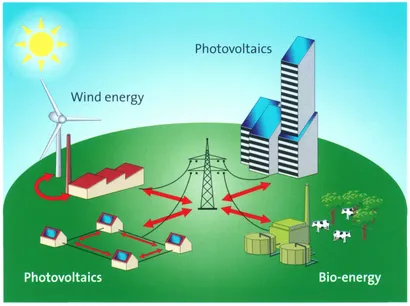
Figure 1.1: There is no shortage of renewable energy from the sun and the wind. Hydro energy, bio-energy and geothermal resources are also considerable
Our planet's renewable energy potential is effectively limitless when measured against humanity's needs. Solar energy, wind energy, hydroelectric, bio-energy (energy from plants) and geo-thermal energy are already being used on a large scale and in many different ways. Solar thermal technology uses solar energy directly to produce hot water. Photovoltaics (PV) produces electricity directly from sunlight. Plants harness solar energy and produce biofuels - wood, straw, vegetable oils for bio-diesel and other fuels. Wood itself is the oldest fuel. The use of water as an energy source goes back at least two thousand years and today hydro-electric power plants generate vast quantities of electricity. Most large potential hydro-electric sites are being utilized or developed but there is still enormous potential at medium and small sites. Wind turbines are the second largest generator of electricity from renewable resources. Total global installed wind power capacity (2004) is already 47.6 GW (Giga Watt = one billion watts), A 1.5 MW (MegaWatt = one million watts) wind turbine, with a rotor diameter of about 70 meters-can generate 76 GWh, gigawatt-hours, of electricity in 20years; the amount of electricity a modern brown coal/lignite power plant would need to burn about 84,000 tonnes of fuel to produce.
1.1.1 Renewable energy around the world
Renewable energy presents business opportunities for manufacturers, distributors, system designers and installers. A whole range of technologies are already being produced, marketed, installed and creating jobs in Europe, Japan, North America and China. Every technology sector is experiencing significant growth.
The European Union (EU) has set itself a target of generating 12% of its primary energy from renewables by the year 2012, with electricity generation from renewables to increase from 14% in 1997 to about 22% in 2010. Each member state has been allocated targets. How they achieve these targets is left up to the individual states. In May 2004, the European Commission announced that Germany, Spain, Denmark and Finland were on track to meet the 2012 target. 72.7% of global wind generating capacity is in Europe.
Germany is the world leader in terms of renewable energy use and equipment manufacturing capacity. In 2004, wind energy overtook hydro energy as the main source of renewable energy electricity generation. The total installed wind generator capacity in Germany is now 16.6 GW. In 2004 wind energy produced 4.1% of the country's electricity and hydroelectric plants produced 3.4%. 6,300,000 m2 of solar thermal collectors have been installed. 90% of heat energy produced from renewables comes from bio-energy and bio-energy in the form of biomass and biogas generated 53,000 GWh of electricity in 2004. The German Renewable Energy Law, which offers guaranteed prices for PV-generated electricity has led to dramatic growth in this market sector — 360 MWp was installed in 2004 — making Germany the world's largest market for PV.
In the USA, about 6% of total energy is produced from renewable sources, mainly hydro-electric and geothermal. There is over 7.2 GW of wind energy installed, 86 MW of PVand 52,000 m2 of solar thermal collectors (2004), The USA is the world's third largest PV market. Japan is the second largest — 280 MWp was installed there in 2004. In the same year China installed 14,000,000 m2 of solar thermal collectors.
One third of the world's population has no access to electricity at all-this is over 1,700 million people. Most of them live in rural areas and require relatively small amounts of electricity, too small to justify the expense of extending the grid. Small stand-alone PV systems are in reality the only practical way to supply many of these people with power. There is a large market for small stand-alone PV home systems in Asia, Africa and Latin America.
1.2 Climate change and dwindling fossil fuel reserves
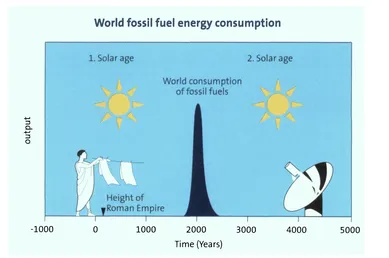
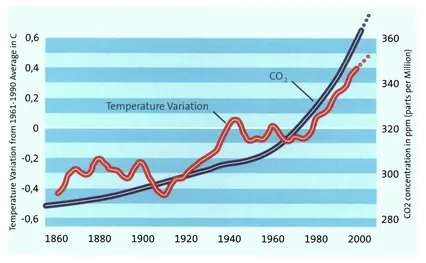
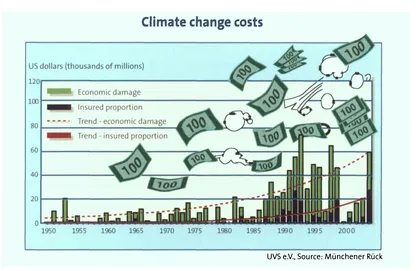
Environmental problems associated with the burning of fossil fuel and the medium and long-term supply of fossil fuel itself, particularly oil and gas, make the move towards a global renewable energy economy both desirable and necessary. At the end of the 21st century, in only 400 years of industrial activity, humanity will have used up much of the fossil fuels which have been deposited in the earth's crust over the last 400 million years. Burning coal, oil and gas is releasing vast quantities of carbon dioxide into the atmosphere and changing the global climate. It is now clear that carbon dioxide in the atmosphere is increasing, and that the change in climate, both regionally and globally, is clearly measurable. The UN Intergovernmental Panel on Climate Change (IPCC) predicts a temperature increase of between 1.4 °C and 5.8 °C over the next 100 years, depending on whether industrialized societies and newly industrializing societies continue in a business-as-usual scenario or shift to a low carbon economy. The shifting of climate zones and the increasing frequency of extreme weather events such as floods, storms and droughts associated with climate change will severely damage the natural environments on which millions of people are dependant. The burning of fossil fuel also produces a range of other pollutants which impact on human health and the environment: benzene, soot, nitrogen oxides, hydro-carbons, carbon monoxide, sulfur oxides and ammonia. Acid rain destroys forests and lakes, and oil spills regularly cause massive environmental damage. A change in the way we use and produce energy is necessary to preserve the eco-spheres on which human life is dependant. Only a radical shift from fossil fuels to a low carbon economy will achieve this. The use of renewable energy will reduce carbon dioxide and other greenhouse gas emissions and help avoid a possible environmental catastrophe.
Figure 1,2: In a period of 400 years a large part of the fossil fuels which have been deposited in the earth over a period of400 million years will have been used up
Figure 1.3: The increase of carbon dioxide in the atmosphere and the increase in temperature have been measurable for many years
Figure 1.4: The economic costs of climate change
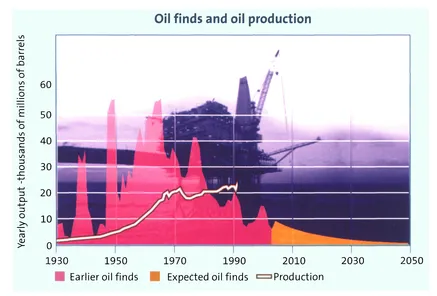
The other major problem is the actual supply of fossil fuel itself. Currently about 80% of the energy used in the industrialized world comes from fossil fuel in the form of coal, natural gas and oil. It is now generally accepted that the reserves of oil and gas will be largely depleted within a few decades. Demand is increasing, particularly from the new industrializing and rapidly growing economies of China and India. Many of the reserves are also in politically unstable or relatively inaccessible regions. The supply of oil and gas could become critical in the coming years and lead to shortages. This is reflected in steadily rising prices.
Figure 1.5: The world's major oil reserves have all been found. Production will not keep up with demand
1.3 Overview of renewable energy, solar energy and the solar resource
Most renewable energies are in effect solar energy — directly or indirectly. The wind is the result of the heating effect of the sun on the earth's atmosphere, as is hydropower. Plants (biomass) need sunlight to grow. Geothermal energy is an exception, it uses the heat of the earth's core. Although hydro turbines, biomass power stations and wind turbines utilize solar energy indirectly, the term solar energy is usually used to refer to devices which utilize the energy of the sun directly to produce both heat and electricity. These technologies are broadly categorized into two categories: active solar and passive solar.
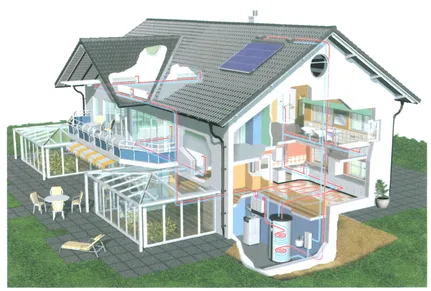
Passive solar is differentiated from active solar in that it does not have any moving parts or electrical components. It usually refers to architectural and constructional features which reduce the overall energy needs of buildings by keeping them warm in winter and cool in summer. Passive solar architecture has a tradition of several thousand years. In ancient Greece buildings were constructed so that during the cold winters the low sun contributed to the heating of the building and during the summer the extended roof provided shade. Small windows (or none) on the north side of a building and large windows on the south side are typical passive solar features in northern latitudes. Passive solar technology is very site-specific — a passive solar house in Alaska will look very different from one in Florida.
Figure 1.6: Design for a house in Central Europe with several passive solar features, such as conservatories and small windows on the north side. The central heating system is solar thermal assisted (Source: http://www.elco.net)
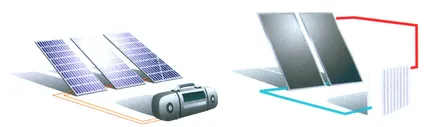
Active solar systems are categorized into solar thermal, which usually produce hot water, but can also be used for cooling and producing steam which drives electricity-generating turbines — and photovoltaics (PV), which produces electricity directly from solar radiation.
Figure 1.7: Active solar technology: PV (left) producing electricity, and (right) a solar thermal system producing heat energy
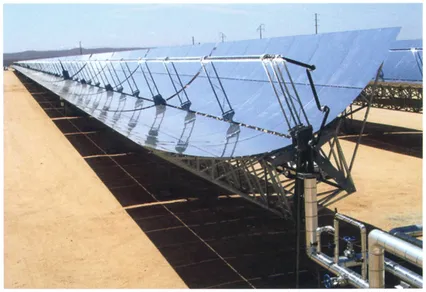
Figure 1.8: Solar thermal power station in California. The parabolic mirrors concentrate the sun's rays on the pipe to produce steam to generate electricity (Source: Solar Millennium A...