eBook - ePub
Support Services and the Curriculum
A Practical Guide to Collaboration
- 224 pages
- English
- ePUB (mobile friendly)
- Available on iOS & Android
eBook - ePub
About this book
This work on support services for special education needs offers an overview of current practice, along with details of current stumbling blocks. It then deals with working with the whole child within the curriculum; training needs; and developing an action plan to find the way forward.
Information
Support Services: An Overview
Chapter 1
Support Services – Their Growth and Current Practice
What is a support service?
The term ‘support’ is used to describe various groups of people offering advice and skills to aid the integration, and general education, of children with difficulties in learning. We read of schools having a ‘Support Department’ with ‘support teachers’ who offer ‘learning support’ or ‘curriculum support’, or ‘special needs support’. Non-school based services often use the term ‘special needs support team’ or ‘support service’ as in ‘peripatetic support service for children who are visually impaired’. However, Hart (1986) states that there is ‘no generally agreed definition of support teaching’. Support services and support/advisory teachers are discussed as if there is a nationally agreed definition, whereas in reality support services differ according to their function, role, development, personnel and the Local Education Authority who employs them. The variety of jobs undertaken by learning support teachers can vary from making a Christmas cake with a group of children with language difficulties to running round the track with an educationally blind child. More examples are given by Booth et at. (1987).
In 1986 the Journal Remedial Education changed its name to Support for Learning a transformation which demonstrates a shift in thinking and which gives a more positive view of the role of support staff. The 1980s were the years when LEAs and schools changed their ethos and moved towards meeting the diverse needs of pupils experiencing difficulties in learning. Before the Warnock Report (DES, 1978) and the 1981 Education Act, schools generally held the belief that children with learning difficulties were best helped by being removed from the mainstream curriculum. Teachers who worked with these children were said to teach the ‘remedial groups’ and were expected to undertake traditional remedial teaching concentrating on improving literacy skills. It was very rare for the ‘remedial’ teacher to work in the classroom alongside the class teacher. Segregation to integration, withdrawal to in-class support, isolation to collaboration are elements which have slowly been evolving in the 1980s and in this chapter we aim to look at this development. The rapid growth of support services over the last twelve years will be briefly examined along with who constitutes a member of a support team, the type of support offered and some of the terminology used.
The growth of support services
A number of initiatives in the 1970s and early 1980s encouraged considerable changes in the English and Welsh education systems which improved the educational opportunities for children and young people with disabilities. The 1970 Education (Handicapped Children) Act made Local Education Authorities responsible for the education of all children, however severely disabled. It stated that all local school systems in England and Wales should provide every child with the opportunity to be educated.
In 1974, The Warnock Committee, chaired by Mary Warnock was established to look at special education. Their brief was very wide and it took them four years to produce their report, Special Educational Needs (1978).
The Warnock Report, as it is generally known, has had a considerable effect upon the whole of education. The report stated that approximately 20 per cent of school-age children would have special educational needs during their school years and, as a consequence, may require additional resources. Special needs could arise from sensory impairment, physical disability, learning difficulties, emotional or behavioural problems, or any combination. This book is concerned with the specialist support for all 20 per cent whether in special schools (2 per cent) or in mainstream education (18 per cent).
The type and degree of support that individuals require to meet their special needs will be as diverse and individual as their identified needs. Services visit all schools covering all age and ability ranges. If support is not available then identified pupils will be severely limited in their ability to benefit from a broad, balanced, relevant and differentiated curriculum.
The Warnock Committee stated ‘we wholeheartedly support the principle of the development of common provision for all children’ (7.3). The chapter which concentrates on special education in the mainstream examined various forms of integration and the ingredients necessary to make them successful. Particular emphasis is given to appropriate specialist training and the need for a high level of support from various services plus the right range of facilities. The report indicated that successful integration could not be achieved ‘on the cheap’. This view was supported by Hegarty and Pocklington (1981) who argue that a policy of integration which has the necessary level of support is as costly as the alternatives.
While carrying out their investigations the Committee found that the few existing advisory services for children with special needs were fragmented, with no clear policies or shared perspectives. Warnock called for all special education services to be unified into one, containing:
- advisory teachers who could offer advice to an identified number of mainstream schools;
- specialist teachers who could work directly with the children;
- advisers; and
- senior adviser.
(DES, 1978, 13.20)
Whether such a model exists today is very debatable.
The concept of collaboration between support services in special education arises directly out of the recommendations of the Warnock Committee, the Report states: ‘The development of close working relationships between professionals in the different services concerned with children and young people with special needs is central to this report’ (DES, 1978, 16.1). Warnock saw the importance of working together to meet the needs of the whole child and family and could see how medical, social services and education personnel would work together for their total good.
Legislation over the past decade has reinforced the need for more collaborative working between professionals, The Warnock Report (1978) culminating in The 1981 Education Act, The 1986 Disabled Persons Act and The Children Act (1989) have wide ranging implications for children with disabilities. Their welfare is of ‘paramount’ consideration and this requires local authorities to work in partnership with parents, and other agencies to minimise the effect of a disability and provide the opportunity for the children to lead lives which are as ‘normal’ as possible.
Clarification of terminology
In order for support services to work effectively to ensure a unified, balanced approach to the family and their child with special needs, a collaborative approach must be adopted and is advocated throughout this book. Various terms are used to describe groups of professionals working together, i.e. multi-disciplinary, interdisciplinary, and transdisciplinary or collaborative. The first two models appear to fall short of the ideal concept of a team approach, which supports the whole child and family, across the whole curriculum, while the latter is the model of support service delivery that provides the structure to enhance collaborative working.
The multi-disciplinary team
This term and approach appears to have grown out of the medical model where experts in various areas bring their particular knowledge to the case of a patient. It is commonly seen at the initial stages of diagnosis and during the formal assessment procedures. The child is examined/assessed by a team from various disciplines all of whom have the common aim of identifying the child’s level of functioning and special needs. This model of approach has evolved as there has been a move towards seeing the child as a whole and a realisation that knowledge of the various aspects of the child must be integrated in order that he/she can achieve the maximum from their education.
The degree of importance placed upon the information gained from the contributing professionals often varies according to their character and status and the setting where the advice is given, be it in a medical, educational, social service or home setting.
On many occasions the multi-disciplinary approach results in a child being seen by a number of professionals and then the information being sent to one member of the team or, as in the case of the 1981 Education Act assessment procedure, a statementing officer. Therefore a group decision is not made as to the best procedures to be followed. Those who have been members of a multi-disciplinary team can state that there is a high possibility of conflicting recommendations, and if the person collating reports
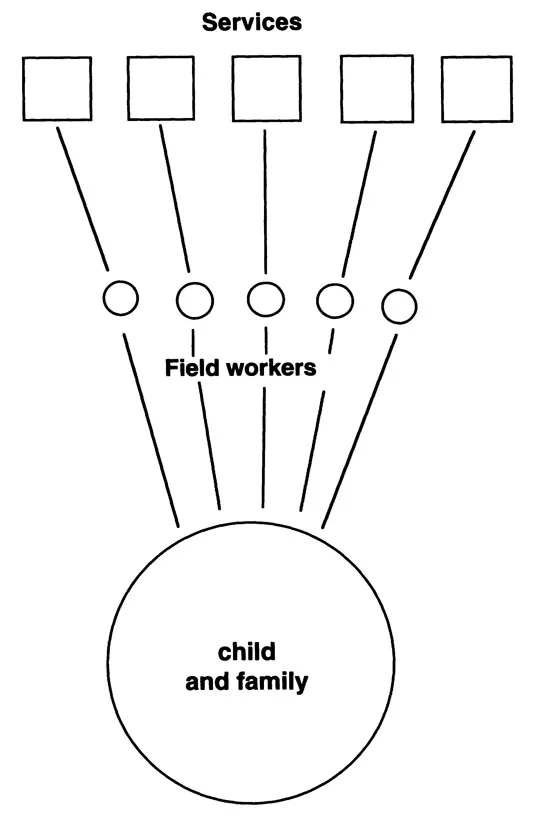
Figure 1.1 A Multi-disciplinary Approach
does not have certain knowledge and expertise, the implications of some of the recommendations may be lost and omitted from the final report or ‘statement’.
Fig 1.1 – the multi-disciplinary model – demonstrates the way in which the professionals work in isolation without collaborative decisions being achieved regarding the implementation of recommendations, teaching approaches, or resources.
The inter-disciplinary approach
On recognition of some of the limitations of the multi-disciplinary approach, as outlined above, many professionals have adopted an inter-disciplinary approach. The team is made up of the same members as in the multi-disciplinary model but there is an attempt to control the fragmentation of findings. The child is seen by the various team members. This is frequently done individually but a group meeting then takes place so that recommendations can be fully discussed. In this way each member of the team (which should include the parents) contributes to the discussion and decision-making process.
There are many similarities between the multi-disciplinary and the inter-disciplinary approaches. Each rely upon all team members having the necessary skills to carry out their assessment effectively and produce a report containing the appropriate recommendations. The recommendations are usually concerning the type and amount of intervention required. However, in many cases the availability of resources, both human and material, are not always considered and the ideal, instead of the manageable, is presented. While it can be argued that all children should receive the best, it is undoubtedly the class teacher who has the responsibility of implementing the recommendations when he/she often feels the least able, with the least authority and with no resources.
Another weakness of the above two approaches is the lack of follow-up with regard to the recommendations. Many professionals involved in the initial assessment do not have regular contact with the child and may only become involved at a time of crisis. An example may be the educational psychologist who may provide advice for the statement of special educational needs. The recommendations contained in the report may suggest the type of programme required by the child but will not state the amount of support to be given to the class teacher in order to implement the programme. Due to the demands of large caseloads the educational psychologist may not have contact with the child and teacher until some crisis occurs or the child’s annual review is due.
Fig 1.2 illustrates how the interdisciplinary model is constructed.
The transdisciplinary or collaborative approach
This approach has been advocated in the USA by Hutchinson (1974) who discussed the advantages by examining the United Cerebral
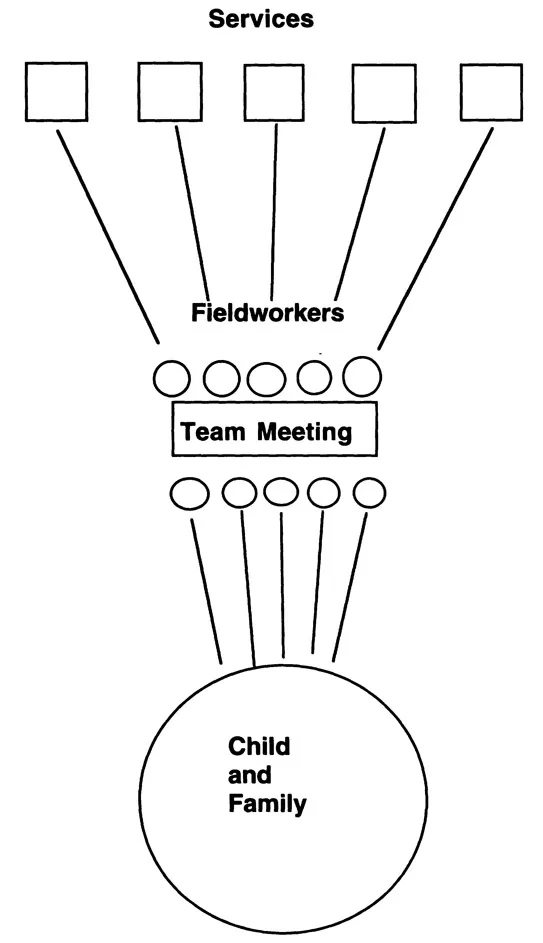
Figure 1.2 An Inter-disciplinary Approach
Palsy Collaborative Infant programme. The approach evolved in an attempt to overcome the problems identified above. In order to reduce the fragmentation and compartmentalising of services, one person is appointed for direct contact for the child and family. The initial assessment is carried out in the same way as the two approaches above and the recommendations may be agreed as in the inter-disciplinary approach, but the implementation of the recommendations is carried out by a few people in co-operation with the others.
The composition of the team for the collaborative approach to supporting children with diverse needs will depend upon the identified special needs of the child and family and may appear the same as the multi-disciplinary and inter-disciplinary models, however, the personal qualities of the individual members of the trans-disciplinary/collaborative team should be such that they can work as a collaborative member of the team, demonstrating a willingness to share expertise, assume some of the responsibilities of the other team members and become a learner in addition to a specialist. (See the chapters on Working in Teams and Training for further discussion.)
We have chosen the term ‘collaborative’ rather than the American sounding ‘transdisciplinary’ because we want to present a model which is jargon free, and which clearly describes the method of working. Our collaborative model contains the majority of aspects described in the transdisciplinary approach, however, the major difference is that the identified link/‘named’ (Warnock)/key person, will change as the child progresses through education and the team will address the needs of the whole child across the whole curriculum.
Fig 1.3 offers a diagrammatic representation of how the transdisciplinary or collaborative approach can work.
Fig 1.4 (p.20) is taken from Orelove and Sobsey (1991). It compares each model by examining aspects of work covered by a team of professionals working with a child with special needs.
Membership of support teams
The members of a collaborative team will be as varied as the child’s special needs. The professionals identified as having contact with the child who has d...
Table of contents
- Cover
- Title
- Copyright
- Contents
- List of Figures
- Foreword
- Introduction
- Part I Support Services: An Overview
- Part II Curriculum and Assessment
- Part III Management and Training
- Part IV The Way Forward
- References
- Index
Trusted by 375,005 students
Access to over 1.5 million titles for a fair monthly price.
Study more efficiently using our study tools.
Frequently asked questions
Yes, you can cancel anytime from the Subscription tab in your account settings on the Perlego website. Your subscription will stay active until the end of your current billing period. Learn how to cancel your subscription
No, books cannot be downloaded as external files, such as PDFs, for use outside of Perlego. However, you can download books within the Perlego app for offline reading on mobile or tablet. Learn how to download books offline
Perlego offers two plans: Essential and Complete
- Essential is ideal for learners and professionals who enjoy exploring a wide range of subjects. Access the Essential Library with 800,000+ trusted titles and best-sellers across business, personal growth, and the humanities. Includes unlimited reading time and Standard Read Aloud voice.
- Complete: Perfect for advanced learners and researchers needing full, unrestricted access. Unlock 1.5M+ books across hundreds of subjects, including academic and specialized titles. The Complete Plan also includes advanced features like Premium Read Aloud and Research Assistant.
We are an online textbook subscription service, where you can get access to an entire online library for less than the price of a single book per month. With over 1.5 million books across 990+ topics, we’ve got you covered! Learn about our mission
Look out for the read-aloud symbol on your next book to see if you can listen to it. The read-aloud tool reads text aloud for you, highlighting the text as it is being read. You can pause it, speed it up and slow it down. Learn more about Read Aloud
Yes! You can use the Perlego app on both iOS and Android devices to read anytime, anywhere — even offline. Perfect for commutes or when you’re on the go.
Please note we cannot support devices running on iOS 13 and Android 7 or earlier. Learn more about using the app
Please note we cannot support devices running on iOS 13 and Android 7 or earlier. Learn more about using the app
Yes, you can access Support Services and the Curriculum by Penny Lacey,Jeanette Lomas in PDF and/or ePUB format, as well as other popular books in Education & Education General. We have over 1.5 million books available in our catalogue for you to explore.