
- 96 pages
- English
- ePUB (mobile friendly)
- Available on iOS & Android
eBook - ePub
Practical Strategies for Individual Behaviour Difficulties
About this book
Primary and secondary teachers who experience difficult behaviour from young children in their classrooms will welcome this handbook which encourages an objective approach to tackling behaviour problems.
Information
Step 1
Observation and Information Gathering
To get a baseline of the current situation the teacher undertakes the following observation without informing the child.
In secondary school this needs to be collated by a year head or tutor set teacher. A blank timetable can be given to each teacher to fill in the appropriate slot (see Figure 1.1). The year head then puts these comments on the one-week-in-view sheet. The timetable can be adapted to include subjects, breaks, assemblies, etc. In the primary school the teacher keeps the sheet on their desk.
Observation should include anything the teacher feels should be there. Evidence of current interactive skill levels such as:
- good co-operation
- length of concentration
- signs of helpfulness
- cognitive success
- difficult sessions where the current problems are demonstrated.
At busy times the teacher may only be able to fill the space with a tick or a cross to indicate the success or otherwise of the session (see Figures 1.2 and 1.3).
Figure 1.2 is a copy of a weekly sheet of observations kept by a newly qualified teacher about a four-year-old. Years later when settled and happy with a foster family this child disclosed the horrific abuse he was subject to at this time. Figure 1.3 is a copy of a weekly sheet used on a successful programme with a 14-year-old boy who moved into the school’s catchment area following a violent family break-up in which he had been stabbed by his father while protecting his mother. He was extremely volatile and aggressive. The dark patches on the figure have been coloured in red by his tutor set teacher as they were good comments.
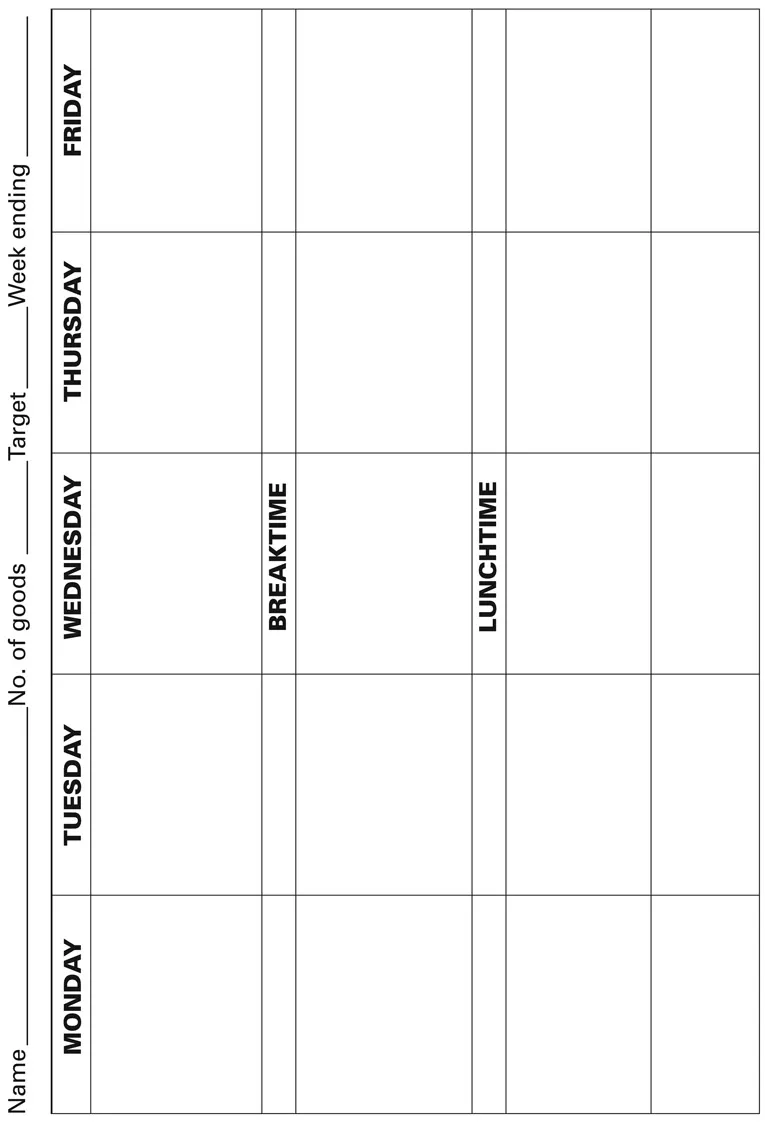
Figure 1.1 Example of a weekly observation sheet
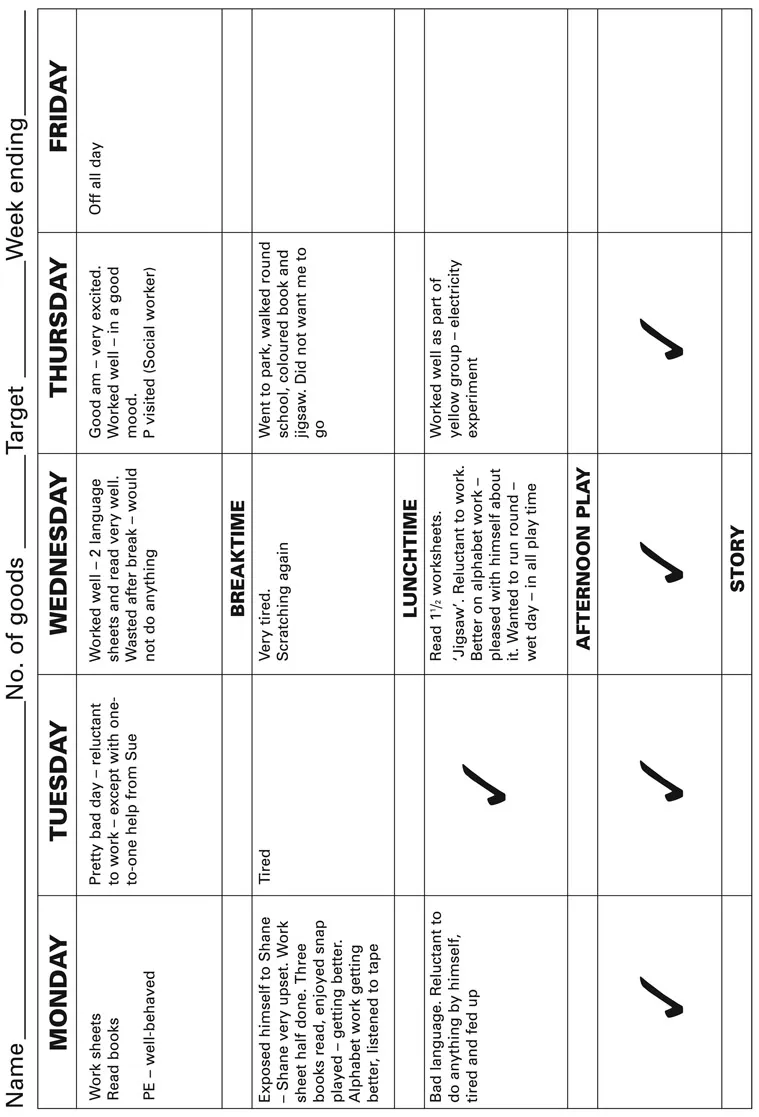
Figure 1.2 Weekly sheet of observations about four-year-old
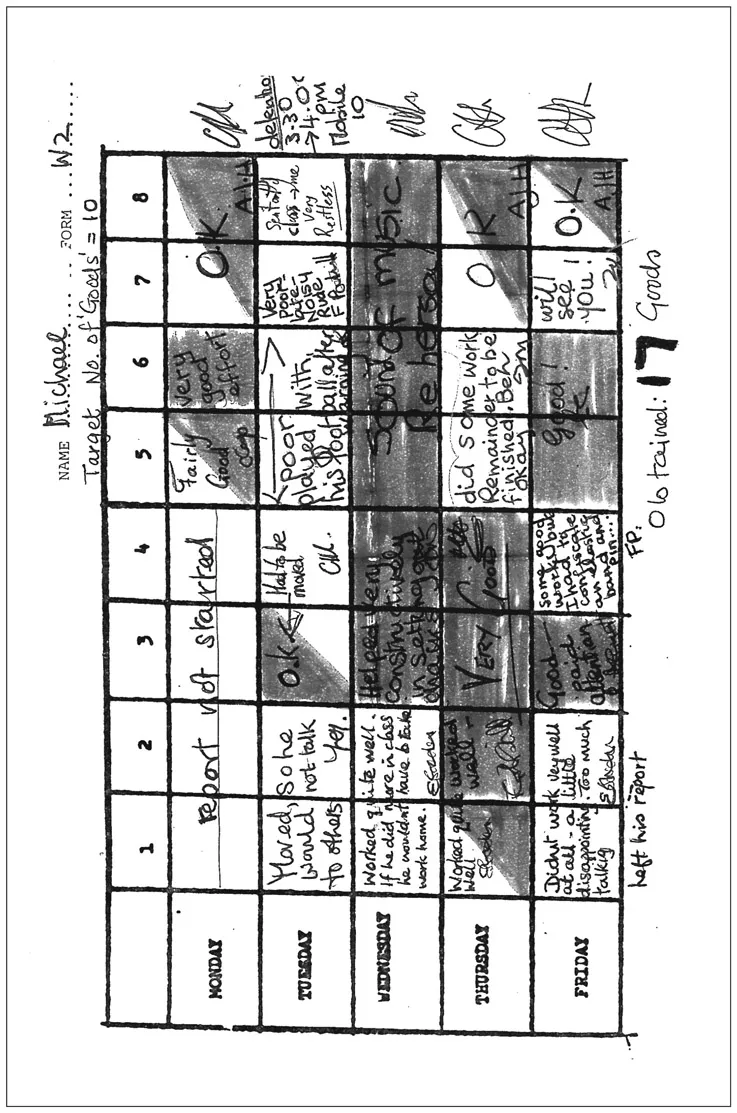
Figure 1.3 Weekly sheet used on programme with a 14—year-old (coloured spaces indicate ‘good’ sessions)
This is a photocopy of an actual sheet used by the boy. His sheets often needed to be sellotaped together or replaced midweeek having been lost.
Record for the Code of Practice
Example
Initial concern
Pupil X arrived at this school two weeks ago. He appears tense and anxious. There have been several incidents of aggressive outbursts. In class he appears to be underachieving, appears to lack concentration and distracts others. There does not appear to be an obvious pattern to his difficulties.
Record academic evidence in the usual way.
Strategy
- A two-week recorded observation will be carried out without the pupil’s knowledge.
- The pupil’s parents to be invited to meet with teacher/pastoral staff to develop understanding of pupil’s current situation. Has moved to this area due to family changes.
- Record academic strategies in the usual way.
The reasons behind this method of observation
You may be anxious to get started on reducing the problem. It may feel like delaying to carry out an observation of this sort.
However, the two-week initial observation is probably the most important part of developing a successful programme that will eliminate the behaviour problem.
-
Teaching is a high stress job and nothing is more stressful about it than unpredictable behaviour.Keypoint – What a behaviour problem ‘feels’ like to the teacher is not always the same as what is actually happening.Teachers I have worked with regularly note the findings of this observation method create unexpected results.Keeping this type of record helps you objectively quantify and describe what is actually happening. It also helps you to map your progress.
-
This way of observing makes it possible to gain a sense of how the child’s home life is affecting their day at school. It soon becomes clear for instance if bad days follow the child arriving upset in the mornings. Strategies for this are dealt with in Step 3.This pattern often also shows the child obviously enjoying school days when there have not been problems before school.
- It is also possible to observe patterns in a child’s week where certain days coincide with particular behaviours within the school. It is possible to clarify which sessions are regularly successful and which are not. This knowledge helps you to understand the actual problem and direct your strategies to eliminate it.
- Sometimes the findings highlight a whole-school or class issue that needs attention. A frequent example of this is the midday playtime.
- It can also reveal the comforting information that some sessions are regularly successful. This is very helpful as there will be elements in that session that help you understand the child and plan the way forward.
- If someone from an outside agency comes into your room to observe the child, while this can be useful, there are some problems with this.
- (a) The group dynamic changes as the ratio of adults to children is immediately halved. This method enables you to gather observations in the normal setting.
- (b) It is chance whether the difficult behaviour will be performed during the half hour the person is in the room. Assumptions made from such a snapshot may not be useful. What is more useful to be aware of is the whole weekly performance and the current level of success as a baseline to build on.
- (c) Planning the strategies you are going to carry out is a very personal activity for a teacher. If you have observed the problem objectively, analysed patterns yourself and planned a strategy you feel is practical for you to carry out, you are more likely to stick to it. It also means you can congratulate yourself when it succeeds!Sometimes programmes designed by other people for you are difficult to remain committed to.
-
The first statistic that will change when your programme is successful is the frequency of the behaviour not the intensity.This method of recording helps you monitor easily both the frequency and the intensity of difficulties. When you compare this to the frequency of good sessions you will be able to recognise immediately when the programme is working.Sometimes good programmes have been abandoned because the behaviour has occurred again, when actually it was already happening less often.
- As your programme continues the weekly sheets form an administratively simple way of recording the programme; you can note on the sheets symbols to show you have applied various strategies at different times. These can be attached to the Code of Practice recording sheets.
- I have known these sheets to be very useful if it becomes necessary to work with Social Services regarding Child Protection Issues. You can offer the social worker ‘fly on the wall’ records over a long period of time. The evidence you present of days when the child was more upset than others may usefully coincide with information they already have.
- This method also helps you remain objective. You count the ‘goods’ and if they have increased you can enjoy a sense of achievement.
- If a sustained improvement suddenly deteriorates you are alerted that something has changed in the child’s life. This change may not be at school.
- It enables you to say confidently to a child: “While I don’t like that behaviour and you must complete the sanction like any other child, I am very pleased that you haven’t done that for three weeks. Do you remember when you used to do this every day?” The programme is for the long term.
Step 2
Defining the Problem
The classroom teacher, or tutor set teacher, with either the SENCO, year head or a colleague, examine the sheets resulting from the observation and discuss possible patterns. Count how many ‘good’ sessions there are each week and record this number on the sheet.
Some patterns you might find:
- The child performs better when a teacher is present but gets into trouble when midday supervisors are in charge, or in any open-ended, less supervised situation.
- The child copes well with the freedom of the playground but resists complying in the classroom.
-
- (a) Child gets on well with adults one-to-one but finds peer group difficult.
- (b) Child withdraws to isolated position and has become an entrenched ‘loner’.
- Certain days stand out as being regularly more difficult than others, or unpredictably some days are ‘wiped out’ from the start. Is it school-based activities that are different, or something at home?
- (a) Are there Child Protection Issues? Is there evidence of:
- sexualised behaviour?
- self harm?
- stealing?
- soiling?
- bruises?
- physical neglect?
- deep anxiety?
- distraught tantrums?
- (b) Does the class spend time in difficult areas on that day? This could be either acoustically difficult or the size of the groupings they are in on that day. Is there a change of teacher that is significant?
- (c) Do the opportunities presented on those days feed into the child’s problem, i.e. mostly ‘open-ended’ or mostly ‘on-task’?
- (d) Does the child arrive upset and often late?
- (e) Do certain visitors to ...
- (a) Are there Child Protection Issues? Is there evidence of:
Table of contents
- Cover
- Title
- Copyright
- Contents
- Preface
- Acknowledgements
- Introduction: Links Between Emotional Development, Self-esteem and School Behaviour
- Step 1 Observation and Information Gathering
- Step 2 Defining the Problem
- Step 3 Planning the Strategy
- Step 4 Carrying out the Intervention
- Step 5 Evaluating Success and Re-defining Remaining Difficulties
- Step 6 Planning the New Strategy
- Appendix 1 School action record sheet
- Appendix 2 Primary school example of recording
- Appendix 3 Secondary school example of recording
- Bibliography
- Index
Trusted by 375,005 students
Access to over 1.5 million titles for a fair monthly price.
Study more efficiently using our study tools.
Frequently asked questions
Yes, you can cancel anytime from the Subscription tab in your account settings on the Perlego website. Your subscription will stay active until the end of your current billing period. Learn how to cancel your subscription
No, books cannot be downloaded as external files, such as PDFs, for use outside of Perlego. However, you can download books within the Perlego app for offline reading on mobile or tablet. Learn how to download books offline
Perlego offers two plans: Essential and Complete
- Essential is ideal for learners and professionals who enjoy exploring a wide range of subjects. Access the Essential Library with 800,000+ trusted titles and best-sellers across business, personal growth, and the humanities. Includes unlimited reading time and Standard Read Aloud voice.
- Complete: Perfect for advanced learners and researchers needing full, unrestricted access. Unlock 1.5M+ books across hundreds of subjects, including academic and specialized titles. The Complete Plan also includes advanced features like Premium Read Aloud and Research Assistant.
We are an online textbook subscription service, where you can get access to an entire online library for less than the price of a single book per month. With over 1.5 million books across 990+ topics, we’ve got you covered! Learn about our mission
Look out for the read-aloud symbol on your next book to see if you can listen to it. The read-aloud tool reads text aloud for you, highlighting the text as it is being read. You can pause it, speed it up and slow it down. Learn more about Read Aloud
Yes! You can use the Perlego app on both iOS and Android devices to read anytime, anywhere — even offline. Perfect for commutes or when you’re on the go.
Please note we cannot support devices running on iOS 13 and Android 7 or earlier. Learn more about using the app
Please note we cannot support devices running on iOS 13 and Android 7 or earlier. Learn more about using the app
Yes, you can access Practical Strategies for Individual Behaviour Difficulties by Geraldine Mitchell in PDF and/or ePUB format, as well as other popular books in Education & Behavioural Management. We have over 1.5 million books available in our catalogue for you to explore.