![]()
PART 1
Exceptional Ability and its Implications
![]()
Introduction: beyond normal expectations
Katie
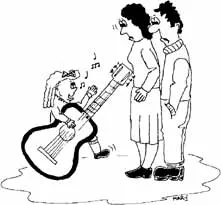
Katie was a startlingly pretty child with a mass of auburn curls, huge blue eyes and dimples. She sang with a true, clear voice, took dancing and guitar lessons and enjoyed writing stories. She was an avid reader. She was also an outgoing child, very much at ease in the company of adults whom she liked to entertain with bright social conversation. She was confident in manner, even a little gracious. Her parents adored her; I disliked her on sight. For Katie was only three years old. Poor Katie. Apart from her doting parents, no-one felt comfortable in her presence. Everything about her jarred one's assumptions about children of her age.
First there was the contrast within the family. Both parents were in their late forties when Katie was born, and were usually mistaken as her grandparents. Then there was the mismatch between her age and the manner and content of her conversation. The unexpectedness of it, the discomfort of being addressed in such adult terms by such a tiny child, aroused a sense of indignation and disapproval in those who met her. On top of all this were the surprising accomplishments. A three-year-old is just not expected to be able to do all the things that she did, and with such evident enthusiasm. Katie was something special. She was an exceptional child – and no-one liked her.
Anthony
Anthony was another unusual child. A friend came to visit with Anthony, his nine-year-old son. We talked of this and that, of mundane affairs, ordinary concerns, until someone asked the boy about his interest in some science project. From an awkward and rather taciturn lad, he became transformed: his eyes lit up, his hands moved rapidly in the air, words poured forth, experiments explained in lengthy and (for us) confusing detail, theories proposed and references made that were beyond the understanding of any of those present. We listened with a feeling of amazement. I remember thinking that we were hearing something remarkable, that Anthony was displaying a level of understanding and knowledge that was not at all in keeping with his age. I was also aware of the general discomfort and unease that this was causing. We simply did not know how to respond. We understood almost nothing of what he was saying. He, on the other hand, was so engrossed in his subject, and so caught up in the telling, that he left no room at all for us to respond – even had we been able to follow his thinking. We were left to smile politely while uttering such meaningless comments as, ‘How interesting. Is that so…? How fascinating’. Anthony's father later explained that the child was deeply unhappy and frustrated in school. He had been unable to make any friends, generally found most of the work far too easy and boring, and he was becoming daily more reluctant to attend school.
Fiona
Fiona was 16. She had joined a group of ‘scholarship’ students preparing for the Oxford and Cambridge examinations through a series of fortnightly seminars led by university lecturers. Fiona had achieved ‘A*’ grades in no fewer than 10 GCSE examinations. She subsequently gained five grade TVs in her A-levels. She played the cello for a county orchestra, had a lovely singing voice and was a talented sportswoman into the bargain. During the seminar discussions it had become obvious to the other students that this girl's depth and breadth of knowledge was of a different order altogether from their own. She was clearly exceptional, even among the very ablest students. ‘But,’ said one member of the group, ‘the really surprising thing about Fiona is that she is so nice!’
During my time working as an educational psychologist on a project for developing the curriculum for very able pupils, I had the opportunity to talk at length to dozens of children who had unusual talents and abilities, and to their parents. These three examples, and the stories told to me by the many other children I have met, epitomise the fundamental dilemmas presented by unusual development, dilemmas which need to be understood if they are ever to be resolved. They demonstrate in the simplest terms that the whole question of giftedness is one not so much of definition, identification, categorisation and provision, but of relationships. It is concerned with the responses of persons one to another, the communication and expression of feelings and the inclusion or exclusion of individuals and groups. It also has to do with the willingness of schools and families to work together to find ways of meeting children's educational and social needs. The main cause of the confusion, and sometimes ill-judged position-taking, regarding children of exceptional ability has been the failure to recognise that at the heart of the matter we are dealing not so much with a special endowment inside a person, but with what happens between people.
How do we make sense of this? The explanation can perhaps best be given by looking again at the encounters with the three young people described. What was significant about Katie's and Anthony's behaviour was not their behaviour as such but the reactions this provoked in those around them. The fact that little Katie, by the age of three, had developed language more consistent with that of a nine-year-old, and a social poise that appeared quite out of keeping with her age, was not a problem in itself. We are all aware that children grow, develop and acquire their living skills at greatly varying rates. Children are not expected to be at similar stages in their development at particular ages. We do, however, construct certain ‘limits of expectation’, our own mental yardsticks by which we measure each new encounter. We develop an understanding of that which we judge to be a reasonable, expected, ‘normal’ range of behaviours. These personal yardsticks are arrived at through both our personal and our shared experiences.
Yardsticks of ‘normality’ will of course be relative to the time, the place and the experience of those who share them. What is felt to be normal in one situation may not be so in another. Take, for example, the question of height. A person may be judged to be extremely tall in one setting yet quite normal in another. A pygmy may be a giant among his own tribe, yet taken for a midget in a group of Masai warriors. There are no absolutes in the questions of tallness or shortness. Extremes can only be judged in relation to the environment in which they occur. This will be true of any experience. A problem only arises where the occurrence of an experience, be it physical, social, emotional or intellectual, falls outside the normal expectations of those involved. As with Katie, the problem of the precocity of her language and social poise lay not in the child, but in the response it evoked from others, and consequently and most essentially, in the messages that passed from others to her, messages of surprise, wariness and disapproval.
The case of Anthony, the nine-year-old scientist, was similar, but with additional significant elements. His conversation, too, was startling to those around because of the incongruity between his age and the level of intellectual understanding and experience he displayed. But here the mismatch was dramatically compounded. With Katie, although her language and manner jarred and evoked unkind and unhelpful responses, at least it was possible to have a conversation with her, to share her interests and understand her enthusiasms. But Anthony was caught up in a world of thinking and pursuits beyond the understanding of those around him. We were left on the sidelines of his thinking, reduced to behaving as spectators, nodding politely at appropriate moments. Again, the problem could not be said to be Anthony's exceptional intelligence in itself. Given a different setting, given a different audience there would have been no problem. The problem lay in the mismatch between his understanding and that of the people around the table. We felt inadequate, but more importantly, Anthony himself probably felt alien, and no doubt frustrated by the fact that we clearly did not understand what he was talking about. He had not learned to take account of the people he was with and adjust his conversation to the social situation.
Fiona clearly demonstrates that exceptional ability per se is not necessarily a problem. No-one denied that her talents were many and varied, that in the pursuit of her many and varied interests she achieved levels to which few of us can aspire. She was indeed a ‘gifted’ young person. Yet the surprise for Fiona's companions was that despite her exceptional talents she was a pleasant person to have around. Her peers not only admired, and perhaps even envied, her; they also liked her. How had this come about? Why should her companions be surprised by her niceness? Why should they have expected her to be otherwise? Why should we expect someone who has highly developed skills and talents to be socially inept or unpopular? What kind of unhelpful stereotyping has grown up around the concept of exceptional ability and talent, and what damage could this do to children's personal development? It is not always the case. It seems that in other countries, in the USA for example, the assumptions that surround highly able individuals are very different from those held in Britain, and are altogether more positive.
This would seem to be the heart of the matter, and the focus of concern for children and parents alike. The real question is not, ‘Is this a gifted or exceptional child?’ or ‘Do this child's abilities qualify her to belong to a particular category which I can accept is gifted?’ It is rather, ‘How can I understand what is going on between this child and me, between this child and others, and between this child and her world?’ And therefore, ‘How can I, as the more experienced adult, enhance and guide this young person's life in order that he or she may make the very best of all his or her talents and qualities, whatever these may be?’
In order to understand how we can support young people who show exceptional ability or talent we need to consider what it can be like to grow up feeling ‘different’ and how this might affect children's self-esteem, self-confidence and their desire to demonstrate their abilities. Once we have some insight into the dynamics of exceptional development we are in a better position to consider how we can provide a suitable learning and social environment in which their talents can flourish. But first we need to decide what we mean by exceptional ability.
![]()
Exceptional development: definition and meanings
Understanding exceptional ability
It has always been difficult to agree on what we understand by ‘ability’, and in particular what we mean when we say a child has ‘exceptional’ ability or talent. For many years the understanding of ‘intelligence’ was linked to the concept of an ‘intelligence quotient’ or IQ, as measured by specifically designed tests. Some of these are based on concepts of ability that date from the work of Binet who devised the first intelligence test. The Wechsler Intelligence Scale (WISC) and the British Ability Scales (BAS) are still used today. On these standardised tests a person's performance can be measured and compared with others of a similar age. A scale can be drawn up, with cutoff points at which the person's performance can be said to fall within, below or above the normal range. Exceptional ability would therefore be defined as performance that fell at the top of the scale, which only a small percentage of the population would achieve.
But human abilities cover a much wider spectrum than can be explored by such tests. The current view is to think of intelligence as multi-faceted, made up of factors that may be relatively independent of each other. There is also a far greater appreciation that social and cultural factors may determine how a person performs and influence what is valued.
One of the most influential models proposed in recent years is that of Howard Gardner, professor of Neurology at Boston University School of Medicine and also professor at the Harvard Graduate School of Education. He concluded that we have seven (and more recently, eight) intelligences:
- Linguistic (the ability to use language)
- Logical and Mathematical (the ability to reason, calculate and think logically)
- Visual-spatial (the ability to paint, draw and sculpt)
- Musical (the ability to compose, play an instrument and sing)
- Bodily-kinesthetic (physical and manipulative skills)
- Inter-personal (the ability to relate well to others)
- Intra-personal (self-awareness, the ability to know oneself)
- Naturalistic (awareness of the natural world and the ability to collect, categorise and analyse).
(Gardner 1983, 1990)
According to Gardner, our ability to understand and make sense of the world requires the use of all eight intelligences. A person can demonstrate unusual levels of ability in all areas of their development, or in any one sphere. Gardner suggests that very able people are more likely to show particular ability in one or in a combination of abilities than in all of them. He also proposed that each form of intelligence generates its own form of creativity. Very creative individuals have the ability to change the domain in which they manifest their particular talents. Exceptional ability would therefore be defined as unusually high-level or high-quality performance in terms of the particular areas of intelligence.
Other psychologists have put forward different models of intelligence. Sternberg's Triarchic Theory of Intelligence divides ability into analytical, creative and practical intelligences. These form the components of what Sternberg calls ‘successsful’ intelligence. This enables a person to recognise and demonstrate their individual strengths while finding ways of compensating and making adjustments for any limitation and weakness. Sternberg considers the ability to plan, monitor and evaluate their own thinking to be one of the key factors that distinguishes the skills of more able pupils (Sternberg 1985). This approach to thinking about intelligence is gaining in importance as increasing account is taken of different community and cultural priorities.
Another way of thinking about exceptional ability is to see it in terms of ‘precocious’ development where a child understands things or demonstrates behaviour at a much earlier age than might be expected. John Stuart Mill would be an example of a precocious child.
John Stuart Mill
John studied Greek at the age of 3; by the time he was 4 he was reading classical work fluently, he was studying physics and chemistry at a theoretical level before he was 11 and had written two essays on political economy by the age of 16. Galton, in the early nineteenth century, was also competent in Latin by the age of 4 and had read the Iliad and the Odyssey by the age of 6. He then turned his attention to physics and chemistry, and by 13 had designed a flying machine.
Alternatively, the behaviour of children with exceptional abilities may not be characterised only by its precocity, but also by the nature of their accomplishments and the quality of their performance. They may do things in unusual ways, look for interesting and novel solutions, find links between ideas and activities that others have not considered, or deliberately choose complex ways of doing things. Their ability to use language in creative and surprising ways may bring a distinctive quality to their writing. Their approach to work and play may be noticeable by its intensity, its heightened sense of purpose and its pursuit of perfection. William Hamilton is one example.
William Hamilton
William was reading Latin, Greek and Hebrew by the age of 5 and could recite long passages of Homer and Milton; he added a new language each year and by the age of 13 had a competent grasp of 13 languages, including Sanskrit and Persian. Pablo Picasso's extraordinary artistic skills were evident from a very early age and by the age of 14 he could paint as well as the Great Masters.
It is clearly easier to recognise high ability in whatever form it might manifest itself if children show this precocious development, or this high-level, intense or unusual response, through their approach to their work. Recognising the abilities of such children is not a problem.
Few of us, however, will encounter such people, or be charged with the responsibility for their education and upbringing. But many of us will be involved in one way or another with children who have the potential for exceptional attainment, in the field of academic study, sport or the creative arts. We are also likely to be involved with children who are unable or unwilling to show their potential talents, who do not perform well on the tests we give them, who have lost interest in their work or have chosen to mask their abilities in order to keep in with the crowd. Einstein was ...