eBook - ePub
A Framework for Learning
For Adults with Profound and Complex Learning Difficulties
- 164 pages
- English
- ePUB (mobile friendly)
- Available on iOS & Android
eBook - ePub
About this book
This book offers carers, practitioners and managers a tried and tested structure for enabling adults with a range of complex needs to develop their individual skills and experience. It also provides a flexible framework which is suitable for specialist colleges and training centers for people with learning difficulties.
Information
Topic
EducationSubtopic
Adult EducationChapter 1
Creating the conditions required to put the framework into practice
The framework has been designed as a flexible structure which carries the potential to be responsive to the needs of every learner. It should be a dynamic entity which grows and changes as a result of a continuous quest to improve. In order to capitalise on this potential, it is critical that a commitment to responding to individual needs is at the centre of the organisation’s culture and is reflected in all aspects of planning, decision making and operations.
We often seem to be subject to imposed restrictions and limited resources. Clarifying the purpose and direction of the service can help to ensure that we: a) remain learner centred, b) focus on what can be done and, c) have at our fingertips a sound rationale for the service which can be evidenced in practice.
Example
A visitor was introduced to our learners with profound and complex learning difficulties. He talked at length about his admiration for the staff, for their ‘patience, dedication and skills’. Yes, the visitor was probably correct in many ways, but his comments rang alarm bells, as many visitors commenting in this way go on to express a view of our learners as ‘unfortunates’.
My aim was for him to recognise that our learners were progressing, achieving, widening their horizons. I wanted him to see that the relationships between staff and learners reflected our strong commitment to recognising our learners as people with potential, people we respect.
I was able to influence the visitor’s perspective by expressing clearly our principles and aims, pointing out ways in which these could be seen in practice.
Principles and aims
The first step is to compose the aims of the organisation, with everyone involved (Figure 1.1). The ideas should be generated by learners, staff and relevant others, rather than by the manager. There is a greater chance of genuine commitment to aims that have not been imposed, but have been carefully thought through and discussed.
Checklist for devising aims:
- involve everyone;
- express simply - avoid jargon;
- identify no more than six aims which are easy to remember;
- ensure that the focus on the individual learner is explicit;
- revisit aims regularly to ensure they are current.
Even if aims have been devised collaboratively, there is a risk that they may gather dust on a shelf. In order to be meaningful, the aims must be reflected in the everyday life of the organisation and referred to constantly, directly and indirectly.
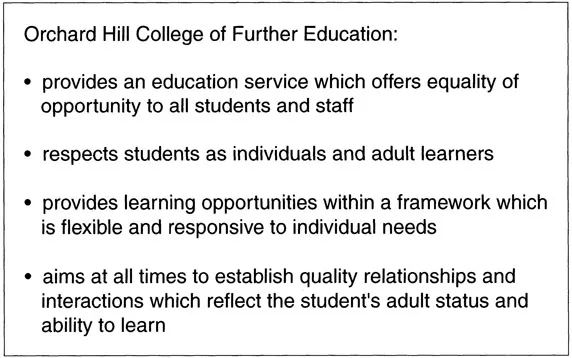
Figure 1.1 Example aims (Orchard Hill College 1999)
Examples for putting aims into practice
- Refer to aims when making and explaining decisions.
- Use aims to inform recruitment, induction and training.
- Refer to aims to identify an agreed ‘concept of good practice’ (Wyatt and Sherratt 1996) so that everyone knows how everyday actions relate to each aim.
- Monitor/appraise and support staff using aims as a point of reference.
- Revisit direct discussion of aims regularly.
- Display aims in every room and refer to them when planning and evaluating sessions.
See Figure 1.2.
In the process of creating a ‘shared concept of good practice’ learners, the staff team, governors, inspectors and relevant others gain an opportunity to reflect on what represents good practice. Once established, this ‘shared concept’ can be used as the basis for prioritising training, informing appraisal and evaluating the service.
There are some key elements to ensuring that the service is centred on each individual learner e.g. curriculum clarity and flexibility, enabling progress, learner motivation, incorporating
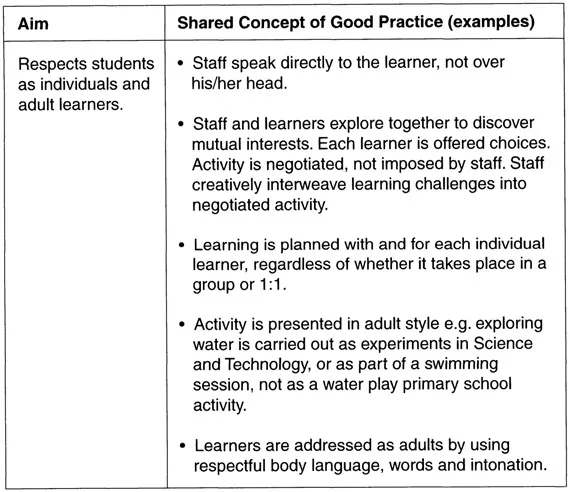
Figure 1.2 Example of an aim translated into practice
learner’s views, recognising achievements (Allen 2000). These key elements should be reflected in the organisation’s aims and practice.
Reference to key elements can be found throughout the framework which is presented in the chapters which follow.
Some examples of key elements for the organisation include those listed in Figure 1.3.
Establishing agreement about organisational aims and practice in relation to these key areas involves confronting and working through attitudes and opinions, thoughts and feelings. This may be achieved initially through staff training opportunities and developed further through reflection and interaction between staff during daily evaluation sessions. The issues for debate might include attitudes to ‘challenging’ behaviours, equal opportunities, physical contact and age appropriateness.
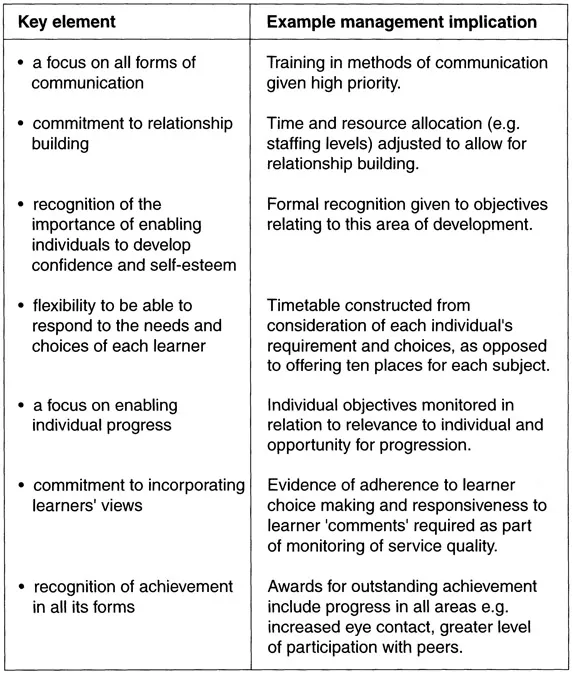
Figure 1.3 Examples of key elements
Age appropriate issues
The framework has been developed specifically with adult learners in mind, although some parts of the work overlap the schools curriculum (for example, see reference to the National Curriculum in Chapter 8) in appropriately amended form. The concept of age appropriate learning is closely linked to the issues of respect for learners, the importance of forming relationships (refer to Chapter 3) and the requirements of learner-led development (refer to Chapter 2). There is emphasis on use of age appropriate equipment and materials, for example, use of real money not play money. However, this must not preclude the learner from keeping what is personally important to him or her. The notion of age appropriateness informs planning and resources, but this does not override the flexibility to respond to expressed choices from individual learners.
One of the key methods of communicating respect for learners is in relation to the spoken language, body language and actions of staff. The use of child orientated words of endearment e.g. ‘poppet’ or ‘sweetie’ are considered to be inappropriate, both in terms of age and in terms of a working relationship. Although many learners may require use of fairly
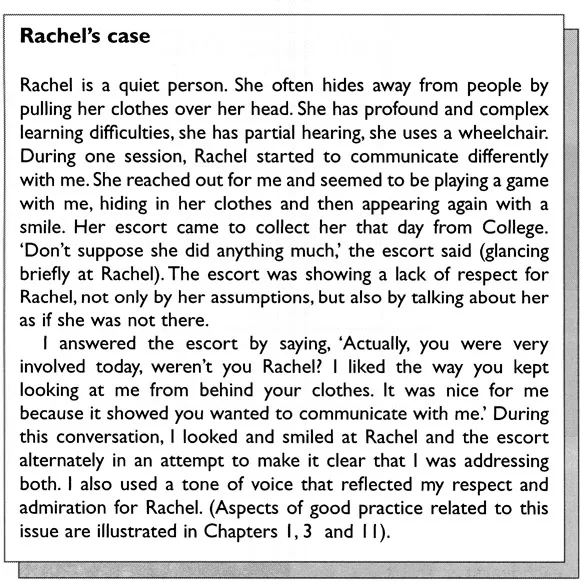
simple words, accompanied by other forms of communication, it is important that the tone of voice and body language used conveys genuine interest and respect. Attention to interaction between staff is also required to ensure that staff always include the learner in discussion, rather than talking over his/her head.
Touching is one further aspect of the age appropriate debate which has raised controversy in some areas. Most learners with profound and complex learning difficulties require physical contact to learn. Appropriate social contact is a key element of raising an individual’s self-esteem; ‘Touch can be affirming and supportive’ (Sanderson et al. 1991). Clearly, safeguards are required to ensure that learners are secure from inappropriate physical contact, but sensible policy and practice should be the answer, not the type of restrictions which prevent the learner interacting with others by effectively banning touch. The framework incorporates a range of approaches which include appropriate contact (refer to Chapters 3, 9 and 11). Successful implementation of the framework requires clarity in relation to policy and practice. It is critical to ensure that this important form of communication is not outlawed through misinterpretation of the concept of age appropriateness or through lack of understanding on the part of managers and others in relation to the needs of learners with profound and complex learning difficulties.
Organisational culture
Johnson and Scholes (1997), suggest that organisational culture comprises three layers: values, beliefs and paradigm (taken-for-granted assumptions). The ‘values’ form mission statements and aims (see Figure 1.1); the ‘beliefs’ reflect commonly held notions about what is acceptable or not; the ‘paradigm’ includes aspects which people find difficult to identify and explain and ‘exists in the minds and hearts of people within and around the organisation’ (Johnson and Scholes 1997). The key is the paradigm which reflects the way the organisation actually operates. The ‘shared concept of good practice’, exemplified above, is an attempt to interact with the paradigm and interweave formal and informal dimensions.
The aim of providing a learner-centred service may be emphasised and reinforced through the formal monitoring process, but informal processes often also take a key role in ensuring sound practice at all levels of the organisation. Transferring good practice intentions into everyday actions requires attention to detail. It is ‘the little things which count’ and which communicate genuine respect and appreciation for each learner.
Examples
- Staff taking their cup of tea and sitting with a learner drinking theirs, rather than staff sitting together.
- Staff always speaking to the learner rather than over his/her head, i.e. instead of saying ‘she did computer work’, staff enable the learner to take part in the conversation. Example: Staff A: ‘Hello Kay. What did you do today?’ Staff B: ‘You did some computer work today, didn’t you Kay?’ (Said while helping Kay to show a computer printout or object of reference.)
- Using age appropriate words and tone of voice.
- Offering and respecting choices.
- Using sensitive and appropriate touch when aiding the learner: the type of touch which communicates respect, liking and a sense that the learner and the task are the sole focus during the time it takes to complete the task.
Informally, such important details may be best reinforced by peer expectations. Staff working in teams can encourage each other to maintain appropriate standards, but this is only possible if they are given the support of managers whose everyday actions adhere to the organisation’s agreed principles.
It would be meaningless to say to individual members of an organisation ‘you must believe in x, y and z’, but continuous dialogue about the language, anecdotes and practices can be used to influence values and create the ‘paradigm’, or shared assumptions, of the organisation.
Commun...
Table of contents
- Cover
- Title
- Copyright
- Contents
- Foreword
- Acknowledgements
- Introduction
- 1. Creating the conditions required to put the framework into practice
- 2. Involving learners in shaping the framework
- 3. Foundation skills
- 4. Communication development
- 5. Science and technology
- 6. Community studies
- 7. Life skills
- 8. Basic study skills
- 9. Physical education
- 10. Creative and cultural studies
- 11. An induction for learners with visual and/or hearing impairments
- 12. The collaborative framework
- References
- Useful addresses
- Index
Trusted by 375,005 students
Access to over 1.5 million titles for a fair monthly price.
Study more efficiently using our study tools.
Frequently asked questions
Yes, you can cancel anytime from the Subscription tab in your account settings on the Perlego website. Your subscription will stay active until the end of your current billing period. Learn how to cancel your subscription
No, books cannot be downloaded as external files, such as PDFs, for use outside of Perlego. However, you can download books within the Perlego app for offline reading on mobile or tablet. Learn how to download books offline
Perlego offers two plans: Essential and Complete
- Essential is ideal for learners and professionals who enjoy exploring a wide range of subjects. Access the Essential Library with 800,000+ trusted titles and best-sellers across business, personal growth, and the humanities. Includes unlimited reading time and Standard Read Aloud voice.
- Complete: Perfect for advanced learners and researchers needing full, unrestricted access. Unlock 1.5M+ books across hundreds of subjects, including academic and specialized titles. The Complete Plan also includes advanced features like Premium Read Aloud and Research Assistant.
We are an online textbook subscription service, where you can get access to an entire online library for less than the price of a single book per month. With over 1.5 million books across 990+ topics, we’ve got you covered! Learn about our mission
Look out for the read-aloud symbol on your next book to see if you can listen to it. The read-aloud tool reads text aloud for you, highlighting the text as it is being read. You can pause it, speed it up and slow it down. Learn more about Read Aloud
Yes! You can use the Perlego app on both iOS and Android devices to read anytime, anywhere — even offline. Perfect for commutes or when you’re on the go.
Please note we cannot support devices running on iOS 13 and Android 7 or earlier. Learn more about using the app
Please note we cannot support devices running on iOS 13 and Android 7 or earlier. Learn more about using the app
Yes, you can access A Framework for Learning by Caroline Allen in PDF and/or ePUB format, as well as other popular books in Education & Adult Education. We have over 1.5 million books available in our catalogue for you to explore.