- 280 pages
- English
- ePUB (mobile friendly)
- Available on iOS & Android
eBook - ePub
Computer-Aided Graphics and Design
About this book
This text, now in its third edition, presents all common methods of computer/automated graphical construction most helpful to the engineering student, draftsperson or designer, describing, in easy-to-understand terms, a wide range of hardware platforms that will run a single set of software options from the Autodesk Corporation. Rewritten and illustrated with over 330 tables, drawings and photographs, this is a vital reference for all mechanical, electrical and electronics, manufacturing, software, civil and architectural engineers; engineering designers and drafters, and industrial illustrartors and asrtisits. A defintive text on the subject for students familiar with LISP in undergarduate courses.
Information
1
Introduction to CADD
A complete study of engineering graphics must include something about the age of computerization and how it affects work done by an engineer or technician. The human being is smart, creative, and slow, whereas the computer is stupid, uncreative, but never tires. The problem, then, is to allow the person and the computer to work well together as a team to control the CADD (computer-aided drafting and design) functions. The graphics workstation is such an example of human-computer control. Certainly, the simulation of human—computer characteristics complement each other, but their languages are very different. We think in symbols and pictures, whereas the computer understands only simple electrical impulses. CADD is playing an increasingly large part in our daily work lives. Over the past decade, CADD applications have been justified because they can save money and time and can improve the quality of the drafting product. Dollar savings of from 3:1 to 6:1, and time savings of from 20:1 to 50:1, are typical of those quoted in applications explained later in this book.
CADD is a way of converting computer impulses into engineering documents and, conversely, to translate the operator’s instructions into electronic data. In many of the more sophisticated systems, we need know little about computer programming to control the CADD effect.
1.1 Quality of CADD Documents
Most CADD devices are easy-to-operate, self-contained computer systems for the direct translation of rough sketches into high-quality finished documents. The systems are designed for simple, real-time operation by technicians or engineers and are particularly useful for producing drawings containing repetitive symbology and text. The first example that comes to mind is the desktop personal computer or laptop computer. These types of computers can be used as graphic workstations since they do not depend on an outside processing source. So if you have such a computer, you will not need to spend money upgrading your existing equipment. The same goes for printers and plotters. From 85 pen plotters to over 300 dot-matrix, laser, PostScript, and color printers, CADD offers the same high-quality, finished look for your printed or plotted drawings as that shown in Figure 1.1. A powerful CADD software package does not have to be expensive to satisfy your drafting needs. With inexpensive CADD you’ll find a two-dimensional computer-aided design and drafting tool that is as at home with initial sketches and conceptual designs as it is with final-presentation drawings and full-scale engineering or architecture projects. Whether you create electrical schematics, assembly drawings, or architectural floor plans, CADD offers you a way to get the needed document. That is why it continues to win such industry praise and why so many design and engineering professionals use CADD.
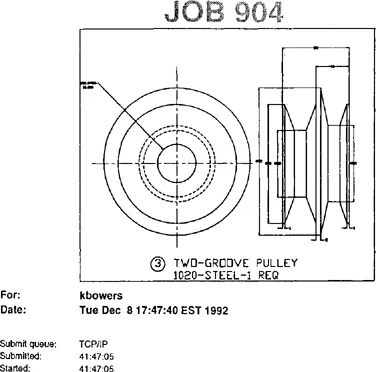
Figure 1.1 Typical CADD output. (Courtesy DLR Associates.)
Many of the illustrations, diagrams, and photoenhancements used in this book were produced as computer displays with the aid and instructions of a human computer. A CADD document, then, is a combination of two or more elements to produce synergy, or united action. The logical basis for this concept lies in the fact that the human mind tends to solve problems heuristically (by trial and error), whereas a CADD system solves by the use of algorithms (an error-free sequence of logic). By letting each mind/machine work to its best capacity, a new and better method can be automated. How this human-machine process is automated is rather simple. Strictly speaking, the automation of any process means the improvement or elimination of certain or all parts of the manual labor involved in doing a job. This does not me...
Table of contents
- Cover
- Half Title
- Title Page
- Copyright Page
- Series Introduction
- Preface
- Table of Contents
- 1 Introduction to CADD
- 2 Principles of CADD
- 3 Computerizing the Design Process
- 4 Graphic Systems and Software
- 5 Pictorial Representation
- 6 Computerized Descriptive Geometry
- 7 Computerized Vector Geometry
- 8 Computerized Solid Geometry
- 9 CADD Charts and Graphs
- 10 Sample Programs and User Problems
- Index
Trusted by 375,005 students
Access to over 1.5 million titles for a fair monthly price.
Study more efficiently using our study tools.
Frequently asked questions
Yes, you can cancel anytime from the Subscription tab in your account settings on the Perlego website. Your subscription will stay active until the end of your current billing period. Learn how to cancel your subscription
No, books cannot be downloaded as external files, such as PDFs, for use outside of Perlego. However, you can download books within the Perlego app for offline reading on mobile or tablet. Learn how to download books offline
Perlego offers two plans: Essential and Complete
- Essential is ideal for learners and professionals who enjoy exploring a wide range of subjects. Access the Essential Library with 800,000+ trusted titles and best-sellers across business, personal growth, and the humanities. Includes unlimited reading time and Standard Read Aloud voice.
- Complete: Perfect for advanced learners and researchers needing full, unrestricted access. Unlock 1.5M+ books across hundreds of subjects, including academic and specialized titles. The Complete Plan also includes advanced features like Premium Read Aloud and Research Assistant.
We are an online textbook subscription service, where you can get access to an entire online library for less than the price of a single book per month. With over 1.5 million books across 990+ topics, we’ve got you covered! Learn about our mission
Look out for the read-aloud symbol on your next book to see if you can listen to it. The read-aloud tool reads text aloud for you, highlighting the text as it is being read. You can pause it, speed it up and slow it down. Learn more about Read Aloud
Yes! You can use the Perlego app on both iOS and Android devices to read anytime, anywhere — even offline. Perfect for commutes or when you’re on the go.
Please note we cannot support devices running on iOS 13 and Android 7 or earlier. Learn more about using the app
Please note we cannot support devices running on iOS 13 and Android 7 or earlier. Learn more about using the app
Yes, you can access Computer-Aided Graphics and Design by Daniel L. Ryan in PDF and/or ePUB format, as well as other popular books in Technology & Engineering & CAD-CAM. We have over 1.5 million books available in our catalogue for you to explore.