eBook - ePub
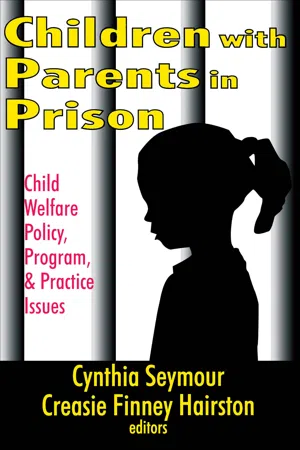
Children with Parents in Prison
Child Welfare Policy, Program, and Practice Issues
- 171 pages
- English
- ePUB (mobile friendly)
- Available on iOS & Android
eBook - ePub
About this book
Adults are being incarcerated in the United States at an ever-escalating rate, and child welfare professionals are encountering growing numbers of children who have parents in prison. Current estimates indicate that as many as 1.5 million children have an incarcerated parent; many thousands of others have experienced the incarceration of a parent at some point in their lives. These vulnerable children face unique difficulties, and their growing numbers and special needs demand attention.Existing literature indicates that children whose parents are incarcerated experience a variety of negative consequences, particularly in terms of their emotional health and well being. They also may have difficult interactions or limited contact with their parents. There are also issues connected with their physical care and child custody. The many challenges facing the child welfare system as it attempts to work with this population are explored in Children with Parents in Prison. Topics covered include: ""Supporting Families and Children of Mothers in Jail""; ""Meeting the Challenge of Permanency Planning for Children with Incarcerated Mothers""; ""The Impact of Changing Public Policy on Relatives Caring for Children with Incarcerated Parents""; ""Legal Issues and Recommendations""; ""Facilitating Parent-Child Contact in Correctional Settings""; ""Earning Trust from Youths with None to Spare""; ""Developing Quality Services for Offenders and Families""; and in closing, ""Understanding the Forces that Influence Incarcerated Fathers' Relationships with Their Children.""Children and families have long struggled with the difficulties created when a parent goes to prison. What is new is the magnitude of the problem. This volume calls for increased public awareness of the impact of parental incarceration on children. Its goal is to stimulate discussion about how to best meet the special needs of these children and families and how to provide a resource for the child welfare community as it responds to
Information
1 Supporting Families and Children of Mothers in Jail: An Integrated Child Welfare and Criminal Justice Strategy
Pamela Covington Katz
Charged with the responsibility for protecting children and preserving families, the child welfare system needs to pay special attention to women in jail and their families. Jails provide an opportunity to reach families early in the criminal justice process. This article explores why working with women in jail and their children is within the scope of the child welfare system’s mandate; describes the pressures on the criminal justice and child welfare systems that prevent either from working effectively with these families; and suggests a collaborative strategy for working more effectively with mothers in jail and their children.
On any one day, the 3,300 jails in the United States hold more than half a million people, including 59,296 women, at a cost of more than $9.6 billion to local governments [Gilliard & Beck 1998; Cornelius 1996]. Women are the fastest growing population in jail; their numbers have increased more than 300% since 1985, largely as a result of a dramatic increase in the number of women incarcerated for nonviolent drug or drug-related offenses [Beck & Gilliard 1997; Snell 1992]. Although the direct expenses of operating and constructing jails are staggering, they do not begin to reflect the costs to children, families, and communities of locking up an ever-increasing number of nonviolent drug offenders—particularly women who are often the sole caregivers for their children. In fact, mothers in jail typically leave behind two or more children [Snell 1992].
Administered by local governments, jails are the entry gate into the criminal justice system. Jails confine pretrial detainees (inmates who were arrested and are awaiting trial). Children and families are particularly at risk during this time because pretrial detainees do not know how long they are likely to be away from their children. With little help or even access to a telephone, jailed mothers must find caregivers to look after their children. These caregivers, in turn, often assume care for the children with few resources to handle their new responsibility. Meanwhile, the children’s lives may be turned upside down as they are shuffled from home to home with little information about what has happened to their mothers.
In addition to holding pretrial detainees, jails confine women who have been convicted of minor crimes, typically misdemeanors, with sentences of less than one year. Often referred to as “sentenced” inmates, these individuals will not serve their sentences in prisons, which are run by state or federal governments and hold inmates convicted of felonies. Unfortunately, jails generally lack the rehabilitative programs often found in prisons, such as drug treatment, educational opportunities, and parenting classes. Although women sentenced to jail have committed less serious crimes than those in prisons, their lives are often marred by the same risk factors—including substance abuse and long histories of victimization—that can be so damaging to children and families. Without help, many of these women will be in and out of jail for a large portion of their children’s lives.
Charged with responsibility for protecting children and preserving families, the child welfare system needs to pay special attention to women in jail and their families. Jails provide an opportunity to reach families early in the criminal justice process, when finding a stable home for the children is of critical concern. Jails can also provide an opening for an effective intervention with families whose children are already in out-of-home care or at serious risk of placement.
This article explores why working with women in jail and their children and families is within the scope of the child welfare system’s mandate and describes the pressures on the criminal justice and child welfare systems that can prevent either system from working effectively with this population. It concludes by suggesting a collaborative strategy for working more effectively with mothers in jail and their children that can serve the interests of both systems.
Impact on the Child Welfare System
At a time when so many issues demand the attention of public administrators, when welfare reform threatens to leave many impoverished families unprotected, and when most public agencies have to do more with less, it can be disheartening to hear that there is yet another population that needs help. Most public agencies struggle to fulfill their narrowly defined mandates, without looking for more places to spend their already thinly stretched resources. Women in jail and their families, however, are not a “new” group in need of special help. These families already fall within the confines of the child welfare system’s commitment to protecting children and preserving families: as discussed below, many of their children are already in out-of-home care and most of the rest are at risk of placement.
Not only are these children at increased risk of abuse and neglect, but the overwhelming evidence demonstrates that they often face numerous other challenges that put them at risk. Children of incarcerated mothers often display low self-esteem, anxiety, low achievement motivation, poor conscience development, poor social adjustment and peer relations, depression, juvenile delinquency, aggression, drug abuse, and other problems [Virginia Commission on Youth 1993]. Ultimately, one in ten will be incarcerated themselves by the time they reach adulthood [Johnston 1995b].
Children in Out-of-Home Care with Mothers Currently or Previously in Jail
On any given day, approximately 7% of the mothers currently in jail have children in out-of-home care [Snell 1992]. This statistic, however, vastly understates the number of children in care whose mothers have been in jail at some point in their lives, since these children often remain in out-of-home care longer than their mothers are in jail. With nearly a million women admitted to jails each year, the number of children in out-of-home care who are affected is undoubtedly much higher than available data suggest [Beck et al. 1995]. If the population of women in jail continues to increase at its current rate of 10% a year, an even larger number of children in out-of-home care will have mothers in jail in the future [Gilliard & Beck 1998].
Children of Mothers in Jail at Risk of Out-of-Home Placement
Three characteristics common to jailed women—substance abuse, long histories of victimization, and recurring criminal justice involvement—combine to put children at increased risk of abuse or neglect. The vast majority of women in jail are addicted to alcohol or other drugs. One study found that 61% of the women in a municipal jail used cocaine at least once a week prior to their arrest and 83% had significant problems related to drug use [Bussey et al. 1995]. These statistics are significant because substance abuse is linked with an increased rate of child abuse or neglect [Zuckerman 1994]. Thus, even without the additional problems created by arrest and incarceration, a mother’s drug addiction can undermine her ability to provide consistent nurturing care to her children.
Further, women in jail often come from fragmented and abusive families and face continuing abuse as adults. More than 17% of the women in jail lived in a family foster home, agency, or institution while growing up [Snell 1992]. At least a third were raised by a parent or guardian who abused alcohol or drugs [Snell 1992]. Many—if not most—have suffered tremendous abuse, including both physical and sexual abuse, often beginning in childhood [Bussey et al. 1995; Johnston 1994; Snell 1992]. In fact, the high rate of alcohol and other drug addictions among women in jail may result from their repeated abuse, as many women may use drugs, in part, to self-medicate the painful feelings associated with these traumatic events [Zuckerman 1994].
If the mother’s partner is currently abusing her, her children are likely to be exposed to that violence at home. Further, if the mother has not had the opportunity to deal with her own history of child abuse or to recognize the ways it might affect how she raises her children, it can impair her ability to nurture and provide for her own children [Davis 1990].
Women in jail and their families face not just the increased risk of abuse and neglect, often associated with childhood abuse, drug addiction, and domestic violence, but also the trauma and disorganization created by the mothers’ crime, arrest, and incarceration [Johnston 1994]. One in five children will witness their mother’s arrest [Johnston 1995a]. Further, such arrests typically lead to tremendous instability for children, who are often shuffled among homes and caregivers and separated from their siblings [Johnston 1995b]. Most children have little contact with their mothers while their mothers are in jail [Johnston 1995a].
A mother’s release from jail rarely alleviates the problems for her family. After release from jail, women often have difficulty finding housing, drug and alcohol counseling, mental health counseling, employment, medical care, family support, or child care [Bussey et al. 1995]. Without these resources, many women are unable to lead crime-free, drug-free lives. Two-thirds of the women in jail have been previously convicted and almost half have been previously incarcerated in either prison or jail [Snell 1992]. Women’s interactions with the criminal justice system often occur in a cycle that begins with accelerated drug use, followed by a drug-related crime, and arrest [Johnston 1994]. Upon release from jail, many women attempt to remain drug-free or at least reduce their drug needs [Johnston 1994]. As their reentry efforts fail, however, their drug use increases [Johnston 1994].
The Need for a Collaborative Strategy
Despite the apparent need to provide support to children and families of women in jail, pressures within the criminal justice and child welfare systems often prevent either system from working effectively with women in jail and their families. Typically, women in jail do not have a copy of the written child welfare case plan for their children [Beckerman 1994]. Further, women in jail often do not receive adequate notice of upcoming family court hearings or cannot get to court even if they receive notice [Beckerman 1994]. Many do not receive visits from their children and have little contact with their child welfare case workers [Beckerman 1994]. In addition, women in jail often receive few services (such as drug treatment) to address the underlying causes of crime, and little assistance in reintegrating themselves into their communities [Bussey et al. 1995].
Too Many Families in Need, Too Few Resources
Both the criminal justice and child welfare systems have seen large increases in the number of women and children they must serve. The number of abused or neglected children nearly doubled from 1986 to 1993 and the nature of their injuries has become increasingly serious [Broadhurst & Sedlak 1996]. These large increases in the number of abused or neglected children affect every aspect of the child welfare system. Child protective services cannot keep up with the dramatic rise in abuse or neglect reports [Broadhurst & Sedlak 1996]. Family foster care services have difficulty recruiting enough foster parents or providing them with the help they need to care for the children. Growing case worker caseloads make reunifying families or finding other permanent homes for children difficult.
Meanwhile, the number of jail inmates, both male and female, has nearly doubled in the last decade [Bureau of Justice Statistics 1997]. Increased populations put additional pressure on every aspect of jail management. Most inmates are in facilities with more than 500 inmates—and some have more than 2,000 [Beck et al. 1995]. In many jails, the physical conditions of the aging facilities exacerbate space constraints [Cornelius 1996]. Resources can barely provide the security staff necessary to maintain ever-increasing populations [Cornelius 1996]. Overcrowding makes jails difficult to manage, causes stress for inmates and staff, and decreases the jails’ ability to explore family-friendly visiting policies or to offer programs, including drug treatment, that require both program staff and additional security staff [Beck & Gilliard 1997; Cornelius 1996]. Jails struggle to simply handle their mandated responsibilities—maintaining security, transporting pretrial detainees to and from court appearances, screening incoming inmates for infectious diseases, feeding inmates, and providing medical services to inmates who are often in poor health (6% of the jail population is HIV positive) [Beck & Gilliard 1997; Cornelius 1996].
Political Pressures
Political pressures create “one size fits all” policies that cannot be adapted to the needs of particular children and families. Strict guidelines on sentencing and restrictions on the length of time that children can remain in care undermine the criminal justice and child welfare systems’ flexibility in responding to the particular needs of families. Mandatory sentencing for drug offenses results in more money being spent to lock women up for longer periods of time. Too often, these women are returned to their communities without efforts being made to adequately address the underlying drug addictions that led to their incarceration. Meanwhile, the federal Adoption and Safe Families Act of 1997 (P.L. 105–89) requires states to move to sever parental rights after the child has spent 15 of the most recent 22 months in out-of-home care. This rule creates a hardship for mothers in jail whose children are in out-of-home care. The mean sentence for women in jail is six months and women often leave jail unprepared to resume care for their children [Snell 1992]. Jails frequently do not provide the drug treatment or parenting classes most women must complete before they can reunify their families [Bussey et al. 1995; Wood 1982]. Further, upon release, women often have difficulty finding services such as housing, employment, or child care that would allow them to care for their children [Bussey et al. 1995].
Inadequate Cross-Systems Cooperation and Exchange of Information
Far from supporting each others’ efforts in working with women in jail and their families, the criminal justice and child welfare systems often seem to be at odds with each other. The difficulties encountered in working with these families frustrate workers in both systems and create a sense of ill will toward both the family in need and the system perceived as originating the obstacle at hand [Women’s Prison Association 1996a, 1996b]. In focus groups, child welfare professionals routinely describe how frustrating it can be to arrange visits or to contact a mother in jail [Women’s Prison Association 1996a, 1996b]. Meanwhile, their criminal justice counterparts have difficulty accessing appropriate child welfare services for the family or contacting the child welfare case worker already assigned to work with the mother in jail and her children [Women’s Prison Association 1996a, 1996b]. Faced with the magnitude of problems that typically confront these families, workers within each system can feel overwhelmed [Women’s Prison Association 1996a, 1996b]. Finally, in the absence of a cross-systems exchange of information, families may receive duplicate or unnecessary interventions, such as drug screening or parenting training, while other needed services, such as discharge planning, are not provided [Women’s Prison Association 1996a, 1996b].
Inadequate Facilities and Training
Women in jail are a relatively small fraction (11%) of the total jail population and their children are a small percentage of the total number of children in out-of-home care or at risk of abuse or neglect [Bureau of Justice Statistics 1997]. For the most part, jails are designed and administered to hold men, who are usually not the primary caregivers for their children before their arrest [Johnston 1995b]. Jails may not ask incoming inmates if they have made adequate arrangements for their children’s care or even if they have children. Jail staff may not receive any training to address the family-related issues that can be pressing for women in jail, such as helping mothers to arrange for their children to be registered for school or to deal with the trauma they are experiencing. Meanwhile, because the children of women in jail are a relatively small and often hidden population of the total number of children in out-of-home care or at risk of placement, child welfare agencies may not provide training for case workers on how to work with these families, including how to arrange visits, what resources are available to support the family, and what requirements women have to fulfill as conditions of their release [Women’s Pri...
Table of contents
- Cover Page
- Halftitle Page
- Title Page
- Copyright Page
- Content Page
- Foreword
- Introduction: Children with Parents in Prison: Child Welfare Policy, Program, and Practice Issues
- 1 Supporting Families and Children of Mothers in Jail: An Integrated Child Welfare 1 and Criminal Justice Strategy
- 2 Charting a Course: Meeting the Challenge of Permanency Planning for Children with 2 Incarcerated Mothers
- 3 In Whose Best Interest? The Impact of Changing Public Policy on Relatives Caring for Children with Incarcerated Parents
- 4 Permanency Planning in the Context of Parental Incarceration: Legal Issues 4 and Recommendations
- 5 Girl Scouts Beyond Bars: Facilitating Parent-Child Contact in 5 Correctional Settings
- 6 Earning Trust from Youths 6 with None to Spare
- 7 Developing Quality Services for Offenders and Families: An Innovative Partnership
- 8 CLOSING THOUGHTS: The Forgotten Parent: Understanding the Forces that Influence Incarcerated Fathers’ Relationships 8 with Their Children
Trusted by 375,005 students
Access to over 1.5 million titles for a fair monthly price.
Study more efficiently using our study tools.
Frequently asked questions
Yes, you can cancel anytime from the Subscription tab in your account settings on the Perlego website. Your subscription will stay active until the end of your current billing period. Learn how to cancel your subscription
No, books cannot be downloaded as external files, such as PDFs, for use outside of Perlego. However, you can download books within the Perlego app for offline reading on mobile or tablet. Learn how to download books offline
Perlego offers two plans: Essential and Complete
- Essential is ideal for learners and professionals who enjoy exploring a wide range of subjects. Access the Essential Library with 800,000+ trusted titles and best-sellers across business, personal growth, and the humanities. Includes unlimited reading time and Standard Read Aloud voice.
- Complete: Perfect for advanced learners and researchers needing full, unrestricted access. Unlock 1.5M+ books across hundreds of subjects, including academic and specialized titles. The Complete Plan also includes advanced features like Premium Read Aloud and Research Assistant.
We are an online textbook subscription service, where you can get access to an entire online library for less than the price of a single book per month. With over 1.5 million books across 990+ topics, we’ve got you covered! Learn about our mission
Look out for the read-aloud symbol on your next book to see if you can listen to it. The read-aloud tool reads text aloud for you, highlighting the text as it is being read. You can pause it, speed it up and slow it down. Learn more about Read Aloud
Yes! You can use the Perlego app on both iOS and Android devices to read anytime, anywhere — even offline. Perfect for commutes or when you’re on the go.
Please note we cannot support devices running on iOS 13 and Android 7 or earlier. Learn more about using the app
Please note we cannot support devices running on iOS 13 and Android 7 or earlier. Learn more about using the app
Yes, you can access Children with Parents in Prison by Creasie Hairston in PDF and/or ePUB format, as well as other popular books in Social Sciences & Social Policy. We have over 1.5 million books available in our catalogue for you to explore.