In The Healthy Mind, Dr. Henry M. Vyner presents the findings of twenty-seven years of research spent interviewing Tibetan lamas about their experiences of the mind. The interviews have generated a science of stream of consciousness that demonstrates that the healthy human mind is the egoless mind, given the paradox that the egoless mind has an ego. Vyner presents this science and also shows his readers how to cultivate a healthy mind. The Healthy Mind features extensive interview excerpts, theoretical maps of the egoless and egocentric mind, discussions of the history of science, and thought experiments that unpack the implications of his findings. This is a useful book for all those interested in the dialogue between Buddhism and psychology and in understanding the nature of the healthy mind.
- 310 pages
- English
- ePUB (mobile friendly)
- Available on iOS & Android
eBook - ePub
About this book
Information
Part I
Introduction
1
Ego and War
9/11
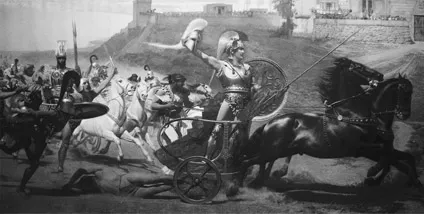
Figure 1.1 Achilles Dragging Hector Before the Walls of Troy1
Imagine for a moment that the president of the United States at the time of the terrorist attacks of September 11, 2001, had been a person who sees life as a stage upon which there is a perpetual struggle between the forces of good and evil. Suppose that he, himself, was a man who had experienced his own life as being a conflict between the good and evil within himself, and that at one point the forces that he called evil had threatened to overtake him and ruin his life.
He had gone somewhat astray in his youth, and he had done things that a future president should not have done—things that were both illegal and unworthy of his family and origins.
Then one day, as the story often goes in America, he saw the light, and he redeemed himself. The forces of good within him triumphed and took control of his life, and he resolved to do his best to become a good and righteous man.
When this future president turned his life around, it instilled within him a deep conviction that the central dynamic of life is a battle in which good is in perpetual conflict with evil. He came to believe that all human beings endlessly wage this war within their soul in which good and evil brawl with one another for control. He came to feel that in this endless moral struggle, sometimes the forces of good prevail, and sometimes the forces of evil win. This was the universe in which he now lived.
After his redemption, this president-to-be was of course grateful that good had triumphed in his own life, and it was only natural that the moral narrative of good and evil became the frame of reference that he brought to understanding much of what happened around him. Now he had a clear and simple way of making sense of life’s complexities.
Having already found that this moral narrative gave coherence and meaning to the events of his own personal struggles, he would now use the same framework to comprehend the larger events of the world with which he would have to deal when he became the president of the United States.
He saw the play of good and evil in almost everything that happened around him. He saw it in the issues of abortion, gun control, welfare and homosexuality in domestic American politics. He saw the international face of evil in the form of terrorism, Islamism, communism and more.
He came to see life itself as one grand jousting match in which the righteous and good people of the world are continually picking up the cudgel of goodness and doing battle with the evil that is present in both themselves and the greater world around them. “Bring it on.”
Now if this kind of man had been president of the United States when the terrorist attacks of 9/11 killed almost three thousand people in New York, Pennsylvania and Washington, DC, how would he have seen those attacks? How would he have reacted to them?
His response, of course, would have been predictable. This president, a well-intended man whose only concern in this context would have been to protect the country he loves, would have plugged the attack into the dominant narrative of his life—the narrative of good versus evil. He would have seen the attack as nothing less than the act of an evil cabal that had to be eradicated from the face of the earth, like all evil.
Acting on this narrative premise, he would have rallied the country to take part in and support a series of what he would call just and necessary wars to eliminate that evil, and this of course is just what he did.
In the wake of the 9/11 attacks, this kind of narrative about good and evil did, to be sure, resonate with a large portion of the American public. The reason that it struck a chord within the hearts of so many Americans is that most human beings, not just Americans, carry around some version of this moral narrative of good and evil within their own hearts and minds. And certainly if anything can be called evil, the attacks of 9/11 were.
Thus it was that the president was not the only person in post-9/11 America that brought a narrative of good and evil to the task of comprehending the events of that day. Many, if not most, of us wanted to go to war and destroy the evil that had struck us such a severe blow, and we wholeheartedly backed the president when he took us down the path to holy war.
But history also records that we Americans were not the only ones to bring a moral narrative to the events of that day. To say the very least, the terrorists saw themselves as righteous warriors engaged in a steeped moral combat as well. They flew the planes that they hijacked into the World Trade Center because they saw America as an imperial country of infidels that was bent on destroying Islam and imposing the American way of life on the Muslim world.
They saw themselves as moral and righteous actors because they felt they were protecting their Islamic religion and their God, and in turn, they saw us as being the evil ones. This was the basic moral narrative that moved them to attack us without any seeming sense of remorse. There can be no doubt that it was this narrative that caused 9/11 itself, and has caused countless other terrorist attacks and wars as well.
What are we to make of the fact that both the terrorists and ourselves brought narratives of good and evil to the events of 9/11? What does it tell us about who we are as human beings?
The ubiquity of this type of moral narrative is a reflection of the fact that most, if not all, of the world’s peoples are brought up to live in a universe that is defined by the presence of good and evil. Even just a cursory look at the world’s religions will tell us that it is the very nature of the socialized human psyche to construct and live in cosmologies that sunder the world into good and evil. We all do it.
Although the details of these morality tales differ from one society to the next, from one culture to the next, and from one era to the next, we all partake of them in our own way. There is God and Satan. Ram and Ravana. Ahura Mazda and Ahriman. The Capitalists and the Communists. Conservatives and Liberals. Believers and Infidels. Pro-choice and Pro-life. White supremacists and people of color.
By and large, humanity lives in stories of good and evil, and we live in these narratives day in and day out even though they drag us off to war, and into lives in which we seek out and thrive on conflict.
How has it come to pass that the vast majority of our species lives in a dualistic moral universe in which good survives by essaying forth every day and projecting itself into a life of eternal combat in which it destroys the forces of iniquity that inhabit both ourselves and the universe? How did this dualistic morality become a universal structure in the human mind? How did these cosmologies that channel us into racism, religious intolerance, terrorism and acts of war become the milieu in which we live our lives?
I just recently watched a video in which a three-hundred-pound mother gorilla is sitting in the sun with her newborn infant on her chest being as tender with that infant as any human mother could ever possibly be. There is much we have in common with the other great apes. Yet despite our similarities, it goes without saying that none of the other members of the animal kingdom—not even our close cousins the great apes—create and live in mythologies that institutionalize a good that requires the righteous destruction of an evil.
In this chapter, we are going to open our investigation into the nature of the healthy mind by first taking a look at the means by which the ego creates a state of mind that is conducive to conflict and even war. In essence, we will be examining the mechanism by which the ego creates the narratives of good and evil that move human beings to commit acts of terrorism and warfare.
After we take a look at this issue, we will then continue our exploration into the nature of the healthy mind by doing a systematic investigation of the structure and dynamics of both the egocentric mind and the egoless mind, and this inquiry will be grounded in the science of the phenomena that appear in the stream of consciousness. The Healthy Mind will evaluate both of these states of mind for the purpose of determining which state of mind is healthier. But first, for now, we will take a look at the ego and its propensity for conflict.
Many of the great personality theorists of the twentieth century have asserted that the ego causes a considerable amount of individual pain, conflict and suffering.2 As part of our inquiry into the nature of the healthy mind, The Healthy Mind is going to focus on describing the broad spectrum of individual psychopathology created by the routine machinations of the ego.3
However, there is also a sociopolitical dimension to this story that is relevant to our task of evaluating whether or not the egocentric mind is a healthy mind, and it is an interesting place to begin our investigation of the healthy mind. Why? Because once you map out the structure and dynamics of the egocentric mind, as we have done, it is difficult to avoid concluding that the conflict that sits at the core of every egocentric mind—think of Freud’s structural theory of the ego and id, for example—is the psychological cause of humanity’s identity-based conflicts: religious intolerance, racism, terrorism, war between nation-states and so forth.
This conclusion has been derived from our theoretical maps of the egocentric mind, which have in turn been derived from our observations of the phenomena that appear in the stream of consciousness (SoC).4 These observations have generated two lines of evidence that support and establish the validity of this hypothesis.
The first line of evidence is the discovery that humanity’s identity-based sociopolitical conflicts have precisely the same structure and dynamic as the egocentric mind’s conflict with itself. As we will be seeing, these two realms of conflict have homologous structures and dynamics.5 This finding suggests that our sociopolitical conflicts are replications of the endemic conflict of the egocentric mind—just as the DNA molecule replicates itself to form new DNA molecules that will pass on genetic information to subsequent generations.
This hypothesis is given further credence by our second line of evidence: we have found the mechanism by which the egocentric mind replicates its structural conflict and transfers it to its social and political relationships with other people. We are going to describe that mechanism in the remainder of this chapter, and we will begin this exposition by first taking a look at the ego itself.
The Ego
The history of personality theory depicts the ego as being a structural entity within the human mind.6 A more colloquial definition of the ego is that it is our self-esteem. If we say that someone has a big ego, we tend to mean he or she has high self-esteem. Or if we say that someone has a huge ego, we mean that they have grandiose self-esteem.
To be certain, self-esteem is both created and lost by the ego, but actually, the ego is much more than an emblem for our self-esteem. The ego is a functioning part of the mind, just as the heart and brain are functioning parts of our body.
If the function of the heart is to pump oxygen and nutrient rich blood to the body, the core function of the ego is to socialize a person by controlling their mind and behavior. In the course of the process of socializing you, the ego does indeed create your self-esteem and identity.
Human beings don’t have an ego when they are born, but our family and society place one inside us as we grow up. The ego that we are all given controls our thoughts, emotions and actions so that we will find a place in and become a well-behaved part of our family and society.
We all have egos because we live in egocentric societies7 that have institutionalized the ego, and employ it for the purpose of socializing its members. As matters stand now, all societies are, to the best of our knowledge, egocentric societies.
However, despite its ubiquity, the ego is problematic. It creates illness within us even as it socializes us. The most fundamental pathology that the ego creates is that it divides the mind in two, and in so doing, it turns each of us into two people: the person you really are and your ego.
This division, in turn, creates conflict within the mind, and to make matters worse, the ego exports that conflict to its relationships with other people. The ego is, if you will, a factory that manufactures conflict both within its own mind when it looks inward, and between people when it looks outward. As we will be seeing, this is one of the several normal pathologies8 that the ego routinely creates within the mind.
The story of the ego begins with the true self. Everybody, every human being, has a true self. Your true self is the person you really are moment to moment.9
As you grow up, your society and family ask you to be somebody different than the person you really are. We are all given an identity, or self-concept, and then told that this received identity is the person we really are, as well as the person we should be. This is something we all experience.
That identity, in turn, becomes the center of your ego, and it defines your place in society10 (Erikson, 1980). The primary function of the ego is to control your mind, actually your stream of consciousness (Vyner, 2007–2008), so that you will become the person that has, or at least to some extent resembles, your given identity.
Once you have an ego, you become two people. First you were just yourself. With an ego in place, you become two people: your true self and your ego. To have an ego is to have a second person in your mind who wants you to be somebody other than the person you really are.
Societies and families do not mean any harm by cultivating an ego within the minds of their youth and turning them into two people. In fact, they mean well. They put this second person into your mind for the purpose of shaping your behavior so as to help you find your place in society. This is simply the way that living in an egocentric society works.
Egocentric societies work on the implicit premise that giving a person an ego and identity will accomplish two basic ends. One, an identity will...
Table of contents
- Cover
- Title
- Copyright
- Dedication
- CONTENTS
- Preface: Cultivating the Wild Stream of Consciousness
- Semantics and Synonyms
- Acknowledgments
- PART I Introduction
- PART II Science of the Stream of Consciousness
- PART III The Egocentric Mind
- PART IV The Egoless Mind
- Index
Trusted by 375,005 students
Access to over 1.5 million titles for a fair monthly price.
Study more efficiently using our study tools.
Frequently asked questions
Yes, you can cancel anytime from the Subscription tab in your account settings on the Perlego website. Your subscription will stay active until the end of your current billing period. Learn how to cancel your subscription
No, books cannot be downloaded as external files, such as PDFs, for use outside of Perlego. However, you can download books within the Perlego app for offline reading on mobile or tablet. Learn how to download books offline
Perlego offers two plans: Essential and Complete
- Essential is ideal for learners and professionals who enjoy exploring a wide range of subjects. Access the Essential Library with 800,000+ trusted titles and best-sellers across business, personal growth, and the humanities. Includes unlimited reading time and Standard Read Aloud voice.
- Complete: Perfect for advanced learners and researchers needing full, unrestricted access. Unlock 1.5M+ books across hundreds of subjects, including academic and specialized titles. The Complete Plan also includes advanced features like Premium Read Aloud and Research Assistant.
We are an online textbook subscription service, where you can get access to an entire online library for less than the price of a single book per month. With over 1.5 million books across 990+ topics, we’ve got you covered! Learn about our mission
Look out for the read-aloud symbol on your next book to see if you can listen to it. The read-aloud tool reads text aloud for you, highlighting the text as it is being read. You can pause it, speed it up and slow it down. Learn more about Read Aloud
Yes! You can use the Perlego app on both iOS and Android devices to read anytime, anywhere — even offline. Perfect for commutes or when you’re on the go.
Please note we cannot support devices running on iOS 13 and Android 7 or earlier. Learn more about using the app
Please note we cannot support devices running on iOS 13 and Android 7 or earlier. Learn more about using the app
Yes, you can access The Healthy Mind by Henry Vyner in PDF and/or ePUB format, as well as other popular books in Theology & Religion & Mental Health in Psychology. We have over 1.5 million books available in our catalogue for you to explore.