- 325 pages
- English
- ePUB (mobile friendly)
- Available on iOS & Android
eBook - ePub
About this book
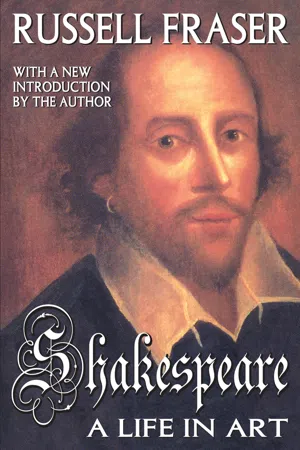
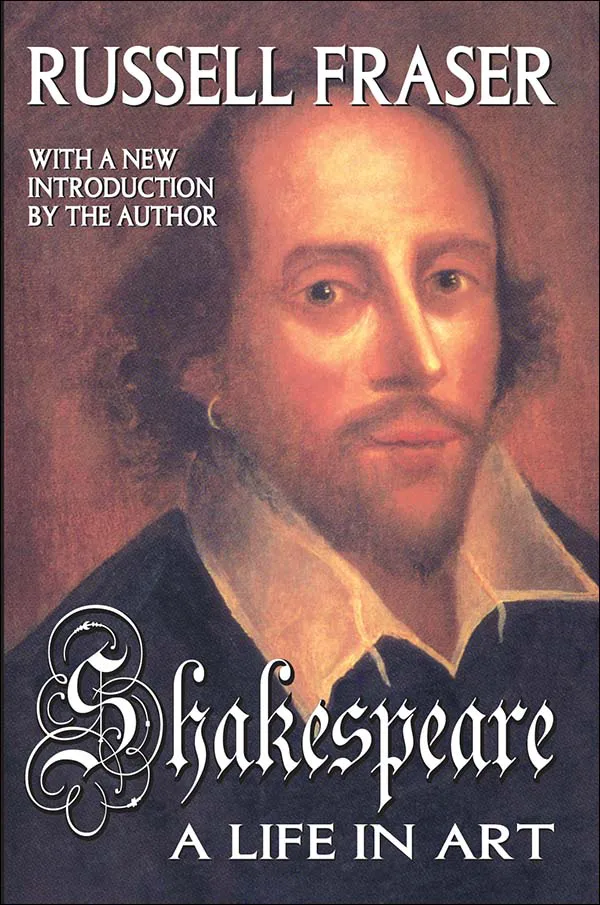
Shakespeare: A Life in Art brings together in a single volume Fraser's previously published two-volume biography (Young Shakespeare, 1988, and Shakespeare: The Later Years, 1992). This volume includes a new introduction, which looks back on the author's lifelong commitment to Shakespeare's work and seeks to find the pattern in his carpet.Fraser's approach places Shakespeare's work first but shows how the life and art interpenetrate, like the yolk and white of one shell. What Shakespeare was doing in Stratford and London underlies what he was writing, or more exactly, the two flow together. Most of the book is devoted to Shakespeare the man and artist, but it simultaneously throws light on his literary and personal relations with contemporaries such as Jonson, Marlowe, and others known as the University Wits. His experience as an actor and man of theater is absorbingly recounted here, as well as his relations to well-born patrons like the Earl of Southampton and Henry Carey, Lord Hunsdon (England's Lord Chamberlain). In 1603 when James I ascended the throne, the Chamberlain's Men became the King's Men, passing under the sovereign's protection. How Shakespeare responded to his ambiguous role--he was both servant to the great and their remorseless critic--is another of Fraser's subjects. In short, Fraser's principal purpose is to advance our understanding of Shakespeare, at the same time throwing light on the work of the man who of all modern, and perhaps ancient poets had the largest and most comprehensive soul. John Dryden, Shakespeare's first great critic, said that, and Fraser tries to estimate what he meant.
Information
Shakespeare
A LIFE IN ART
RUSSELL FRASER

Originally published in 1988 and 1992 by Columbia University Press
Published 2008 by Transaction Publishers
Published 2017 by Routledge
2 Park Square, Milton Park, Abingdon, Oxon OX14 4RN
711 Third Avenue, New York, NY 10017, USA
2 Park Square, Milton Park, Abingdon, Oxon OX14 4RN
711 Third Avenue, New York, NY 10017, USA
Routledge is an imprint of the Taylor & Francis Group, an informa business
New material this edition copyright © 2008 by Taylor & Francis.
All rights reserved. No part of this book may be reprinted or reproduced or utilised in any form or by any electronic, mechanical, or other means, now known or hereafter invented, including photocopying and recording, or in any information storage or retrieval system, without permission in writing from the publishers.
Notice:
Product or corporate names may be trademarks or registered trademarks, and are used only for identification and explanation without intent to infringe.
Product or corporate names may be trademarks or registered trademarks, and are used only for identification and explanation without intent to infringe.
Library of Congress Catalog Number: 2006053015
Library of Congress Cataloging-in-Publication Data
Fraser, Russell A.
Shakespeare : a life in art / Russell Fraser ; with a new introduction by the author.
p. cm.
Originally published as two volumes by Columbia University Press: Young Shakespeare, 1988, and Shakespeare: the later years, 1992.
Includes bibliographical references and index.
ISBN-13: 978-1-4128-0605-3 (alk. paper)
ISBN-10: 1-4128-0605-4 (alk. paper)
1. Shakespeare, William, 1564-1616. 2. Dramatists, English-Early modern, 1500-1700--Biography. I. Fraser, Russell A. Young Shakespeare. II. Fraser, Russell A. Shakespeare, the later years. III. Title.
PR2894.F65 2007
822.3’3--dc22
[B]
822.3’3--dc22
[B]
2006053015
ISBN 13: 978-1-4128-0605-3 (pbk)
For Ted and Lloyd St. Antoine
Mes compaignions cui j’amoie et cui j’aim
(Companions whom I love and love still)
(Companions whom I love and love still)
—Richard Coeur de Lion
Contents
Part Book 2 Shakespeare: The Later Years
Preface
1 Two-Headed Janus
2 The, Revolution of the Times
3 Sailing to Illyria
4 Foots of Nature
5 Treason in the Blood
6 The Wine of Life
7 Bravest at the Last
8 Unpathed Waters, Undreamed Shores
9 Journeys’ End
Index
Book 2
Shakespeare: The Later Years
Preface
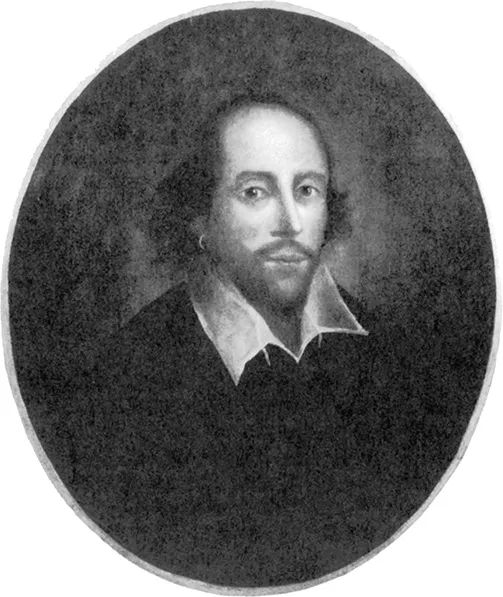
THIS BOOK continues and completes the biography I began with Young Shakespeare (1988). Like its predecessor, it means to run the life and work together, clarifying one in terms of the other. Shakespeare’s work seeks to stand on its own, true of any credentialed artist’s, and saying where it comes from or what it reflects needs reserve and a large dose of tact. Less forthcoming than Henry James, he left no notebooks intimating connections. A few supers in the plays were known to him in person, like Marian Hacket, the fat alewife of Wincot, and that Paolo Marco Lucchese who ran a restaurant in St. Olave’s parish, London, and is summoned by the Duke in Othello. His first version of Polonius, identified by some with Queen Elizabeth’s minister Burghley, is only made-up “Corambis,” however. As a rule, the more life affects him, the less he lets on. But the personal life, though he buries it deep, participates in his art, an energizing presence.
Energizing doesn’t always mean troubled. Whatever the subject, Shakespeare’s art is happy, “the unseen good old man” behind the arras converting grief and vexation to profit. His handling of everyday business, emotionally neutral, is like that. Living much in the world, he takes frequent notice of “current events,” working a sea-change on his material. For example, Bottom’s “lion among ladies” in A Midsummer Night’s Dream. In August 1594, James VI of Scotland, later England’s King, baptized a son. The allegorical pageant that went with the ceremony should have featured a lion drawing a cart. But you couldn’t bring in a fearful beast like a lion, so James’s courtiers used a blackamoor instead. This tale of Scottish naivete, going the rounds in London, came to Shakespeare’s ears and he gave it scope in his play.
On other events of the period, personal to him or too risky to accommodate, Shakespeare is silent. His silences are often speaking silences, however, and what he doesn’t address in so many words turns up in his fictions, lively but encrusted. The Gunpowder Plot, the Midland riots of 1607, and the death of his only son are examples.
A dramatic writer, Shakespeare almost never speaks in his own voice, letting recurrent words or phrases do the talking for him. This technique, like leitmotifs in music, needs highlighting, and I cite his recurrences in notes at the back of the book. Because he seems to me the best gloss on his own work, I quote him often to point the argument, not to adorn the tale. I don’t always identify quotations as such, and where their source isn’t obvious I give it in the notes. My reading of As You Like It being “new,” I have published it separately (as “Shakespeare’s Book of Genesis” in Comparative Drama, Summer 1991).
I have a point of view, sometimes different from the received one, and don’t hesitate to assert it. The portrait of Shakespeare that emerges in these pages won’t meet everyone’s agreement. So with my treatment of matter-of-fact, for instance, the order the plays were written in. Befitting my subject, I have done my best to be scrupulous, and hope at a minimum that readers will call tenable what I put for true.
Downplaying the work in favor of the life would make the going easier. Shakespeare’s life is only worth recording, though, because of the plays and poems that came from it, and I have tried to do them justice, not at great length but sufficient. This obligates readers to know something of Shakespeare’s text, less a burden than a gift, and in any case not to be shirked.
Needing help, I have had the luck to find it. Robert Weisbuch, a source of wit in others, helped me say better what I meant to say. Friends who know their Shakespeare—John Russell Brown, William Ingram, and Alvin Kernan—gave me the benefit of their learning and intelligence. Though my wife Mary Zwiep had her own work to do, precluding much attention to mine, her presence made a difference.
Russell Fraser
Ann Arbor, 1991
Ann Arbor, 1991
1
Two-Headed Janus
REHEARSALS and out-of-town tryouts were over and in 1594, when this curtain goes up, Shakespeare stood before his public fully fledged. Though only thirty that year, he thought his days past the best. Sonnets, mostly youthful work, picture him “as I am now,” crushed by time’s hand or “beated and chopped” with age. For this precocious old man, the world-weariness has its share of literary posing. But his people on the average lived shorter lives than we do and “haggish age” stole on them early.
London when he lived there was a pesthouse, Stratford too. Country air carried death, like the air they breathed in cities. Sanitation mocked itself and his contemporaries sickened from typhus, dysentery, and bubonic plague. His brothers and sisters, seven in all, dropped off one by one, only Joan surviving past middle age. He himself died at fifty-two. Poverty waited at the lane’s end, especially in the nineties, a time of worsening inflation. Some of his acquaintance, like Tom Nashe, went to debtors’ prison and came out to die in straits. Many didn’t have enough to eat or what they ate wasn’t good for them. The Irish of their day, they were often “cup-shotten.” If tradition has it right, a drinking bout finished off Shakespeare. Politics, a subtler scourge, afflicted high and low. One of his fellow playwrights, Thomas Kyd, felt the scourge. A caution to the rest, he fell foul of the thought police. Loyalty today was disloyalty tomorrow and the up-and-down wore them “out of act” or strength.
But “old,” meaning decrepit, also means the real thing, veritable Shakespeare. Romeo, an “old” murderer, is practiced in killing, and Shakespeare at thirty, old or expert in craft, towered over the others, satellites to his pole star. Naturally, he made a target for envious gossip. Robert Greene, a jealous rival, seeking to account for Shakespeare’s ascendancy, compared him to the provident ant. Greene himself was a grasshopper, fiddling the summer out, but his reading, though partial, includes a piece of truth. Shakespeare, his poet’s eye “in a fine frenzy rolling,” had a cold eye when this was wanted.
As success stories go, his seems unlikely. Late in the 1580s he had come up from Stratford, penniless and anonymous. He left behind a wife who had snared him at eighteen, also three children, doubtful assets. The Shakespeare family’s fortunes had to be entered on the debit side too. John Shakespeare saw to that. Once Stratford’s bailiff, he was well along on the road to the poorhouse. Shakespeare’s father liked to litigate and hoped something would turn up. His mother, one of the Ardens, an ancient name in Warwickshire, had her name to console her. For Shakespeare, starting out, the auspices weren’t good. But this through-and-through professional showed them how the career belongs to the talents and by 1592 had ten plays to his credit. Some brought in record returns.
Like a scenario for one of these plays, Shakespeare’s story has its checks and reversals. Plague broke out in London in 1592, closing the theaters, his livelihood, for almost two years. Actors like Will Kempe, the time’s famous comic, and Edward Alleyn, its great tragedian, fled the city, going on tour. If Shakespeare went with them, his travels were abridged. Plague destroyed some acting companies, Pembroke’s Men among them, and likely young Shakespeare belonged to this fellowship. “As for my Lord Pembroke’s,” Henslowe the theater manager wrote Alleyn, his son-in-law, “they are all at home and have been this five or six weeks, for they cannot save their charges [expenses] with travel . . . and were fain to pawn their apparel.” Evidently the playbooks went the way of the apparel and certain plays of Shakespeare’s, once the property of Pembroke’s Men, turn up later in the repertory of a rival company.
But Fortune had better things in mind for this playwright. When plague slackened in the spring of 1594, London’s theaters reopened, the companies returned, and Shakespeare got back in harness. Though Alleyn’s company, the Admiral’s Men, dominated his theater world, other companies competed for popular favor. Shakespeare the apprentice didn’t mind which one he wrote for. In June, Strange’s Men performed two plays of his at Newington Butts, south of the Thames. Before the year was out, the company lost its patron but found a new one, Lord Hunsdon, High Chamberlain of England. In 1594 Shakespeare entered Hunsdon’s service. He remained with this company for the rest of his career.
Pleasing the multitude, he pleased the cognoscenti too. His first attempt at comedy, farce mixed with other things and perfection of its kind, enlivened the Christmas revels in 1594 at the largest of the Inns of Court, London’s law schools. This same December he received a higher accolade, performance before the Queen in her palace at Greenwich. By then pirate publishers had snapped up three of his plays, an index of their growing appeal. The first was Titus Andronicus, dismaying to Bardolaters but a rousing success with the crowd.
A snobbish view held that plays were insubstantial pageants, here today, gone tomorrow. Shakespeare may have concurred (the best in that kind were shadows). But poetry appealed to the ages. “I have built a monument more lasting than bronze,” said Horace, one of his teachers. The pupil hoped to emulate the teacher and by 1594 his skill as a poet was widely acclaimed. Not long after, a contemporary hailed him as the modern Catullus. His two famous poems of the early 1590s, Venus and Adonis and The Rape of Lucrèce, established his credentials as a serious writer, also helping feather his nest. Each carried a dedication to Henry Wriothesley, the Earl of Southampton, a young notability at Court. He was Shakespeare’s patron, perhaps for some years the “master-mistress” of his passion. A patron was expected to reward the poets who flattered him and likely Southampton did this. One way or another, young Shakespeare built a stake.
In 1594 he “staked down,” as in their card game of primero. Formerly a hir...
Table of contents
- Book 1 Young Shakespeare
- Book 2 Shakespeare: The Later Years
Trusted by 375,005 students
Access to over 1.5 million titles for a fair monthly price.
Study more efficiently using our study tools.
Frequently asked questions
Yes, you can cancel anytime from the Subscription tab in your account settings on the Perlego website. Your subscription will stay active until the end of your current billing period. Learn how to cancel your subscription
No, books cannot be downloaded as external files, such as PDFs, for use outside of Perlego. However, you can download books within the Perlego app for offline reading on mobile or tablet. Learn how to download books offline
Perlego offers two plans: Essential and Complete
- Essential is ideal for learners and professionals who enjoy exploring a wide range of subjects. Access the Essential Library with 800,000+ trusted titles and best-sellers across business, personal growth, and the humanities. Includes unlimited reading time and Standard Read Aloud voice.
- Complete: Perfect for advanced learners and researchers needing full, unrestricted access. Unlock 1.5M+ books across hundreds of subjects, including academic and specialized titles. The Complete Plan also includes advanced features like Premium Read Aloud and Research Assistant.
We are an online textbook subscription service, where you can get access to an entire online library for less than the price of a single book per month. With over 1.5 million books across 990+ topics, we’ve got you covered! Learn about our mission
Look out for the read-aloud symbol on your next book to see if you can listen to it. The read-aloud tool reads text aloud for you, highlighting the text as it is being read. You can pause it, speed it up and slow it down. Learn more about Read Aloud
Yes! You can use the Perlego app on both iOS and Android devices to read anytime, anywhere — even offline. Perfect for commutes or when you’re on the go.
Please note we cannot support devices running on iOS 13 and Android 7 or earlier. Learn more about using the app
Please note we cannot support devices running on iOS 13 and Android 7 or earlier. Learn more about using the app
Yes, you can access Shakespeare by Russell Fraser in PDF and/or ePUB format, as well as other popular books in Literature & Literary Biographies. We have over 1.5 million books available in our catalogue for you to explore.