- 320 pages
- English
- ePUB (mobile friendly)
- Available on iOS & Android
eBook - ePub
The Green Travel Guide
About this book
This book suggests ways in which we can enjoy our holidays and our travel even more: by becoming green travellers. It also suggests different types of green holidays and encourages some of the better examples of good environmental practice in holidaymaking around the world.

SECTION TWO
POINTS ON THE GREEN COMPASS
CHAPTER 3
CLOSE TO HOME
BRITAIN
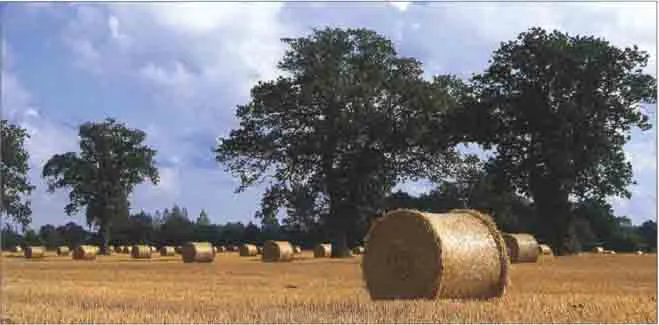
For the British green traveller, holidaying in Britain has many attractions. Remaining closer to home should have environmental benefits: you are travelling less far afield, and using fewer resources. There are also many positive reasons for staying in Britain, a fact that many have already discovered for themselves: out of 54 million holidays of four nights or more taken by Britons in 1996, 57 per cent were spent in the country. In addition to a wealth of beautiful landscapes, historic towns and villages, the environment of the British Isles is our most immediate. The dictum ‘think globally, act locally’ applies most readily here: if we learn to understand and appreciate our local environment, we are more likely to protect it. Having done that, we will be more ready to maintain greener standards elsewhere.
Travelling closer to home means that the normal considerations of transport can be reversed. Walk first, or cycle. Take a bus or a train. Use a car sparingly. However, despite many encouraging local initiatives, it has become progressively harder to use greener modes of transport. Although the newly privatised railway companies in England, Scotland and Wales have pledged to make significant new investment in track and rolling stock, their first few years have been more notable for cancelled or reduced services. Hopefully, as investment begins to take effect, and with the hint of stronger regulation from the Labour government elected in May 1997, public transport will improve, both on rail and road. And, lest it be forgotten, international travel from Britain can have environmental impacts at home and abroad: there has been long-running opposition from many green groups to the plans for a new, fifth terminal at London’s Heathrow Airport, and a new runway at Manchester’s Ringway.

In the British countryside, farming practices encouraged by the European Union’s unreformed Common Agricultural Policy have slowed, but not stopped, the loss of hedgerows, the less-than-discriminate use of agrochemicals, pollution of water courses or the loss or degradation of sites of special scientific interest (SSSIs).
Britons continue to seek out the countryside, however, and this love affair brings its own problems. One is planners’ projections that by early next century some 4.4 million new homes will be needed in Britain, of which many are likely to be built on greenfield sites. Another is the pressure on parts of the countryside most popular with tourists and those wanting to live there – particularly from traffic and the trend towards second-home buying. On a more basic level, access to open space, especially in the country, continues to be a sensitive issue. At the same time, public space continues to be lost in towns, a point recently taken up by radical environmentalists such as The Land Is Ours group. To meet these challenges, as well as Britain’s international environmental commitments, is a daunting challenge for the government.
Britain’s countryside may be increasingly suburbanised but, at its best, each county, indeed each village, retains something of its own local characteristics, its sense of place and belonging, whether reflected in distinctive building styles, local food and drinks or traditional games and customs. The creative environmental group Common Ground has long campaigned to highlight and preserve local distinctiveness, most notably through their annual ‘Apple Day’ celebrations. The Campaign for Real Ale publishes its Good Beer Guide, including a list of pubs and hotels that could form a local distinctiveness itinerary in itself (of course, indistinctiveness might set in a few pints later).
Britain has much to offer the green traveller, whether home-grown holidaymaker or overseas visitor. How and where you spend your time is up to you, but the opportunities are remarkably varied. Walking or cycling holidays, or simply taking off for a few days, can be the best way to see Britain at your own pace (see under Sports and Activity Holidays in Chapter 2 for details). Sadly, the ability to take a bicycle on a train has been reduced in recent years but, where possible, it is a good combination. A series of long-range walks have been established in recent years, covering different types of countryside, and enticing for walkers whether they want to cover several hundred miles in a couple of weeks, or simply take a weekend break. They range from the Highland Way in the north of Scotland, the Pennine Way in northern England and the Scottish Borders, Offa’s Dyke Path in Wales, the Icknield Way in the east of England and the South West Coastal Path, running from Somerset around the Cornish peninsula to Dorset.
Cyclists can explore Britain along those canal paths which remain open, or follow some of the tracks being opened up by such organisations as Sustrans, whose coast-to-coast cycle path across northern England, using a variety of minor roads, bridleways and former railway lines, won the global prize in the Tourism for Tomorrow awards, sponsored by British Airways, in 1995. Of course, it is also possible to combine modes of transport. Walking or cycle tours of the Scottish Islands, for example, will almost certainly involve using ferries that are part of the pleasure, while some of the smaller Welsh valley railway lines are a delight to travel.
Britain’s coastline, rivers and canals also provide routes for those wanting to take to the water whether under sail, by narrow boat or even canoeing. Horse riding and caravanning holidays are increasingly popular, with the former offering the opportunity to leave the tarmac behind for gentler, less crowded bridleways. As for accommodation, that can range from camping out, staying at a youth hostel or a bed and breakfast hotel to enjoying five-star luxury. This book can obviously only hint at the range of possibilities for a British holiday for the environmentally minded. Otherwise, the various tourist boards can provide information on what to see and do in a particular region. See also Chapter 2 for hints on how to enjoy your holiday while also helping protect the environment in Britain, just as you would abroad.
Less of a joy are some of Britain’s beaches. The number of beaches recommended as safe for bathing in The Reader’s Digest Good Beach Guide 1998, was down 8 per cent on the previous year, while only 125 out of the 755 monitored beaches met the Marine Conservation Society’s guideline standards. MCS standards for inclusion in the guide require that a beach does not have inadequately treated sewage routinely discharged within its vicinity, as well as conforming to the highest microbiological standards based on the European Community’s Bathing Water Directive. It should be pointed out that the society’s criteria insist on a higher degree of water cleanliness than the EC directive (see On and In the Water in Chapter 2 for further details).
Compared to elsewhere in Europe, Britain’s wildlife reflects an island landscape that has been largely dictated by human settlement, agriculture and industry over many centuries. The once-native wolf and beaver have long been extinct, and reintroduced ‘wild’ boar are confined to farms. But for all that, naturalists can enjoy themselves in Britain. Most obvious are the tens of thousands of bird watchers who daily and weekly train their lenses on species ranging from commonly found garden visitors to rare species in remote places – red kites in the Welsh Hills, golden eagles and ospreys in Scotland or migratory waders at numerous wildlife reserves across the country. The RSPB can offer information on bird watching holidays.
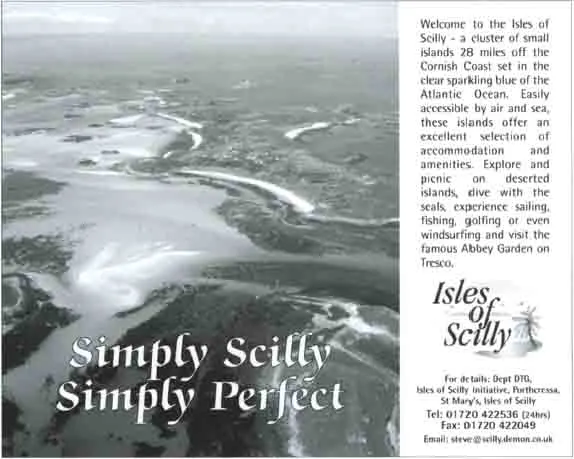
Supporting those aspects of the tourism industry that encourage more environmental awareness is a good way of contributing to practical conservation and sustainable development. In recent years, both the government and the tourism industry have begun to question the environmental sustainability of tourism. The British Tourist Authority (BTA) and the English Tourist Board (ETB) have both supported such efforts as promoting guidelines for ‘sustainable rural tourism’, initiating or supporting award schemes, helping to identify and develop visitor-management techniques and other methods that ‘combine sound business practice with good “green” principles’. Both organisations have developed marketing and promotional schemes to further ‘sustainable’ tourism, particularly to stimulate low-season travel and to ‘effect wider tourist dispersal, to ease congestion where it is environmentally damaging and spread tourism to areas where it is appropriate and acceptable’.
In November 1995, the ETB published an advisory manual, Sustainable Rural Tourism: Opportunities for Local Action, designed for local councils and others in the business of promoting or supplying tourism. In March 1996, the ETB began to distribute a ‘green audit kit’ to help small businesses improve their environmental performance. This and other activities by tourist boards in Scotland, Wales and Northern Ireland followed a period of growing recognition that tourism pressures were having a serious impact on the environment. In 1990 Michael Howard, the then Environment Secretary, set up a taskforce to report on the issue. Its findings were delivered the next year under the title, Tourism and the Environment: Maintaining the Balance (also published by the English Tourist Board). ‘Problems arise from visitor pressure when the relationship between the visitor, the place and the host community is not kept in harmony,’ the report concluded. These problems, it said, were principally:
■ overcrowding, resulting in an unpleasant experience for the visitor, increased risk of damage to the resource and extra pressure on the host community;
■ traffic overload from out-of-place cars and buses;
■ extra wear and tear on the place’s physical fabric;
■ intrusive development which spoils the setting;
■ alienating local communities through noise, unruly behaviour or a change in the character of the place.
’The scale of these problems varies widely from place to place,’ the report argued, going on to suggest that ‘they occur in a severe form at relatively few locations and where they do exist are often concentrated at particular points and specific times’. It concluded that many of the problems could be resolved by better management. But looking ahead, the report sounded a warning. ‘Although techniques to tackle most of the problems can be found, action needs to be taken if unacceptable damag...
Table of contents
- Cover
- Half Title
- Title Page
- Copyright Page
- Table of Contents
- Foreword
- Acknowledgements
- List of Boxes
- Acronyms and Abbreviations
- Introduction
- The British Airways ‘Tourism for Tomorrow’ Award Scheme
- Section One: The Greener Holiday
- Section Two: Points on the Green Compass
- Section Three: The Green Traveller’s Directory
- Index
Trusted by 375,005 students
Access to over 1.5 million titles for a fair monthly price.
Study more efficiently using our study tools.
Frequently asked questions
Yes, you can cancel anytime from the Subscription tab in your account settings on the Perlego website. Your subscription will stay active until the end of your current billing period. Learn how to cancel your subscription
No, books cannot be downloaded as external files, such as PDFs, for use outside of Perlego. However, you can download books within the Perlego app for offline reading on mobile or tablet. Learn how to download books offline
Perlego offers two plans: Essential and Complete
- Essential is ideal for learners and professionals who enjoy exploring a wide range of subjects. Access the Essential Library with 800,000+ trusted titles and best-sellers across business, personal growth, and the humanities. Includes unlimited reading time and Standard Read Aloud voice.
- Complete: Perfect for advanced learners and researchers needing full, unrestricted access. Unlock 1.5M+ books across hundreds of subjects, including academic and specialized titles. The Complete Plan also includes advanced features like Premium Read Aloud and Research Assistant.
We are an online textbook subscription service, where you can get access to an entire online library for less than the price of a single book per month. With over 1.5 million books across 990+ topics, we’ve got you covered! Learn about our mission
Look out for the read-aloud symbol on your next book to see if you can listen to it. The read-aloud tool reads text aloud for you, highlighting the text as it is being read. You can pause it, speed it up and slow it down. Learn more about Read Aloud
Yes! You can use the Perlego app on both iOS and Android devices to read anytime, anywhere — even offline. Perfect for commutes or when you’re on the go.
Please note we cannot support devices running on iOS 13 and Android 7 or earlier. Learn more about using the app
Please note we cannot support devices running on iOS 13 and Android 7 or earlier. Learn more about using the app
Yes, you can access The Green Travel Guide by Greg Neale in PDF and/or ePUB format, as well as other popular books in Business & Hospitality, Travel & Tourism Industry. We have over 1.5 million books available in our catalogue for you to explore.