eBook - PDF
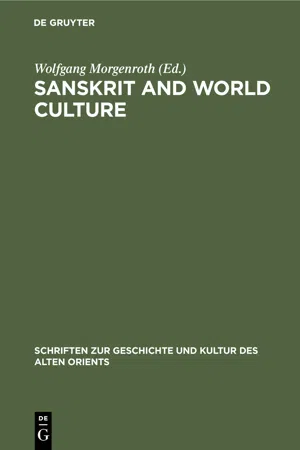
Sanskrit and World Culture
Proceedings of the Fourth World Sanskrit Conference of the International Association of Sanskrit Studies, Weimar, May 23–30, 1979
- 776 pages
- English
- PDF
- Available on iOS & Android
eBook - PDF
Sanskrit and World Culture
Proceedings of the Fourth World Sanskrit Conference of the International Association of Sanskrit Studies, Weimar, May 23–30, 1979
Information
Table of contents
- Foreword
- Preface
- Contents
- 1. Sanskrit and Humanistic Sciences
- Le sanskrit et la culture générale du monde
- 2. Ancient History of South Asia
- Society and State in Ancient India — Based on Sanskrit Sources, Mainly on the Arthasāstra
- The Kidarite Kings in Kalhaṇa's Rājataraṅgiṇī
- Pflugtypen nichtarischer Völkerschaften in historischer Wertung. Zur Entwicklung der Produktivkräfte auf dem indischen Subkontinent
- Spuren bäuerlichen Widerstandes gegen die Feudalabhängigkeit in der frühfeudalen Phase (5.-8. Jh. u. Z.) in Indien im Vergleich zu West- und Osteuropa
- Prakṛtilcopa, janapadalcopa — Formen sozialer und politischer Auseinandersetzungen in der altindischen Gesellschaft
- Frühe Formen des Grundeigentums in Indien - urvarā und kṣetra im Ṛgveda
- From gopati to bhūpati. A Review of the Changing Position of the King
- 3. The Role of Sanskrit in South Asia
- Sanskrit Culture and Modern Nepalese Poetry
- Die Rolle persischer Übersetzungen der Sanskritschriftdenkmäler in der indo-moslemischen kulturellen Synthese
- Джаядева и вишнуитская лирика в Бенгалии
- Traces of Saivism and Visnuism in the Traditional Ethno-Areal Forms of the Folk Theatre and Dance
- Indian Myths and Legends in R. K. Nārāyaṇ's Interpretation
- Some Problems of the Sanskrit Elements in Nepalī
- Le sanskrit et les écrivains musulmans à l'époque mogole
- Die Bedeutung der klassischen indischen Philosophie für die moderne Philosophie Indiens, dargestellt am Beispiel Bāl Gaṅgādhar Tilaks und Swāmī Vivekānandas
- Влияние Теории Классиуеской Поэтики Ратуру Хинди Позднего Средневековья
- Revival in the Sanskrit mahākāvya Tradition
- Sanskrit Inscriptions of Ancient Assam
- On the Impact of the Ancient Indian Literary Tradition on Prose dastans in Urdū
- The Influence of Sanskrit Poetical Motifs and Technique on Sinhala Poetry
- Cultural Heritage of the Peoples of India and Its Role in the Development of Modern Literature
- Bhāgavatapurāṇa Tradition and Poetry of Vaiśnava Bhakti
- 4. The Role of Sanskrit in the World
- 4.1. Sanskrit in Central Asia
- On the Tibetan and Mongolian Translations of Sanskrit Grammatical Works
- Краткий обзор тибетских и монгольских сборников рассказов из Пануаманмры
- Zur Entwicklung mittelasiatischer Wandmalerei unter indischem Einfluß
- Notes on the Tibetan Tradition in Grammar
- Tibetische Autoren über indische Einflüsse in der lamaistischen medizinischen Literatur
- Санскритские Поэтиуеские Термины И Стили В Монгоьской Поэзии XIV В
- 4.2. Sanskrit in South East Asia
- Some Traces of the Theory of rasa in Malay Classical Literature. Remarks on the Problem of Hindu-Moslem Synthesis
- Die Entwicklung des Sanskrit-Wortbestandes in der Bahasa Indonesia (indonesische Sprache)
- Rāmakerti — The Khmer (or Cambodian) Rāmāyaṇa
- "Prepositions" and "Conjunctions" of Bahasa Indonesia Borrowed from Sanskrit
- The Vyāsa-subhāṣita-saṃgraha. A Unique Sanskrit Anthology Prevalent also in Śrī Laṅkā and Thailand
- 4.3. Sanskrit in Europe
- La résonnance de la pensée indienne dans la culture roumaine
- British Periodical Reaction to Sir William Jones's Introduction of Sanskrit Culture to the West
- From prāṇāgnihotra to Eucharist
- The Connection between the Pañcatantra and Cervantes' Dialogue of the Dogs
- Indian Influence In Danish Literature
- Tantrismus und Europäisches Naturgefühl
- Mahābhārata Motifs in Classical Greek and Latin Sources
- Contribution of Leon Cyboran (1928-1977) to the Study of Philosophy of Yoga
- 5. Linguistics
- 5.1. General and Comparative Linguistics
- Les Sanskrits et les procédés d'hiérophanisation par le langage
- A Critical Examination of Grermano-Indo-Aryan Isoglosses and Their Significance for the Reconstruction of Indo-European Culture
- Die aktuelle Bedeutung der Indologie für die Sprachwissenschaft
- Desemantization and Grammaticalization of Sanskrit sodara/sodarī in the Bahasa Indonesia
- 5.2. Descriptive and Historical Grammar of Sanskrit
- Zur Vorgeschichte der altindischen reduplizierten Verbaladjektive auf -i
- A Collection of Sentences for the Student of Sanskrit
- Zu den ai. Nominalstämmen auf -añc-. Eine Erwiderung mit methodologischen Bemerkungen
- The Problem of Visarga
- Sanskrit und Sprachstatistik
- 5.3. Sanskrit Lexicon
- Ein etymologischer Beitrag zum Vedischen: ūrú-
- La racine sanscrite kamp à la lumière des faits iraniens
- Sanskrit kapi and kareṇu
- Die Brennlinse im alten Indien
- Some Problems of the Sanskrit Terminology of Agriculture
- 5.4. Middle Indo-Aryan
- Grammatical Incorrections, Stylistic Choices, Linguistic Trends —With Reference to Middle Indo-Aryan
- Nirguṇ Literature-Lexicographical Difficulties
- Die Entwicklung des Verbums vom Altindischen zum Päli
- Inscriptions in Hybrid Sanskrit from Gilgit and from Laghmān
- The Dialectal Variety of Middle Indo-Aryan
- Early Brajbhāṣā Morphology. Some Pronominal Characteristics
- 5.5. Indian Grammar and Lexicography
- Bhartṛharis Begriff der Wirksamkeit (kriyā). Einige Gedanken zum Thema, ausgehend von Vākyapadīya III.8.21
- Eine Handschrift von Venīdattas Pañcatattvaprakāśa aus dem 17. Jahrhundert
- Sanskrit Semantics. Its Development and Evaluation
- Some Pāṇinian Roots Which are Used Only in European and Persian Languages
- 6. Philosophy and Religion
- 6.1. Veda
- Prayogaratna of Nrsimhayajvan. Manuscript Notes
- The Comparative Antiquity of Indra and Varuna
- The Cosmic, Cyclical Dying (parimara). Aitareya Brāhmaṇa 8,28 and Kauṣītaki Upaniṣad 2,11-15
- Textkritische Bemerkungen zum Cāturmāsya-Abschnitt des Vārāha-Śrautasūtra
- Vedic kṛtyā́ and the Terminology of Magic
- Textkritisches zur Paippalāda-Samhitā
- The Cow Sacrifice in the Tradition of India as Referred to by Kālidāsa
- On Death and Other Subjects in the Rgveda
- Acchāvākīya und potra — ein Vergleich
- Paippalāda-Saṃhitā-the Orissan Recension of the Atharvaveda. Some Observations
- Bemerkungen zu den vedischen Metaphern und Identifikationen
- Treatment of Gods in the Vedas. A Psychological Study of the Notion of Devatva
- 6.2. Buddhism and Jainism
- Jīwa and ajīva
- Some Remarks on the Pratītyasamutpāda
- The Works of Nāgārjuna in Sanskrit
- Genesis of Milinda-Pañha
- 6.3. Hinduism
- The Pāśupatas as seen by the Śaivas
- The Theory of Creation an Advaita Vedantic Interpretation
- The Concept of Yoga in the Bhagavadgītā
- Pātañjala-Yoga-Sūtras and Psychic Science. A New Approach to Arrive at the True Meanings of Yogic Siddhis
- From Bhakti to Prapatti—The Theory of Grace in the Pāñcarātra System
- Some Observations on the Śaiva Kula System
- Vikalpa as Defined by Vijñānabhiksu in the Yogavārttika
- Classical Sāṃkhya about the Ultimate Elements of the Material World
- Trilocana — A Forgotten Naiyāyika
- 7. Natural Sciences and Medicine
- Tradition of Rationalist Medicine in Ancient India. Case for a Critical Analysis of the Caraka-saṃhitā
- Some Emendations to the Text of Ravigupta's Siddhasāra
- Études āyurvédiques. II. Déontologie módicale et orthodoxie brahmanique
- Some Highlights of Astronomy and Mathematics in Medieval India
- Mathematical Knowledge in the Epoch of the Harappa Culture — On the Materials from the Excavations in Lothal
- 8. Poetry
- 8.1. Epics Including Purānas
- Purānic Attempts to Fix a Purānic Canon
- Sanskrit Epic Tradition. II. The avātara Accounts of Rāma
- Textual Layers of the Bhagavadgītā as Traces of Indian Cultural History
- Über die altindischen Epen
- Oral Tradition as Reflected in the Great Epics
- 8.2. Classical Poetry
- Some Remarks about the Mudrārāksasa of Viśākhadatta
- Zum Problem des Tragischen — untersucht am Hauptkonflikt des Dramas Uttarāramacaritam von Bhavabhūti
- Bhartrhari Problem in Contemporary Indology
- Jīvānandanam—A Medico-Literary Drama
- 8.3. Narrative Literature
- Folktales in Prakrit Literature
- 8.4. Indian Poetics
- The Indian Theory of anaucitya in Aesthetic Relish
- Concept of Obscenity (aślīlatā) in Sanskrit Poetics
- Essai de lecture d'un poème sanskrit
- 9. Archaeology and Art History
- Weltbilder und indo-iranische Architekturformen
- Symbolism of mithuna Sculptures. An Inquiry into the Intellectual Background of Their Patrons, Artists and Worshippers
- The Garland of Letters (Varnamālā). Remarks on the Symbolism of Kālī
- Archäologische Tradition indischer Volkskunst
- Entwicklung und Tradition indischer Terrakottaplastik
- Mathurā und die Herausbildung des Gupta-Stils
- On the Structure of rta and brahman (brahmodya)
- A Unique Image of Umā—Maheśvara
- Das Rāmāyaṇa in der indischen Volkskunst. Anmerkungen zu einer Bildrolle aus Midnapur
- Gānasopāna — a Work on Indian Classical Music by Shri Gulābrao Mahārāja
- Plates
Trusted by 375,005 students
Access to over 1.5 million titles for a fair monthly price.
Study more efficiently using our study tools.
Frequently asked questions
Yes, you can cancel anytime from the Subscription tab in your account settings on the Perlego website. Your subscription will stay active until the end of your current billing period. Learn how to cancel your subscription
No, books cannot be downloaded as external files, such as PDFs, for use outside of Perlego. However, you can download books within the Perlego app for offline reading on mobile or tablet. Learn how to download books offline
Perlego offers two plans: Essential and Complete
- Essential is ideal for learners and professionals who enjoy exploring a wide range of subjects. Access the Essential Library with 800,000+ trusted titles and best-sellers across business, personal growth, and the humanities. Includes unlimited reading time and Standard Read Aloud voice.
- Complete: Perfect for advanced learners and researchers needing full, unrestricted access. Unlock 1.5M+ books across hundreds of subjects, including academic and specialized titles. The Complete Plan also includes advanced features like Premium Read Aloud and Research Assistant.
We are an online textbook subscription service, where you can get access to an entire online library for less than the price of a single book per month. With over 1.5 million books across 990+ topics, we’ve got you covered! Learn about our mission
Look out for the read-aloud symbol on your next book to see if you can listen to it. The read-aloud tool reads text aloud for you, highlighting the text as it is being read. You can pause it, speed it up and slow it down. Learn more about Read Aloud
Yes! You can use the Perlego app on both iOS and Android devices to read anytime, anywhere — even offline. Perfect for commutes or when you’re on the go.
Please note we cannot support devices running on iOS 13 and Android 7 or earlier. Learn more about using the app
Please note we cannot support devices running on iOS 13 and Android 7 or earlier. Learn more about using the app
Yes, you can access Sanskrit and World Culture by Wolfgang Morgenroth in PDF and/or ePUB format, as well as other popular books in Philosophy & Philosophy of Religion. We have over 1.5 million books available in our catalogue for you to explore.