In a masterful survey of the history of the idea of human perfection, prize-winning author and noted rhetorician Michael J. Hyde leads a fascinating excursion through Western philosophy, religion, science, and art. Eloquently and engagingly he delves into the canon of Western thought, drawing on figures from St. Augustine and John Rawls to Leonardo da Vinci and David Hume to Kenneth Burke and Mary Shelley. On the journey, Hyde expounds on the very notion and "Otherness" of God, the empirical and ontological workings of daily existence, the development of reason, and the bounds of beauty. In the end, he ponders the consequences of the perfection-driven impulse of medical science and considers the implications of the bourgeoning rhetoric of "our posthuman future." It is nothing short of a triumphant examination of why we humans are challenged to live a life of significant insignificance.
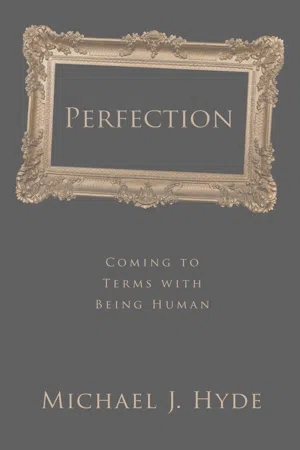
- 341 pages
- English
- PDF
- Available on iOS & Android
eBook - PDF
About this book
Information
Topic
PhilosophySubtopic
Ethics & Moral PhilosophyTable of contents
- Cover
- Half Title, Title Page, Copyright, Dedication, Epigraph
- Contents
- Acknowledgments
- Preface
- 1. Coming to Terms with Perfection
- 2. God on a Good Day
- 3. Interpreting the Call
- 4. The Otherness All Around Us
- 5. Reason
- 6. Beauty
- 7. The Lived Body
- 8. The Good Life, the Good Death
- 9. The Biotechnology Debate
- 10. On Being an Oxymoron
- Notes
- Index
Trusted by 375,005 students
Access to over 1.5 million titles for a fair monthly price.
Study more efficiently using our study tools.
Frequently asked questions
Yes, you can cancel anytime from the Subscription tab in your account settings on the Perlego website. Your subscription will stay active until the end of your current billing period. Learn how to cancel your subscription
No, books cannot be downloaded as external files, such as PDFs, for use outside of Perlego. However, you can download books within the Perlego app for offline reading on mobile or tablet. Learn how to download books offline
We are an online textbook subscription service, where you can get access to an entire online library for less than the price of a single book per month. With over 1.5 million books across 990+ topics, we’ve got you covered! Learn about our mission
Look out for the read-aloud symbol on your next book to see if you can listen to it. The read-aloud tool reads text aloud for you, highlighting the text as it is being read. You can pause it, speed it up and slow it down. Learn more about Read Aloud
Yes! You can use the Perlego app on both iOS and Android devices to read anytime, anywhere — even offline. Perfect for commutes or when you’re on the go.
Please note we cannot support devices running on iOS 13 and Android 7 or earlier. Learn more about using the app
Please note we cannot support devices running on iOS 13 and Android 7 or earlier. Learn more about using the app
Yes, you can access Perfection by Michael J. Hyde in PDF and/or ePUB format, as well as other popular books in Philosophy & Ethics & Moral Philosophy. We have over 1.5 million books available in our catalogue for you to explore.