eBook - ePub
Available until 31 Dec |Learn more
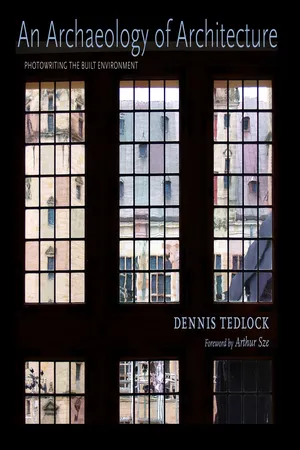
An Archaeology of Architecture
Photowriting the Built Environment
This book is available to read until 31st December, 2025
- 168 pages
- English
- ePUB (mobile friendly)
- Available on iOS & Android
eBook - ePub
Available until 31 Dec |Learn more
About this book
Page by page, this book takes us on a journey through the built world that ranges from Greece to Guatemala and from New York to San Francisco. Tedlock practices what he calls photowriting, a creative process that brings photographer and writer together in the same person. It may be true enough that a photograph can show more than words can say, but it is equally true that words can say more than a photograph can show. A third space opens up in the middle, where the viewer reader can look back and forth between image and text at will.
Tedlock looks at the built world with the eye of an archaeologist and ethnographer His long experience as a fieldworker has made him acutely aware of the ways in which buildings are continuously altered by human actions and natural forces Anthropology assigns ruins to archaeology and structures currently in use to ethnology, but Tedlock reminds the viewer that an occupied building bears marks of the same processes that produce archaeological remains. As he puts it, “Whenever I look around at the worlds humans build for themselves, I see archaeology in the making.”
Tedlock looks at the built world with the eye of an archaeologist and ethnographer His long experience as a fieldworker has made him acutely aware of the ways in which buildings are continuously altered by human actions and natural forces Anthropology assigns ruins to archaeology and structures currently in use to ethnology, but Tedlock reminds the viewer that an occupied building bears marks of the same processes that produce archaeological remains. As he puts it, “Whenever I look around at the worlds humans build for themselves, I see archaeology in the making.”
Frequently asked questions
Yes, you can cancel anytime from the Subscription tab in your account settings on the Perlego website. Your subscription will stay active until the end of your current billing period. Learn how to cancel your subscription.
At the moment all of our mobile-responsive ePub books are available to download via the app. Most of our PDFs are also available to download and we're working on making the final remaining ones downloadable now. Learn more here.
Perlego offers two plans: Essential and Complete
- Essential is ideal for learners and professionals who enjoy exploring a wide range of subjects. Access the Essential Library with 800,000+ trusted titles and best-sellers across business, personal growth, and the humanities. Includes unlimited reading time and Standard Read Aloud voice.
- Complete: Perfect for advanced learners and researchers needing full, unrestricted access. Unlock 1.4M+ books across hundreds of subjects, including academic and specialized titles. The Complete Plan also includes advanced features like Premium Read Aloud and Research Assistant.
We are an online textbook subscription service, where you can get access to an entire online library for less than the price of a single book per month. With over 1 million books across 1000+ topics, we’ve got you covered! Learn more here.
Look out for the read-aloud symbol on your next book to see if you can listen to it. The read-aloud tool reads text aloud for you, highlighting the text as it is being read. You can pause it, speed it up and slow it down. Learn more here.
Yes! You can use the Perlego app on both iOS or Android devices to read anytime, anywhere — even offline. Perfect for commutes or when you’re on the go.
Please note we cannot support devices running on iOS 13 and Android 7 or earlier. Learn more about using the app.
Please note we cannot support devices running on iOS 13 and Android 7 or earlier. Learn more about using the app.
Yes, you can access An Archaeology of Architecture by Dennis Tedlock in PDF and/or ePUB format, as well as other popular books in Architecture & Architecture General. We have over one million books available in our catalogue for you to explore.
Information
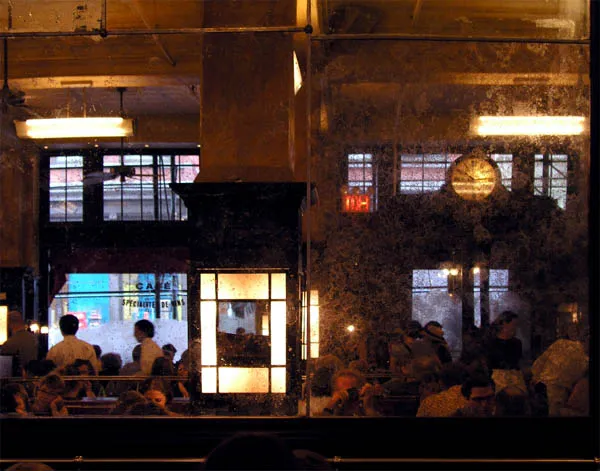
An Old Paris Brasserie
The reversed lettering of the red EXIT sign tells us we are looking into a mirror, but the words in the window are not reversed, since the mirror has given us the view of a person reading from outside the café in which we find ourselves. At right is a clock whose roman numerals, running counterclockwise, are hard to read through the tarnished silvering of the mirror. The long hand, pointing right, has climbed one minute past IX. On the other side of the clock, the short hand has descended most of the way from I to II. Taking the daylight outside into account, the time is 1:46 p.m., and we can imagine that the people inside, some seated at tables and others at a bar, are eating lunch. From the white shirts of the two standing men at left and the black-and-white attire of the standing woman and bending man at right, we can infer that they all belong to the wait staff. The man facing us at bottom center, holding a camera with both hands, is taking the picture at this very moment. It is May, and seven Mays before this one, the result would have been a picture of a leather wholesaler’s warehouse. When the café opened, the reviewer for the New York Times observed that “it has the weary, slightly cynical look of an old Paris brasserie.” It is named for Balthazar, the magus whose gift was myrrh. We are on Spring Street at the corner of Crosby, in SoHo.
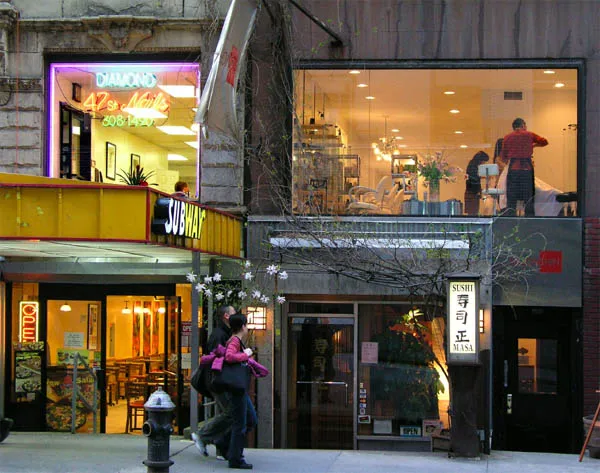
Shiatsu Shampoo and Sushi
Shortly before sunset, the light inside these four places of business becomes brighter than the light outside. The Subway shop is empty but stands ready to swallow its customers, drawing them under its trademark marquee, telling them in neon that the open door is open, and luring them inside with photographs of salads, not sandwiches. In the window above, neon names a nail salon for 47th Street, and this is East 47th Street, not far from the United Nations. Next door to Subway, the more intimate experience offered by Sushi Masa has caught the attention of the couple walking down the street with laptop bags. Standing in place of pictures of food is a star magnolia tree in full bloom, with leaves just beginning to come out. To the right behind the signpost, a greening vine emerges from a wooden planter, reaches up through a trellis, grasps the pole that holds the banner at top center, and climbs clear out of the picture. The door at bottom right leads to Salon Shin, whose square red logo appears above the door and again on the banner. Haircuts and styling are preceded by a shiatsu shampoo and massage. From the sushi and shiatsu side of the picture, the boundary between the two buildings is blurred by the magnolia tree, the vine, and the April breeze that moves the banner.
Four Kinds of Writing
The summer sun is still high enough to reach down to the delivery vans on the west side of Stockton Street, between Pacific Avenue and Jackson Street in San Francisco. Before the vans arrived, three scripts accounted for all the writing on display here: traditional Chinese characters (not the simplified characters promoted by the PRC), uppercase Roman letters, and Arabic numerals, all intended to be legible for anyone needing to read them. Between the vans is the entrance to Wing Sing Dim Sum, Cantonese for “Eternal Victory Snacks,” an eatery that takes no reservations, accepts no credit cards, makes no deliveries, and has no waiters, no alcohol, no TV, and no Wi-Fi. There are a few tables, but most people come for takeouts. Just $4.00 will buy us rice plus our choice of one of the scores of fried, steamed, or baked items on display in the window to the left of the entrance. A fourth kind of writing comes and goes with the vans, carrying secret messages.

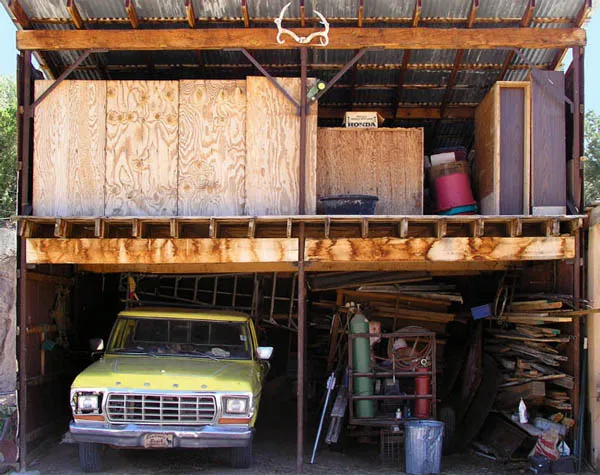
Lower on the Driver’s Side
Iron pipes and pine boards frame this four-part shed. Corrugated galvanized steel covers the roof, and the sides are walled with sheet metal and Masonite. The antlers at the top have seven points that were becoming eight in the year the buck was shot. Whatever is stored at top left is masked with plywood, but on the right we can see a toy John Deere tractor, a box that held a fragile part for a Honda, a black tub used to mix mortar, and an upside-down stack of plastic buckets. Below, on the right side, are a folded aluminum ladder, a galvanized steel trash can, a spray can, scrap lumber, and at the lower right corner, two dead batteries. Welding equipment and a one-cylinder motor fill a two-wheeled trailer with its hitch held up by a wire crate. Backed in on the left is a ’79 Ford pickup that rides closer to the road on the driver’s side. The owner must have traveled many a rough mile without a passenger to balance his weight. The front plate bears the silhouette of a donkey and names the Centinela Ranch, in Chimayó, New Mexico. Among the ranch’s breeding stock are mammoth donkeys, meaning that the jacks stand at least 56” high at the withers and the jennies at least 54”. Behind the truck are a broom and a ten-foot ladder. Mounted on the wall to the left, where it fades into the darkness, is a God’s eye made of yarn wound around spokes, each one tasseled at the tip.
Carl Nielsen’s Cantata
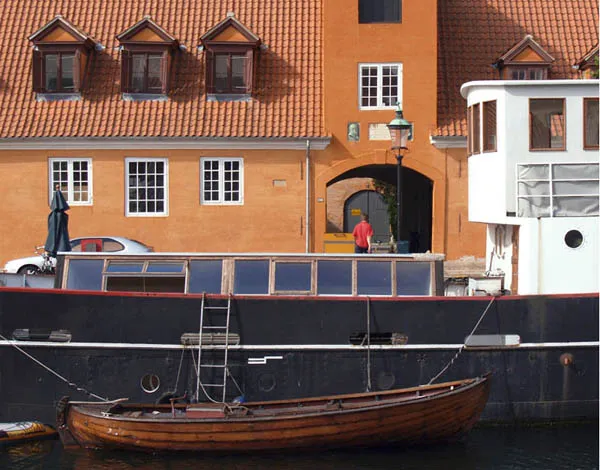
Moored in the canal in front of this orange-yellow building is a cargo boat converted into a houseboat, with a parasol folded shut on the foredeck. Elsewhere in Copenhagen are other buildings whose red bricks have been covered by layers of lime wash mixed with dark yellow ochre, and other houseboats. This one floats in Frederiksholms Kanal, marking the southwest side of Slotsholmen, the “Castle Islet” at the ancient center of the city. Moored to the houseboat is a motorboat the owner uses to make short trips around the city, one hand on the red throttle and the other on the handle of the rudder. The building, number 28B, dates from 1711. It houses the sculpture school of the Royal Danish Academy of Fine Arts. Above the entrance, a plaque and two bronze busts mark this as the place where father-and-son sculptors H. V. Bissen and Vilhelm Bissen had their workshop from 1842 to 1913. On June 9, 1925, a passerby might have caught the words of a song about apple blossoms shedding their petals. In a garden somewhere inside, Carl Nielsen was conducting a cantata that celebrates youth, this on the occasion of his sixtieth birthday. Today, in front of the entrance, a delivery boy is stepping off his cycle to lift the lid of the yellow box that carries his cargo. Beyond him, across a courtyard, two dark triangles on a yellow sign warn of danger behind closed doors.
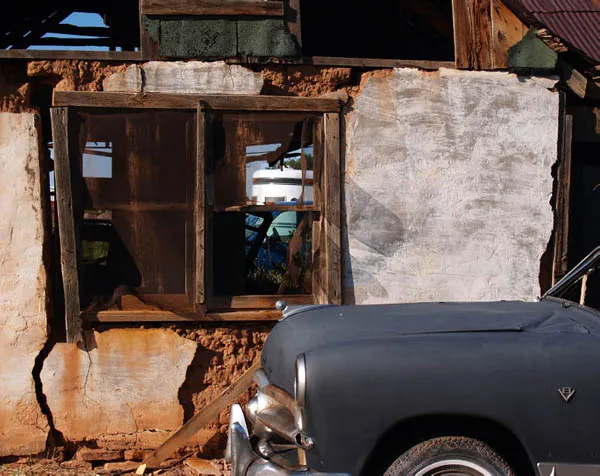
The Car That Saved Ford
Parked in front of this abandoned house is a sleek, slab-sided Ford V8 sedan, advertised as “the car of the year” in 1949 and described by the auto industry as “the car that saved Ford.” The current owners, who live in Punta de Agua, New Mexico, have taken a step toward restoration by fitting it out with whitewall tires. They removed the old paint and applied a matte undercoat, but left the dent in the hood intact and have yet to add a coat of lustrous enamel. As for their house, they left it to the weather when they built a new one behind it. Rain has thinned the whitewash, exposing the brushstrokes. Under the plaster are courses of adobe bricks made from local earth, the same earth that colors the tire tread. The plaster would not have separated from the wall if the builders had nailed chicken wire to the bricks before applying it. Beneath the bricks a shallow foundation of local flagstone has shifted, creating a gap between the left side of the wooden window frame and the adjoining wall. Traces of red paint remain on the frame. The glass is gone, but remnants of shiny copper screening hang in the openings. It is now September, late in the rainy season, and the weeds inside the house have grown tall. Visible beyond the upended bedsprings and the open back door is the cab of a blue pickup with its tinted windows rolled up. Beyond that, a new horse trailer gleams in the sun.
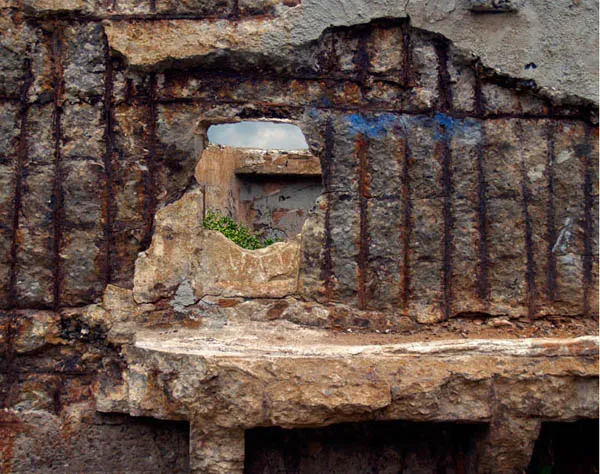
Joseph Sutro’s Underworld
Now these walls expose their rebar to the salt air, but there was time when they supported the power plant and laundry for the world’s largest glass-enclosed bathing pavilion. Housed under the same roof were six saltwater pools with different temperatures, 500 dressing rooms, seating for 7,000 spectators, a balcony for an orchestra, two restaurants, and a museum that featured stuffed animals. All bathers were provided white towels and black wool swim suits, and the laundry was capable of washing as many as 40,000 towels and 20,000 suits in a single day. Joseph Sutro, a Prussian emigrant to San Francisco, got the idea for the pavilion in 1881, while looking at tidal pools near Point Lobos. He chose a building site near Seal Rocks, and by 1896, the Sutro Baths were ready for bathers at 10¢ a head. The baths were closed in 1953 and the pavilion burned down to the foundations in 1966. At the time, local Satanists had been saying there were tunnels underneath the pavilion, providing access to the surface of the earth for malevolent beings who live in the underworld.
Herodes Atticus Hosts Puccini
A stage set is under construction here, in what remains of a classical theater. Four carpenters admire their handiwork, two on the balcony at left and two at front center. Visible at lower left are the bottom rows in a great semicircle of marble seats. If the stage had been built in the Greek style, it would have been the same width as the distance between the closest front row seats at each side, but this stage is wider, in Roman style. The architect followed the writings of Vetruvius in making the stage five feet high, but the carpenters have added a superstructure that reduces the view from the lower seats. The original backdrop was three stories high clear across, reaching the same height as the semicircular portico that rose behind the topmost row of seats and sheltered theatergoers from showers. Vetruvius describes the reason for the equal heights as acoustical. Beyond the backdrop is a city, and the white building adorned with cornices is distinctly Greek. We are in Athens, looking down on the Odeon of Herodes Atticus from the southern rim of the Acropolis. He built this theater in the year 161, in memory of his wife Aspa...
Table of contents
- Cover
- Half title
- Title
- Copyright
- Contents
- Foreword
- Prologue
- Introduction
- Photowriting the Built Environment
- Acknowledgments