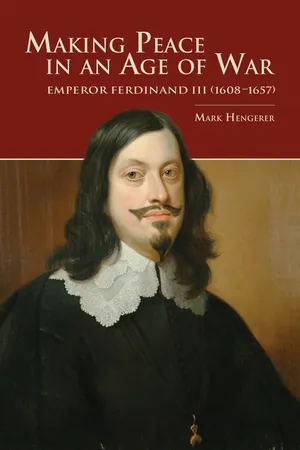
This English-language translation of Mark Hengerer's Kaiser Ferdinand III: 1608–1657 Eine Biographie is based on an analysis of the weekly reports sent by the papal nuncio's office to the Vatican. These reports give detailed information about the daily whereabouts of the dynasty, courtiers, and foreign visitors, and they contain the gossip of the court in addition to weekly analysis of some political problems. This material enabled the author to report on daily life of the dynasty and to analyze the circumstances under which policy was made, which has led to a balance between the personality of Ferdinand III and the problems with which he dealt. In this biography, Hengerer provides answers to the question: Why did it take the emperor more than ten years to end a devastating war, the traumatizing effects of which on central Europe lasted into the twentieth century, particularly since there was no hope of victory against his foreign adversaries from the very moment he came into power?
- 329 pages
- English
- ePUB (mobile friendly)
- Available on iOS & Android
eBook - ePub
About this book
Information
PART I
THE WAY TO THE THRONE, 1608–1637
1.1
PATH TO THE IMPERIAL THRONE, 1608–1636
Heir and Spare
In mid-May of 1608, people in Graz expected Anna Maria, wife of Archduke Ferdinand, to give birth within a few days, and they fervently hoped for a son. Since her marriage in 1600, she had already borne three children; only one son had survived. At the beginning of June, the birth was still thought to be imminent, and when it had not happened by the beginning of July, it became apparent that there had been an error in the calculation of the due date. It was not until two weeks later, around twelve o’clock at night from July 12 to 13, that the archduchess delivered a son. The birth, so eagerly awaited, went smoothly; both mother and child survived. As infant mortality at the time was extremely high, the papal nuncio at the court of Graz was rushed to the castle the same day. On Sunday, July 13, he baptized the boy with the name Ferdinand Ernst.1
Archduke Ferdinand Ernst was born into a widely extended dynasty that had also produced the reigning Emperor Rudolf II, who, like the newborn’s father, was a grandson of Emperor Ferdinand I. Behind him stood an illustrious ancestral line: Queen Joanna of Castile and Aragon and her husband Philip the Handsome, whose mother Maria was heir apparent of Charles the Bold of Burgundy and whose father was Emperor Maximilian I. He, in turn, was a son of Emperor Friedrich III, who had commissioned the imperial palace at Graz. The first king of the Romans from this dynasty had been Rudolf I, born in 1218.
There were European dynasties who could boast longer rule, but none controlled so many lands worldwide. Joanna’s and Philip’s children had divided this immense inheritance between a Spanish and an Austrian line; the latter, in turn, was split into an Imperial and a Styrian line. As head of this last lineage, the newborn’s father reigned over the duchies of Styria, Carinthia, and Carniola, the county of Gorizia (Görz), and some coastal regions around Trieste and Fiume (Rijeka). The Spanish line ruled large regions of South, Central, and North America, the Iberian Peninsula, Sicily, Naples, the duchy of Milan, and several enclaves in North Africa. The Burgundian lands, which included the Franche-Comté and those ten provinces of the Netherlands loyal to the Habsburgs, had come to them as inheritance via Mary of Burgundy and was often governed by Austrian Archdukes; the French were aware that her ancestors belonged to a cadet line of the French royal family and considered the Habsburg succession in Burgundy as damage to be repaired. Besides the kingdom of Hungary and neighboring Croatia and Slavonia, the Imperial line ruled the kingdom of Bohemia (including Moravia, Silesia, and Lusatia) as well as the two Austrian territories above and below the river Enns—a “monarchical union of monarchical unions of states formed by estates” (Winkelbauer).2 The county of Tyrol along with a number of Swabian, Alsatian, and Upper Rhenish regions, collectively known as Further Austria, were administered by an archduke serving as viceroy; there, the Imperial and Styrian lines ruled by turns.
As diverse as this giant dominion was, it appeared oppressive to some, such as the king of France, say, or the many imperial princes, and especially the many knights, barons, and counts in the Austrian Habsburg territories who stood in opposition to the dynasty. In the Holy Roman Empire, there was little authority in the narrower sense, and there were problems with the Estates as well, especially concerning the confessional and ecclesiastical aspects of rulership. But precisely here was the the newborn assigned a role: after the baptism, his father asked the nuncio for the pope’s blessing for himself, the mother, and the little boy, who was born a “new servant of His Holiness and the Holy See.”3 Thus, Archduke Ferdinand Ernst, later Emperor Ferdinand III, was, from the day of his birth, a party in the confessional conflict that would soon embroil the Empire in war.
Let us look briefly at this Empire. It was composed of a multitude of estates—privileged holders of feudal rights constituted in corporations that guaranteed political participation—with very different rights of dominion or lordship. Seven electors—the archbishops of Mainz, Cologne, and Trier, the margrave of Brandenburg, the duke of Saxony, the count Palatine, and the king of Bohemia—selected the king of the Romans, who was heir apparent to the emperor. Immediately under the emperor were several hundred other territorial rulers, including clerical and secular princes; Imperial abbots, counts, barons, and knights; a number of Imperial villages; and, finally, the Imperial cities, which frequently had considerable extramural rights and even territories that they governed almost independently. The electors (though not the king of Bohemia), imperial princes, and Imperial cities had voting privileges in the Imperial Diet (Reichstag), which met every few years, generally in Regensburg. Deputations of the Imperial Estates addressed problems between Diets, though the electors often regulated matters at special electoral conferences (Kurfürstentag) without input from the other Imperial Estates. The two highest judicial instances were the Imperial Chamber Court (Reichskammergericht), dominated by the Imperial Estates, and the emperor’s Aulic Council (Reichshofrat). In addition, the Empire was divided into ten Imperial Circles, especially important for military affairs. The Imperial Circles were also organized by the Estates; even counts and knights were represented in their corporate units.
The year of Ferdinand III’s birth marked a profound turning point in this Empire’s history. Its institutions collapsed and were replaced by armed confessional alliances of the Imperial Estates. In 1608, for the first time, the Imperial Diet was unable to arrive at a final agreement because of religious differences. The Peace of Augsburg (1555), which had calmed a religiously divided Empire by promoting coexistence for Catholics and Lutherans, had run its course; now the principal dispute was over the legal status of properties taken after 1552 from the Catholic Church by Lutheran and, especially, Calvinist rulers. Although the secularizations carried out before 1552 had been ratified in 1555, many questions remained open. Could the city councils of Imperial cities determine their citizens’ religion? Could secular princes confiscate church property surrounded by their own territories? Could clerics who became Lutherans or Calvinists retain, as their personal secular property, territories entrusted to them by the Church? Catholics regarded the interdiction of this practice in 1555 and termed the ecclesiastical reservation (Geistlicher Vorbehalt) as protection from further loss of ecclesiastical territories. Protestants, on the other hand, saw it as an unacceptable restriction of the princes’ right to religious authority, and they continued their confiscation of church property. Nor did the Imperial Chamber Court function any longer as it was meant to.
This massive functional disruption of two central Imperial institutions was exacerbated in 1608. Mere days after the breakup of the Imperial Diet, several Protestant Imperial Estates formed a military alliance, the so-called Evangelical Union, headed by the Calvinist count Palatine who resided in Heidelberg. The ecclesiastical electors of Mainz, Cologne, and Trier, several Catholic bishops, and the duke of Bavaria did not believe the Union to be a defensive agreement, and in 1609, they founded their own military alliance, the Catholic League, under Bavarian leadership. The crisis engulfing Imperial institutions and the military buildup were decisive factors for the outbreak of the Thirty Years’ War.4
The year of Ferdinand III’s birth also marked a profound turning point for the Habsburg lands. In 1608, two territories saw the deposition of their ruler in the interest of the Protestant Estates. Because of military resistance to his re-Catholicization policy, Emperor Rudolf II had to abdicate as king of Hungary. The Hungarian Estates replaced him with his younger brother, Archduke Matthias, who was more open to compromise where religious rights were concerned. In Moravia, Rudolph II attempted to enforce the prince’s disputed right of reformation, and there, too, the Estates deposed him, choosing Archduke Matthias as their new ruler. Rudolph II was able to save his Bohemian crown (though only for a few years) by granting the Estates, in a so-called Letter of Majesty (Majestätsbrief), religious freedom as well as far-reaching governmental participation.
The two depositions make clear why Ferdinand II and Ferdinand III fought so tenaciously for their territorial dominion and for the right, granted in principle to all secular imperial princes in 1555, to determine the religious confession of their subjects, including the nobility. In the sixteenth century, the Habsburgs had not been able to realize this Right of Reformation because of their geographical situation. Defense against the Ottoman Empire’s war of conquest demanded constructing and maintaining a line of fortresses from the Adriatic Sea far into northeastern Hungary. Though the Holy Roman Empire provided financial assistance, the Habsburgs needed additional tax revenues from their own territories. These were approved and raised by the Estates, which in return demanded and received religious autonomy that included confessional freedom and their own churches, clerics, schools, and printing presses. Thus, there developed at the manorial level a Protestant ecclesiastical organization that the nobility shaped into a territorial church led by the Estates but also including urban populations and peasants. The territorial churches headed by Protestant princes in the Empire served as their model. At the beginning of the seventeenth century, the Protestant nobles were fully aware of the political implications of this process and formed protective alliances beyond their borders. From the Habsburgs’ point of view, this amounted to a kind of state within a state or—as in the Netherlands, Hungary, and Moravia in 1608—the end of the rule for those Habsburgs who found themselves in serious conflict with the Protestant Estates.5
Early Years
Ferdinand III’s mother Maria Anna was a daughter of the Bavarian Duke Wilhelm V and Princess Renata of Lorraine (Figure 2). Born in 1578, she was married off in 1600 to Inner Austria in order to strengthen the alliance of two princes of the Counter Reformation. Historical research deems her marriage “exceedingly happy” (Albrecht).6 After Ferdinand’s birth, she remained, as custom decreed, in the same room for over a month. There, the Graz nuncio presented her with letters of congratulations from the pope and the Cardinal Secretary of State Borghese. She returned her thanks and commended “her husband, children, and her entire Most Serene House”7 to the Holy Father.
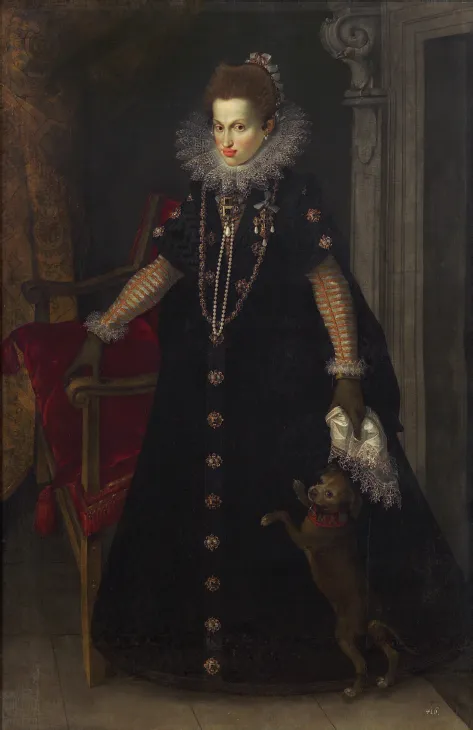
FIGURE 2 Mary Anne of Bavaria, mother of Ferdinand III, oil painting by Joseph Heintz the Elder. Vienna, Kunsthistorisches Museum.
Though the children of the Habsburgs were usually suckled by wet-nurses, during their early years, they remained with their mothers, who had their own households dominated by women within the framework of the general court. No picture of Ferdinand III as a small child survives, but like his elder brother (Figure 3) and later his own children, he probably took his first steps in a dress and was draped with lucky charms and religious trinkets. An early, somewhat more elaborate notice concerning the future emperor reports that in 1615, during a visit by the archducal family to the nuncio’s Graz residence, he assiduously devoted himself to the Italian pastries. It is likely that he saw his maternal grandfather, Wilhelm V of Bavaria, when the duke visited Styria in 1612 on a pilgrimage to Mariazell with all the princes and his daughter.8
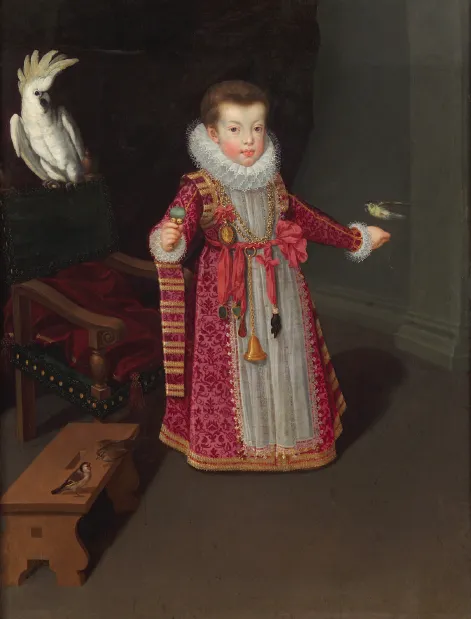
FIGURE 3 Archduke Charles of Austria, elder brother of Ferdinand III (died in 1619), oil painting, artist unknown. Vienna, Kunsthistorisches Museum.
Throughout these years, Ferdinand III’s mother served as a link between Inner Austria and Bavaria. She kept informed about political, dynastic, and court matters and, in turn, informed her Bavarian relatives. Thus, in 1611, she commented on the financial needs of the Counter Reformation as well as on two Graz personalities who were later to assume importance in Ferdinand III’s life. She described Eggenberg, her husband’s main counselor, as an “upstanding man” and justified his financial conduct. Of her husband’s younger brother, the twenty-five-year-old Bishop Leopold of Passau and Strasbourg, she noted that he had “little taste for the ecclesiastical state.”9 This was apparent to everyone as he, evidently in quest of a crown, had interfered militarily in the dispute between Rudolf II and King Matthias.
After Rudolf II’s death in 1612, the obligations for Ferdinand III’s father increased. As Rudolf II’s successor, the electors chose Matthias, who charged his Graz cousin with various representational functions. So, for two months during the winter of 1612/13, the four-year-old Archduke Ferdinand Ernst traveled to Vienna with his parents and elder brother. In order not to cause the little princes any discomfort, the journey proceeded at a leisurely pace and took eight days, from December 11 to 18, for the distance between Graz and Vienna. After their return to Graz, Maria Anna reported that the imperial couple had been inordinately fond of her children and had taken “great pleasure in them; praise God the Almighty that everything went so well.”10 She was probably also referring to the esteem the Inner Austrian ruling family had enjoyed in Vienna. The emperor had presented them with rich gifts, and some people already hailed the archduke from Graz as the future king of the Romans.
In 1613, Archduke Ferdinand again represented Emperor Matthias at the Imperial Diet in Regensburg. Because the imperial couple could no longer be expected to produce children, the emperor discussed the issue of succession with his cousin from Graz. Already at this time they included the Spanish ambassador, as King Philip III also had a claim to the Imperial inheritance. In August of 1613, the archducal family went from Graz to Lower Austria. Because plague raged in Vienna, they stayed in Wiener Neustadt. Here was Maximilian I’s grave as well as a Gothic Hofburg where Ferdinand III would later reside from time to time. And it was here, on January 5, 1614, in the hour before midnight, that his younger brother Archduke Leopold Wilhelm was born. Thus, Ferdinand III spent the fifth year of his life first in Wiener Neustadt and then in Vienna. Only in July of 1614 did he travel back to Graz with his mother and siblings; his father went on to the Moravian Diet in Olomouc (Olmütz).11
At this time, Maria Anna, in her letters, referred to her growing sons as her “little fellows” and her sons and daughters as “my little troop.” She was happy that the children had withstood the journey from Vienna to Graz in good form: “Travel has not harmed my little troop.”12 Only Archduke Leopold Wilhelm had been a bit off-color, and the eldest, Johann Karl, had developed a growth on his right cheek that had soon improved. In Graz, the family was given a splendid reception. Noble students had dressed as nymphs, “surrounded the carriage and accompanied it through twenty-four gates decorated with fresh foliage and wreaths. On arrival they were met by more students disguised as goddesses, singing and playing music, and showering the carriage with good wishes and fragrant flowers.”13 This surely must have impressed the six-year-old Archduke Ferdinand Ernst.
But Maria Anna had to leave her children for good in 1616, and Archduke Ferdinand Ernst lost his mother at the age of seven. In December of 1615 she became so ill that her brother in Munich ascribed her recovery to divine omnipotence after the doctors had already despaired of her life. But joy at her improvement was short-lived. During the night of March 7, 1616, she had severe seizures and became s...
Table of contents
- Cover Page
- Halftitle Page
- Title Page
- Copyright Page
- Contents
- Introduction
- Part I: The Way to the Throne, 1608–1637
- Part II: Searching for Peace in War, 1637–1648
- Part III: The Difficulty of Maintaining Peace
- Notes
- Bibliography
- Index
- About the Author
Trusted by 375,005 students
Access to over 1.5 million titles for a fair monthly price.
Study more efficiently using our study tools.
Frequently asked questions
Yes, you can cancel anytime from the Subscription tab in your account settings on the Perlego website. Your subscription will stay active until the end of your current billing period. Learn how to cancel your subscription
No, books cannot be downloaded as external files, such as PDFs, for use outside of Perlego. However, you can download books within the Perlego app for offline reading on mobile or tablet. Learn how to download books offline
Perlego offers two plans: Essential and Complete
- Essential is ideal for learners and professionals who enjoy exploring a wide range of subjects. Access the Essential Library with 800,000+ trusted titles and best-sellers across business, personal growth, and the humanities. Includes unlimited reading time and Standard Read Aloud voice.
- Complete: Perfect for advanced learners and researchers needing full, unrestricted access. Unlock 1.5M+ books across hundreds of subjects, including academic and specialized titles. The Complete Plan also includes advanced features like Premium Read Aloud and Research Assistant.
We are an online textbook subscription service, where you can get access to an entire online library for less than the price of a single book per month. With over 1.5 million books across 990+ topics, we’ve got you covered! Learn about our mission
Look out for the read-aloud symbol on your next book to see if you can listen to it. The read-aloud tool reads text aloud for you, highlighting the text as it is being read. You can pause it, speed it up and slow it down. Learn more about Read Aloud
Yes! You can use the Perlego app on both iOS and Android devices to read anytime, anywhere — even offline. Perfect for commutes or when you’re on the go.
Please note we cannot support devices running on iOS 13 and Android 7 or earlier. Learn more about using the app
Please note we cannot support devices running on iOS 13 and Android 7 or earlier. Learn more about using the app
Yes, you can access Making Peace in an Age of War by Mark Hengerer in PDF and/or ePUB format, as well as other popular books in History & Historical Biographies. We have over 1.5 million books available in our catalogue for you to explore.