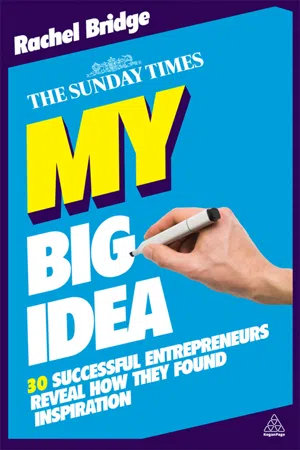
So what constitutes a good business idea? How do you look for one? And when you find one, how do you know if it's good enough to turn into a successful business? My Big Idea tells the stories of 30 successful entrepreneurs and how they got the winning ideas for their successful businesses. Intriguing and encouraging, this insightful collection shows you that inspiration for that winning business idea is all around you. You just have to look carefully and spot it before someone else does. So what are you waiting for? Read My Big Idea and get ready for inspiration to strike.
- 192 pages
- English
- ePUB (mobile friendly)
- Available on iOS & Android
eBook - ePub
About this book
Information
1
Martyn Dawes
Founder of Coffee Nation
Being around Martyn Dawes when he is getting enthusiastic about something can be a rather alarming experience.
He says: ‘I have a habit of making a very strange noise when I get very excited. It sounds a bit like the noise Al Pacino makes in the film Scent of a Woman. It invariably makes people jump, particularly if they are on the phone.’
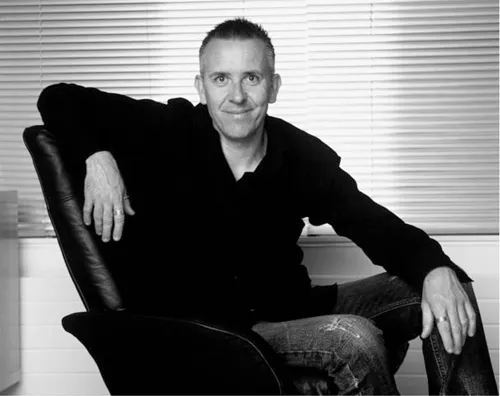
Dawes has much to be excited about right now. He recently sold his business Coffee Nation, which was selling more than 750,000 cups of coffee a month from its self-service machines, for £23 million.
Born in Coventry, Dawes was adopted at six weeks old by a couple who were unable to have children of their own. He says: ‘I was their whole focus and a lot of love and encouragement came my way.’
But Dawes was always restless, caused partly, he now thinks, by uncertainty over his origins. ‘I wanted to get out there and show what I could do. I had a need to prove myself. I think it was a way of compensating for not knowing where I came from.’
He was so keen to get started that he dropped out of college halfway through his A levels at the age of 17 to work for a local foundry where his father worked. In his spare time he took flying lessons and dreamed of becoming a pilot. But his dream was shattered when he discovered he was colour blind. So at the age of 21 he got a job with Massey Ferguson, the tractor maker.
He did well but after a year he met his future wife, Trudi, and decided to move to London to be with her. He set up on his own as a self-employed management consultant for engineering companies and soon discovered he had a knack for it.
He says: ‘When you are 23 you have a wonderful sort of arrogance and inbuilt self-confidence because you haven’t had the experience that says you could get your fingers burned.’
Within six months he had started up his own consultancy, and soon his wife, who worked in human resources, joined him.
The consultancy did well, but by the time Dawes was 28 he was getting restless. He says: ‘I have got a very low boredom threshold and I realised that consulting was not really what I loved doing. I could see that businesses interested me more than consulting did.’
So he took £50,000 out of the consultancy business and started looking around for inspiration to start up a business of his own. It was, however, harder than he thought. He says: ‘It is very hard to find something when you don’t know what you are looking for. I would get knots in my stomach because I was so scared.’
He briefly considered buying a clothing company that had gone bust, and also looked into the idea of opening a chain of workplace children’s nurseries. He says: ‘I looked at everything. I literally had a blank sheet of paper in front of me.’
One day he read an article in a newspaper about a company which was doing well by putting photocopiers into newsagents and corner shops. It got him thinking.
He says: ‘I liked the idea of a business model in which you could generate a little bit of revenue from lots of different places. That way you would not be reliant on any one of them too much and would never be really exposed to one customer. And you would be using the foot traffic of people already going into those stores.’

Fact file
Date of birth: 14 January 1968
Marital status: divorced with one child
Qualifications: BA (Hons) business studies degree from South Bank Polytechnic
Interests: socialising, sports cars, taking flying trapeze lessons
Personal philosophy: ‘Never ever give up.’

He decided to visit the United States in search of inspiration, starting in New York and then heading for Minneapolis, which at the time had the biggest shopping mall in the world. While he was there Dawes initially toyed with the idea of becoming the UK franchisee for a frozen yoghurt business. But at the last minute he realised that it might not be such a good idea because the sun does not shine much in England. He was also entranced by a restaurant called The Screening Room which contained several tiny cinemas for groups of friends to watch films together. But he quickly realised that to open something similar in the UK would involve a huge investment of capital.
His big idea eventually came to him when he was standing in a local New York convenience store. He noticed that large numbers of people were coming in simply to buy a cup of coffee to take away and realised that there might be a similar demand for takeaway coffee in the UK too. Following the photocopier business model he had read about, he would install instant coffee machines in corner shops and give a percentage of the money earned from the machine to the shop owner.
Back home in the UK, Dawes got to work. He persuaded four independent corner shops to take his machines, which he filled with instant coffee powder and powdered milk. But he quickly discovered that not many people actually wanted to buy instant coffee from a machine in a grubby little shop.
He says: ‘I remember walking through Peckham thinking what the hell am I doing? It was the wrong product in the wrong shops in the wrong location.’
So he started putting his instant coffee machines into larger convenience stores such as Spar and Alldays. But by 1997 he realised that the product and the location were still wrong. He says: ‘I was selling 50–60 cups a week but that was never going to spin the wheel.’
His personal life also took a nosedive. He and his wife separated and Dawes found himself sleeping on friends’ floors.
Then one day he was standing near one of his machines talking to customers when one of them said something that hit a nerve. Dawes says: ‘The man said to me, “Why would I spend 59p on a cup of coffee when I can go back to the office and put the kettle on? If you want to sell me something in a store like this it has got to really excite me.”’
Dawes suddenly realised the answer to his business problems was to provide machines that made real coffee with fresh milk. So he persuaded a couple of manufacturers to lend him a few genuine espresso machines to try out, and quickly saw sales improve. ‘It was a eureka moment. I felt fantastic.’
Unfortunately, his euphoria did not last long. By this time he had come to the end of his £50,000 and had no money left.
He went to see an insolvency practitioner at his accountant’s firm for advice on winding up the company. But while he was there he happened to bump into an adviser who thought he might be able to find investors for Dawes’ business.
So Dawes quickly wrote a business plan and was given the chance to pitch at a forum for investors. By the end of the day he had secured investment of £100,000 in return for 20 per cent of the company’s equity. That unlocked the door to a £90,000 bank loan – and Dawes was back in business. He began to find better sites for his machines and two years later managed to raise £4 million from venture capitalists to invest in growing the company, leaving him with a 25 per cent stake.
His Coffee Nation gourmet coffee stations are now in over 400 outlets including Tesco stores and Welcome Break motorway services, where they serve real espresso coffee made with fresh milk and fresh coffee beans. Dawes has also installed his machines in Odeon Cinemas and W H Smith outlets in airports and stations, and has expanded throughout mainland Europe. In 2008 Dawes sold the business to private equity firm Milestone Capital for £23 million.
Now 42, Dawes is immensely proud of what he has achieved. He says: ‘I was tempted to give up many times. But if you do and somebody else makes it with your idea, you have got the rest of your life to kick yourself and think of what might have been.’
He credits his ex-wife Trudi with much of his success and giving him the drive to succeed, saying: ‘She was and continues to be an enormous source of inspiration to me. When I first became self-employed at the age of 23 she could see in me what I couldn’t see in myself. I would not be where I am today, and I wouldn’t have the confidence or the self-belief without her.’ They are set to re-marry.
Dawes has also succeeded in resolving much of his restless search for his true identity. Eight years ago he finally met his birth mother for the first time. To his surprise he discovered she is something of an entrepreneur herself and runs her own corporate gift business.
He says: ‘When I met her I could see exactly the same traits in her as in me, and it has enabled me to relax a bit with myself. I had always thought, why am I like this, why do I always want more? And now I know.’
Table of contents
- Cover
- Title page
- Imprint
- Table of contents
- Acknowledgements
- Dedication
- Introduction
- 1. Martyn Dawes, founder of Coffee Nation
- 2. Judy Craymer, creator of Mamma Mia
- 3. Stephen Waring, founder of Green Thumb
- 4. Will King, founder of King of Shaves
- 5. Deirdre Bounds, founder of i to i
- 6. David Sanger, founder of Rollover Hot Dogs
- 7. Anthony Ward Thomas, founder of Ward Thomas Removals
- 8. Lara Morgan, founder of Pacific Direct
- 9. Paul Stanyer, founder of HolidayTaxis.com
- 10. Robert Hughes, founder of Wesco
- 11. Hilary Andrews, founder of Mankind
- 12. David Salisbury, founder of David Salisbury Conservatories
- 13. Karl Massey, founder of Cottrills
- 14. Sally Preston, founder of Babylicious
- 15. Will Ramsay, founder of the Affordable Art Fair
- 16. Ian Wilson, founder of WEXAS
- 17. Karen Darby, founder of Simply Switch
- 18. Guy Schanschieff, founder of Bambino Mio
- 19. Lucy Barker, founder of Barker Brooks Media
- 20. Richard Tang, founder of Zen Internet
- 21. Carole Nash, founder of Carole Nash Insurance Consultants
- 22. Spencer Swaffer, founder of Spencer Swaffer Antiques
- 23. Helen Colley, founder of Farmhouse Fare
- 24. Don Lewin, founder of Clinton Cards
- 25. Chey Garland, founder of Garland Call Centres
- 26. Andy Thornton, founder of Andy Thornton Ltd
- 27. Nick Austin, founder of Vivid Imaginations
- 28. Cheryl Grant, founder of White Label Productions
- 29. Gordon Montgomery, founder of Fopp
- 30. Mark Leatham, founder of Leathams
- Full Imprint
Trusted by 375,005 students
Access to over 1.5 million titles for a fair monthly price.
Study more efficiently using our study tools.
Frequently asked questions
Yes, you can cancel anytime from the Subscription tab in your account settings on the Perlego website. Your subscription will stay active until the end of your current billing period. Learn how to cancel your subscription
No, books cannot be downloaded as external files, such as PDFs, for use outside of Perlego. However, you can download books within the Perlego app for offline reading on mobile or tablet. Learn how to download books offline
Perlego offers two plans: Essential and Complete
- Essential is ideal for learners and professionals who enjoy exploring a wide range of subjects. Access the Essential Library with 800,000+ trusted titles and best-sellers across business, personal growth, and the humanities. Includes unlimited reading time and Standard Read Aloud voice.
- Complete: Perfect for advanced learners and researchers needing full, unrestricted access. Unlock 1.5M+ books across hundreds of subjects, including academic and specialized titles. The Complete Plan also includes advanced features like Premium Read Aloud and Research Assistant.
We are an online textbook subscription service, where you can get access to an entire online library for less than the price of a single book per month. With over 1.5 million books across 990+ topics, we’ve got you covered! Learn about our mission
Look out for the read-aloud symbol on your next book to see if you can listen to it. The read-aloud tool reads text aloud for you, highlighting the text as it is being read. You can pause it, speed it up and slow it down. Learn more about Read Aloud
Yes! You can use the Perlego app on both iOS and Android devices to read anytime, anywhere — even offline. Perfect for commutes or when you’re on the go.
Please note we cannot support devices running on iOS 13 and Android 7 or earlier. Learn more about using the app
Please note we cannot support devices running on iOS 13 and Android 7 or earlier. Learn more about using the app
Yes, you can access My Big Idea by Rachel Bridge in PDF and/or ePUB format, as well as other popular books in Business & Entrepreneurship. We have over 1.5 million books available in our catalogue for you to explore.