Ferenczi for Our Time stakes its greatest claim on the reader's attention by making manifest the contours of a distinctively Ferenczian tradition in the history of psychoanalysis, covering methodology, theory, and clinical practice in psychoanalysis.
eBook - ePub
Ferenczi for Our Time
Theory and Practice
- 224 pages
- English
- ePUB (mobile friendly)
- Available on iOS & Android
eBook - ePub
About this book
Information
PART I
MELANIE KLEIN AND SANDOR FERENCZI
Chapter One
From patient to founder of a psychoanalytic school: Ferenczi’s influence on the works of Melanie Klein
Nobody within the psychoanalytic community doubts that Melanie Klein was one of the most influential contributors to our discipline after the first great generation of psychoanalysts. Her findings on the early mental development of the child and the derived theoretical conclusions have had a great impact on general psychoanalytical theories and practice.
Life and work of Melanie Klein (1882–1960)
Melanie Klein was born in Vienna in 1882. She married in 1903 and moved to Rózsahegy (Rosenberg, Ruzomberok), a small town in the region of the Austro-Hungarian monarchy with a Hungarian, Slovak, German, and Jewish population. She became acquainted with the languages spoken there. She had an unhappy marriage, with significant periods of separation, and she divorced in 1922.
Klein moved to Budapest in 1910 and enjoyed the intellectual vitality of the “big town”. Sandor Ferenczi saw her for the first time in 1912, in order to treat her depression. Her sporadic visits to Ferenczi’s office were changed to a formal psychoanalytic treatment in 1914; soon after that, Ferenczi was called up to serve in the army, stationed 120 km away from Budapest. He visited Budapest occasionally and continued sporadic analysis with his analysands (including Géza Róheim and Klein). Ferenczi was transferred back to Budapest in 1916.
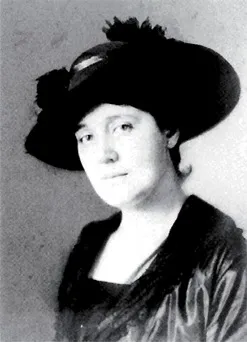
A glamorous young Melanie Klein.
Melanie Klein encountered Freud’s work in Budapest, and she attended the meetings of the Hungarian Psychoanalytical Society from 1914 onwards. The meetings were a kind of social encounter, in which members of the Society were accompanied by their family members and those who were interested in this new approach. Klein remained in analysis with Ferenczi until 1919. In that year, she became a member of the Hungarian Psychoanalytical Society after presenting her paper, “The development of a child”, to the membership of the Society.
Ferenczi suggested to Klein that she closely observe children as a means of approaching her own problems. Later, he proposed that she treat children using psychoanalysis.
At the Hague Congress in 1920, Ferenczi introduced Klein to Abraham. In 1921, Klein moved to Berlin, where she became a well-known child analyst some years later. She was in contact with Ferenczi through letters. Her creativity and originality soon appeared. In 1924, Klein started analysis with Abraham: it lasted for about eight months, until Abraham’s early death.
Ernest Jones invited Klein to move to London. He wanted to strengthen the British Society with her presence and, secondarily, he wanted to have an appropriate analyst for his children. Klein arrived in London in 1927. By that time her technique of child analysis was fully worked out and her original contribution was in progress. This resulted in her book, The Psychoanalysis of Children, published in 1932, a work which Edward Glover considered a milestone in the development of psychoanalysis.
She followed the tradition of the Hungarian School of Psychoanalysis (Ferenczi, Balint) when she emphasised the significance of the object in the psychological development of the child. She was among the founders of the British object relations theory. She presumed that the early external object relations became internal within the realm of unconscious phantasy and would be components of the personality, determining the later social and transferential relations. She described the process of “psychological metabolism” through introjection and projection.
The paranoid–schizoid and depressive positions are lucid constellations of drives, objects, and defences widely used in psychoanalytic understanding nowadays. The description of defences characteristic of these positions opened new ways of understanding certain psychopathologies. Her discoveries of the influence of early strivings and anxieties on the development of the Oedipus complex are also fundamental.
Klein’s work resulted in a basic development of psychoanalytic technique, in which more emphasis was put on work with transference and pregenital processes. What is absolutely certain is that psychoanalysis today would not be the same without the contributions made by Melanie Klein.
Melanie Klein’s work relies on the findings of three outstanding masters—Freud, Ferenczi, and Abraham—and on the personal impact of the latter two.
Freud
The importance of Freud is obvious. He invented the whole method and described its metapsychology; he laid down the theoretical foundations of the science and art of psychoanalysis. He constantly reviewed his new approach and updated it in the light of new findings, thus establishing the practice of psychoanalysis. Freud was a real scientist in the sense that he was driven by the motivation of scientific cognition throughout his work. He was interested in the fate of the instincts in the lives of human beings; how—through what processes and intermediate states—do compromises evolve between satisfaction of the instincts and forces prohibiting such satisfactions? As Haynal, quoting what Freud had told Klein, wrote, “I am interested only in unconscious” (Haynal, 1989, p. 3). When Klein drew attention to the observation that the functioning of instincts is manifested in their relationship to psychological objects, and that it makes no sense to talk about instincts without those objects, it meant a conceptual change in the field of psychoanalysis. In her own words,
The analysis of very young children has taught me that there is no instinctual urge, no anxiety situation, no mental process which does not involve objects, external or internal: in other words, object-relations are the centre of emotional life. Furthermore, love and hatred, phantasies, anxieties and defences are also operative from the beginning of life. (Klein, 1952, p. 53)
Abraham
Karl Abraham was a great contributor to the formation of Melanie Klein’s concept of object-relations, calling attention to the significance of the pregenital period, and the part-objects within it, which have a great role in the process of personality development. By establishing the object-relations theory, Klein essentially questioned one of the basic principles of Freud: the principle of primary narcissism. It is important to stress this difference because this is the basic characteristic of the so-called Budapest School of Psychoanalysis, or Hungarian School of Psychoanalysis. The students of Ferenczi—Michael Balint, Alice Balint, Imre Hermann and, in this respect, Melanie Klein as well—agreed pretty much that the newborn is not only a physiological being in the beginning, but an active object-seeking person who turns to the primary object or part-objects (Klein) with affects.
It was a great help for Klein to have discovered relatively early the psychoanalytic play technique. The play technique not only revolutionised the practice of child analysis, but also widened greatly the spectrum in which we can recognise and treat transference, through the description of the two positions and of the early emotions and defence mechanisms functioning within those positions. In this way, the method of psychoanalysis could be extended to cases of severely regressed patients, who were considered untreatable by Freud’s method of psychoanalysis. It turned out that such patients were also able to produce transference, with the difference that their transference was of pregenital nature, and, thus, in its appearance basically different from the Oedipal type of transference. Klein’s object-relations theory—with active internalised objects within unconscious phantasies and the early anxieties that influence the development of the Oedipal situation—provides indispensable elements of psychoanalytic knowledge today (Flaskay, 1983).
Melanie Klein in Budapest
Until psychoanalysis appeared in Melanie Klein’s life and enabled her to take a new direction, many things had happened to her. Her adulthood started early, at the age of seventeen, with a long process of engagement, followed by an unhappy marriage. Her first child was soon born. Her early engagement and marriage prevented her from finishing her academic education. Signs of her depression appeared soon after her marriage. Her mother often spoke about Melanie’s “unfortunate nerves”. In a letter of 25 April 1906, she wrote to her daughter, “It is your fate or, unfortunately, your disposition that there is always something that tortures you” (Grosskurth, 1987). During one of her travels to be cured in Abbazia (now Opatia) on the Adriatic coast, she met Klára Vágó, a distant relative of her husband. Klára Vágó was an intelligent, educated, and independent woman; she was also a divorced woman, a rarity at that time. A strong friendship developed between them, and she became a kind of “mother-substitute” for Melanie.
Melanie Klein’s first visit to Budapest occurred after an invitation from Klára Vágó offering her the possibility of taking a rest there. Thus, when Melanie Klein actually moved to Budapest in 1910 with her family, she did not encounter an altogether unfamiliar place. She had acquaintances there and she knew the city as well. Budapest was experiencing the most favourable period of its history in 1910: many would call this period the “Golden Age”. The Austro-Hungarian Compromise (Ausgleich) of 1867 had brought peace and political stability to the country. It was followed by unprecedented economic development and boom, which assured the economic basis for the 1896 celebration of the first millennium of the Hungarian Kingdom and state. Impressive public buildings were erected and grand bridges, railway stations, and Continental Europe’s first underground train system were built. All these were accompanied by a thrilling atmosphere of a vivid scientific and cultural life. Literary salons were common and high-quality journals appeared regularly. It was not by chance that Budapest, a cultural capital of Europe in those days, was one of the first among the European cities to accept and host psychoanalysis, the new doctrine and paradigm.
Medical journals and publications collected and published the writings of Freud, Ferenczi, and other psychoanalysts. It is well documented in literary works, fiction, essays, and memoirs that psychoanalysis was at the core of debates and discussions among intellectuals, and that it attracted interest and enjoyed popularity as a topic of discussion in cafés and salons. In May 1913, Ferenczi founded the Hungarian Psychoanalytical Association with five members.
When Melanie Klein arrived in Budapest she was in a difficult and desperate life situation. It had ultimately become clear to her that her marriage with Arthur Klein did not work. Moving in with her mother brought to the surface the ambivalence in their relationship, which had existed from the very beginning. According to her biographer, Grosskurth (1987), “. . . Melanie’s feelings of hostility towards Arthur are indisputable, and seem to be fused with unconscious hatred towards her mother” (p. 69). She lost her mother in 1914. After several attempts at separation, she divorced her husband ten years later.
Melanie Klein learnt Hungarian in Rózsahegy (today’s Slovakia)—where she had lived before—and Budapest, and regularly attended the meetings of the Hungarian Psychoanalytical Association from 1914 onward. Those meetings had a fairly relaxed atmosphere; family members, friends, and acquaintances were also allowed to be present. Allegedly, Melitta (later Melitta Schmideberg), the daughter of Melanie Klein, also attended these meetings in 1919, at the age of fifteen (Harmat, 1994).
Klein’s analysis with Ferenczi
Available pieces of information concerning when and under what circumstances Melanie Klein met Ferenczi and was introduced to psychoanalysis are ambiguous. It is certain, however, that such an encounter must have taken place during her stay in Budapest. In her autobiography, she mentions that in 1914 she came across and read Über den Traum, by Freud. She indicates that this text inspired her to start an analysis with Ferenczi, “the most outstanding Hungarian analyst”. Other biographers of Klein suggest that she had begun to see Ferenczi, “the best nerve specialist”, regularly, as early as 1912 (Grosskurth, 1987; Dupont, quoted in Harmat, 1994). Harmat, on the other hand, specifies the year 1916 as the beginning of Klein’s analysis (1994, p. 336).
Psychoanalysis meant something different to Ferenczi than it meant to Freud. (It is reported that Freud once told Melanie Klein, “I am interested only in the unconscious”.) Ferenczi conceived of psychoanalysis as a tool with which one could help other suffering people. He himself wrote,
I have had a kind of fanatical belief in the efficacy of depth-psychology, and this has led me to attribute occasional failures not so much to the patient’s ‘incurability’ as to our own lack of skill. . . . It is thus only with the utmost reluctance that I ever bring myself to give up even the most obstinate cases, with which I go on for very many years. I have refused to accept such verdicts as that a patient’s resistance was unconquerable, or that his narcissism prevented our penetrating any further or the sheer fatalistic acquiescence in the so-called ‘drying up’ of a case. (Ferenczi, 1931, p. 128)
It did happen that his great benevolent endeavour to help someone took Ferenczi off course and led him astray; however, once he had recognised his mistake, he was never reluctant to change. This is well illustrated by his experiences with mutual analysis.
It is the generally shared view of Melanie Klein’s analysis with Ferenczi that there was something wrong with it: it did not proceed as an analysis ought to proceed. According to her biographers, the major problem of Melanie Klein’s analysis was that Ferenczi ignored the negative transference; he failed to analyse it, idealised his patient, and performed an incomplete job. Melanie Klein herself, however, says something else in this connection: her formulation is much more refined, “Technique at this time was extremely different from what it is at present and the analysis of negative transference did not enter” (Grosskurth, 1987). It seems very much to be the case that many people make Ferenczi accountable for not having used some method (transference) that was not part of the everyday practice of psychoanalytic treatment of his day, though it had been discussed in some writings. As a matter of fact, Ferenczi had actually made much greater progress in the understanding and treatment of transference than most of his contemporaries.
There are different answers to the question of what the reasons could have been for criticism and why ignorance persisted for so long in Ferenczi’s judgement, which are dealt with in more detail in other chapters of the present volume. Here is a brief list of some of them: Ferenczi’s negative transference with Freud, which came out in their disputes as well; Ferenczi’s rational criticism toward some views and the therapeutic attitude of Freud, to which Freud often reacted sensitively and sometimes even rejectively; the traumatisation of the psychoanalytic community because of the conflict between Freud and Ferenczi (Balint, cited in Haynal, 1989), the result of which was that the followers identified with Freud, dissociating themselves from the “dissident” Ferenczi out of fear that dissidents could jeopardise the unity and stability of the group (Melanie Klein was later also considered a “dissident”); the jealousy and rivalry of Jones toward Ferenczi, in which many took sides with Jones; Ferenczi’s active technique and his concept of mutual analysis, which indeed surpasses the framework of psychoanalysis in several respects; and, as a last remark, the accent or weight attributed to Sandor Ferenczi in writings dealing with the background of, and precursors to, the work of Melanie Klein.
I want to focus on the influences Ferenczi might have exerted on the development of Klein’s views and findings. Some of the authors analysing the work of Klein underestimated Ferenczi, as was the general tendency of the day. These authors tended to devalue the importance of Ferenczi in Melanie Klein’s professional development, in highly refined but consistent ways. This might be related to some of the conditions referred to above; however, it is most probably a consequence of the Ferenczi imago emanating from, and transmitted by, Jones. (As we know, Jones consistently stood beside Klein in great storms and supported her against Freud.) It is very difficult to judge what role Melanie Klein’s loyalty to Jones might have played in the way she herself remembers Ferenczi.
Taking into consideration the above mentioned observations and not denying certain specificities of Ferenczi’s character that might have influenced the relationship between himself and Melanie Klein, it is also worth mentioning a number of objective facts, which might have influenced the process of Klein’s analysis with Ferenczi and her...
Table of contents
- Cover
- Half Title
- Title Page
- Copyright Page
- Contents
- ACKNOWLEDGMENTS
- ABOUT THE EDITORS AND CONTRIBUTORS
- SERIES EDITOR’S FOREWORD
- PREFACE
- INSTEAD OF AN INTRODUCTION INTIMACY AND TRAUMA
- PART I: MELANIE KLEIN AND SANDOR FERENCZI
- PART II: From Ferenczi To Winnicott And Dolto
- PART III: The Balints—Memories, Personal Recollections And Images From London, Paris, And Budapest
- PART IV: Closer To Our Time
- PART V: Close To The Body
- INDEX
Trusted by 375,005 students
Access to over 1.5 million titles for a fair monthly price.
Study more efficiently using our study tools.
Frequently asked questions
Yes, you can cancel anytime from the Subscription tab in your account settings on the Perlego website. Your subscription will stay active until the end of your current billing period. Learn how to cancel your subscription
No, books cannot be downloaded as external files, such as PDFs, for use outside of Perlego. However, you can download books within the Perlego app for offline reading on mobile or tablet. Learn how to download books offline
Perlego offers two plans: Essential and Complete
- Essential is ideal for learners and professionals who enjoy exploring a wide range of subjects. Access the Essential Library with 800,000+ trusted titles and best-sellers across business, personal growth, and the humanities. Includes unlimited reading time and Standard Read Aloud voice.
- Complete: Perfect for advanced learners and researchers needing full, unrestricted access. Unlock 1.5M+ books across hundreds of subjects, including academic and specialized titles. The Complete Plan also includes advanced features like Premium Read Aloud and Research Assistant.
We are an online textbook subscription service, where you can get access to an entire online library for less than the price of a single book per month. With over 1.5 million books across 990+ topics, we’ve got you covered! Learn about our mission
Look out for the read-aloud symbol on your next book to see if you can listen to it. The read-aloud tool reads text aloud for you, highlighting the text as it is being read. You can pause it, speed it up and slow it down. Learn more about Read Aloud
Yes! You can use the Perlego app on both iOS and Android devices to read anytime, anywhere — even offline. Perfect for commutes or when you’re on the go.
Please note we cannot support devices running on iOS 13 and Android 7 or earlier. Learn more about using the app
Please note we cannot support devices running on iOS 13 and Android 7 or earlier. Learn more about using the app
Yes, you can access Ferenczi for Our Time by Tom Keve, Judit Szekacs-Weisz, Tom Keve,Judit Szekacs-Weisz in PDF and/or ePUB format, as well as other popular books in Psychology & History & Theory in Psychology. We have over 1.5 million books available in our catalogue for you to explore.