- 256 pages
- English
- ePUB (mobile friendly)
- Available on iOS & Android
eBook - ePub
About this book
At the turn of the 20th Century, Japanese 'villages' and their exotic occupants delighted and mystified visitors to the Great Exhibitions and Worlds' Fairs . At the beginning of the 21st Century, Japanese tourists have reversed the gaze and now may visit a range of European 'countries', as well as several other cultural worlds, without ever leaving the shores of Japan. This book suggests that these and other exciting Asian theme parks pose a challenge to Western notions of leisure, education, and entertainment. Is this a case of reverse orientalism? Or is it simply a commercial follow-up on the success of Tokyo Disneyland? Is it an appropriation by one rich nation of a whole world of cultural delights from the countries that have influenced its twentieth-century success? Can the parks be seen as political statements about the heritage on which Japan now draws so freely? Or are they new forms of ethnographic museum? Examining Japanese parks in the context of a variety of historical examples of cultural display in Europe, the U.S. and Australia, as well as other Asian examples, the author calls into question the too easy adoption of postmodern theory as an ethnocentrically Western phenomenon and clearly shows that Japan has given theme parks an entirely new mode of interpretation.
Information
The World of Fantasy
In a list of 'Theme Parks in Japan' issued by the Japan National lourist Office (JNTO), more than half the 28 parks detailed draw on aspects of what could loosely be called 'culture' for the theme chosen. Some opt to represent periods of Japanese history, and one or two feature the sets of cinematographic enterprises; but the largest single group in 1995, when I received this publicity, were using as a focus one or more foreign countries. They are known collectively in Japan as gaikoku mura (foreign country villages).
Another source, a special issue of a Japanese tourism magazine that separates 'theme parks' (tēma pāku) from 'amusement parks' (yūenchi) and ranks them according to various criteria, not only confirms the proportion of foreign country theme parks, but rates them very highly ('Checking Parks and Playgrounds' 1995:5). Since that time, several new parks have opened, and, despite some quite dire financial reports since the Japanese economic 'bubble' burst (for example, Asahi Shinbun 23/5/97, p. 1; The Japan Times, 3/1/99, p. 10; Jones 1994), there seem still to be plans to open more.
In 1995 I visited ail the parks on the JNKJ list tnat were concerned with foreign countries, and these did not exhaust the possibilities, as I learned through conversation, notices in the press and publicity given out by travel agents. My first tour took me to Canadian World, Glücks Kōnigreich (Germany) and Marine Park Nixe (Denmark), to Tazawako Swiss Village, British Hills (which will be discussed in Chapter 8), Parque España, and Huis Ten Bosch (a new version of a Holland Village). It also included Nijinosato (Rainbow Village), with British, Canadian and Japanese sections; Reoma World's 'Oriental Trip', with features from Bhutan, China, Korea, Nepal and Thailand; and Space World, where, for no very clear reason, I encountered an African theme.
On a second tour, in 1997, I visited Maruyama shakespeare Park (which will be reserved for Chapter 6), Roshia-mura (Russian village), and the new Tivoli Gardens in Kurashiki, which I was allowed to see in the week before its official opening. At that time, a Turkish village, which I could not fit into my itinerary, had recently opened, and I was not granted advance entry to Gulliver's Kingdom, due to open a few days after my departure. For comparative purposes, I called in on some parks with Japanese themes, including Meiji-mura, a collection of houses built during the period at the end of the nineteenth century when Western influence on Japan was clearly demonstrated in new forms of architecture, and Little World, a 'museum' of houses from around the world. In this chapter, however, the focus will be on the gaikoku rnura
To give an overall impression of these parks is a little difficult, because they have very clear differences, ranging from the organization and emphasis of the theme and layout through to their ideology and financial basis. However, most of them do also share common features. The first is what I found to be an extraordinary degree of attention to detail and to an internal idea of authenticity,1 though the ideas presented may be at variance with the preconceptions of a visitor from the part of the world on show. Most of them do, however, include museums and displays about the people and cultures represented, and several offer food, drink and goods imported directly and advertised as unavailable elsewhere in Japan.
Typically, the parks try to create a space that will induce visitors to feel that they have actually entered the foreign country featured, and many provide a passport in exchange for the usually quite substantial entrance fee, as well as a map to guide the visitor through the facilities. The surroundings are constructed to recall the place in question; several have been chosen because natural features suggest the physical geography of the country in question, and they add to their atmosphere by employing natives of that country to feature in events and shows staged at intervals throughout the day. Local crafts are also demonstrated, often by native employees. Literary themes are another common feature of these parks, and statues of famous writers and/or their characters are almost de rigueur.
This chapter will examine several individual parks to give an idea of the complexity and claims to authenticity of any one of them, and then try to summarize features of the others to illustrate the range of possibility. The first example, Glücks Königreich, will demonstrate some of the fine attention to detail that may be found in the parks, the second, Parque España, the variety of attractions they may include, and the third, Canadian World, an extraordinary fidelity to a particular theme. The fourth park, Reoma World, begins to introduce the idea of a combination of several countries, whilst the fifth, Roshia-mura, epitomizes an attempt to unify a vast range of cultural difference. The final park, Huis ten Bosch, the largest, is also billed as an experimental new design for living.
Glücks Königreich
A plush coach leaves Obihiro Station, in Japan's northernmost island of Hokkaido, and drives straight to Glücks Königreich, which is also only five minutes' taxi ride from Obihiro airport. Visitors can thus travel directly from any other part of Japan to enter this German park, where they will be immediately (and continuously) regaled with marching music. The entrance ticket is designed to look like a German passport, which is stamped at the immigration counter, and contains messages of welcome from the German collaborators in the park's creation, and information about the provenance of the buildings and the period of German history in which they originated.
Passing a windmill copied from an original in Bremen, the visitor proceeds into a cobble-stoned square, constructed by German craftsmen with '400-year old used granite pavement stones' from Berlin and Dresden. The square is surrounded by wooden-framed houses, built as replicas of those from named towns and cities, including 'an exact reproduction' of Hanau City Hall containing an information corner and 'historical materials' about modern Germany. A statue of the Brothers Grimm stands in pride of place, and the houses in the square are apparently all in some way related to their lives and fairy tales. Statues of characters from the stories are to be found at further strategic spots throughout the park.
The Brothers Grimm have provided the main theme of this park, and beyond this town section, known as Grimm Stadt, is Grimm Dorf (Grimm Village) and Grimm Wald (Grimm Wood). A book shop and a library offer many versions of Grimms' fairy tales to buy and to browse amongst, as well as a large selection of other books foreign to Japan, and many of the shops sell stuffed, dulcified and painted renderings of the characters to take home as souvenirs. In an amusement area beyond 'the woods', 'a European-style fun fair' offers many rides, including a merry-go-round, a roller coaster and a ferris wheel, decorated again with characters from Grimms' fairy tales. Snow White, Little Red Riding Hood and the Goose Princess are all given their proper German origins here.
Back at the other side of the entrance to Glücks Kömgreich lies the real architectural jewel of the park. This is a full-size reproduction of Biickeburg Castle (Fig. 1.1a), the 700-year-old home of Count Ernst
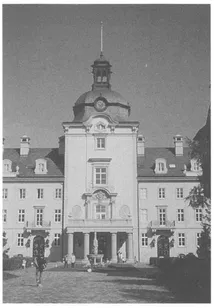
Figure 1.1a Bückeburg Castle, as reproduced at Clücks Königreich, Hokkaido, japan.
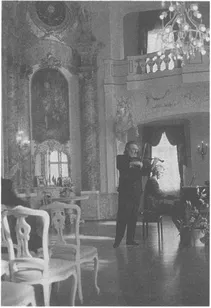
Figure 1.1b Replica of the Great Festival Hall of Bückeburg Castle, where concerts are given daily by German musicians.
Philipp von Schaumburg Lippe, who has written in the brochure commemorating its construction of his delight at travelling half-way around the world 'only to arrive at my home castle again'. According to this brochure, the reconstruction was carried out by German craftsmen under the guidance of a German professor specializing in the restoration of old castles, and the slates on the roof were brought from Germany, as was much of the interior décor, such as chandeliers, antique paintings and furniture.
The Great Festival Hall (Fig. 1.1b), a pink and white baroque feast of pillars, arches and wrought-iron balconies, apparently features the largest ceiling painting in Japan. It is said to be characterized by its beautiful acoustics, and concerts of classical music are presented here by German musicians who spend a month or so visiting this extraordinary home-from-home environment. During my visit, there was a trio - violinist, pianist and soprano, all of superb quality - who gave twenty-minute concerts twice during the day, and a longer one in the evening. They played a variety of short pieces by German composers, probably familiar to many Japanese visitors; but on that day, these were sadly rather few in number. At the second session, it was myself and one other person, who left after about ten minutes.
The rest of the castle serves as a luxury hotel, with a splendid gourmet restaurant' offer specialities prepared by the German chef, conference suites, a sports club, and guest rooms ranked as fit for kaiser, king, duke, marquis, earl and baron. Those 1 was allowed to examine were quite stunning for Japan: spacious, opulent, and reasonably tasteful (by my limited standards, anyway), and furnished throughout with individual reproduction 'barockstyle' pieces made by an Italian company. There is also a honeymoon suite for couples who choose to hold their wedding in the park's St Catherine's Church, a replica of one apparently visited by the Grimm Brothers in their childhood.
In 'Grimm Dorr, there are several houses that have been transported, lock, stock and barrel, from various specified regions and reconstructed here. They include a 'Hansel and Gretel' house, from Wallau, near Marburg (where the Grimm Brothers used to teach), now selling sweets from around the world. A 'Snow White' house offers goods imported from Germany, and a Bakery from Kassel/Hessen features a German baker who uses an imported oven to bake fresh rye bread and biscuits daily. In an old converted stable from Bohne/Hessen, a German butcher demonstrates the art of sausage-making, apparently according to a 400-year-old recipe, and visitors may again sample and purchase his creations.
Other houses have been decorated to show interiors. They include a farmhouse, a shoemaker's workshop, and a kitchen, dining-room and bedroom, decorated in the style of the seventeenth to eighteenth centuries, in a reconstruction of the court house where the Grimm Brothers lived. This also houses a permanent museum of German history on the first floor, and various temporary exhibitions - about Johann Sebastian Bach, and Martin Luther, for example - below. Fairs and festivals are also held in the park, and a variety of illustrious German visitors have travelled here both to see the parades, and to take part in the opening ceremony in 1989, and the inauguration of the castle in 1992.
While I was in the park, there was no festival, but I was able to watch a demonstration of ballroom dancing and acrobatics on an outdoor stage, enclosed in a large marquee, while munching on grilled spare ribs, sold at a kind of barbecue snack bar. The artists came out afterwards to have their photographs taken with numerous groups of Japanese visitors, and a conversation with the musical director (this time operating a hi-fi machine) revealed that, apart from himself, they were from Romania, Czechoslovakia and Hungary. These artists stayed for a few months, and the fee they were offered was apparently no longer high enough to induce performers to come from Germany, though the musicians in the castle had seemed content with a tour of a month.
The problem of providing native people to demonstrate German crafts and skills had not yet become evident to the Japanese visitors in this park, who seemed happy enough that the entertainers had an appearance they considered appropriate for their photographs. Nor did the musicians express any anxiety about the lack of an audience. However, providing variety of entertainment will clearly be an important factor in turning first-time visitors into the 'repeaters' who will ensure the park's continuity. During my visit, the greatest success in this respect was to be found in the superb collection of German beers and wines, clearly an important attraction for parties of men seated at tables outside the shop, sipping the samples.
Glücks Königreich has attractions for people of all ages and inclinations, and it is a park that demonstrates attention to detail and authenticity, according to the way that the publicity describes the buildings and the theme that unifies them. It is a relatively small park by comparison with some of the others we shall visit, but German culture is popular in Japan (see below), and Lufthansa has invested in an office to promote visits to the country itself. In the meantime, the fairy-tale theme is appropriate for the idea of a fantasy excursion, and the surroundings of this early example of the gaikoku mura genre Jive up to expectations.
Parque España
Parque España is a larger and altogether more flamboyant venture, it advertises itself as having four main themed areas, representing 'Ciudad, Tierra, Mar and Fiesta', and they are described as evoking 'motifs' rather than claiming many exact reproductions. In 'Ciudad', for example, the main street is said to be inspired by the Las Ramblas avenue in Barcelona and the main square by the Plaza Mayor in Madrid, the 'Tierra' picks up on the style of Seville and Andalusia, and 'Mar' is said to be reminiscent of Málaga, 'in the heart of the Costa del Sol'. The features of the Plaza de Fiesta, where rides and other amusements are to be found, are constructed in a blue and white stone mosaic 'heavily influenced by Gaudí'.
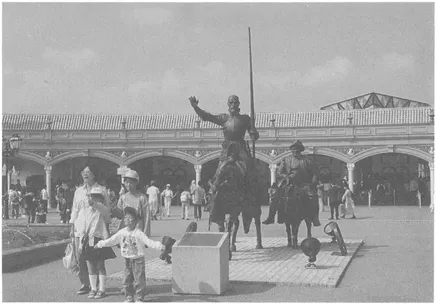
Figure 1.2 Entrance to Parque España: posing with statues of Don Quixote and Sancho Panza.
Parque España has gone for Don Quixote and Sancho Panza, rather than Cervantes himself, for its literary theme, and an enormous statue of the intrepid pair welcomes the visitors as they troop from the carpark towards the ticket booths (see Fig. 1.2). These characters have definitely been 'disneyfied', however, and their reincarnations as dog and (probably) racoon pepper the pages of the guidebooks, maps and other publicity, illustrate the shopping bags, and appear on the stage in a series of variety shows throughout the day. They are accompanied by other characters such as Choquy Vivito, Dulcinea and Julio Rañana as they cavort about the stage.
In fact, the real strength of this park, built five years into the gaikoku mura boom, and opened in 1994, is the vast number of shows and street performances. As one wanders through the Spanish squares and village lanes, serenades of strolling musicians give way to flamenco-style dancing and the antics of members of mobile theatre groups. All this is a mere taster, however, to the Grand Parade or 'Street Party', the spectacular professional performances held at regular intervals in the huge open-air theatre, and the more orthodox flamenco dancing, reserved for those who pay extra to dine in the Theatre-Restaurant Carmen. According to artistes I met and chatted to during their day off, the Parque España employs around a hundred Spanish artists to perform here.
The educational side of the country visit is not abandoned in all this festivity, however. A huge castle houses a museum of Spanish history, with rooms for various periods, and large displays of manuscript-type books present information about the Roman and Islamic influences on Spain, as well as detail of crafts such as guitar-making. The building is described as a reproduction of the castle birthplace of Francis Xavier, the sixteenth-century missionary who introduced Christianity to Japan, and it contains replicas of wall paintings from the Altamira Caves. Video presentations introduce aspects of Spanish art, and the museum shop sells books and souvenir goods related to the Prado Museum in Madrid and the real Castillo de Xavier. Outside the castle, there is an area of 'Roman ruins', reconstructed for viewing, but not, when I was there, for examining closely.
The main open-air theatre is called the Colosseum, and I was briefly concerned that there might have been a mistake in the naming of this important monument; but a notice beside it explains the Roman influence in Spain, and the way that open-air theatres of this sort had been a part of Roman life. Today it is the venue for 'different types of Spanish music', and 'a show presented by the Parque España characters'. I watched both presentations, which included a stylized representation of a bullfight, a good deal of well-choreographed Spanish dancing, and several skits involving Don Quijote and Sancho Panza, and their rescue of Dulcinea. These shows were spectacular, with loud music, plenty of jokes, and streamers fired into the air at the end. The audience was full and enthusiastic on the Saturday when I visited Parque España.
There was also a wide curved-screen IMAX presentation of a film about an Andalusian pilgrimage to Rocio, which gave a very lively and lifelike representation of personal involvement in the occasion, as well as superb views of the scenery, It depicted the travelling of different groups of people to the event, including families, young people and friends, and created an atmosphere of merrymaking, jollity and some drunkenness, which seemed to achieve a feeling of participation in the audience.
Throughout the park, there are cafés, restaurants and snack bars offering sangria, churros, 'real Spanish coffee' and a variety of dishes such as paella, tapas and 'pizzas packed with Spanish flavours'. I was not impressed with the efforts of this park to make the food very Spanish, or to cover much in the way of regional specialities. Nor, indeed, were my Spanish informants, who explained that the food was made the way the Japanese like it. This is a feature of most of the parks, in fact, and probably necessary to please the important paying visitors. Those I spoke to certainly seemed happy enough, and there was a huge range of choice, including a Japanese restaurant.
The Spanish performers said that they enjoyed the general atmosphere of the place, however, and they did not seem to think there would be a shortage of people to come to Japan for a season. They said that they were treated well (which was not the case for the musical director at Glücks Königreich); but they described some tensions that arise in the organization of their shows. Spanish performers like to be spontaneous, they explained, but the Japanese organizers want everything to be carefully timed and predictable. In a street show involving a small decorated caravan, which had also appeared in the Rocio film, a couple of guitarists and several dancers, I did notice some sparring going on between the musicians and an uncomfortable-looking Japanese 'minder', neat in his park uniform, and equipped with a mobile telephone (Plate 1).
After the spectacular 'Street Show' passed by, replete with colourful floats, including a Spanish galleon and a castle, two enormous cucarachas and pirates running in and out of the crowd, a row of park cleaners moved in quickly to sweep up and restore the street to its pristine state. The parade was quite reminiscent of the one in Tokyo Disneyland, and the emphasis on cleanliness was probably influenced by this Disney ideal too. Shows other than the parade featured 'pirates', an emphasis which may also have been more to recall the excitement and fantasy of the Disney experience than to represent any great historical accuracy, since from a Spanish point of view it was the English and others who were the pirates!
The commercial element is very evident in this park. There are shops throughout the place selling a wide variety of goods, some imported from different parts of Spain, some from Mexico, and some from other parts of America. There are also specialist shops in the different areas: in 'Tierra' selling goods made on the premises, such as hand-enamelled ceramics and 'traditional confectionery'; in 'Ciudad' offering 'high-quality Spanish furniture and interior goods', leather products, and 'a wide range of leading Spanish fashion'; and in 'Mar', 'miscellaneous goods and folkcraft based on the history of navigation', including compasses and terrestrial globes. All the rides also throw their customers out into a souvenir shop.
One of the major characteristics of this large and thriving park is that features of it have been built by different companies, particularly in the amusement-rides area, and the various enterprises are also franchised out, including again an office of the national airline, Air Iberia. The origins of the contributions are made clear in the Guidebook, where they are acknowledged. This division of labour probably makes it difficult to monitor the 'authenticity' of the display, outside the main constructions; but from the point of view of this one European who has visited Spain on several occasions, and who is aware of the importance of regional variation, there is a very convincing overall atmosphere. This is undoubtedly created by the buildings, streets and squares; but the sheer number of Spanish performers certainly helps too.
Canadian World
Canadian World is one of the earlier gaikoku mura to have been built, in 1990, but it is often cited as an example of economic malaise in the theme park world. Unlike Parque España and many others, it was not conceived as a purely commercial endeavour, but as a practical response to local unemployment, when coal-mines in the area were closed down. The site, which is said to be reminiscent of the wide open spaces of the Canadian countryside, is a development of the former mining area. It was set up by a Tokyo agency, and then handed over to Ashibetsu City, which in 1992 became twinned with Charlottetown, Prince Edward Island.
The connection with Prince Edward Island reflects the main theme of this park, which is the story of Anne of Green Gables, set in that part of Canada, and written by Lucy Maud Montgomery, who grew up there. I was glad I had been warned of this theme and therefore read the first of her books on the journey there, because otherwise much of the careful reconstruction of scenes from the tales would have been completely lost on me. One whole 'zone', for example, is a group of houses known as 'Avonlea' (Fig. 1.3), which is where she lived, and another is Bright River, the site of the station where the orphaned girl, Anne, was eventually collected by 'Matt', who was looking for the boy he and his sister had agreed to take in.
Green Gables, their home, has also been reconstructed as a replica of the original model in Canada, and the rooms are decorated in the style of the period in the nineteenth century when the story was set. It also houses a museum about the life and works of L. M. Montgomery, with photographs of her at various ages, and of the area where she grew up and conceived of the tale. Nearby there is a copy of the church she attended, a 'Lovers' Lane' and a 'Haunted Wood' (locales that feature in the stories) and the house of Anne's friend, Diana, where visitors can buy or dress in clothes of the period and have their photographs taken.
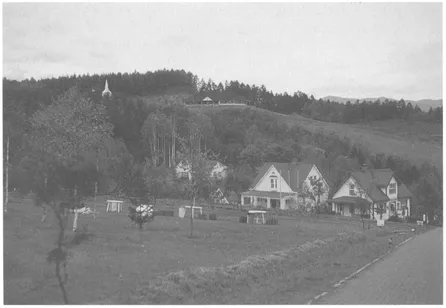
Figure 1.3 Avonlea, recreation of the town fictionalized in Anne of Green Gables, Canadian World, Hokkaido, Japan.
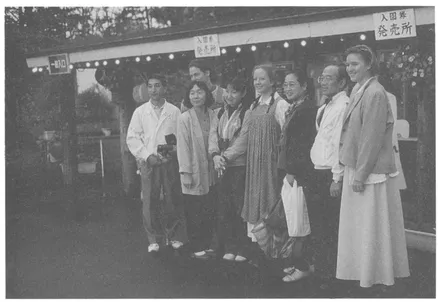
Figure 1.4 Anne, Diana and Gilbert posing with visitors to Canadian World.
There is also a school building: and here I stum...
Table of contents
- Cover
- Half Title
- Series Page
- Title Page
- Copyright Page
- Contents
- List of Figures
- List of Plates
- Acknowledgements
- Introduction: Going Abroad at Home
- 1 The World of Fantasy
- 2 Is This Reverse Orientalism?
- 3 ... or Disneyfication?
- 4 Some Other Non-Western Parks
- 5 The World as Japan's Heritage?
- 6 'Real'or Replica?
- 7 Mimesis and Japanese Arts
- 8 Education and Entertainment
- Bibliography
- Index
Trusted by 375,005 students
Access to over 1.5 million titles for a fair monthly price.
Study more efficiently using our study tools.
Frequently asked questions
Yes, you can cancel anytime from the Subscription tab in your account settings on the Perlego website. Your subscription will stay active until the end of your current billing period. Learn how to cancel your subscription
No, books cannot be downloaded as external files, such as PDFs, for use outside of Perlego. However, you can download books within the Perlego app for offline reading on mobile or tablet. Learn how to download books offline
Perlego offers two plans: Essential and Complete
- Essential is ideal for learners and professionals who enjoy exploring a wide range of subjects. Access the Essential Library with 800,000+ trusted titles and best-sellers across business, personal growth, and the humanities. Includes unlimited reading time and Standard Read Aloud voice.
- Complete: Perfect for advanced learners and researchers needing full, unrestricted access. Unlock 1.5M+ books across hundreds of subjects, including academic and specialized titles. The Complete Plan also includes advanced features like Premium Read Aloud and Research Assistant.
We are an online textbook subscription service, where you can get access to an entire online library for less than the price of a single book per month. With over 1.5 million books across 990+ topics, we’ve got you covered! Learn about our mission
Look out for the read-aloud symbol on your next book to see if you can listen to it. The read-aloud tool reads text aloud for you, highlighting the text as it is being read. You can pause it, speed it up and slow it down. Learn more about Read Aloud
Yes! You can use the Perlego app on both iOS and Android devices to read anytime, anywhere — even offline. Perfect for commutes or when you’re on the go.
Please note we cannot support devices running on iOS 13 and Android 7 or earlier. Learn more about using the app
Please note we cannot support devices running on iOS 13 and Android 7 or earlier. Learn more about using the app
Yes, you can access The Orient Strikes Back by Joy Hendry in PDF and/or ePUB format, as well as other popular books in Ciencias sociales & Hostelería, viajes y turismo. We have over 1.5 million books available in our catalogue for you to explore.