eBook - ePub
Human Adaptability, Student Economy Edition
An Introduction to Ecological Anthropology
- 496 pages
- English
- ePUB (mobile friendly)
- Available on iOS & Android
eBook - ePub
About this book
This book focuses on mechanisms of human adaptability. It integrates findings from ecology, physiology, social anthropology, and geography around a set of problems or constraints posed by human habitats.
Information
PART
ONE
ONE
ENVIRONMENTAL ANTHROPOLOGY
___
History, Theory, and Method
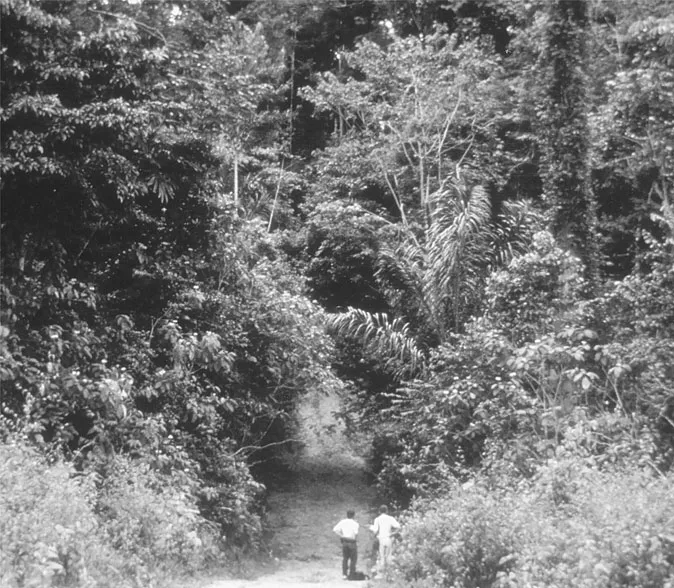
Photo by E. Moran
1
PEOPLE IN ECOSYSTEMS
The study of human adaptability focuses on functional and structural features of human populations that facilitate coping with and transforming the physical environment, particularly under conditions of environmental change and stress. All around us we see evidence of global-scale environmental change and its local and regional manifestations. Global climate change, exacerbated by emissions of earth-warming gases, has been associated with the growing severity and frequency of extreme events such as storms, drought cycles, and flooding associated with El Niño and La Niña events. The Greenland and antarctic ice sheets are melting at a surprising pace (Hassol 2004). Climate change and the loss of biodiversity worldwide due to deforestation, fragmentation, and economic development not only threaten us with the loss of this accumulated genetic bank but constitute a globally scaled experiment with the structure and function of the biosphere (Walker et al. 1999; NRC 1999a; Steffen et al. 2004). The challenge is all the greater given the difficulties in distinguishing between human-induced changes and, for example, natural decadal climatic variability (Hulme et al. 1999). Demand is growing for a refined understanding of the environmental changes we are experiencing, of the consequences to human populations, and of the scale and magnitude of the adaptations different populations must make in order to adapt to or mitigate these changes. Human populations are amazingly adaptable. This chapter and Chapters 3–4 present major theoretical and methodological concepts relevant to the study of adaptability. Chapter 2 outlines the historical development of environmental anthropology.1
Contemporary studies of human adaptability reflect a growing interaction between the social and the biological sciences (Harrison and Morphy 1998; Gutman et al. 2004; Goodchild and Janelle 2004; Moran and Ostrom 2005; Moran 2006). Cultural ecology and ethnoecology were earlier forms of this research, in which the concepts and methods of the biological sciences played a less central role. Most of the research in human ecology in the disciplines of anthropology, geography, and sociology was of this kind until the early 1970s. These social and cultural approaches to the study of human adaptability have enriched our understanding of coping behaviors. Nevertheless, a full explanation of human adaptability must integrate the physiological aspects of our responses with a solid understanding of the physical environment in which our behavior takes place. This is particularly true today given the growing practice of team-based multidisciplinary research required by the study of environmental change at scales from local to regional to global (NRC 1999a; Turner 2005; Moran and Ostrom 2005).
The integration of social and biological approaches to the study of adaptability was facilitated by acceptance of the ecosystem concept (see review of this history in Moran 1990; Golley 1992). This concept, derived from the study of biological ecology, views all organisms as part of ecological systems and subject to the same physical laws. Within this framework, human beings can be seen as third-order consumers in a food chain, or the interaction between two human populations can be considered mutualistic. The ecosystem approach makes it possible to apply a greater body of data to explanatory models of human behavior than is possible from a strictly social or cultural approach.
In this chapter, we will consider the ecosystem concept and the distinction between adaptation and adjustment. While the concept of evolutionary adaptation is relevant to the understanding of human adaptability, most research with human populations has found that nongenetic forms of adaptability are more common. Genetic adaptation involves changes in gene frequencies that confer reproductive advantage to the population in a particular environment. It is a response to prevailing environmental circumstances and may lower the population’s capacity to adjust to future changes in its environment. It also tends to restrict the population to types of habitat in which it has a reproductive advantage. The human species is characterized by a marked degree of phenotypic plasticity. As a result, the interaction between environment and genotype brings about variations (adjustments) in behavior and morphology to adjust the organism to those conditions. These adjustments occur at the individual level, although they may be shared by the whole population living in a given habitat. In other words, the human species is generalized and adjusts itself to new circumstances by physiological as well as social and/or cultural means, and in so doing transforms the environment. Few corners of the earth have escaped being transformed by humans, and even some “pristine” places are the product of millennia-old changes brought on by our ancestors (Redman 1999; Redman et al. 2004; Diamond 2005).
The other central concept examined in this chapter, the ecological system or ecosystem, describes the interaction between living and nonliving components of a given habitat. While it is possible to view the whole biosphere as an ecosystem for some purposes, scientists have found it useful to divide the biosphere into smaller and more homogeneous biogeographical regions, or biomes. Such biomes represent a given set of climatic, floral, and faunal characteristics. While species may differ between continents, the type of biota across biomes will manifest commonalities resulting from the adaptation and adjustment to similar ecological conditions. Terrestrial and aquatic ecosystems respond to stress in similar ways: reduced biodiversity, altered primary and secondary productivity, increased disease prevalence, reduced efficiency of nutrient cycling, increased dominance of exotic species, and increased presence of smaller, shorter-lived opportunistic species (Rapport and Whitford 1999).
Although the interdependence of biological organisms was recognized during the nineteenth century, the ecosystem concept was not articulated until 1935, when A. G. Tansley proposed it to explain the dynamic aspects of populations and communities. An ecosystem includes “all the organisms in a given area, interacting with the physical environment, so that a flow of energy leads to a clearly defined trophic structure, biotic diversity and material cycles” (E. Odum 1971:8).
Ecosystems are said to be self-maintained and self-regulating, an assumption that has affected ecosystem studies but has been questioned recently by biologists and anthropologists. The concept of homeostasis, once defined as the tendency for biological systems to resist change and to remain in a state of equilibrium (E. Odum 1971:34), led to an overemphasis on static considerations and to an evaluation of man’s role as basically disruptive. Later, Vayda (1974), Slobodkin (1968, 1974), and Bateson (1963) defined homeostasis as the maintenance of system properties (while others, for example, emphasize resilience [Holling 1973]). Recent ecosystem studies have emphasized, instead, the emergent properties of complex systems as characteristic of ecosystems (Levin 1998).
The cybernetic quality of ecosystems leads naturally to the use of systems analysis, which begins with a holistic model of the components and interrelations of an ecosystem—essentially a qualitative and descriptive process that anthropologists find useful. However, it then proceeds to simplify these complex interactions so that it can quantitatively study the behavior of both the whole and particular parts of an ecological system (E. Odum 1971:276–292).
Systems theory provides a broad framework for analyzing empirical reality and for cutting across disciplinary boundaries. Nonetheless, system approaches rely on other theories and develop measurements based on criteria other than those suggested by the system itself. Essentially, systems theory is a perspective that resembles anthropological holism: a system is an integral whole and no part can be understood apart from the entire system. Early studies focused on closed systems, understood through the negative feedbacks that maintain functional equilibrium. Later system analyses dealt with open systems reflecting positive feedback, nonlinear oscillating phenomena, and the purposive behavior of human actors. Such purposiveness is unevenly and differentially distributed, leading to conflict over goals and to system behavior reflecting the internal distribution of power. More recent stochastic approaches use dynamic modeling approaches such as STELLA (Constanza et al. 1993) and intelligent agent-based models such as SWARM and SUGARSCAPE (Epstein and Axtell 1996; Grimm et al. 2006; Walker et al. 2006; Parker et al. 2003). The former is an ecosystem type model, whereas the latter simulates “intelligent agent’s behavior” based on principles of artificial intelligence (Deadman 1999; LeBars et al. 2005; Macy and Willer 2002). The study of complex adaptive systems recognizes the nonlinear nature of systems and assumes that the complexity associated with a system is simply an emergent phenomenon of the local interactions of the parts of the system (Openshaw 1994, 1995; Epstein and Axtell 1996; Langton 1997; DeAngelis and Gross 1992).
Clifford Geertz, influenced by his reading of Dice (1955), Marston Bates (1953), and Eugene Odum (1971), was perhaps the first anthropologist to argue for the ecosystem as a viable unit of analysis in cultural anthropology. In his Agricultural Involution (1963), Geertz used the ecosystem concept to stress that a historical perspective helps explain Indonesia’s economic stagnation as largely a result of the economic patterns established during the era of Dutch colonialism.
For purposes of this volume, the ecosystem can be subdivided into the three components that structure it: energy, matter, and information. Energy flows into ecosystems and is converted into vegetal biomass, which in turn sustains animals and humans. Chemical energy makes possible the conversion of matter from organic to inorganic forms and the cycle of essential nutrients in ecosystems. Information makes possible control over rates of flow, changes in ecosystem structure and function, and overall adaptability to both internal and external conditions. In studying adaptability, it is most convenient to begin with humans’ response to constraints imposed by their habitat.
HUMAN ADAPTABILITY AS A RESPONSE TO CONSTRAINTS
The study of human adaptability tends to emphasize the plasticity of human response to any environment. Its use of a broad database that includes physiological, behavioral, and cultural adjustments to environmental change circumvents sterile debates over whether cultural or biological studies provide the most useful tools for studying interactions between humans and their environments. The human adaptability approach deals with the specific problems faced by inhabitants of various ecosystems. It focuses on how human populations, as they interact with each other and their environment, attempt to accommodate themselves to specific environmental problems, change the environment to make it more usable, and, in turn, how they are changed by these reciprocal dynamics. The approach gives agents (people) a lively role as decisionmakers in changing, adjusting, and transforming the physical environment, without overlooking the fact that the agents are changed in the process. Every constraint also represents an opportunity. For example, aridity constrains the practice of rain-fed agriculture, but it reduces fungi and mold which cause severe damage in humid areas. Likewise, arid lands are commonly less constrained by nutrient-poor soils than are humid areas. Nevertheless, it still stands to reason that limited access to water is the most constraining feature of arid regions.
Focusing on problems presented by environments does not imply abandoning the study of entire biomes. However, the data available is still fragmentary, and researchers have experienced difficulty in analyzing these broad units. Some scientists divide a biome into species for study, while others deal with the specific behavior of populations and communities. The approach used in this book identifies clearly defined limiting factors, stresses, or problems that elicit human responses—transforming the source of the stress whenever possible (Balée and Erickson 2006) and not just adjusting to it. Problems such as extreme cold, low biological productivity, and water scarcity demand adjustment by organisms. Human agents must move nutrients to infertile areas and irrigate areas where water is scarce. The question is, Under what conditions do agents decide that the effort is justified or possible? Table 1.1 summarizes the major constraints of a number of ecosystems that will be studied in Chapters 5, 6, 7, 8, 9.
TABLE 1.1 Limiting Factors of Representative Biomes
Biome | Characteristics |
Arctic zones | Extreme and prolonged low temperatures |
Light/dark seasonal cycles | |
Low biological productivity | |
High altitudes | Low oxygen pressure, or hypoxia |
Nighttime cold stress | |
Low biological productivity | |
High neonate mortality | |
Arid lands | Low and uncertain rainfall |
High rates of evaporation | |
Low biological productivity | |
Grasslands | Prolonged dry season |
Cyclical drought | |
Herd size and composition | |
Humid tropics | Great diversity of species |
High rainfall | |
Secondary succession | |
Solar radiation |
Focusing on a problem allows the researcher to get away from the debate over the appropriate unit of analysis (individual, population, or ecosystem) and initially requires the researcher to consider all levels of response to the problem. For example, extreme and continuing stress may elicit a coping response of irreversible physiological change during the individual’s developmental period (developmental adjustments). Acclimatory forms of physiological response, on the other hand, facilitate the adjustment of individuals after the developmental period and are reversible (acclimatory adjustment). Perhaps the most common forms of adjustment are behavioral, social, and cultural (regulatory adjustments). Regulatory adjustments are more flexible than developmental or acclimatory adjustments because they involve less commitment from the physical organism, and can be acquired promptly by learning from others.
A problem approach permits the inclusion of these multilevel responses to a particular problem—for example, cold stress. It also facilitates the conceptualization of the research by suggesting hypotheses to be tested and knowledge to be sought. During the investigation, focusing on specific problems helps keep the study on track by continuous testing of the hypotheses proposed. In the analysis stage, the focus on specific problems helps guide the interpretation of data. Lees and Bates (1990) suggest that one can focus on, for example, a dam building project, a development project, or a drought to study the entirety of human responses to an unprecedented or precipitating event in a manner similar to what I propose in the study of ecosystem constraints. This approach is comparable to geographers’ efforts to understand human responses to natural hazards (White 1974). For these approaches to have theoretical benefit, classes of events must be clustered...
Table of contents
- Cover
- Half Title
- Title Page
- Copyright Page
- Table of Contents
- List of Illustrations
- Preface to the Third Edition
- List of Acronyms
- PART ONE ENVIRONMENTAL ANTHROPOLOGY History, Theory, and Method
- PART TWO STUDIES OF HUMAN ADAPTABILITY
- PART THREE URBAN SUSTAINABILITY
- Glossary
- Bibliography
- Index
Trusted by 375,005 students
Access to over 1.5 million titles for a fair monthly price.
Study more efficiently using our study tools.
Frequently asked questions
Yes, you can cancel anytime from the Subscription tab in your account settings on the Perlego website. Your subscription will stay active until the end of your current billing period. Learn how to cancel your subscription
No, books cannot be downloaded as external files, such as PDFs, for use outside of Perlego. However, you can download books within the Perlego app for offline reading on mobile or tablet. Learn how to download books offline
Perlego offers two plans: Essential and Complete
- Essential is ideal for learners and professionals who enjoy exploring a wide range of subjects. Access the Essential Library with 800,000+ trusted titles and best-sellers across business, personal growth, and the humanities. Includes unlimited reading time and Standard Read Aloud voice.
- Complete: Perfect for advanced learners and researchers needing full, unrestricted access. Unlock 1.5M+ books across hundreds of subjects, including academic and specialized titles. The Complete Plan also includes advanced features like Premium Read Aloud and Research Assistant.
We are an online textbook subscription service, where you can get access to an entire online library for less than the price of a single book per month. With over 1.5 million books across 990+ topics, we’ve got you covered! Learn about our mission
Look out for the read-aloud symbol on your next book to see if you can listen to it. The read-aloud tool reads text aloud for you, highlighting the text as it is being read. You can pause it, speed it up and slow it down. Learn more about Read Aloud
Yes! You can use the Perlego app on both iOS and Android devices to read anytime, anywhere — even offline. Perfect for commutes or when you’re on the go.
Please note we cannot support devices running on iOS 13 and Android 7 or earlier. Learn more about using the app
Please note we cannot support devices running on iOS 13 and Android 7 or earlier. Learn more about using the app
Yes, you can access Human Adaptability, Student Economy Edition by Emilio Moran in PDF and/or ePUB format, as well as other popular books in Social Sciences & Anthropology. We have over 1.5 million books available in our catalogue for you to explore.