eBook - ePub
The 20th Century: A Retrospective
- 448 pages
- English
- ePUB (mobile friendly)
- Available on iOS & Android
eBook - ePub
The 20th Century: A Retrospective
About this book
This book is a collage of human experiences made from overlapping pieces and woven together by themes of crises, revolution, and change, aiming to raise issues that people in the twentieth-century world tried to address.
Part One
THE EARLY CENTURY
1
The Paradoxes of Modernization
One feature of the history of old Russia was the continual beatings she suffered because of her backwardness. She was beaten by the Mongol Khans. She was beaten by the Turkish beys.. . . She was beaten by the British and French capitalists.. . . All beat her—because of her backwardness, because of her military backwardness, cultural backwardness, political backward-nessy industrial backwardness, agricultural backwardness. ... We are fifty or one hundred years behind the advanced countries. We must make good this distance in ten years. Either we do it or we shall go under.
I. V. Stalin, Works (1952-1955)
Consider the conveniences at the disposal of the fin de siècle [end of the century] housewife: a house with a good part of the old-fashioned portable furniture built into it, e.g., china cabinets, refrigerators,. . . electric lights, telephones and electric buttons in every room. . . . Thus has vanished the necessity for drawing water, hewing wood, keeping a cow; churning, laundering clothes, cleaning house, beating carpets, and very much the rest of the onerous duties of housekeepingy as our mothers knew it.
Adna Ferrin Weber, The Growth of Cities in the Nineteenth Century (1963)
HOW DOES A GENERATION DIFFERENTIATE ITSELF FROM ITS ANCESTORS? Is historical vision necessarily apocalyptic, cyclical, cumulative, or progressive? Why has the West labeled itself as modern when distinguishing the recent past from other ages of history? Finally, can the experience of millions of disparate and dispersed peoples fit under this adjectival umbrella? The English adjective “modern” came into usage at the end of the sixteenth century Derived from the Latin word modernus (“just now”), the word referred to the present or recent past. “Modern” meant “new” but soon began to denote a qualitative judgment as well insofar as it suggested an improvement over the antiquated or obsolete past. European historians began to call their age modern to set it apart from the less advanced Middle Ages or the rude and barbarous kingdoms that lay beyond European boundaries. They used the slide rule of modern standards to judge the history of the European past and the non-European past and present.
The creation of this particular view of modernity as a revolutionary period of unprecedented and progressive change was the work of the Enlightenment, a period of unparalleled intellectual creativity in the Western world that substantially changed both popular and intellectual attitudes toward science, society, religion, and government. Faith in scientific reason and the empirical method lay at the center of the European definition of modernity. The small group of reformers who sparked the Enlightenment—the scientist Isaac Newton; the political philosophers John Locke and the Baron de Montesquieu; the writers Denis Diderot and Voltaire; and the philosopher David Hume, among others—decisively dethroned the primacy of religious knowledge, sometimes against their will, and established science and the scientific method of inquiry as the criterion for truth. They argued that the clerical monopoly and definition of knowledge was scandalous and that morality, politics, and history should be studied from an empirical and utilitarian standpoint. Saints and their miracles were displaced by a new pantheon of heroes that started with Copernicus and extended to Newton, truth-seekers who battled the censorship of church and state in their quest for knowledge. These thinkers visualized the world as an intricate mechanical construction and believed that the laws governing the universe could be deduced using empirical methods. In science, it was proclaimed, true knowledge about nature could occur only after replicable investigations yielded data that confirmed a hypothesis. Social science disciplines took their cue from science and tried, with significantly less success, to use variations of the scientific method to ascertain the truth in their fields of inquiry. Thus, historians tried to uncover universal laws governing human development, economists quantified the market, and psychologists delved into the workings of the human mind.
Borrowing from contemporary scientific models, thinkers in the eighteenth and nineteenth centuries such as the Marquis de Condorcet and Auguste Comte believed that human history was bound by laws. If these could be understood and the fruits of this research judiciously applied, time would bring progress. Instead of the Christian emphasis on the salvation of the individual, thinkers prophesied that all humankind could partake of this new prosperity and knowledge. This shift in historical imagination can also be traced to the eighteenth and nineteenth centuries, when the agricultural and industrial revolutions made prosperity possible for the multitude instead of the select few. Applied technology revolutionized old economic traditions wherein an elite minority thrived on the labor of serfs and slaves. The nineteenth-century industrial revolution proved the success of the happy union of science and applied technology that further fortified European optimism. Nature could be tamed, mastered, and manipulated to provide a harmonious and knowable world, and technology could be used to create wealth and exploit resources at an unprecedented rate. In this new age of optimism, a secular version of history highlighted the steady march of select nations toward progress, reason, and scientific knowledge. It replaced the Christian view of history, which traced humankind’s sorrowful exile from the Garden of Eden.
The ideas of the Enlightenment also had a profound impact in the world of politics. Voltaire bitterly criticized the exercise of arbitrary power by absolutist governments and was an ardent proponent of individual civil liberties. Montesquieu, in his major work, The Spirit of Laws, praised the English political system as a guarantor of political liberty. Thomas Jefferson read Montesquieu and argued that the separation of powers among the executive, legislative, and judicial arms of the government prevented the concentration and misuse of power. This theory of “checks and balances” played a very important role in shaping the Constitution of the United States in 1787. Enlightenment political ideology discredited the exercise of unlimited and hereditary monarchical power as medieval or barbaric and helped popularize notions of the rights of the individual, especially as they pertained to their political freedom and control of their property.
Are We All Modern Yet?
By the late nineteenth century a typically modern country had experienced the industrial revolution and the bulk of its population was engaged in nonagricultural work. Secular and scientific knowledge formed the core of the educational curriculum in the newly expanding schools, vocational institutes, and universities. Millions of rural dwellers were drawn to the bright lights and employment opportunities that were to be found in the bustling cities, such as London and Chicago. By the 1890s electric streetcars, an American invention, carried workers, shoppers, and schoolchildren to their destinations in most of the European capitals. Governments grew apace, creating bureaucracies that engaged in rational planning to maximize the welfare of the citizenry as well as engaging in the more traditional duties of taxation, administration, and the maintenance of internal and external security. The newly emerging print media, especially national and international newspapers, helped define modernity and circulated its criteria for public consumption around the major economic and cultural centers of the world. Etiquette books, magazines, advertising, and popular fiction instructed readers in the intimate details of modern life, and on urban dress codes, appropriate leisure pursuits, civilized manners, and the new rules that governed the interaction of men and women on a more equal basis.
The word “modern” was mainly used in two ways: to valorize the history, culture, economics, and politics of those who considered themselves modern and, simultaneously, to castigate those who were “premodern,” “underdeveloped,” “backward,” “antiquated,” “reactionary,” “benighted”—in short, those who had failed to match Western modernity. When the curtain lifted on the early part of the twentieth century, from Washington to Tokyo political leaders worried that their countries might not be sufficiently modern. Who constituted the charmed circle of modernization? How was this hierarchy created and maintained? Was modernization irreversible, and were all nations destined to experience it? Was there only one path to progress, or could the end be achieved in different ways? Some questioned the necessity of heedless modernization. These romantics yearned for a past before the enthronement of science and reason and looked for different endings to the historical story. Artists, poets, philosophers, and conservatives railed against the conditions of modern existence and through their critique highlighted the perils of modernization.
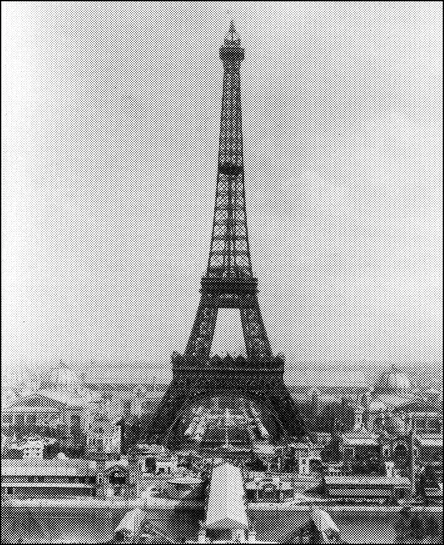
PICTURE 1.1 World’s Fair, Paris, l889. The Eiffel Tower and the exhibition on the Champ-de-Mars were highlights during the Paris World Exposition. Many of the buildings around the base of the tower were filled with representatives and artifacts of empire. (Photo from the Library of Congress)
If we were to draw a mental map of the world in 1900, it would be possible to imagine a series of concentric circles narrowing down to a few countries at the center, such as Germany, France, and England. Of course, across the Atlantic lay the might of the emerging United States. It was becoming a major player in the international arena as American industrial and agricultural goods poured into the world market. By the late nineteenth century, the United States had set up Ger-man-style research universities and the work of U.S. scientists was beginning to gain the attention of the European world. At the periphery stood the vast majority in the colonized world, in particular the countries of Asia and Africa. The second series of circles comprised European nations that had failed to achieve the Enlightenment dream of a government limited by laws and franchise, education based on sciences rather than theology, and the replacement of an ossified feudal social structure by a society in which careers were open to talent and individuals could be compensated for the misfortune of humble birth through the acquisition of education and wealth.
The Grand Russian Empire, the Austro-Hungarian Empire, and to a lesser extent the Ottoman Empire, behemoths of another age, fell into this second ring. Culturally, the ruling classes looked to Western Europe, but they resisted the proliferation of Enlightenment ideas within their imperial boundaries and oscillated between fitful reform and an obstinate adherence to premodern methods of governance. In Russia the situation was particularly complex. While the Tsarist government realized that industrialization was vital if the empire was to retain its military authority on the continent, it feared the consequences of urbanization, unplanned population growth, and the rise of a professional middle class. Ultimately Tsar Nicholas II was convinced that the main function of the government was to retain the autocratic monopoly of power, and to that end he followed policies that both fostered and retarded modernization.
In a certain sense the situation of the countries of Latin America shared in this predicament. Mexico, Argentina, Brazil, and other lands had broken free from the colonial rule of Portugal and Spain during the course of the nineteenth century, and significant sections of the ruling classes believed in the Western ideas of progress, representational government, and the political and civil rights of the individual. But the colonial legacy of centralized and authoritarian governments frustrated the implementation of these ideas. At the same time, within the world economic order Latin American nations were primarily suppliers of agricultural goods and consumers of manufactured goods. This role worked to their economic disadvantage, as did the internal Creole elite monopoly on both political power and economic resources.
By the early 1900s the world looked to the West and had already internalized the West’s evaluation of itself as scientifically literate, materially productive, and politically democratic. In this chapter we define the paradoxical nature of modernization. Several themes will be touched upon: industrialization; the philosophies of liberalism, socialism, feminism, and nationalism; the rise of the middle class and the working class; colonialism; and modernism. These ideas will be further elaborated in succeeding chapters.
Industry and Science
Western monopoly on what defined progress was of recent origin and rested on the material prosperity and technological superiority wrought by industrialization and capitalism. For example, fueled by new energies such as coal, steam, and water, the British cotton industry underwent a metamorphosis in the eighteenth century and proved to be the biggest source of British exports. By the late nineteenth century, the cotton textile industry was surpassed by a modern complex of heavy industry in which iron ore, petroleum, and electricity provided power for the production of iron and steel, machinery, chemicals, and textiles. Britain was able to effectively dominate the world economy because of a concurrent revolution in commercial transportation. The British merchant marine, flying under the protection of the Union Jack, had dominated commerce on the high seas since the seventeenth century. Initially, it brought the wealth of the world to England: spices from the East Indies, cotton from Egypt, tea and silks from China and India, sugar and coffee from the West Indies, and cotton and tobacco from America. But by 1900 Britain was exporting machinery, chemicals, and textiles. Great Britain, especially London, was also the financial capital of the world, setting the standards in investment, banking, and insurance.
The industrial revolution developed hand in hand with the scientific revolution, which, however, was not concentrated in Britain. For the first time in human history modern scientific discoveries became commercially viable through a process of applied technology. The telegraph had already been introduced in the nineteenth century, but now the telephone, an invention of Alexander Bell’s in 1876, began to make its appearance in urban centers. By the late 1890s electric light not only made home illumination cleaner, safer, and more effective but also completely revolutionized the daily routine hitherto dictated by the sun. The adage “Early to bed and early to rise makes a man healthy, wealthy, and wise” was no longer a truism but a quaint echo of a premodern, agrarian lifestyle. Medical discoveries flowed apace, and the scientific work of Robert Koch and Louis Pasteur proved that many incurable diseases, such as diphtheria, typhoid, and scarlet fever, could be controlled by vaccination, medication, and good hygiene (see Chapter 13).
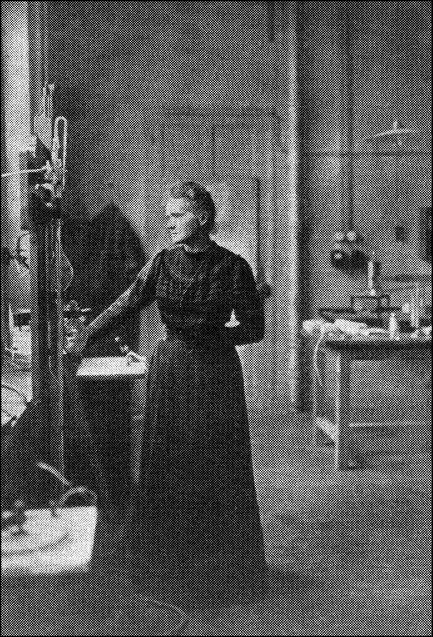
PICTURE 1.2 Marie Curie in her laboratory. Marie Curie, Polish by birth, shared the 1903 Nobel Prize for Physics with her husband, Pierre, for their work on radioactivity. (Photo courtesy of the American Institute of Physics/Emilio Segre Visual Archives)
Other scientific discoveries followed. In 1895, William Roentgen discovered X rays, a form of radiation that can penetrate opaque objects. This technology was applied in many areas of physics and medicine. A more startling discovery was that of the French physicist Marie Curie, who found that atoms are composed of many small, fast-moving particles such as electrons and protons. She and her husband, Pierre Curie, found that the element radium does not maintain constant atomic weight but constantly emits subatomic particles. Building on their work, Max Planck, a German physicist, explained that subatomic energy is emitted in uneven little spurts. This finding led to the realization that matter and energy might be different forms of the same thing, a notion that shook the old view of atoms as stable building blocks of nature. Albert Einstein proved conclusively in his theory of relativity, published in 1905, that matter and energy are interchangeable and that all matter contains enormous amounts of energy. Yet, even though Einstein revolutionized physics by representing the subatomic universe as uncertain and undetermined, Newtonian physics of hard facts, controlled and replicable experimentation, and unchanging laws still regulated the way science was done in laboratories.
Liberalism and Democracy
The philosophy of liberalism, a central block of modernization, is built around two central concepts, liberty and equality. In the eighteenth century, when most monarchs believed that it was their divine right to interfere in private life, liberals, who were considered dangerous radicals, protested against the infringement of inalienable civil rights. Thus they demanded that governments abolish censorship and individuals be granted the right to express their beliefs freely in speech and print. Demands for basic personal freedoms were incorporated both into the U.S. Bill of Rights and the Declaration of the Rights of Man issued by the revolutionaries in France. Liberty also meant that sovereignty lay with the people and the people alone should have the power to legislate human affairs. In practice this principle meant that the people should choose their representatives, who would rule on their behalf and legislate for the common welfare. All citizens were to be considered equal in the eyes of the law and to enjoy the same civil liberties. Nobody could claim special legal privileges on account of their bloodline. Thus liberals were deeply opposed to the society of orders where the nobility and the clergy enjoyed special juridical and economic privileges. But when liberals spoke about equality, they did not mean to eradicate the differences between the rich and the poor; instead, they wanted to give everyone the same legal opportunity to pursue life, liberty, happiness, and property. In many ways political life in Britain was the pioneer of modern politics. The British had devised a unique political solution that combined aristocratic and monarchical privileges with popular representation. Although King Charles I lost his head in 1649, the monarchy had learned its lesson well and meekly submitted as generations of parliamentary leaders chipped away at its privileges. By 1900, the monarch was a figurehead and the royal family a comfortable sour...
Table of contents
- Cover
- Half Title
- Title Page
- Copyright Page
- Dedication
- Contents
- Pictures and Illstrations
- Maps
- Tables
- Figures
- Preface and Acknowledgments
- Introduction
- PART ONE: The Early Century
- PART TWO: The Later Century
- PART THREE: Century-Long Themes
- Suggested Readings and Other Resources
- Index
Trusted by 375,005 students
Access to over 1.5 million titles for a fair monthly price.
Study more efficiently using our study tools.
Frequently asked questions
Yes, you can cancel anytime from the Subscription tab in your account settings on the Perlego website. Your subscription will stay active until the end of your current billing period. Learn how to cancel your subscription
No, books cannot be downloaded as external files, such as PDFs, for use outside of Perlego. However, you can download books within the Perlego app for offline reading on mobile or tablet. Learn how to download books offline
Perlego offers two plans: Essential and Complete
- Essential is ideal for learners and professionals who enjoy exploring a wide range of subjects. Access the Essential Library with 800,000+ trusted titles and best-sellers across business, personal growth, and the humanities. Includes unlimited reading time and Standard Read Aloud voice.
- Complete: Perfect for advanced learners and researchers needing full, unrestricted access. Unlock 1.5M+ books across hundreds of subjects, including academic and specialized titles. The Complete Plan also includes advanced features like Premium Read Aloud and Research Assistant.
We are an online textbook subscription service, where you can get access to an entire online library for less than the price of a single book per month. With over 1.5 million books across 990+ topics, we’ve got you covered! Learn about our mission
Look out for the read-aloud symbol on your next book to see if you can listen to it. The read-aloud tool reads text aloud for you, highlighting the text as it is being read. You can pause it, speed it up and slow it down. Learn more about Read Aloud
Yes! You can use the Perlego app on both iOS and Android devices to read anytime, anywhere — even offline. Perfect for commutes or when you’re on the go.
Please note we cannot support devices running on iOS 13 and Android 7 or earlier. Learn more about using the app
Please note we cannot support devices running on iOS 13 and Android 7 or earlier. Learn more about using the app
Yes, you can access The 20th Century: A Retrospective by Choi Chatterjee,Jeffrey Gould,Phyllis Martin,James Riley in PDF and/or ePUB format, as well as other popular books in History & 20th Century History. We have over 1.5 million books available in our catalogue for you to explore.