
eBook - ePub
The Murder in Merger
A Systems Psychodynamic Exploration of a Corporate Merger
- 316 pages
- English
- ePUB (mobile friendly)
- Available on iOS & Android
eBook - ePub
About this book
This book provides an overview of the psychodynamics theory, bringing together concepts from the field within a particular focus, that of "emotional connectedness". It is for managers who are involved in facilitating the transitions of enterprises as they form into a newly merged entity.
Information
Chapter One
Introduction
The relatedness of individuals to their work organizations has changed radically in the past couple of decades, the result of a changing global environment in which uncertainty and technological advances have become paradoxical partners. Information and communication technologies appear to promise more certainty in the control of business operations, “organizational knowledge”, and employee performance, yet despite this, people’s experience of working life is of greater uncertainty and of having less control over their futures. Experiences of fragmentation have also increased, as the picture drawn by one employee of a global services firm clearly shows (Figure 1). Small and large enterprises have responded by changing internal structures of roles and relationships, employment arrangements, the location of their production or service operations, and universally getting rid of so-called “non-core business”, which usually means mass sackings of staff. There is another paradox, perhaps, in the shift to larger, more powerful organizational units, such as global corporate mergers, while at the same time over-valuing entrepreneurial individualism and its focus on individual performance. Connectedness and survival are central themes in this kind of environment.
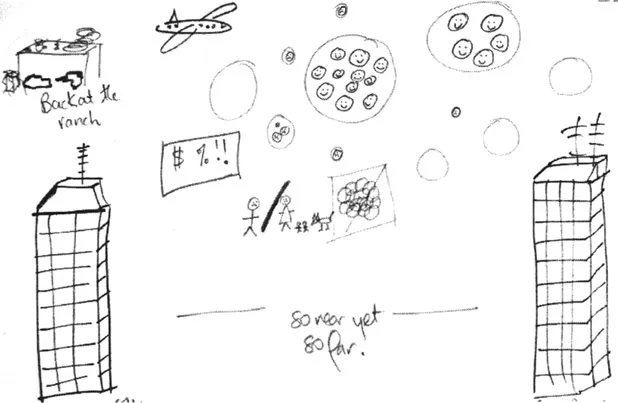
Figure 1. A consultant’s experience of working in a global services firm.
Relatedness between the individual and the organization is a subject that has received attention for a long time, especially by those working in the field of human relations. They have noted the shift from dependency relations to a creed of autonomy in which the individual must either deny their dependency needs or take on the role of a consumer in order to relate to social institutions (e.g., Long, 1999b; Miller, 1999). Alienation of the individual is one consequence of this shift.
The shift in individual-organizational relatedness has heightened people’s vulnerability. Changes such as downsizing, outsourcing or restructuring dislodge anxieties that prior organizational structures acted to contain. Emotional experiences have become split off from formal structures and left to the informal organization to manage and enable integration. The focus on the individual may be a defence, or avoidance, of painful aspects of relating as a group within and to the organization. Individual connectedness is impinged upon by societal changes, organizational changes, and relating these to everyday work realities filled with conflicts, competitiveness, tensions, and dilemmas (Krantz, 1998; Roberts, 1999; Sievers, 2000). Others have noted that when self-centred individualism holds sway, then conditions for corruption are enabled: the individual connects to the organization through greed, omnipotence, deceit, or grandiose fantasy, and the nature of the relatedness becomes pathological (Levine, 2005). Self-centred individualism also diminishes the psychological investment of the individual in the organization, with an increasing distance between top management and the workforce. One expression of this can be found in the rapidly increasing differential between a CEO’s salary and that of the lowest paid employee in the organization.
However, work is an important, if not critical, part of contemporary life. It contributes profoundly to a sense of individual identity. The ability to take part in work keeps individuals in touch with reality, even if that reality arouses fears of catastrophic change. Increasingly, work is becoming the “container” for the individual. Individuals’ emotional relatedness is a significant feature of work life and work stresses. Emotional relatedness within organizations requires as much managing as does the organizational task (Lawrence & Armstrong, 1998; Obholzer & Roberts, 1994).
At the heart of the matter is that people’s experience of work is the product of their relatedness to the organizational system, their roles, and who they are individually: their sense of Self. This suggests that new forms of emotional containers are needed for the changing conditions of individuals’ relatedness to work organizations, containers that have the capacity to integrate the personal and systemic, the conscious reality with the psychic (unconscious) reality, and to build psychological presence as part of all roles.
Importance of attending to emotional forces in organizations
The personal stories related in this book highlight the importance of attending to emotional experiences in organizational systems, and how this contributes to understanding invisible forces affecting an enterprise and the achievement of its mission and goals. In particular, emotional forces aroused by large-scale corporate mergers and their effects upon organizational functioning are not widely understood. If those experiences can be more fully comprehended, it might make for better management of emotional relatedness within organizations, especially during times of catastrophic change.
The effects of a merger upon organizational functioning is presented through an in-depth case study (Chapters Four-Six). It explores events in one large global firm, formed from a merger between two other global entities. The new firm is a very large enterprise as a consequence. A significant factor in the degree to which staff felt emotionally connected in the merged organization was that the old and new firms conducted their business through a complex multi-matrix structure of project teams, support roles, and executive responsibilities. The study sheds light on the emotional connectedness and disconnectedness engendered by two increasingly common events in the life of a firm: mergers, and adoption of matrix organizational structures.
My interest in emotional connectedness per se was initially formed from a previous study of emotional experiences within a virtual team (de Gooijer, 1999). This study revealed that emotional connectedness between organizational members working almost exclusively in isolation from each other, dependent on technology for communicating, was subject to heightened processes of projective identification that seemed impossible to contain or even to test in reality. If this was difficult at a team level, what might it mean for an organization operating globally? How might projective processes be contained when the capacity to contain them through traditional forms of organizing work were absent or diminished? These questions initiated a new study of emotional connectedness in a global enterprise employing a matrix organizational structure (de Gooijer, 2006).
Interest in this particular enterprise was piqued by the firm’s assertion that its organizational structure had been designed to connect people who worked off-site for long periods of time in temporary project groups. Management considered the 30% annual turnover of staff too high, and wondered about how to generate stronger staff affiliation to the firm. Was the structure, in fact, fulfilling the design intent, or in what way did it connect people? From a systems psychodynamics perspective, how might this structure enable (or not) engagement with felt experiences and unconscious processes from the relatedness among organizational members? How could projective processes be worked through when work groups experienced a constantly changing membership?
What began as a curiosity about emotional connectedness in a matrix organizational structure soon became a curiosity as to why so much disconnectedness was observable in the firm. The reasons for this disconnectedness led to the discovery of the emotional forces at play in the immediate aftermath of a corporate merger.
Systems psychodynamic consulting and research lends itself to curiosities of this kind. Frequently, a systems psychodynamics approach will focus on containing or understanding anxieties in the organizational system that have already escalated to dysfunctional levels. Not that such dysfunctionality is always apparent at first glance, or on coming in contact with the presenting situation. While the case reveals dysfunctional aspects of the firm itself, it also offers something of practical significance to those who work in or with organizations, whether in the capacity of management or as a consultant. It offers a perspective that being alert to staff members’ felt experiences and their emotional connectedness as a normal part of business provides leading data on the health of the enterprise. Managers who are more wholly informed about organizational realities, i.e., both external and psychic realities, can work more realistically on resolving problems, assessing risks, or making strategic business decisions.
Approach to understanding emotional connectedness
What does it mean “to understand emotional connectedness in an organization”? To understand emotional connectedness is to study subjective and intersubjective experience, the lived experiences of individuals and groups. In the context of emotional connectedness in organizations, it is an exploration of organizational psychic reality generated from members’ shared phantasies about the enterprise. (The term “phantasy” is used to mean unconscious impulses, in contrast with conscious “fantasy”.)
Organizational psychic reality has its foundations in psychoanalytic clinical methods and group relations theory. More recently termed systems psychodynamics, it includes concepts such as unconscious processes of interpersonal relations; object relations theory (with the organization as object); primary processes of the organization (e.g., primary task and primary risk); socio-technical systems; task and sentient systems; unconscious fantasies of the enterprise, or the “organization-in-the-mind”; and defence mechanisms within organizations, otherwise known as social defences.
Definitions of emotional connectedness can be found in the seminal theories of psychoanalysts, which others within the emerging field of systems psychodynamics have applied to organizations (e.g., Bion, 1961, 1984c, 1994; Freud, 1912b, 1921c; Jaques, 1955; Klein, 1975f; Menzies Lyth, 1970; Miller & Rice, 1967; Trist & Bam-forth, 1951). Specific concepts of emotional connectedness which they explore include the emotional links between people and attacks on linking; the development of thought from emotional experience; the relationship between container-contained and the process of containment for transforming or working through emotional experiences; the capacity of an emotional link to generate creative transformation or destructive annihilation in the psychic structure of individuals or groups; the processes of projection and introjection of instinctual impulses and phantasies; the links between internal objects and external reality identified by object relations theory; transference and countertransference processes for carrying the content of relatedness between people; the use of individuals as receptacles for projection by a group; the recognition of self and other as “subject”, and the associated dialectic process of relating and mutual recognition (intersubjectivity); group relatedness, which includes libidinal ties, group mind, and mentality; and the effects that the size of a group has upon its ability to engage, or its potential for projection.
These concepts are further discussed in Chapter Two, along with their application to systems psychodynamic aspects of corporate mergers and organizational structures.
The case study
The study of TT Ltd, focusing on its regional operations in Australia-New Zealand, informs the central discussion of the book. Initially, the firm’s recent merger was considered to be background context rather than an influencing factor on connectedness. As my research progressed, it became clear that experiences of the merger was the determining factor in the psychic reality of the organization. While its organizational structures were manifestly for emotionally connecting staff members, they were also a manifestation of defensive responses to the anxieties invoked by the merger. Anxieties were at their peak in the two-three years after the merger was effected.
I saw management intent on creating connections among employees, but failing to see the significance of emotional disconnectedness to the business. I learnt that when realistic anxieties about the business were not fully attended to, then these invoked neurotic anxieties and manic responses to perceived dangers. Fears about business survival became cathected with primitive fears of annihilation. The first were dealt with by ever increasing exhortations for employees to “sell more business”, while the primitive fears were defended against. The “dark side” of the merger, experienced every day by employees, was seen to be a problem of maladaptive individuals, not of the organizational system.
The effects of the merger are discernible in the experiences of employees connecting to the organization, to their own and others’ roles, and to the work of the enterprise itself. Their experiences are explored through the lens of connections, of which there are three key ones:
- the connecting structures of the organization: different and multiple structures existed to connect people, some consciously determined, others for unconscious purposes. Altogether, they form “normative”, “phenomenal” and “existential” structures;
- personal experiences of connecting to the enterprise: these are illustrated in a series of vignettes throughout the book, depicting the psychological and emotional experiences of entry to the organization, performing in role, and disconnecting from the organization;
- staff members’ experiences of role in the enterprise: specifically those of management, consultant, and support staff roles.
These connections are considered systemically in a discussion on the psychodynamic aspects of the case, especially the “organization-in-the-mind” held by its members. This includes a discussion on the enterprise and the system dynamics revealed in employees’ drawings. Themes of splits and disconnections, “headless” leadership, negative capability, an absence of mutuality, and psychotic processes are discernible in the emotional connectedness between management and staff, and in experiences of group connectedness. Exploration of the concept of the “consultant as container” for the success of the enterprise adds to the emerging picture of an organization not emotionally connected to a healthy level of functioning. A hypothesis is presented that the psychic reality of the enterprise became saturated by a fear of annihilation evoked by the merger. The matrix structure is shown to be a social defence mechanism, created in response to primitive anxieties aroused within the organization.
A theory about emotional forces within a merger
In the first instance, anxieties aroused by a merger are seen to be of a primitive kind, a primary response to experiencing a merger as a catastrophic change in the life of the organization. Second, emotional disconnectedness becomes employed as a social defence against feeling the pain of these anxieties. Klein’s (1975f) theories on primitive processes are pertinent here for exploring the nature of the danger, real and phantasized, experienced from the merger. Various social and psychic defence mechanisms are observable in the case study, such as the multiple organizational structures, the role of “counselling families”, idealization of the individual, and processes of projection, denial, and regression. These mechanisms ensured that emotional connectedness was kept at bay.
A theory on containing destructive forces in a corporate merger is presented in Chapters Nine and Ten. Factors for containing such forces include emotional links, containment, managing anxiety in the organization, and managing the primary risk of a merger. A model of the systems psychodynamics of a corporate merger is formulated in which the processes of the associated catastrophic change and the dynamics between container-contained are depicted. The model is intended to enhance understanding of the emotional dynamics in a merger and the developmental processes that need to be managed.
* * *
My hope is that the firm’s story, and the development of a psychodynamic theory on corporate mergers, can contribute to organizations being experienced as more emotionally integrated sites of endeavour, more emotionally robust for dealing with catastrophic change. I would hope also that workplaces might come to feel more creative for all, less dysfunctional, that work itself is felt to be more often satisfying. Work-related stress might then diminish in its severity.
Table of contents
- Cover
- Half Title
- Title
- Copyright
- Contents
- ACKNOWLEDGEMENTS
- ABOUT THE AUTHOR
- PREFACE
- CHAPTER ONE Introduction
- CHAPTER TWO Concepts for understanding emotional connectedness
- CHAPTER THREE TT Ltd: a case study
- CHAPTER FOUR Connecting structures of the firm
- CHAPTER FIVE Connecting to the enterprise
- CHAPTER SIX Employees’ experiences of role
- CHAPTER SEVEN Emotional connectedness in a corporate merger
- CHAPTER EIGHT Psychological meaning of corporate mergers and organizational structures
- CHAPTER NINE A murderous merger
- CHAPTER TEN Containing destructive forces
- APPENDIX: The field study
- REFERENCES
- INDEX
Trusted by 375,005 students
Access to over 1.5 million titles for a fair monthly price.
Study more efficiently using our study tools.
Frequently asked questions
Yes, you can cancel anytime from the Subscription tab in your account settings on the Perlego website. Your subscription will stay active until the end of your current billing period. Learn how to cancel your subscription
No, books cannot be downloaded as external files, such as PDFs, for use outside of Perlego. However, you can download books within the Perlego app for offline reading on mobile or tablet. Learn how to download books offline
We are an online textbook subscription service, where you can get access to an entire online library for less than the price of a single book per month. With over 1.5 million books across 990+ topics, we’ve got you covered! Learn about our mission
Look out for the read-aloud symbol on your next book to see if you can listen to it. The read-aloud tool reads text aloud for you, highlighting the text as it is being read. You can pause it, speed it up and slow it down. Learn more about Read Aloud
Yes! You can use the Perlego app on both iOS and Android devices to read anytime, anywhere — even offline. Perfect for commutes or when you’re on the go.
Please note we cannot support devices running on iOS 13 and Android 7 or earlier. Learn more about using the app
Please note we cannot support devices running on iOS 13 and Android 7 or earlier. Learn more about using the app
Yes, you can access The Murder in Merger by Jinette De Gooijer in PDF and/or ePUB format, as well as other popular books in Psychology & Organisational Development. We have over 1.5 million books available in our catalogue for you to explore.