![]()
Platform
1 All aboard
We want our children to be free-thinking, independent learners; yet the system they are educated in can be rigid and straightjacketing, not promoting the values in education that we crave for our children.
Is the ideal of a creative and free environment where children explore, ask questions, explain to each other and have fun obtainable? Is it possible to reach a high level of independent learning in an atmosphere of performance, targets and timetabling?
Furthermore, can we teach openly and feel less guilt? Organisation and planning have dangerously overtaken an honest and spontaneous approach to teaching and learning.
In a culture of believing knowledge is the be all and end all, the notion of implementing an enquiry approach has many difficulties. There are substantial gaps between how schools are being asked to deliver the curriculum, how learning is being encouraged around the world and how teachers perceive how education works. The process of learning being given more importance than the end product is why an enquiry approach is essential. In my own experience, those times when children’s learning has been exciting and long lasting is when they are working hard to explore and hang on to those life-changing moments when children ‘get’ something, as opposed to remembering a fact or method that has little intrinsic meaning at that moment in time or for the future.
Do you remember the organisation of many 1970s junior classrooms? If not, then lucky you! It was row upon row of wooden desks with a lift-up lid, pencil sharpener shavings stuck to the bottom with ink splats. If we talked we were shouted at and we had to fill exercise books with sums. Handwriting featured a lot, with endless practising and copying. Art lessons were a favourite of mine but looking back we all did the same thing; there was no responsibility for creating or developing your own ideas. We used to do a project at the end of term and I must have done two or three scrapbooks about France. I loved it there and wanted to express my thoughts with drawings of the flag, map and the Eiffel Tower. However, all the scrapbooks were identical. Why was this never challenged? Why was I not encouraged to try something new? Why were my stereotypical drawings of French people unchallenged?
Thinking back, and remembering, praise was given to those who achieved academically. Later, some of the teachers from my school were very surprised that I had become a teacher because I struggled a lot, especially with reading. I just didn’t get it. Reading Comprehension was a total mystery to me and the scheme we used was fiddly, with little vocabulary cards that fitted into slots to form sentences. It just didn’t do it for me. I didn’t really enjoy reading until I was pregnant and on maternity leave with lots of time to spare (as my first born was late!). At that time I read and read and now enjoy reading about teaching and learning, so that it is a skill that has been a slow burn for me.
Not everyone is the same and I’d like to think that if I was at school now, teachers wouldn’t allow me to do the same repetitive tasks. Instead they would challenge me and support and inspire me to feel confident in my abilities and to take responsibility for my learning. Looking back I never really had those ‘wow’ moments. I was happy and have fond memories of the Infant school where subjects seemed to merge and rooms were dedicated to different subjects, so that we had a reading and writing room, and an art room and we were free to roam from one to the other, but still not in a challenging or enquiring style. I think we want more for our children today.
Therefore, in this guide you will find achievable goals to develop an enquiry-style curriculum and learning policy for your school. Use this guide as a learning journal by adding your own experiences and questions; along with your school, you will begin the amazing journey of letting go and promoting a learning environment where if there’s something you don’t know then, together, we’ll work it out. Even if there’s no right or wrong answer, the process of finding that out will be far more rewarding and deeply rooted in the learning process, becoming a way that we think rather than something we know.
The idea of this journal is to follow the learning path with your school; include all staff, children and parents in presenting your school’s way of learning. By developing the responsibility of the staff to allow children to make decisions and try something new, parents will have the assurance that they are sending them to a positive, forward-thinking school that endeavours to provide the best learning environment possible.
Enquiry can take on different forms. Ultimately you want enquiry to weave through the curriculum and timetable, but you may need to organise off timetable days or ‘wow’ days to generate enthusiasm and impact, as well as to give a platform for staff and children to practise enquiry skills in an organised way. Once everyone feels confident and totally values the process, it can roll out into everyday practice and you can start to form the group of teachers that I am going to call Team Enquiry.
At the beginning of an enquiry or on an off-timetable ‘wow’ day, use the learning path to give structure to the learning taking place. It is a misunderstanding that enquiry means no structure. A straightforward framework is essential to give teachers the confidence to have a go at a new style of teaching where responsibility and ownership are handed over to the learner and is not dictated by the teacher.
Teachers are not now the primary resource of knowledge for children, so our role now has to be that of a guide, opening up possibilities and allowing children to take risks, be creative and develop their critical thinking skills. This approach can cause anxiety for many, so buckle up your belt for a bumpy road! This journal will help teachers to feel in control and captains of their own destiny rather than feeling out of control and watching the lesson unravel before their eyes, or remain static and uninspiring.
Maintaining the balance is what this journal will help you to do, as well as to explore the ways in which you learn, collaborate with others and prepare children to develop their skills as a learner, now and in the future. The future for children in education is unknown so we need to prepare for the pathways children can take as learners into the future.
In using this guide successfully, you have to have flexibility and confidence in yourself in responding to new ideas and the ideas of others. If someone’s response to a new initiative is “well, we’ve always done it like this”, then their starting point is very different from someone who says, “show me how it works, I’ll have a go”. The art of embedding enquiry positively is in establishing enquiry procedures and practices which fit generally with the majority view, yet allow everyone to explore their understanding and skill set. We learn most when we are at the edge of our comfort zone, so be clear about this at the start. You are going to ask teachers to possibly change and do something they feel uncomfortable with. Reassure them that we will do this together and the whole teaching team should provide a supportive atmosphere where strengths are celebrated and weaknesses supported.
Be open about your practice and how things work. Some see this as a weakness but if you want to influence change, let them see how you do it – by sharing ideas as a commonplace routine and letting them ‘pinch’ your practice ideas. Establishing this sharing atmosphere will open up the key to good practice and take away the competitive nature within teams that performance is a solitary status that teachers are on their own doing the same things in the same way and being protective of how they think it works best. Teachers are creative beings and given the right environment where collaboration and raw enthusiasm is built upon and given a purpose, amazing things will happen with enquiry.
It will take time to get everybody on board and things at times will get messy. Regularly remind staff and yourself that you’re not asking to get rid of all their previous ideas. Mistakes will happen along the way, but together when learning is opened up and practice is put under the microscope, real meaningful change with no ‘finger pointing’ can take place.
One of my favourite books is ‘Show your work by Austin Kleon. It has nothing to do with schools but everything to do with sharing your creativity and collaboration. He says that “when you share knowledge … you receive an education in return” (Kleon 2014: 119). Setting the scene in your school of a sharing community could be the hardest thing you do but, equally, the most rewarding and it will ultimately benefit the learning environment in school. Once you start this process, gaps will appear and those gaps will become your starting point. For me, it was ensuring that everyone understood the power of enquiry, seeing the value of a whole school theme or off-timetable day and setting up learning opportunities rather than disseminating knowledge and a curriculum that’s been done in the same way for a long time to pupils. These are hefty starting points but at least I knew where to start and where to go!
You need to find your starting point. It might be that elements of enquiry are already being used in your school, so build on them. Knowing the context of your school will be very important in finding your way. Consider both staff confidence and children’s experiences to start your enquiry school. It could be that many children have valuable experiences out of school, though they are not given the freedom to explore independently. They may have a wealth of ideas but lack the reflective skills in order to learn from mistakes. There are no judgements here, just a fact-finding mission to find your starting point. Equally, interact with the staff to work out what teaching styles are generally going on and gauge their willingness to try something new at a meaningful level.
This can take time and it could become a drip-feed effect which actually, though it may take years to implement rather than months, does become embedded more strongly as opposed to a quick ‘wham, bam’ initiative that might seem very exciting but lacks the substance and longevity that enquiry has. These small interactions that you have with teachers and children will all add up to building an enquiry school and you need to acknowledge them and celebrate them. I get such satisfaction from listening to snippets of conversations about what has worked well in a class or how certain children have progressed from year to year. I like to think I’ve played a part in promoting that recognition of learning and opening up thinking throughout the school.
Use the reflection page to explore your starting point (Figure 1.1).
Figure 1.1 Reflection page
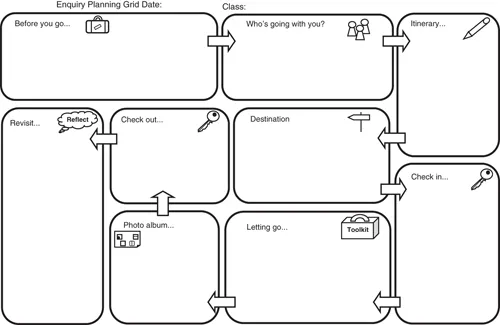
Figure 1.2 is the planning grid; this is the template to use for enquiry planning. Each section of this book will help you to add to the plans to give structure and direction to your enquiry pathway personally and as a school. It will, hopefully, help you to plan for every eventuality and guide you through implementing an enquiry approach.
Figure 1.2 Planning grid
Someone asked me at school if I wanted the school to use this grid through the planning stages for everything. Wouldn’t that be amazing! I answered that yes, the ultimate aim would be that, but we’re not quite there yet. We’ve got a lot of work to do before this is in place.
This book will follow the planning grid as you implement an enquiry style and promote an enquiry ethos with all.
It flows along your journey from finding your personal starting point to recognising the areas for development in others and creating a structure to planning and delivering enquiry. There will be lots of opportunities along the way to make your own notes and reflections, so use them to bring clarity and purpose to your journey.
![]()
Platform
2 Before you go
Figure 2.1
Confidence goes a long way in bringing others on board, and however experienced you are it’s essential to have a clear understanding of your strengths. I have been in many staff meetings when teachers have delivered a message apologetically and with a “well, I’m not going to do it but I want you to do it” mentality. This will get you nowhere fast. It’s not about appearing like a ‘know it all’, which I’ve felt from others several times, and which may cause some to disappear and mumble to each other about what you’ve said. It’s more about establishing your role, being positive and being confident in your ideas so that your enquiry teaching spreads and sneaks up on people and becomes absorbed into learning and teaching.
Before you go on this enquiry journey, it’s important to think about your role in the school. This obviously could be quite varied, as some may be established teachers, newly qualified or a phase leader. You may feel that it’s not your responsibility to promote enquiry in your wider school or that it’s not your job. Have faith that whatever your position, an enquiry school is the future and you wi...