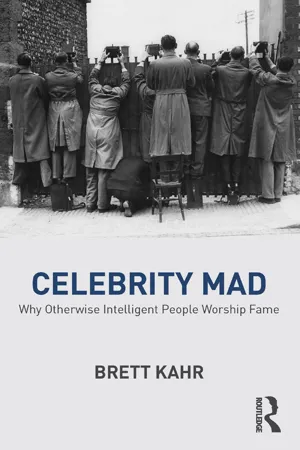
Who grasped at earthly fame,
Grasped wind: nay worse, a serpent grasped that through
His hand slid smoothly, and was gone; but left
A sting behind which wrought him endless pain.
Robert Pollok, The Course of Time: A Poem, in Ten Books,
1827, Book III, lines 533–536
Some years ago, I attended a very lavish, intimate dinner party in London’s Notting Hill. The guest list consisted of a noted theatrical director, a nationally renowned broadcaster, a bestselling novelist, a multi-multimillionaire financier, an astronaut who had commanded one of the Apollo rocket ships, and an internationally venerated classical musician, whom, for reasons of confidentiality, I shall call “Maestro X”. The assembled personalities proved so glittering that I recognised all the names beforehand, bar my own!
In spite of the elegant décor and the extremely delicious food, meticulously prepared by our gracious and solicitous hostess, I had a dreadful evening.
Whenever any particular subject arose in conversation, Maestro X dominated the discussion. In the midst of debating the Middle East, we soon learned that this venerable conductor had performed there many times, and that he knew more about Israeli politics than Benjamin Netanyahu. When we progressed to a discussion of cinema, Maestro X regaled us with his recent work in Hollywood and told us precisely what inner forces had prompted Steven Spielberg to film Schindler’s List. And when we turned our attention to psychoanalysis, the Maestro certainly knew more about Sigmund Freud than I did, and he proceeded to pontificate in emphatic tones about why Freud had become a dinosaur.
I sat next to the astronaut, and, never having previously met anyone who had walked on the surface of the moon, I dared to switch the topic of conversation in a vain effort to include this rather timid and understated space voyager, who looked increasingly bored. Before the astronaut could clear his throat, Maestro X launched into a disquisition about the future of space travel and about his hopes of conducting an interplanetary concert one day. Indeed, Maestro X, an undeniably accomplished gentleman, supreme in his craft, and by far the most celebrated figure at the dining room table, held court all evening, but he did so in the most grandiose and narcissistic manner and turned what might otherwise have proved to be an extremely enjoyable supper party into a cross between a press conference and a Shakespearean monologue.
More recently, my wife and I had supper with a long-standing, cherished friend, who happens to be a prominent show business agent. Although he usually keeps his telephone switched off during our dinners, on this occasion he forewarned us that our meal might be interrupted by a highly demanding new client whose name he mentioned, and whom we recognised instantly as one of the most famous recording artists in world history.
Regrettably, I had another terrible evening.
The client in question, “Miss Y”, stood to earn £40,000 for a very brief personal appearance, which required no singing and no preparation, and which would bring her enormous positive press coverage; yet Miss Y found the terms and conditions not entirely convivial, and so she continued to telephone the agent at five-minute intervals, screaming and hollering. The cell phone rang literally twenty times during our meal, and with each successive call our friend the agent came closer and closer to experiencing a cerebral haemorrhage. Eventually, the agent turned off his mobile telephone. Shortly thereafter, he fired the client, even though he had stood to earn a great deal of money in commission fees.
During these fraught suppers, Maestro X and Miss Y displayed far more narcissistic psychopathology than patients with whom I have worked, whom colleagues had referred specifically for narcissistic personality disorder. Indeed, the Maestro and the pop singer reminded me very much of the famous anecdote concerning the screen star Marlene Dietrich. Apparently, when some friends came backstage to see Miss Dietrich after a live concert performance, she reputedly boasted about how much she had enjoyed her own singing during the first act, how much she had delighted herself in the second act, and how beautiful she looked in her sparkling dresses. Then she turned to her friends and intoned, “But enough about me … what did you think of my performance?”
The narcissism of celebrities has certainly annoyed many people over the years. For instance, back in 1924, the author Virginia Woolf (1924, p. 120) lamented, in a letter, about one of her colleagues: “I met that surly devil Bunny Garnett; and really, his fame has congested him. He is rigid with self importance.”
Noël Coward, actor, stage star, screen star, playwright, novelist, songwriter, singer, director, and painter, knew more about celebrities and their inner lives than perhaps any other diarist of the twentieth century. In 1955, Coward’s great friend, the aforementioned Marlene Dietrich, performed her cabaret before an expensive audience at the Café de Paris in London. Afterwards, Miss Dietrich entertained Mr Coward in her suite at the Dorchester Hotel. Coward (1955a, p. 277) found Dietrich “fairly tiresome”, and he wrote in his diary,
She was grumbling about some bad Press notices and being lonely; she also gave an account of singing privately for the Queen, which was obviously meant to be highly amusing but merely turned out to be silly and bad-mannered. Poor darling Marlene. Poor darling glamorous stars everywhere, their lives are so lonely and wretched and frustrated. Nothing but applause, flowers, Rolls-Royces, expensive hotel suites, constant adulation. It’s too pathetic and wrings the heart. [Coward, 1955a, p. 277]
Exactly one week later, Coward went to watch his even greater friends, Sir Laurence Olivier and his wife Vivien Leigh, Lady Olivier, star in William Shakespeare’s Macbeth in Stratford-upon-Avon. After the stellar couple shone as “Macbeth” and “Lady Macbeth”, they invited Coward back to their home, Notley Abbey, in Haddenham, Buckinghamshire, for the evening, where Coward (1955b, p. 278) “observed, to my true horror, that Vivien is on the verge of another breakdown.” According to Coward (1955b, p. 278),
She talked at supper wildly. She is obsessed, poor darling, by the persecutions of the Press; her voice became high and shrill and her eyes strange. This morning when she had gone to a fitting, Larry came and talked to me. He is distraught and deeply unhappy. Apparently this relapse has been on the way for some time. She has begun to lose sleep again and make scenes and invites more and more people to Notley until there is no longer any possibility of peace. Their life together is really hideous and here they are trapped by public acclaim, scrabbling about in the cold ashes of a physical passion that burnt itself out years ago. I am desperately sorry because I love them both and I am truly fearful of what may happen. The cruelty of fifth-rate journalists has contributed a lot to the situation but the core of the trouble lies deeper, where, in fact, it always lies, in sex. She, exacerbated by incipient TB, needs more and more sexual satisfaction. They are eminent, successful, envied and adored, and most wretchedly unhappy.
Having had similar encounters with other stars throughout the course of his career, Coward (1958, p. 384) despaired, “It is sad to think how many of our glamorous leading ladies are round the bend.”
Years later, after Miss Leigh’s death, Laurence Olivier, now Baron Olivier of Brighton, revealed his own proto-narcissistic state of mind while speaking with the American actor Frank Langella on the set of the 1979 film Dracula. During an off-camera moment, Lord Olivier admired the physique of his younger co-star and confessed, “I had a lovely chest when I was your age. In fact, one of my fantasies was to be standing on a pedestal in a museum and have people pay to worship my naked form” (quoted in Langella, 2012, p. 72). Unsurprisingly, the equally self-absorbed Mr Langella (2012, p. 72) replied, “You too?”
The British-born actor Robert Pattinson, best known for his appearances in films such as Harry Potter and the Goblet of Fire and, also, Twilight, pontificated, “Pretty much every person I know who’s got famous is completely nuts. It’s just isolation and also the repetitiveness of your interactions with people” (quoted in Day, 2017, p. 19). Pattinson’s musings, published in The Telegraph Magazine, certainly echo the more private remarks offered by Noël Coward many decades previously.
Not only do celebrities regard themselves as mad, but numerous psychological professionals also maintain a similar view about those people in the public eye. Indeed, shortly after I had begun to work in the media as a sometime broadcaster and television presenter on mental health issues, a very eminent psychologist forewarned me that I would soon come to discover that every single famous individual suffers from borderline personality disorder. He told me that I would not believe this fact at first, yet after a period of years, I have come to appreciate that this hard-won clinical observation contains a great deal of truth.
Having now worked in the media for nearly forty years, I have had the privilege of meeting and, often, collaborating with, those who have achieved international fame, as well as those who have had more modest walk-on parts in crowd scenes; and although I have, in fact, encountered several people who have met the diagnostic criteria for borderline personality disorder or narcissistic personality disorder, I have come to know many more who do not. Indeed, I have discovered that working with “famous” people and with “celebrities” in a clinical context proves to be a most fulfilling experience, because famous people often become the best psychotherapy patients, and they usually work extremely well in treatment. Having already survived the pains and the pleasures of being scrutinised by the entire world, they experience the benign camera lens of the psychotherapist or psychoanalyst as a great relief. They also live in a world in which everyone has struggled with drugs, alcohol, sexuality, violence, anxiety, and depression, and in which everyone admits to these conflicts quite openly; therefore, in my experience, many celebrities struggle much less with shame than ordinary neurotic patients do.
I could, of course, speak at greater length about the psychology of the celebrity, addressing questions concerning grandiosity, exhibitionism, and related topics, but I shall not do so, for two reasons. First of all, the pledge of confidentiality that each mental health practitioner promises implicitly or explicitly to each client must be sacrosanct and should remain so, even after the death of the psychotherapist. Second of all, although we might experience a sense of titillation when hearing about Madonna’s preoedipal conflicts, Sting’s psychosexual development, or Lady Gaga’s struggles with the rapprochement subphase of the separation-individuation process, I suspect that we might be able to pose a much more interesting and much more important set of psychological questions, as part of a broader cultural analysis.
In 1996, Nathan Lane, the charismatic American theatre star, received a Tony Award for Best Actor in a Musical for his performance as “Pseudolus” in the Broadway revival of A Funny Thing Happened on the Way to the Forum. During his acceptance speech at the Majestic Theatre in Manhattan, Lane exclaimed, “this means a lot to me because as you know I’m an emotionally unstable, desperately needy little man.” The packed audience of theatre professionals erupted in chortles, knowing that Lane’s description of himself could readily apply to many others in the auditorium as well.
Of course, not every celebrity has become consumed by his or her international notoriety. In 1931, Harold Nicolson, the future British parliamentarian, recorded a charming anecdote in his diary about a luncheon party attended by such members of the aristocracy as Sir Oswald Mosley—the future leader of the British Union of Fascists—and others, such as Elizabeth, the Viscountess Castlerosse, and Lady Diana Cooper, the daughter of Henry Manners, the eighth Duke of Rutland, not to mention the writer Herbert George Wells and the film star Charlie Chaplin. As Nicolson (1931, p. 93) recalled:
We discuss fame. We all agree that we should like to be famous but that we should not like to be recognised. Charlie Chaplin told us how he never realised at first that he was a famous man. He worked on quietly at Los Angeles staying at the athletic club. Then suddenly he went on holiday to New York. He then saw “Charlie Chaplins” everywhere—in chocolate, in soap, on hoardings, “and elderly bankers imitated me to amuse their children”. Yet he himself did not know a soul in New York. He walked through streets where he was famous and yet unknown.
Clearly, one can be famous without always realising that this might be the case. Such an anecdote certainly encapsulates an ostensibly less exhibitionistic and narcissistic relationship to fame in a film star.
One could readily investigate the deep unconscious characterological aspects and motivational strands that contribute to the development of the celebrity and, likewise, one could also examine the impact of fame and fortune upon the celebrity. Although we might imagine their lives to be a never-ending stream of banquets and balls, many celebrities also suffer profoundly from envious attacks and from bitter rivalries. Let us consider, for example, the noted playwright, screenwriter, and theatrical director Arthur Laurents, best known, perhaps, for having written the book for the perennial musical West Side Story. In his posthumously published memoir, Laurents recalled that fame had brought him a barrage of vicious anonymous messages, left on his answering machine, such as “Do you know how many people hate you?” (quoted in Laurents, 2012, p. 85) and “Haven’t you died yet?” (quoted in Laurents, 2012, p. 85).
Everyone appreciates that celebrities struggle with psychological issues and illnesses and, also, with the ugly shadow side of being famous. But what about the audience members who pay to watch the celebrities display their inner worlds?
In the pages that follow, I will address no further the question of whether celebrities might be psychopathologically disturbed, attention-seeking, maternally deprived exhibitionists, or whether they suffer from the stresses of the institution of celebrity itself. In fact, I shall focus not on the celebrities but, rather, upon the audience—you and me—to begin to understand why we, as onlookers, become so obsessed with the lives of our celebrities. What role or roles do celebrities serve within our inner worlds? What function or functions do celebrities fulfil in terms of the unconscious life of the large group that we inhabit?
The Nielsen Company reported that, in 2013, the average American person watched approximately 155 hours and 32 minutes of television per month (including television programmes transmitted not only on T.V. sets but, also, on computers and cell phones) (Advertising and Audiences: State of the Media. May 2014, 2014). This constitutes almost the exact amount of time that one might devote to full-time employment! And much, if not most, of what we watch on television contains appearances and performances by celebrities, or news items about celebrities.
To quote but one memorable example: on 19 February 2010 the American golf champion Tiger Woods participated in a press conference in which he decided to apologise to the entire world for having cheated on his wife. One wonders why Mr Woods felt that he must deal with an essentially private marital matter on a global stage. But whatever Woods’s motivations, or those of his managers and publicists, why do millions and millions, if not billions, of us watch these teleconfessions with such assiduity? So many people sat glued to their televisions that, according to C.N.N., trading on the New York Stock Exchange actually dipped during Tiger Woods’s speech and then picked up again as soon as the press conference ended.
Let us now attempt to understand why we have become so obsessed with celebrity culture.