1
INTRODUCTION
Elizabeth Shove, Jacopo Torriti and Jenny Rinkinen
Energy research and energy-related policy making are informed by terms, ideas and stories that reproduce certain ways of thinking about problems and responses. As in other fields, phrases enter common usage, concepts become taken for granted, and shared vocabularies form. Disciplines and approaches build on these foundations, often forgetting that what seems like obvious, or common wisdom has a history: it is not set in stone nor is it uncontested or uncontroversial. The essays included in this collection explore different aspects of what we refer to as ‘fables’ in the energy world.
The phrases and sayings about which we write are not simply ‘made up’, or fictional in the sense of being products of the imagination alone. Rather, our point is that they act as orienting narratives; as tales that have conceptual foundations that have become invisible, worn smooth through use and submerged within familiar discourses in government, as well as in research and teaching.
In reviewing and revisiting a selection of terms that have this fable-like status we have two main goals. One is to introduce and also problematise the concepts we discuss – reminding old hands and newcomers alike that recurrent refrains (such as, ‘first pick the low hanging fruit’), imperatives (to keep the lights on) and policy injunctions (engage with the energy trilemma) reproduce ideas that need not, and perhaps should not, be taken at face value. The second is to enrich the repertoire of concepts circulating in this field and to create opportunities for disciplines and approaches outside the realm of energy research to make useful contributions. On both counts, new ‘stories’ and vocabularies are needed.
The idea for this collection came from this double realisation.
Although approaches differ, the essays included here have certain features in common. Each sets out distinctive characteristics of the ‘fable’ or topic in question and each offers a critical analysis of the ideas on which the phrase or statement depends and of the challenges and issues that follow. The result is more than a glossary or index of key terms. In detailing what lies behind dominant discourses and sayings, contributors articulate and critique assumptions and conventions that have become embedded in the energy field. We do not push the analogy with Aesop’s fables very far, but each chapter begins with an emblematic image and a short statement, making a link to this tradition. This is partly for fun, but also as a reminder of the power of metaphor and discourse.
Terms and languages are always changing, and we do not pretend to offer a final, rival or definitive lexicon. Instead, our purpose is to make the familiar strange again in order to generate and promote critical reflection about some of the core ideas around which energy and transport studies revolve. In detail, the collection examines eleven terms: energy demand; energy services; efficiency; rebound; elasticity; picking low hanging fruit; keeping the lights on; promoting smart homes; the energy trilemma; flexibility; and non-energy policy. This is not an exhaustive list, but in combination, these topics represent and exemplify dominant approaches in energy and transport policy and research.
Each ‘fable’ can be read as a stand-alone contribution and each is designed to inform and inspire students, teachers, policy makers or researchers with an interest in that topic. Reading them together gives a stronger sense of how related traditions and schools of thought ‘hang together’ and support each other. In designing the collection, we have sought to make some of these connections plain.
The first two chapters following this introduction (on demand and on services) show how energy is conceptualised as something that is abstracted from what people do, and from the histories, cultures and contexts in which energy demand is constituted.
The chapters in Part II (efficiency, rebound and elasticity) explore a series of linked ideas about the character of provision and consumption. All three terms are rooted in engineering and/or economics and all share a tendency to treat energy as a topic in its own right (as a resource, a component of an input-output equation or as a standardised commodity). In brief, notions of efficiency are in essence about delivering the same service but with fewer units of energy. The terms ‘rebound effect’ and ‘elasticity’ both emphasise the role of price (per unit of energy) in determining changes in demand. For example, the concept of rebound relates to the idea that the savings associated with efficiency gains might trigger increases in other (often non-energy) carbon intensive commodities and services. Meanwhile, the idea of elasticity concerns the anticipated impact of an increase or decrease in price on demand. In discussing these concepts we remind readers of the work involved in constituting ‘energy’ as a distinctive field of research and intervention.
The contributions in Part III focus on specific injunctions: ‘first pick the low hanging fruit’, ‘keep the lights on’ and ‘promote smart homes’. In all these cases, energy (as used in buildings, or for transport) is viewed as a quantifiable resource used in delivering pre-defined services. Picking ‘low hanging fruit’ refers to opportunities to ‘harvest’ quick wins in terms of energy efficiency, and to do so without compromising the level of service provided. Assumptions about the non-negotiability and apparently ‘fixed’ status of energy services – and of the societal need for them – are also reproduced in the rhetoric of ‘keeping the lights on’. In revisiting this idea we ask which lights need to be kept on, and why is lighting in any case so important? The third example, which has to do with the potential for using ‘smart’ technology and controls to manage domestic energy demand, depends on a similarly powerful set of ideas about present and future ways of life, and about the character of ‘consumer’ response.
The three chapters in Part IV deal with themes relating to policy. The first of these concerns the energy trilemma. The notion of an energy trilemma suggests that the goals of promoting energy security, affordability and decarbonisation are all important, but also in tension. This is so in that strategies that focus on one corner of the trilemma – like decarbonising supply – might make it harder to achieve other goals, such as providing ‘affordable’ power. Although talk of the trilemma is pervasive, it routinely sidesteps questions about the scale, the extent and the character of demand.
By contrast, demand seems to be crucial for those interested in flexibility and demand side management. Ideas about demand are also fundamental for debates about policies and interventions that have a bearing on the reduction and the escalation of energy consumption. So how is demand conceptualised?
Until recently, detailed questions about when and where energy is used were of relatively little concern partly because solid fuel, gas, and oil can be distributed and stored. An influx of more renewable sources of supply complicates this approach – bringing with it a new agenda about exactly when and where different forms of energy (and especially electricity) are used, and about the scope for shifting demand in space and time. From this point of view, the concept of ‘flexibility’ draws attention to the fact that both the location and the timing of energy consumption is indirectly shaped by policies that are not specifically concerned with energy or carbon emissions as such, but that have profound consequences for both. In elaborating on the implications of this observation, the last fable in the collection takes issue with the view that the policies that matter for energy or transport are those that are explicitly or primarily concerned with energy or with transport.
Energy Fables highlights threads and lines of reasoning that run through the energy landscape. The list of terms and the topics we discuss is not exhaustive and others – for example, fuel poverty, comfort or storage – could be explored in similar terms.1 In the postscript we take stock of the practical and policy implications of reviewing and sometimes overhauling the concepts and assumptions we discuss. We also recognise the everyday politics of energy and transport research: it is no accident that problems are defined and framed as they are, or that so much is invested in only some lines of enquiry and investigation. Dominant paradigms and interpretations of practical value and policy relevance interlock, and do so in ways that perpetuate many of the fables discussed here. While it would be naïve to expect new discourses and debates to spring up overnight, even small shifts of perspective generate new problem definitions, and with them new opportunities for intervention. Which new fables emerge, and how concepts of energy change and develop in the future remains to be seen. The fact that this book has no final punchline, and no one unifying conclusion, is not an accident or an oversight: it is because the field is open and because our purpose is to provoke and fuel future discussion, not to bring it to an end.
Note
1 See the online ‘DEMAND dictionary of phrase and fable’ at www.demand.ac.uk/demand-dictionary for more examples.
2
ENERGY DEMAND
Jenny Rinkinen and Elizabeth Shove
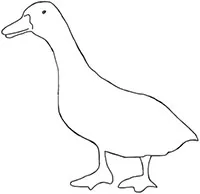
Some creatures are more insistent than others, and quacking ducks can be especially demanding. This chapter explores the social foundations of energy demand. | |
Introduction
Energy demand, usually indicated by the amount of energy consumed in different sectors, is a key factor in national and international energy and climate change policy. Since carbon emissions are significantly associated with the production and distribution of energy, demand reduction is a priority. This is evident in a recent strategy produced by the UK’s six ‘End use energy demand’ research centres, which claims that ‘reducing energy demand and improving energy efficiency provide the most promising, fastest, cheapest and safest means to mitigate climate change’ (EUED, 2016, p. 5).
But what is energy demand, really?
The Oxford English Dictionary defines demand as ‘an insistent and peremptory request, made of as right’ (Oxford Dictionaries, 2018). In the energy world, demand has different meanings and associations: it often figures as the logical partner to ‘supply’; it is tied to interpretations of ‘need’; and it is the subject of various forms of intervention, including methods of ‘demand side’ management. As detailed below, all three of these interpretations treat energy demand as a social and economic phenomenon that exists in its own right.
This view is at odds with more sociological and more historical analyses of what energy is for and of how patterns of demand, in a more fundamental sense, emerge and change. As outlined by Shove and Walker (2014), such approaches suggest that it is not, strictly speaking, energy that is demanded. Rather, demand is for the services that energy makes possible: that is, for heating, lighting or mobility, for functioning televisions and laptops, for frozen food or for hot dinners. The demand for such services is, in turn, inseparable from the ongoing dynamics of social practice. From this point of view, it makes no sense to treat ‘demand’ as if it was in some way detached from the social arrangements and from the technologies and infrastructures of which societies are composed, and of which ‘needs’ are made.
In this chapter we distinguish between (a) definitions that interpret demand as the energy required to meet current and future needs and (b) those that take energy demand to be inseparable from the constitution of energy services and social practices. The first interpretation supposes that energy suppliers and policy makers are involved in meeting needs that exist, ready-made. In these accounts, demand (in the sense of what energy is for) is treated as given, rather than as a topic of research or policy intervention in its own right. By contrast, the latter position highlights the ongoing constitution of demand and the part that policy makers and others play in establishing and changing what people do and the energy requirements that follow.
Meeting demand
Engineers and economists generally think of energy as a ‘resource’ that is produced, distributed, and supplied in response to consumer demand. Energy is consequently treated as a standardised commodity, measured in agreed units (therms, kWh, Mtoe, etc.), and subject to various laws of the market. For example, if prices rise, consumers are expected to cut back on the amount of energy they use, and to consume (somewhat) more if costs go down. This relationship is complicated by different forms of ‘price elasticity’. In practice, consumers are more willing or able to reduce some forms of energy demand than others. But in general, and alongside this uneven sensitivity to price, the consensus is that consumers buy the amount of energy they need unless there is some kind of shortage, and unless they cannot afford to do so. As a result, need and consumption are regularly taken to be the same. This line of argument is consistent with the view that producers and distributors aim to meet consumers’ needs and design and organise systems of provision so that supply matches demand.
The scale of energy supply, now, and in the future, consequently depends on estimates of present and future demand. Established methods of demand forecasting involve judgements about trends in urbanisation, lifestyle, population and economic growth (Asif and Muneer, 2007). Not all forecasts anticipate increases in consumption, but those that do justify investment in more extensive systems of provision (more power stations, more roads etc.).
In treating demand as an outcome of a host of economic and other consumer-oriented factors, forecasters treat the estimate of future supply as something that is quite unrelated to past and present technologies and infrastructures of provision. Put differently, they do not imagine scenarios in which demand grows in response to supply, nor do they consider the possibility that forecasts are themselves part of engendering future needs.
This is consistent with the tendency to think about the need and the demand for energy and for the services it makes possible as something that exists as a social and economic ‘fact’ and that is, at any one point in time, non-negotiable. Various authors argue that people have certain ‘basic’ needs, and that these underpin an also basic level of energy demand (Day, Walker and Simcock, 2016; Gough, 2017). Much of this literature supposes that basic needs (for nutrition, shelter, clean water, education, thermal comfort, a non-threatening environment, etc.) are universal. Exactly how these needs are met changes over time, but the contention is that there are certain unwavering ...