- 504 pages
- English
- ePUB (mobile friendly)
- Available on iOS & Android
eBook - ePub
Office Building Safety and Health
About this book
Most workers spend the majority of their day in an office building environment. Protecting office workers from safety, health, and security risks is a key task of many safety and health professionals, particularly those responsible for the management of very large office complexes and high rise buildings. This book provides a comprehensive look at
CHAPTER 1
INTRODUCTION
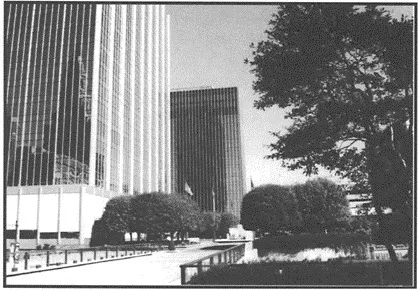
Typical high-rise office buildings.
Prior to the catastrophic events that occurred at the World Trade Center on September 11, 2001, little attention was given to the protection and safety of those within office buildings. As we look about us we see that office buildings are an integral part of the business world, as we know it today. These buildings, “people containers,” come in varied shapes and sizes. These office buildings range from the large skyscrapers of the cities, the corporate office complexes in industrial parks, the office buildings that are a part of manufacturing facilities, to the office buildings of very small companies. These office buildings may house from ten to the tens of thousands of workers.
As employees travel to their offices each day, their safety and health are of more concern to them than in the past. Employers and owners have a greater vested interest to provide safety and security to those employees in their office buildings. Office building safety, health, and security have become a timely and essential part of the business world today.
Although there are many types of work where the inherent hazards present a more deadly and dangerous situation than the office environment, the office environ-ment presents enough hazards that it should not be overlooked. Granted the office environment is not a manufacturing operation with a myriad of large machines/equipment or production lines, nor is it a constantly changing environment like a construction worksite.
One aspect of these people containers is that a large number of individuals are packed in a small amount of space with limited egress and at times poor ventilation that makes people feel that they are in a confined space. I once read that the survival kit for a high-rise office building was a canary in a cage and a brick. If the canary succumbed, you would use the brick to break the window. (The use of a canary was an old mining trick to detect bad air.) But today we know that fires, explosions, chemical releases, and collapse are as much a hazard as if not more than bad ventilation. All of these situations can result in a catastrophic event.
There are other hazards faced by workers in office buildings, which may not cause death but could lead to injuries and illnesses that may either be acute or chronic. Granted most of the issues today are those related to ergonomic issues that result in sprains and strains from material handling, repetitive injuries from poorly designed workstations, and the psychological factors and stress-related events that impact the health and the well-being of employees.
Other hazards include workplace security, terrorism, and the threat of violence that must be addressed in office work areas just as much as in other types of workplaces.
The normal hazards of slips, trips, falls, poor housekeeping, burns, operating equipment caught by or between moving objects, strikes by falling objects and electrical shock all should be an integral part of an office environment’s safety and health effort. The use of chemicals, exposure to biologicals such as mold, virus, and bacteria, and exposure to blood-borne pathogens such as AIDS and HVB that have the potential to cause acute and chronic disease in the workforce are not to be treated lightly.
Data for office building mortality and morbidity is not very good. OSHA does not require reporting of injuries and illnesses for most office types of operation. Thus, the only records available would have to come from the companies themselves and they are unlikely to provide these details. The only other entity that might have an idea of the frequency and severity of the illnesses and injuries that are occurring would be the company’s workers compensation carrier (see Figure 1-1).
SAFETY AND HEALTH (MANAGING)
Safety and health start in the design of the building. If the applicable safety and health codes are not an integral part of the design then you are stymied from the start. Almost every design component has a safety factor attached to it. It might be what force the building would withstand, the fire protection within the building, the adequacies of egress, the provision of proper ventilation, and the overall habitability of the structure. These are some of the large items. Many small subtle features go into the design of office buildings (e.g., exit signage) that provide for safety and health. Other items that are not part of the building’s structural design but are an integral part of the feeling of being safe would be the design and wiring of the security system for the building.
Once a building has been designed with safety in mind then planning for safe and healthy occupancy must be considered. This may include everything from hygiene facilities to amount of space per worker. Owners and employers must work together to assure that the actual workplaces are as free from hazards as possible. Not only are we looking at those factors that could cause physical injury, but those that could produce acute or chronic health effects from short-or long-term exposure to such items as mold or waste water.
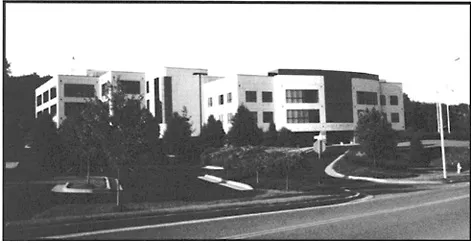
Figure 1–1. Not all office buildings are high-rises, but they still have the same inherent problems.
This office building is the employer’s and worker’s home away from home. Thus, it may need to be more livable than the actual workers’ homes since they spend the most of their waking hours in office environments. Study after study indicates that in most cases a good (safe and health) work environment goes a long way toward fostering job satisfaction, high morale, and better productivity. At least this is the foundation for a productive workplace. On Dr. Abraham Maslow’s hierarchy of needs, once the basic biological needs of food and shelter are met then security is the second most important need. Thus, providing a safe and healthy work environment is a giant step toward meeting this need of workers.
Once the physical environment is safe and healthy, does anyone really care about the workers’ safety and health? This is where managing safety and health comes into play. It is not enough to espouse worker safety and health. It is imperative that the employer is committed to providing the leadership regarding occupational safety and health. Employers need to do more than talk a good talk since their actions will speak louder than their words. Safety and health needs to be part of the culture of the workplace. The employer and the workers should not tolerate an unsafe or unhealthy workplace.
Management of safety and health not only requires commitment and leadership support as a critical element. Another key factor has been shown to be employee involvement in fostering safety and health. As part of the management process, hazard identification, hazard intervention and prevention, and training must exist. Training is vital even in the office environment since workers need to know the company’s policies, rules, hazards they are going to be exposed to, how to use equipment safely, what to do in an emergency, and their responsibilities related to safety and health at the company.
There is a real cost when owners and employers do not take safety and health seriously. Workers’ compensation is integrally tied to workplace injuries and illnesses. It is a direct cost to a business when workers become ill or suffer an injury in their workplace. The more injuries the more the cost the employer will experience. The worker compensation system demonstrates the importance of prevention as a mechanism to hold down the cost of workers’ compensation. The containment of worker compensation premiums is critical to a profitable business operation whether it be heavy industry or office-related work.
As an aid in developing a safety and health program in an office building, it is imperative the owners and employers be familiar with the workings of the Occupational Safety and Health Administration (OSHA). OSHA should not be viewed only from an enforcement perspective.
Although OSHA seldom conducts inspections or requires recordkeeping of office-related business operations, the workers are themselves covered by the regulatory authority of OSHA. Employers who have an office workforce may not have the inherent hazards faced by manufacturing or construction operations, but they do have to address the existing the hazards which are present even though those hazards may not be as many, pervasive, or dangerous as those faced in other workplaces. Even though the danger is less for offices, it should not be assumed that offices are safe or free of health hazards since unsafe conditions can still exist and workers can always perform work in an unsafe manner or be exposed to potential chemical, biological, or physical hazards capable of causing injuries and health effects. OSHA is responsible for the safety and health of all workers; therefore, office-building employers need to be aware of OSHA’s function, intent, and regulatory requirements.
THE HAZARDS (SAFETY)
At first glance it would seem that few hazards exist in an office environment that could lead to injuries or health effects, but this is just not the case (see Figure 1–2).
The hazards that can lead to injuries should be identified and relevant preventive techniques should be adhered to. The hazards could cause slips, trips, falls, burns, electrocutions, back injuries, sprains, strains, eye injuries, cuts, and bruises. These hazards range from walking/working surfaces to sharp cutting instruments. Employers and workers need to be on-guard related to these types of hazards.
Office equipment poses not only safety concerns but many have health hazard concerns. The mitigation or prevention of office equipment hazards and the development of safe operating processes and procedures should be undertaken to assure that no adverse effects are suffered by those working around and with the equipment. Workers should receive training on the safe use and operation of any tools or equipment that they will be using.
It may seem that housekeeping is not a subject unto itself. Housekeeping is a primary culprit in many accident and injury scenarios. Housekeeping has a direct impact upon the general functioning of an office and the potential for accidents to occur.
Many injury events in office buildings result from the handling of materials or actual lifting of materials. These can be some of the most expensive injuries. A single back injury has been reported to cost in the neighborhood of $10,000. Employers should identify potential material handling hazards and discuss ways to mitigate the repercussions of these types of activities. Also, the material handling and lifting equipment that can be used to assist in these activities will be identified and purchased as necessary.
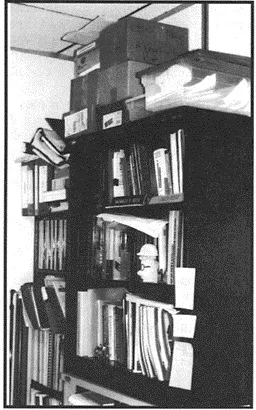
Figure 1–2. What could go wrong in this setting?
HEALTH HAZARDS
The design of the layout of an office building can do much to either improve or contribute to the overall safety and health of the workforce. The selection of furniture, the use of natural lighting and its accessibility to workspaces, and convenience of design in providing proximity to accessory locations are often factors in the safety and health of workers within office buildings. The overall environment has the most effect on the health of workers. This includes many factors such as ventilation, noise, temperature, cleanliness, and the design of individual workspaces that can be adjusted to the uniqueness of the worker. This would be the fitting of the worker’s office, cubicle, or area to accommodate the individual worker.
In today’s office environment, no discussion on office safety and health would be complete without a discussion of the ergonomic hazards relevant to office tasks. This would not be just a discussion of computer workstations, although for most office workers, this would be an important factor. But it includes other factors such as environmental and personal stress. Workers should be trained on the most common types of cumulative trauma disorders, their symptoms, and preventive actions that can be taken. A worker trained on ergonomic issues can go a long way toward prevention and early detection that can be a real cost savings. Although considered an injury rather than an illness, employers should take specific action to help mitigate the pervasive or infamous back injury.
Sick Building Syndrome is an infamous term in today’s office world which can usually be linked to the ventilation system, but this is not always the case. When new wall or floor coverings are installed, the off-gassing of adhesives and materials may also be a culprit.
The term office building environment key s in specifically on indoor air quality, but it addresses other potential environmental factors such as noise, temperature, and illumination. It also implies the use of safety floor and wall coverings as factors that affect the office-building environment.
It must be realized that a single-employer office building is different than a multi-employer office building where each employer may be using chemicals that other employers do not know about. Standard procedures for the handling and storage of chemicals should be developed as well as ways to assure the consistency of communications to other employers regarding chemical hazards and the types of chemicals that could be found within the office building. Workers should be trained on how to react to chemical spills and should be provided guidance on the proper response and communication to others regarding the spill.
Many of the health issues in office buildings are related to chemicals that exist and are used, the ventilation system, other workers, construction/renovation activities and hygiene conditions. In office buildings any chemical used has the potential to be spread by the ventilation system to the whole building. Some of the equipment and chemicals used could possi...
Table of contents
- COVER PAGE
- TITLE PAGE
- COPYRIGHT PAGE
- DEDICATIONS
- PREFACE
- ABOUT THE AUTHOR
- ACKNOWLEDGMENTS
- CHAPTER 1: INTRODUCTION
- CHAPTER 2: PLANNING OFFICE BUILDING SAFETY AND HEALTH
- CHAPTER 3: MANAGING OFFICE BUILDING SAFETY AND HEALTH
- CHAPTER 4: WORKER INVOLVEMENT
- CHAPTER 5: WORKERS’ COMPENSATION
- CHAPTER 6: OSHA’S ROLE AND RULES
- CHAPTER 7: OFFICE BUILDING SAFETY
- CHAPTER 8: OFFICE EQUIPMENT SAFETY
- CHAPTER 9: OFFICE BUILDING HOUSEKEEPING
- CHAPTER 10: MATERIAL HANDLING AND LIFTING
- CHAPTER 11: DESIGNING OFFICE WORKPLACES
- CHAPTER 12: OFFICE ERGONOMICS
- CHAPTER 13: OFFICE BUILDING ENVIRONMENT
- CHAPTER 14: OFFICE BUILDING CHEMICAL HAZARDS
- CHAPTER 15: OFFICE BUILDING HEALTH ISSUES
- CHAPTER 16: OFFICE BUILDING EMERGENCIES
- CHAPTER 17: OFFICE BUILDING FIRE PREVENTION
- CHAPTER 18: OFFICE FIRST AID
- CHAPTER 19: OFFICE BUILDING MAINTENANCE
- CHAPTER 20: OUTSIDE/GROUNDS MAINTENANCE
- CHAPTER 21: GENERAL FACILITIES (HYGIENE)
- CHAPTER 22: OFFICE BUILDING RENOVATION AND CONSTRUCTION
- CHAPTER 23: OFFICE BUILDING SECURITY
- CHAPTER 24: PROTECTING THE OFFICE BUILDING FROM NBCs
- CHAPTER 25: WORKPLACE VIOLENCE
- CHAPTER 26: PARKING LOT SECURITY
- CHAPTER 27: SUMMARY
- APPENDIX A: SAMPLE WRITTEN SAFETY AND HEALTH PROGRAM
- APPENDIX B: SUMMARY OF 29 CFR 1910
- APPENDIX C: FEDERAL OSHA REGIONAL AND STATE OSHA OFFICES
- APPENDIX D: COMPREHENSIVE OFFICE BUILDING SAFETY AND HEALTH INSPECTION CHECKLIST
- APPENDIX E: SAMPLE AND BLANK MATERIAL SAFETY DATA SHEETS
- APPENDIX F: DISINFECTANT SELECTION TABLE
- APPENDIX G: HAZARD ASSESSMENT CERTIFICATION FORM FOR PERSONAL PROTECTIVE EQUIPMENT
- APPENDIX H: AGENTS, DOSES, AND SYMPTOMS FROM NBCs
- APPENDIX I: WORKPLACE VIOLENCE SECURITY PROGRAM
- APPENDIX J: ASSAULT INCIDENT REPORT FORM
Trusted by 375,005 students
Access to over 1.5 million titles for a fair monthly price.
Study more efficiently using our study tools.
Frequently asked questions
Yes, you can cancel anytime from the Subscription tab in your account settings on the Perlego website. Your subscription will stay active until the end of your current billing period. Learn how to cancel your subscription
No, books cannot be downloaded as external files, such as PDFs, for use outside of Perlego. However, you can download books within the Perlego app for offline reading on mobile or tablet. Learn how to download books offline
Perlego offers two plans: Essential and Complete
- Essential is ideal for learners and professionals who enjoy exploring a wide range of subjects. Access the Essential Library with 800,000+ trusted titles and best-sellers across business, personal growth, and the humanities. Includes unlimited reading time and Standard Read Aloud voice.
- Complete: Perfect for advanced learners and researchers needing full, unrestricted access. Unlock 1.5M+ books across hundreds of subjects, including academic and specialized titles. The Complete Plan also includes advanced features like Premium Read Aloud and Research Assistant.
We are an online textbook subscription service, where you can get access to an entire online library for less than the price of a single book per month. With over 1.5 million books across 990+ topics, we’ve got you covered! Learn about our mission
Look out for the read-aloud symbol on your next book to see if you can listen to it. The read-aloud tool reads text aloud for you, highlighting the text as it is being read. You can pause it, speed it up and slow it down. Learn more about Read Aloud
Yes! You can use the Perlego app on both iOS and Android devices to read anytime, anywhere — even offline. Perfect for commutes or when you’re on the go.
Please note we cannot support devices running on iOS 13 and Android 7 or earlier. Learn more about using the app
Please note we cannot support devices running on iOS 13 and Android 7 or earlier. Learn more about using the app
Yes, you can access Office Building Safety and Health by Charles D. Reese in PDF and/or ePUB format, as well as other popular books in Business & Human Resource Management. We have over 1.5 million books available in our catalogue for you to explore.