In Offshore Software Development: Making It Work, hands-on managers of Offshore solutions help you answer these questions:
- 280 pages
- English
- ePUB (mobile friendly)
- Available on iOS & Android
eBook - ePub
About this book
Information
SECTION 1
THE OFFSHORE IMPERATIVE
This book is divided into three sections. First, we look at understanding the Offshore model—how it works, what the financials portend, and the leading players. Next, we look at the historical evolution of the Offshore service model, key to understanding the present. Finally, we look at the execution of Offshore Outsourcing, helping you to be forewarned and forearmed.
In this first section, Chapter One provides an overview of the recent growth of Offshore, the most compelling new IT trend. Chapter Two is a pragmatic overview of Offshore program initiation. Finally, Chapter Three concludes this section with a close look at Offshore vendor management, including the vendor choice process.
1
CRUNCHING THE OFFSHORE NUMBERS: WHAT THE FINANCIALS PORTEND
WELCOME TO THE DEFINITIVE GUIDE ON OFFSHORE OUTSOURCING
The individuals and firms in this book represent over 60 years of Offshore Outsourcing hands-on Fortune 50 experience, encompassing both solid track records of success to emulate, as well as missteps and bloopers to avoid.
Offshore Outsourcing, perhaps more than most complex and broad IT initiatives, can make or break individual careers, and even companies. At issue is often more than simply the viability of the Information Technology (IT) organization as an entity. To the extent that the IT function provides the firm’s strategic or competitive edge, Offshore Outsourcing can be a determinant of the success or failure of the organization as a whole. Either way the stakes are high.
In this chapter, we introduce the overall concept of Offshore Outsourcing. We also look at the hard financial numbers behind the Offshore wave, and its phenomenal, seemingly recession-proof growth (see Exhibit 1.1).
SETTING THE STAGE: THE COMPELLING OFFSHORE STORY
Attend any conference on IT consulting services today and a whirlwind trend will come to light. It is called “Offshore”—and it is the fastest growing IT trend today.
What is “Offshore?” Breathtakingly simple in concept, it can be tricky to implement. The computers and data they hold generally stay in the United States. The workers programming and providing technical maintenance and support services on those computers, however, reside in India, the Philippines, and a host of other locations. They log on to an international network, and perform these functions from the other side of the world. A small contingent—usually 20 to 30 percent of the overall team—stays in the United States to provide contact during normal U.S. working hours. In addition, the design and customer-interface functions usually remain in the United States. Offshore is truly a case of the IT function as a global melting pot—at the application team level.
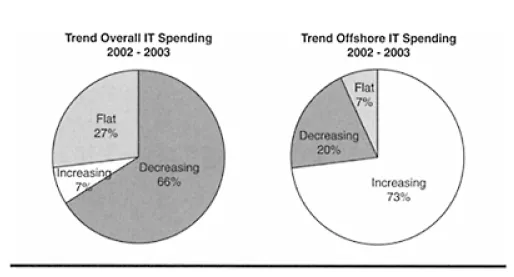
Exhibit 1.1 Although 66 Percent of Companies Surveyed Show a Decreased Overall IT Spending, 73 Percent Show Offshore Outsourcing Spending Growing (Source: JP Morgan, Indian IT Services: CIO Survey, March 2002)
Although Offshore Outsourcing has frequent coverage in the press as the ultimate threat to the information technology worker, the reality is that the Offshore Co-Sourcing model (20 percent Onshore, 80 percent Offshore) described above is usually applied to a maximum of 30 percent of applications—and even a smaller percentage of personnel— across any individual IT organization. There are many reasons, but one key concern is that most firms simply will not (or cannot, under regulatory scrutiny) allow remote networked consultants to have access to sensitive customer data. That limits the amount of Offshore Outsourcing pretty effectively in most industries. Most companies who are mature in Offshore Outsourcing—implemented the program three years or more—have shifted their perception from blind fear to an appreciation of the savings it can provide for that 30 percent, and serve to stave off an even bigger threat—that of being completely outsourced (the entire IT organization is replaced by an outside firm). The irony is while the popular press portrays Offshore solely as a threat to jobs, the reality is it just as often provides the savings and value to create more job stability and security.
Beyond the impact of jobs, the first question is usually—what about risk? 9/11 has only increased the Offshore Outsourcing trend further, as the illusion of U.S.-based safety was sadly brought home to us. The track record of early Offshore Outsourcing adaptors has shown that, even as the myth of U.S.-based “safety” has been debunked, the economics of Offshore Outsourcing has made war too expensive in terms of potential lost revenue. A recent New York Times article suggested, not completely tongue-in-cheek, that the question of whether recent skirmishes between India and Pakistan were leading to war was best answered by American Express—a reference to that firm’s large investment in Offshore Outsourcing in India.1 The article suggests that the best way to assess the likelihood of war is determined by asking the leadership of large companies with significant Indian investment, such as American Express. The article strongly implies that these countries are well aware of the potential cost of war in terms of negative economic impact. This economic threat serves as a big deterrent, the authors imply.
Why is Offshore so compelling? A master’s-level computer scientist makes at most U.S. $14,000 per year in India, and is generally better educated and more enthusiastic than his $100,000 plus American counterpart.2 Do the math, and the potential savings are staggering. Based on personal experience, those of the presentations at various conferences on Offshore, and discussions of the Offshore Interest Group members, most companies list their Offshore projects as the only ones that regularly demonstrate an IRR (Internal Return on Investment) well over 110 percent. Usually, quality and efficiency improve as well. By 2010, India may run out of workers, and newcomers such as China may take the lead.
A quick note about the author: as part of my role as Offshore Program Manager at a large northeastern financial institution, I created and coordinated a monthly Offshore Interest Group. This virtual group is made up of experienced Offshore Program Managers from leading Fortune 100 firms. Together we represent well over 60 years of Fortune 100 Offshore experience. This book is intended to be an executive toolkit on Offshore, a kit created from real-life examples and lessons learned from these experienced firms and individuals. Each chapter introduces a key set of concepts and illustrates them with realworld examples. Speaking from the two years of sharing monthly insight and practical experience with the Offshore Interest Group membership, this book focuses on pragmatic solutions proven in real life, not theories. This book is targeted at the senior technology and business executives who need to cut costs without reducing service, and want to learn from those who have proven success in meeting that objective.
First, we consider the macrocosm of what is at play across the technology industry as a whole. Newspaper coverage to the contrary, a deep understanding of the Offshore phenomenon is not possible via a sound bite. The disparity between public misconception and reality is wide, fueled by fear in a shrinking economy that particularly threatened the formerly secure jobs within IT. The record, year-over-year profitability of the set of leading Offshore Outsourcing vendors, coupled as it is with the recent lackluster financial performance of Traditional IT Outsourcing service providers, creates implications regarding the relative growth of Offshore Outsourcing that cannot be ignored. And indeed, are not overlooked by Wall Street and the global investment community, as the respective stock price history and other financial measures attest.
Later in Chapter Two, we look at Citigroup as a microcosm of the individual firm and the kind of savings generally at stake when considering Offshore. Along the way, we define our basic terms and concepts, creating a vocabulary of Offshore that can serve us as we dig deeper into the details of methodology and best practices in subsequent chapters.
OFFSHORE OUTSOURCING VERSUS TRADITIONAL IT OUTSOURCING
To understand the IT imperative that is the technology discipline Outsourcing, it is first important to make a clear distinction between it and what we will of Offshore call, for lack of a better term, Traditional IT Outsourcing.
The Traditional IT Outsourcing model is relatively clear-cut. An outside technology firm is hired to take over the IT function for the organization in whole or in part. The theory is that because managing technology is their primary business these large firms can provide more expertise at a lower price by leveraging economies of scale across many customers. So, rather than have a division of the firm perform technology functions, the organization looks outside for the entire function throughout the life cycle, from IT strategic planning, to systems analysis and design, and finally systems maintenance to retirement.
Although there have been success stories with Traditional IT Outsourcing, there is also a relatively high rate of visible and expensive failures.3 Defining failure as the termination of a Traditional Outsourcing legal contract before the original agreed upon termination date, for contacts that had been in place for at least one year, D&B found that 25 percent of traditional outsourcing relationships failed.
In Traditional Outsourcing, what seems to occur is that the initial flush of savings and efficiencies in the long run become overshadowed by the inability to establish a close strategic and business partnership between the newly streamlined “foreign” IT organization and the management of the firm it is serving at the operational level. Over the long term, firms require a proactive technology partner able and willing to provide creative input and judiciously advise in investments in technology. Although top executive-level relationships don’t seem to flag, middle-management alignments tend to disappear during Traditional IT Outsourcing, and as a result, the organization does not have a means of realizing the creative process in a manner that really integrates IT. Anyone who has worked in a major Fortune 50 firm knows that it is already hard enough to bridge the communication, personality, values, and priorities gaps between IT and its internal business customers. Add another layer—such as an outside firm providing IT services—and that relationship is usually all but dead. Yet it is this relationship, at the operating management level (not the executive), that determines how technology supports the creative heart of the organization.
In order to have valuable and meaningful input between the “line” (revenue generating) businesses, bread-and-butter functions, and IT, there is an ongoing need to continually work to bridge the gap between business and technology to allow these functions to work hand in hand. Key partnerships often are tenuous, forged on personal relationships over shared experiences that evaporate in today’s rapidly changing and mobile environment. In the past, and in much of the present, that means that today’s technology leaders need to take the time to understand their business counterpart’s models and challenges intimately. Although this will change over time, today’s business leaders in large Fortune 50 firms by and large have not grown up with technology and lean on their IT partners for guidance or at least proactive initiation.
The problem with Traditional IT Outsourcing is that this partnership is one of the services that goes by the wayside in the emphasis on cost cutting. Few large Traditional Outsourcing firms can afford to have an IT strategic planner follow the business leaders around just to tee up next year’s potential partnership—yet this is exactly what is required when business and technology meet over the table to put a plan together. If the IT function is kept inhouse, the best and brightest of IT leadership have learned to do double duty in keeping a close relationship with their business peers while simultaneously leading the tactical execution of the existing IT strategy. Although this may or may not be acknowledged, even with the growing number of executive-level “relationship managers” that are springing up as part of IT services everywhere, it one of the key factors that enable the kind of technology deployment that truly provides competitive advantage.
Offshore Outsourcing is unique in that the strategic inhouse business partnership function is preserved along with the savings associated with Outsourcing. Traditional Outsourcing occurs when the entire IT function is dismissed, and IT exists solely through the service provider. The co-sourcing model, explained below, enables companies to have the savings and efficiencies of outsourcing, while keeping key strategic functions of project/program management, and so on, inhouse. This is through a business model commonly called Co-Sourcing.
In Co-Sourcing, the geographic placement of team members is determined by their function. Offshore teams are often discussed in terms of percentages, such as “80/20” or “70/30.” “80/20” means that, of a given IT application development or maintenance support team implemented with the Co-Sourcing model, 80 percent of the team is located Offshore (out of the United States) and 20 percent of the team Onshore (within the United States or the Americas). This occurs of course, with “70/30” or even “60/40” teams.
Whatever the percentage of the team that is Onshore, the functions of that team usually include maintaining the partnership and planning function with their business counterparts. Although the specifics vary from team to team and firm to firm, as a general rule of thumb, the Onshore positions maintain the strategic, planning, or architectural functions, and the Offshore positions usually require the most tactical execution. Exhibits 1.2 and 1.3 show the typical Onshore/Offshore mix of team functions across the systems development life cycle.
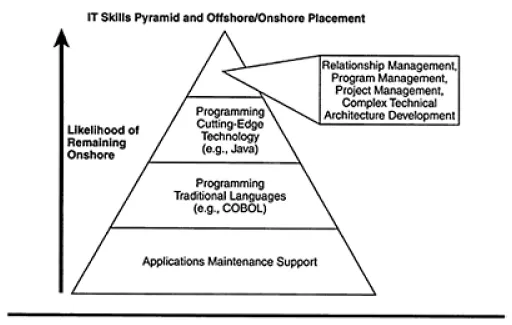
Exhibit 1.2 A Look at IT Job Impact across the System Life Cycle
Exhibit 1.3 A Look at Onshore versus Offshore for Each IT Stage
Benefits of Offshore Outsourcing
It is here that Offshore Outsourcing becomes clear as an imperative.
The typical Masters-level computer programmer with five years’ experience in India commands a salary of roughly $12,000 U.S. These individuals are generally quality employees in every sense—they are generally enamored of American culture and are excited to be a part of it, however remotely. Their English language skills are excellent, and they are more than aware of the importance of these business opportunities to their country as a whole, as well as their immediate family.
A picture emerges, based upon the Co-Sourcing model, of an IT imperative that provides numerous benefits, with minimum of the costs—and the risks—associated with Traditional IT Outsourcing.
Of course, beyond illustration, there is often a gray line between Offshore Outsourcing and Traditional IT Outsourcing. For example, Traditional Outsourcing firms are now building extensive Offshore Outsourcing capabilities, and may blend the Offshore and Traditional Outsourcing models by Offshoring a Traditionally Outsourced function. But at the time of writing, it is unclear whether the Traditional IT Outsourcing companies, generally U.S.-based, will actually be able to catch up with the Indian-based Offshore companies. Although it is difficult to provide hard evidence as many corporate customers are legally prohibited from sharing information related to Offshore pricing or rates, strong anecdotal information points to the perceived gap of the value of Traditional Outsource providers who are late and smaller entries into the Offshore Outsourcing game. For example, at the Gartner Outsourcing Summit in July 2003 in Las Vegas, several in-the-moment audience polls asked the audience—generally more knowledgeable on Offshore than the average IT manager—of the comparative value of the Traditional Offshore companies now moving Offshore versus the Offshore Outsourcing companies who are based Offshore and represent the new wave. The results, poll after poll, came back that the Traditional Outsource companies are not really providing the same level of value in terms of price per services.
Thus far, the U.S. company market share of Offshore Outsourcing has been making fast inroads but is not keeping up with the plain vanilla Offshore Outsourcing firms. However, this is changing rapidly. Even though U.S.-based firms often can’t match their India-based counterparts in pricing, the quality of the candidates, or the methodology sophistication of these companies, they often are the initial choice of many U.S. customers, who focus on what is familiar and perceived of as safe. Most Indian Offshore companies have attained CMM levels of 4.0 or beyond, whereas U.S. companies remain at 3.0 or less.4 (CMM is one of several independent industry company certifications that evaluate the methodology and other processes relating to efficiency of IT execution— Level 5 is the highest rating.). However, this emphasis usually occurs just once, and upon contract renewal time, price is the focus, other firms are introduced, and value for dollar rather than “safety” is emphasized. Firm after firm in the Offshore Interest Group has shifted from U.S.-based to India-based firms, or decided upon a mixture of both with the requirement that the U.S.-based firms lower prices significantly. Therefore the financial trends outlined below are probably true for the long term, but may not hold as new vertical markets are introduced to Offshore for the first time and reach for the known quantity in an Offshore partner.
And just as India-based Offshore Outsourcing firms such as Infosys find it hard to compete with U.S. firms for top U.S. graduates, even the top U.S. firms here cannot compete with the top firms in India.
The press abounds with stories about how Offshore Outsourcing is following in the footsteps of other industries moving overseas in search of cheap labor, and the impact of these labor movements on an economy that will be made up of increasing levels of unemployment. It is the IT skills pyramid above that provides the key to the jobs retained here in the United States over time. As Offshore Outsourcing becomes more and more part of the mainstream, U.S. corporations will not be able to afford to keep the Offshoreappropriate jobs here in the United States, when these services are available at such inexpensive and high quality elsewhere. The landscape of Offshore sets the waves of change across the way we will structure our IT skill departments, our training, our colleges, and our career planning, far into the future. Note again, however, that there is a natural limit to the IT jobs that can be moved Offshore—the limitations of networked consultants’ access to sensitive customer data. In the Offshore Interest group, as an example, most firms average about 20 percent of the IT organization in a Co-Sourcing model for Offshore. Usually external consultants are the first eliminated, minimizing the direct impact on employees.
Exhibit 1.4 Benefits of Offshore Outsourcing
Significant cost savings
Preserve the value of the internal IT organization
A competitive imperative
Ability to move U.S.-based employees higher up the IT skills pyramid
Hedge the availability of mainframe programmers, who are rapidly “aging out” in the United States
Leverage time differences to shorten system and product development life cycles
Not all time zone differences are challenges, and creative u...
Table of contents
- Cover Page
- Title Page
- Copyright Page
- Dedication
- Preface
- Acknowledgments
- Section 1 The Offshore Imperative
- Section 2 A Hands-On Offshore Program Management Toolkit
- Section 3 The Offshore Program Challenge
Trusted by 375,005 students
Access to over 1.5 million titles for a fair monthly price.
Study more efficiently using our study tools.
Frequently asked questions
Yes, you can cancel anytime from the Subscription tab in your account settings on the Perlego website. Your subscription will stay active until the end of your current billing period. Learn how to cancel your subscription
No, books cannot be downloaded as external files, such as PDFs, for use outside of Perlego. However, you can download books within the Perlego app for offline reading on mobile or tablet. Learn how to download books offline
Perlego offers two plans: Essential and Complete
- Essential is ideal for learners and professionals who enjoy exploring a wide range of subjects. Access the Essential Library with 800,000+ trusted titles and best-sellers across business, personal growth, and the humanities. Includes unlimited reading time and Standard Read Aloud voice.
- Complete: Perfect for advanced learners and researchers needing full, unrestricted access. Unlock 1.5M+ books across hundreds of subjects, including academic and specialized titles. The Complete Plan also includes advanced features like Premium Read Aloud and Research Assistant.
We are an online textbook subscription service, where you can get access to an entire online library for less than the price of a single book per month. With over 1.5 million books across 990+ topics, we’ve got you covered! Learn about our mission
Look out for the read-aloud symbol on your next book to see if you can listen to it. The read-aloud tool reads text aloud for you, highlighting the text as it is being read. You can pause it, speed it up and slow it down. Learn more about Read Aloud
Yes! You can use the Perlego app on both iOS and Android devices to read anytime, anywhere — even offline. Perfect for commutes or when you’re on the go.
Please note we cannot support devices running on iOS 13 and Android 7 or earlier. Learn more about using the app
Please note we cannot support devices running on iOS 13 and Android 7 or earlier. Learn more about using the app
Yes, you can access Outsourcing Software Development Offshore by Tandy Gold in PDF and/or ePUB format, as well as other popular books in Business & Information Management. We have over 1.5 million books available in our catalogue for you to explore.