Load Testing of Bridges, featuring contributions from almost fifty authors from around the world across two interrelated volumes, deals with the practical aspects, the scientific developments, and the international views on the topic of load testing of bridges.
Volume 13, Load Testing of Bridges: Proof Load Testing and the Future of Load Testing, focuses first on proof load testing of bridges. It discusses the specific aspects of proof load testing during the preparation, execution, and post-processing of such a test (Part 1). The second part covers the testing of buildings. The third part discusses novel ideas regarding measurement techniques used for load testing. Methods using non-contact sensors, such as photography- and video-based measurement techniques are discussed. The fourth part discusses load testing in the framework of reliability-based decision-making and in the framework of a bridge management program. The final part of the book summarizes the knowledge presented across the two volumes, as well as the remaining open questions for research, and provides practical recommendations for engineers carrying out load tests.
This work will be of interest to researchers and academics in the field of civil/structural engineering, practicing engineers and road authorities worldwide.
This chapter deals with the methodology for proof load testing. All aspects of proof load testing that are shared with other load testing methods have been discussed in Part II of Volume 12. In this chapter, the particularities of proof load testing are discussed. These elements include the determination of the target proof load, the procedures followed during a proof load test (loading method, instrumentation, and stop criteria), and the post-processing of proof load test data, including the assessment of a bridge after a proof load test.
1.1 Introduction
Proof load testing is a method of load testing in which a load representative of the factored live load is applied to the structure. If the structure can carry this load without signs of distress, the test is considered successful and the structure has been shown experimentally to fulfill the code requirements. Since for this type of load testing large loads are involved, the risk and cost involved with proof load testing is higher than for diagnostic load testing. The risk encompasses possible damage to the structure or its collapse (structural safety) as well as the risk for the executing personnel and the traveling public. To minimize the risk for the structure, the tested structure needs to be instrumented and the measurements need to be followed in real time. If a preset threshold for these measurements (a so-called stop criterion) is exceeded, further loading is not permitted even though the target proof load may not yet be achieved. To minimize the risk for the executing personnel and the traveling public, safety regulations need to be implemented and a safety plan needs to be developed prior to the load test.
To guarantee the structural safety, the proof load test needs to be carefully prepared. On the other hand, however, there is a need to develop methods to quickly carry out proof load tests so that with a minimum number of sensors and simplified loading protocol, an advice about the bridge can be given. This “quick and easy” type of proof load testing can only be applied to bridges of which the structural behavior is well understood and for ductile failure modes. The development of recommendations for this type of proof load testing is the subject of current research but is a promising application of proof load testing for the future.
The preparations for a regular proof load test include extensive calculations and predictions of the behavior of the bridge as well as the preparation of the sensor plan and the development of the threshold values for the stop criteria. At least two qualified testing engineers should be following and evaluating the measurements during the test.
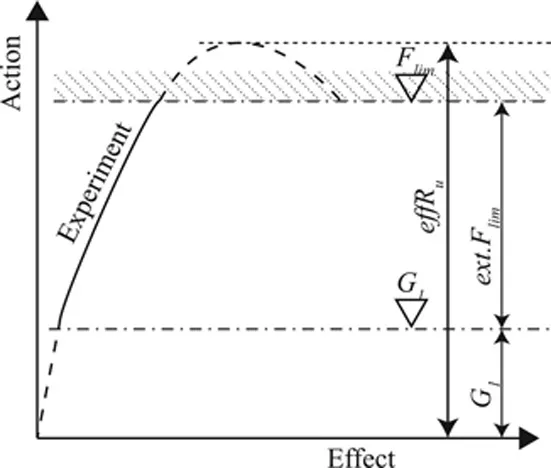
Figure 1.1 Use of stop criteria during proof load test
The followed safety philosophy using stop criteria (Deutscher Ausschuss für Stahlbeton, 2000) is shown in Figure 1.1 (see also Chapter 3 of Vol. 12). If a stop criterion is reached, the corresponding load is Flim. Loading beyond this point is not allowed. A proof load test is successful if the sum of the permanent loads G1 and the target proof load Ftarget is smaller than the limiting load Flim. If the opposite is found in a proof load test, the bridge does not fulfill the requirements of the code for the considered safety level that was the target for the proof load test, but it may still fulfill the requirements at a lower safety level.
The safety plan for the proof load test needs to be developed after a technical inspection of the bridge. This inspection should signal possible safety risks and should consider the access to the test site. All possible dangerous situations and all possible problems (technical, electrical, electronical, planning-related, etc.) that may arise during the on-site activities need to be reported, and possible solutions and backup plans for these events need to be presented (Koekkoek et al., 2015). During all activities on site, the safety of the personnel and traveling public needs to be evaluated by a safety engineer. In the Netherlands, it is required that the information of all emergency services is visible on site in case of a calamity, and that a first-aid kit and at least one person with first-aid training is always present on site. Access to the tested structure should be restricted during testing. Only the executing personnel are allowed access to the bridge during the test. During the test, nobody is allowed to go under the bridge unless this event has been communicated with all parties and the load is removed. If the bridge cannot be closed to traffic during the proof load test, special safety considerations should be taken for the traveling public. It is strongly advised to temporarily close the bridge when the target load is applied.
For those who are not directly involved with the proof load test but may be affected by it, such as the traveling public and inhabitants of houses near the bridge, information should be provided. Similarly, information should be available upon request for the press and other interested parties. It is recommended that the communications expert of the local road authority develop this information.
1.2 Determination of target proof load
1.2.1 Dutch practice
In Dutch practice, the target proof load should be equivalent to the factored loads from the required load combination with load factors corresponding to the governing code. This equivalence is described in terms of an equivalent sectional force or moment. For this purpose, a linear finite element model is used. In this finite element model, the applied loads correspond to...
Table of contents
Cover
Half Title
Series Page
Title
Copyright
Table of Contents
Editorial
About the Book Series Editor
Preface
About the Editor
Author Data
Contributors List
List of Tables
List of Figures
Part I Proof Load Testing of Bridges
Part II Testing of Buildings
Part III Advances in Measurement Techniques for Load Testing
Part IV Load Testing in the Framework of Reliability-Based Decision-Making and Bridge Management Decisions
Part V Conclusions and Outlook
Author Index
Subject Index
Structures and Infrastructures Series
Trusted by 375,005 students
Access to over 1.5 million titles for a fair monthly price.
Study more efficiently using our study tools.
Frequently asked questions
Yes, you can cancel anytime from the Subscription tab in your account settings on the Perlego website. Your subscription will stay active until the end of your current billing period. Learn how to cancel your subscription
No, books cannot be downloaded as external files, such as PDFs, for use outside of Perlego. However, you can download books within the Perlego app for offline reading on mobile or tablet. Learn how to download books offline
Perlego offers two plans: Essential and Complete
Essential is ideal for learners and professionals who enjoy exploring a wide range of subjects. Access the Essential Library with 800,000+ trusted titles and best-sellers across business, personal growth, and the humanities. Includes unlimited reading time and Standard Read Aloud voice.
Complete: Perfect for advanced learners and researchers needing full, unrestricted access. Unlock 1.5M+ books across hundreds of subjects, including academic and specialized titles. The Complete Plan also includes advanced features like Premium Read Aloud and Research Assistant.
Both plans are available with monthly, semester, or annual billing cycles.
We are an online textbook subscription service, where you can get access to an entire online library for less than the price of a single book per month. With over 1.5 million books across 990+ topics, we’ve got you covered! Learn about our mission
Look out for the read-aloud symbol on your next book to see if you can listen to it. The read-aloud tool reads text aloud for you, highlighting the text as it is being read. You can pause it, speed it up and slow it down. Learn more about Read Aloud
Yes! You can use the Perlego app on both iOS and Android devices to read anytime, anywhere — even offline. Perfect for commutes or when you’re on the go. Please note we cannot support devices running on iOS 13 and Android 7 or earlier. Learn more about using the app
Yes, you can access Load Testing of Bridges by Eva Lantsoght, Eva O.L. Lantsoght,Eva Lantsoght, Eva O.L. Lantsoght in PDF and/or ePUB format, as well as other popular books in Technology & Engineering & Civil Engineering. We have over 1.5 million books available in our catalogue for you to explore.