Stakeholders are persons, without a doubt: but why do we use a word that specific, which incorporates so many concepts that some hundreds of its different definitions exist in the literature, and direct translation of which in other languages is nearly impossible? In fact, some history, and a little in-depth analysis, of the meanings of this word can help us to reveal a significant part of the mystery.
The word stakeholder dates back to the beginning of the eighteenth century, in England, and it meant the person who was entrusted with the stakes of bettors: he was the holder of all the bets placed on a game or a race, and he was the one who was paying the money to the winners. Therefore, the first stakeholder was a holder of interests, and this is, even today, one of the most common meanings, if we consider, in addition, that “having a stake” is a synonym of “having an interest”, and that stakes (meaning “strong sticks”) can be pushed in the ground either to mark a property, or to be part of a fence that settles the boundaries of an estate, so defining the perimeter of an interest.
But stakes (still meaning “strong sticks”) can be hammered in the ground also for supporting plants: in fact, it is believed that the first modern meaning of stakeholders, which has been attributed (Freeman, 1984) to an internal memorandum of Stanford University Research Center dated 1963, was “those groups without whose support the organization would cease to exist”. Therefore, stakeholders are the strongest supporters of an organization (we could also say that they may be ready to “go to the stake” for it!), and their contribution is foundational to the existence of the organization itself: main emphasis is, in this definition, on internal stakeholders, who are the doers of organization's performances, and who need to be properly engaged to give an effective contribution. Meanwhile, in the above-mentioned perspective, stakeholders do not act anymore as individuals only, but they are considered as part of groups, too: stakeholders interface each other through processes, start to act collectively, by sharing their resources and by integrating their efforts, and they do it through relations, so that their behavior becomes organizational, and not only personal.
Furthermore, in the first text on the theory of stakeholders (Freeman, 1984), the definition of stakeholder was “a stakeholder in an organization is any group or individual who can affect or is affected by the achievement of the organization's objectives”. Since “to affect” is a synonym of “to influence”, it was here that one other of the most common concepts in stakeholder definitions came in: stakeholders influence the organization's objectives, and are influenced by them, and this is the first time that the nature of stakeholders' centrality in the organizations became evident, since stakeholders were defined as both the actors and the recipients of the organization's results.
In the original PMBOK (Project Management Institute, 1987), the stakeholders were considered as the participants to the project. In addition, some years later (Freeman, 1994), the foundational concepts of participation and of created value were enhanced too, and stakeholders were defined as “participants in the human process of joint value creation”. At first, in fact, stakeholders participate in the organizations, as far as other stakeholders would like to participate in the same organizations, and, in both cases, they want to do so jointly, e.g., by becoming, and then being part of a specific community, which is deeply characterized by common goals, behavioral rules, specific languages, and so on. Thus, regarding the created value, the extraordinary importance of this concept, on the one hand, is due to the enhancement of the stakeholders' role on the joint creation of the business and/or social value, while, on the other hand, is because it introduces the issue that actual value which is added by stakeholders must be considered arithmetically: in fact, it can be positive, but also null or negative. Indeed, in, and outside of, all the organizations, there are positive stakeholders, who have to be engaged, and whose needs have to be satisfied, but there are generally also neutral/reluctant stakeholders, who require special additional efforts for their engagement, and negative/hostile stakeholders too, who have to be disengaged, if possible, but, in any case, must be dissatisfied, in order to achieve organization's goals.
Moreover, starting from the second half of the 1980s, a vision of the enterprise as a complex system inserted in the society was born, and a new “stakeholder theory” started to be developed. In this vision, the basic idea is to extend the benefits that are created by the enterprise from its shareholders to its participants to various titles, and to affirm the conviction that this same idea must be translated in ethical principles of managerial behavior. Without entering into the dispute between stakeholder view and shareholder view (also because shareholders are stakeholders, too), it is important to notice that above focus on corporate social responsibility started to incorporate an important ethical component into the concept of stakeholder. In fact, it is confirmed that a strong ethical concept is still valid today, since, for instance, Cambridge Dictionary defines stakeholder as “a person such as an employee, customer, or citizen who is involved with an organization, society, etc., and therefore has responsibilities toward it and an interest in its success”: conveniently, responsibility is considered by the community of project managers as one of the top ethical issues (Project Management Institute, 2006).
Finally, if we go back to the word stake, it could be interesting to notice that one of its main meaning is risk, and that “at stake” is a synonym of “at risk”: in other words, stakeholders do risk in order to achieve their goals, and risk-based thinking is part of their life, exactly as it is part of several disciplines, from project management, since its early beginning, to quality management, more recently, and so on. On the other side, stakeholders are the ones who introduce risk in all the domains.
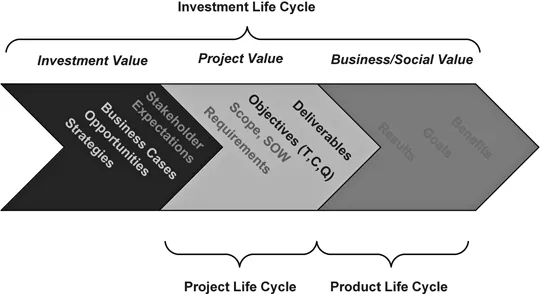
Are all the above considerations applicable to project stakeholders? Of course they are, with a specific focus on unicity, and a necessary emphasis on the relation between stakeholder expectations and project goals, which confirms the stakeholder centrality in all projects. Every project is, actually, unique, and its unicity is reflected not only in its scope, goals, objectives, deliverables, time, cost, resources, and so on, but also in its own set of stakeholders, which, then, characterizes specifically each project both with respect to others—also if they may be related in the same program, and in terms of its inherent complexity. Furthermore, a foundational issue is that stakeholders are central in all the projects. In fact, organizations define strategies, which are based on their own mission and vision, and projects are means to accomplish strategic goals, then achieving, through their results, the expected benefits: the overall value that is generated by each project determines the stakeholder satisfaction, and the relevant project success rate, within the whole investment life cycle (see Figure 1.1). It is, indeed, a fact, that each project exists to implement an investment, which, in turn, has been mutually agreed to harmonize different stakeholder expectations: organizations define strategies, which are based on their own mission and vision, then select pursuable opportunities in accordance with their defined strategy, then set business cases up, and, finally, start projects up. The inputs of a project generally include, then, business case, contract, and Statement of Work, or things like that: of course, there are different business cases or similar for different stakeholders, as, for instance, providers, investors, and customers are, and this leads to the existence of different perspectives, in terms of results to be achieved, that will accompany the project in all its life cycle, and also afterwards, i.e., in released product/infrastructure/service life cycle.
Figure 1.1 The project investment value chain.
In fact, while, on the one side, business cases, which are the causes of project start-up, are based on stakeholder business expectations, which, in turn, correspond to project goals to be achieved, on the other side, contract and SOW (Statement Of Work), which are the references for project development and delivery, are based on stakeholder requirements, which are, in turn, the conversion of different stakeholder expectations in a commonly agreed (at least initially) project scope, and which correspond to project objectives to be delivered. Project manager, project team, and other stakeholders implement the project in accordance with the requirements, and, then, deliver it to other stakeholders: project can be considered really successful when its goals are realized, then achieving those results that correspond to the stakeholder expectations in terms of created business value and relevant achieved benefits.
This double role of stakeholders is the pillar of all projects, and confirms the stakeholder centrality: stakeholders are both the doers and the beneficiaries of the project, and while, on the one side, the stakeholder work is basic for project implementation, on the other side, the stakeholder satisfaction is the main project success factor.
Definitively, a project stakeholder is a person, or a group of persons, or an organization, who
participates, or would like to participate, in the project;
has some kind of interest in the project;
can be (if properly engaged) a foundational supporter of the project;
may affect/influence the project, or may be affected/influenced by the project itself;
can bring a value, which could be either positive or negative, to the project;
may have responsibilities toward the project, which, in turn, is supposed to satisfy his requirements and expectations;
is characterized by a risk-based thinking approach;
is part of a set that characterizes uniquely each project; and
has a central role in all projects: stakeholders, indeed, both implement the project and determine its success via their satisfaction, and, then, are the actual key for project success.
It is, then, a fact, on the one hand, that each project includes a large variety of stakeholders, having different interests, expectations, level of influence, responsibilities, etc., and, on the other hand, that, due to the key centrality of their role, all stakeholders are important.
In project management literature, the definitions of project stakeholders are quite essential: while in first PMBOK (Project Management Institute, 1987), stakeholders were considered as just the synonym of “participants”, maybe the first real definition of project stakeholders, with an evident emphasis on active involvement and interest aspects, was “individuals and organizations who are actively involved in the project, or whose interests may be positively or negatively affected as a result of project execution or successful project completion” (Project Management Institute, 1996). However, current definitions leave the active involvement issue, which, on one part, limits the stakeholder domain, while, on the other, is more an objective to be reached via positive engagement, rather than an assumption that is part of a definition, and, at the same time, insist on influence aspects as the core ones. Moreover, some perspectives add the essential human factor of perception “stakeholder is a person, group or organization that has interests in, or can affect, be affected by, or perceive itself to be affected by, any aspect of the project” (International Organization for Standardization, 2012), some other insist on the first concept of participation “all individuals, groups or organisations participating in, affecting, being affected by, or interested in the execution or the result of the project can be seen as stakeholders” or, very similarly, relaxing the interest issue but with a further extension to programs and portfolios concepts, “stakeholder is an individual, group or organization that may affect, be affected by, or perceive itself to be affected by a decision, activity, or outcome of a project, program, or portfolio” (Project Management Institute, 2017).
In general, typical project stakeholders include two groups that are both temporary and specific structures of the project domain, i.e., the project organization and the project governance stakeholders, and other groups, as investors, customers, and special interests groups, that we can find also in more stable structures, as organizations generally are. The project organization is the temporary structure that includes (International Organization for Standardization, 2012) the project manager and the project team, and that may include a project management team and a Project Management Office, too, while project governance may involve the project sponsor, a project steering committee or board, and other top management executives. Definitively, since all the stakeholders are important, it is foundational to consider them all properly.
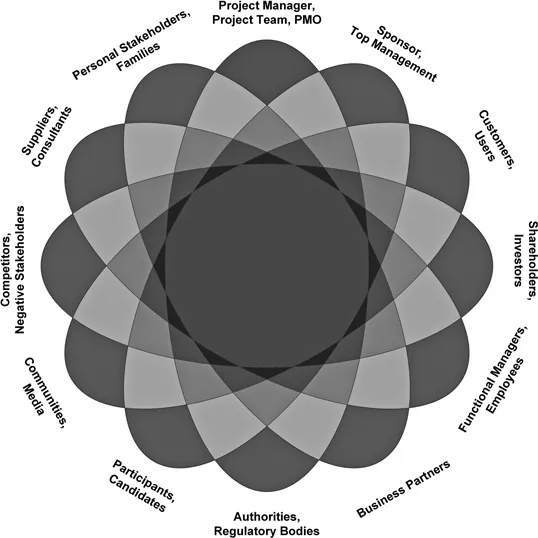
Figure 1.2 The Project Stakeholder Rose.
An accurate overview about different project stakeholders should include (see Figure 1.2):
the project manager;
the project team, the project management team, the project management office;
the sponsor, the project steering committee or board, the top management;
the customers, the users, the contracting officers;
the shareholders, the investors, the funders, the partners;
the functional and/or resource managers, the employees, the professionals, the collaborators;
the business partners, the network partners, the distributors, the representatives, the members of the consortium;
the supp...