- 288 pages
- English
- ePUB (mobile friendly)
- Available on iOS & Android
eBook - ePub
UML for Developing Knowledge Management Systems
About this book
UML for Developing Knowledge Management Systems provides knowledge engineers the framework in which to identify types of knowledge and where this knowledge exists in an organization. It also shows ways in which to use a standard recognized notation to capture, or model, knowledge to be used in a knowledge management system (KMS).
This volume
Information
Publisher
Auerbach PublicationsYear
2005Print ISBN
9780367391713
9780849327230
Edition
1eBook ISBN
9781135485535
Chapter 1
Introduction
The concept of knowledge management (KM) has been around since the mid-1970s. There is evidence of this through the work of Dorothy Leonard-Barton who authored the case study of Chaparral Steel, which has had an effective KM strategy in place since the mid-1970s. This case study led to her research titled “Wellsprings of Knowledge— Building and Sustaining Sources of Innovation” (Harvard Business School Press, 1995). During the late 1970s, Everett Rogers of Stanford, through his work in the diffusion of innovation, and Thomas Allen of MIT, through his work in information and technology transfer, both contributed to how knowledge is produced, used, and diffused within organizations.
In the late 1970s, computer technology started to contribute greatly to the amount of available knowledge being produced through computer products and processes. Doug Engelbart’s Augment (“augmenting human intelligence”) introduced in 1978 was an early groupware or hypertext application, which interfaced with other applications and systems. Rob Acksyn and Don McCracken’s Knowledge Management System (KMS), an open distributed hypermedia tool, predates the Internet by a decade, were two such examples.
By the mid-1980s, the importance of knowledge as a competitive asset began to gain momentum, although from an economic perspective it had yet to recognize knowledge as an asset. However, at this time most organizations were still lacking the strategies, methods, and procedures to quantify and manage knowledge as an asset. During the late 1980s, there was an increase in the amount of knowledge available as well as products and processes, which produced a need for organizations to find a way to manage this knowledge.
The 1980s also brought the advent of work done in artificial intelligence (AI), specifically expert systems. This yielded knowledge acquisition, knowledge engineering, knowledge-based systems, and computer-based ontologies. As the 1980s continued, a consortium of U.S. companies started the Initiative for Managing Knowledge Assets (1989). This organization’s mission was to provide a technological base for managing knowledge. This organization also introduced the term knowledge management.
By 1990, a number of management consulting firms in the United States, Europe, and Japan began KM practices and programs. KM was introduced in the popular press in 1991 through Tom Stewart’s “Brainpower” in Fortune magazine. In 1995, Ikujiro Nonaka and Hirotaka Takeuchi authored, The Knowledge-Creating Company: How Japanese Companies Create the Dynamics of Innovation, which is considered the most widely read work to date on KM.
By the mid-1990s, KM initiatives began in earnest by incorporating the Internet. The International Knowledge Management Network (IKMN), which began in Europe in 1989, went to the Internet in 1994 and was followed by the U.S.-based Knowledge Management Forum and others. During this time many KM conferences, seminars, and organizations began growing. By 1995, the European community began offering funding for KM-related projects through their ESPRIT program. For the chronological listing of these events, see Figure 1.1 for a snapshot of the history of KM.
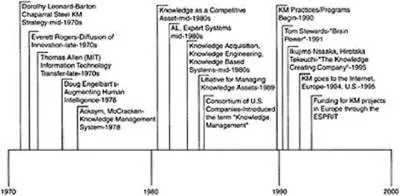
Figure 1.1 Knowledge Management Time Line
Some additional history of KM includes:
- Late 1880s—Franz Boas, the founder of modern anthropology, studied knowledge production and diffusion within and between cultures, known as cultural cognition. Other anthropological studies in this area include those by Emile Durkheim, Ruth Benedict, and Margaret Mead. (See Stephen A.Tyler, ed, 1969.)1
- Early 1900s—Joseph Schumpeter introduced the input of knowledge to the classical economic model, demonstrating that economic growth is dependent on technological change.
- 1936–1960—Though Karl Mannheim created the field of Sociology of Knowledge in 1936, Robert Merton expanded it into the form it is today. This field is best summarized in his 1945 paper, “Paradigm for the Sociology of Knowledge,” in which he describes the forces in science and society that govern knowledge.
- – Social bases—social position, class, generation, occupational roles, mode of production, group structures: university, bureaucracy, academies, sects, political parties, society, ethnic affiliation, social mobility, power structure, social processes (competition, conflict, etc.).
- – Cultural bases—values, ethos, climate of opinion, type of culture, culture mentality.
- – Spheres of—moral beliefs, ideologies, ideas, the categories of thought, philosophy, religious beliefs, social norms, positive science, technology. – Reasons for—to maintain power, promote stability, orientation, exploitation, obscure actual social relationships, provide motivation, canalize behavior, divert criticisms, provide assurance, control nature, coordinate social relationships, etc. – (For more information on sociology of knowledge and social epistemology, see Steve Fuller, 1993.)2
- 1957—Herbert Simon coined the term organizational learning, and challenged the “rational man” concept in economics.
- 1957—Michael Polanyi introduced the importance of tacit knowledge.
- 1960s—In a study about AT&T, Alvin Toffler discussed the need to shift from “handcraft” to “headcraft” to become an adaptive corporation and keep the procedural manuals fluid.
- 1962—Kenneth Arrow established the concept of “learning by doing” as a way for organizations to generate knowledge.
- 1966—Thomas Kuhn revealed how scientific knowledge evolves as a series of revolutions influenced by sociological forces.
- 1970s—Several cognitive scientists focused on social cognition vs. individual cognition. In 1997, the first RoboCup tournament was played in Japan to test social cognition theories.
- 1976—John Holland introduced a mathematical framework that is used today as a model to measure the effectiveness of KM.
- 1978—Nathan Rosenberg added to Kenneth Arrow’s work “learning by using,” generating knowledge by using a product.
- 1980s—The diffusion of information and communications technology forced the world into an information economy by reducing the cost of access to information.
- 1980s—Labs, hospitals, and businesses realized the benefits of computer-based knowledge systems. Expert systems, automated knowledge acquisition, and neural nets began to capture expert knowledge to help users of the system diagnose problems.
- 1982—Nelson and Winter developed the Evolutionary Economic Theory that demonstrated how including knowledge as a factor in economics can improve the accuracy of an economic model.
- 1986—Karl Wiig from Arthur D.Little coined the term knowledge management in an article about the use of AI in helping people manage knowledge.
- 1990s—Economist Paul Romer introduced New Growth Economics accounting for new knowledge and technological change.
- 1996—Organization for Economic Cooperation and Development (OECD) issued a report called “The Knowledge-Based Economy.”
- 1998—United Nations sponsored a report called “Knowledge Societies: Information Technology for Sustainable Development.”
Today KM continues to evolve. It has evolved to mean many things to the myriad organizations that institute this paradigm. However, we must realize that the practice of KM has its roots in a variety of disciplines, which include:
- Cognitive science—The study of the mind and intelligence, which comprises many disciplines including philosophy, psychology, and AI. Information learned from this discipline will improve tools and techniques in gathering and transferring knowledge.
- Expert systems, AI, knowledge-based management systems—Technologies, tools, and techniques from AI are directly applied to KM and KMSs.
- Computer-supported collaborative work (groupware)—In many parts of the world KM has become synonymous with groupware. Sharing and collaboration have become vital to organizational KM and KMSs.
- Library and information science—The art of classification and knowledge organization is at the core of library science; it will become vital as we gather more information. This science will most certainly contribute to tools for thesaurus and vocabulary management.
- Technical writing—Technical writing, also called technical communications, is directly relevant to the effective representation and transfer of knowledge.
- Document management—The managing of electronic images, document management has made content accessible and reusable. This has become an essential piece in KMSs and KM activities.
- Decision support systems—Decision support systems have brought together several disciplines, which include cognitive science, management science, computer science, operations research, and systems engineering—all of which will assist the knowledge worker in the performance of their tasks. This primarily focuses on aiding managers organizationswith their decision-making process.
- Semantic networks—Semantic networks are knowledge representation schemes that involve nodes and links between nodes. The nodes represent objects or concepts and the links represent relations between nodes. This discipline is now in use in mainstream professional applications, including medicine, to represent domain knowledge in an explicit way that can be shared. This is one of several ways that a knowledge engineer can represent knowledge.
- Relational and object databases—Relational and object databases primarily contain structured and unstructured data, respectively. However, through data-mining techniques we have only begun to extract the explicit knowledge contained in these resources.
- Simulation—Referred to as a component technology of KM (computer simulation) continues to contribute significantly to e-learning environments. E-learning is another key ingredient of the KMS.
- Organizational science—Organizational science deals with the managing of organizations, understanding how people work and collaborate. Organizations contain many dispersed areas of knowledge where a KM policy and KMSs are essential. This discipline has led to many of the aspects involved in communities of practice and the development of communities of practice within a KMS.
- Economics—Specifically knowledge economics, which is the study of the role of knowledge in creating value, is the next step for the evolution of KM. This will give KM a higher level of visibility because it will associate it with the valuation of the enterprise.
There have been many contributors to the field of KM. Four contributors warrant special mention:
Karl Wiig is considered by many to be the first to introduce the term knowledge management. He authored a three-volume series on KM in the mid-1990s, which represents landmark events in the field and has done much to establish the early legitimacy of KM as a new intellectual field of study.
Peter Drucker has been writing about management for 60 years. He has authored over 30 books on management strategy and policy, which have been translated into more than 20 languages. He is recognized worldwide as the thought leader in corporate management. He has consulted with many of the world’s largest corporations as well as nonprofit organizations and government entities. He is considered to be the “arch-guru of capitalism” and the “father of modern management, social commentator, and preeminent business philosopher.”
Paul Strassmann is an expert on information economics. He is an accomplished author, lecturer, and consultant. He has held many seniorlevel information officer positions and, through his work with the U.S. military, has pioneered the advancement of U.S. information superiority.
Peter Senge is a lecturer, author, and consultant who was named “Strategist of the Century” by the Journal of Business Strategy in 1999. His 1990 book The Fifth Discipline popularized the concept of the “learning organization.” This publication in 1997 was identified by the Harvard Business Review as one of the seminal management books of the past 75 years.
Peter Drucker and Paul Strassmann have stressed the importance of explicit knowledge as an organizational resource. Peter Senge has focused on learning organizations as a cultural dimension of managing knowledge.
These individuals have significantly paved the way to understanding the importance of information and the learning and sharing of knowledge. This book, UML for Developing Knowledge Management Systems, will focus on what I believe to be at the core of KM and KMSs, knowledge! How do we capture and model this knowledge? We will use a standard notation for modeling the various types of knowledge that we need to capture. I will also show the different techniques that must be utilized to correctly articulate and verify the knowledge captured through the use of a case study. This will be essential to building “robust knowledge” structures within your KMS.
Notes
1. Tyler, S.A. Cognitive Anthropology (New York: Holt, Rinehart, and Winston, 1969).
2. Fuller, S. Philosophy of Science and its Discontents (New York: Guilford Press, 1993).
Chapter 2
Knowledge Management
Overview
Today there is a proliferation of information addressing the knowledge economy and the belief that the future of business success will be based on the ability to capture, manage, and leverage an organization’s knowledge. What does this mean? How do you create an environment to capture and manage enterprise knowledge? More precisely, what is KM? Before we begin to construct a KM initiative, we must first agree on a definition. If you were to speak to ten different KM practitioners, you would probably receive ten different definitions. For us to move forward, we will use the following definition to set the framework for our continuing discussion about KM.
KM consists of methodology practices, new software systems, processes, and operating procedures that are developed to validate, evaluate, integrate, and disseminate information for users to make decisions and learn. Now that we have a definition of KM, what exactly are we managing? In other words, what is knowledge?
Let us start by distinguishing between data, information, and knowledge (see Figure 2.1). At the beginning of the spectrum, you have data. Data consists of random bits and pieces of something. This “something” can be numbers, text, video, or voice. On the other hand, information puts these random bits and pieces of “something” into a logical order that is meaningful to its user. The results of this logical order could be a report of some kind (e.g., a stock report for an investor, voice recording of a business meeting, a patient summary for a nurse, or a spreadsheet for an accountant).

Figure 2.1 Data-Information-Knowledge
Furthermore, knowledge enables the user of information to make a decision or learn something from the information that has been presented. For instance, from a stock report, an investor can ascertain what stock she should buy or sell; a video may be delivering instructions about a procedure or process; and from a patient summary, a nurse may be able to determine when a certain medication should be administered to a patient.
Now that we have a clear picture of the evolution of knowledge, it is appropriate to continue with our understanding of KM. Remember our above-stated definition. With any definition, we must be aware that a narrow definition will tend to produce results that will lead to simple human resource policies and procedures leaving much of the value of KM unrealized. However, a definition that is too broad will be too abstract and lead to an unclear implementation of KM policies, practices, and procedures. Therefore, our definition reflects theories of KM that differentiate knowledge f...
Table of contents
- Cover Page
- Title Page
- Copyright Page
- Preface
- Acknowledgments
- Chapter 1: Introduction
- Chapter 2: Knowledge Management
- Chapter 3: Declarative Knowledge
- Chapter 4: Procedural Knowledge
- Chapter 5: Tacit Knowledge
- Chapter 6: Explicit Knowledge
- Chapter 7: Process Knowledge and Concept Knowledge
- Chapter 8: Case-Based Reasoning
- Chapter 9: Knowledge Modeling
- Chapter 10: UML—An Introduction
- Chapter 11: Knowledge Modeling with UML
- Chapter 12: Defining a Knowledge Acquisition Framework
- Chapter 13: Business Case: Department of Motor Vehicles Reporting System
- Chapter 14: Applying Your Knowledge Framework
- Chapter 15: Summary
- Appendix A: Probing Questions 1
- Appendix B: Glossary
- Appendix C: References
Trusted by 375,005 students
Access to over 1.5 million titles for a fair monthly price.
Study more efficiently using our study tools.
Frequently asked questions
Yes, you can cancel anytime from the Subscription tab in your account settings on the Perlego website. Your subscription will stay active until the end of your current billing period. Learn how to cancel your subscription
No, books cannot be downloaded as external files, such as PDFs, for use outside of Perlego. However, you can download books within the Perlego app for offline reading on mobile or tablet. Learn how to download books offline
Perlego offers two plans: Essential and Complete
- Essential is ideal for learners and professionals who enjoy exploring a wide range of subjects. Access the Essential Library with 800,000+ trusted titles and best-sellers across business, personal growth, and the humanities. Includes unlimited reading time and Standard Read Aloud voice.
- Complete: Perfect for advanced learners and researchers needing full, unrestricted access. Unlock 1.5M+ books across hundreds of subjects, including academic and specialized titles. The Complete Plan also includes advanced features like Premium Read Aloud and Research Assistant.
We are an online textbook subscription service, where you can get access to an entire online library for less than the price of a single book per month. With over 1.5 million books across 990+ topics, we’ve got you covered! Learn about our mission
Look out for the read-aloud symbol on your next book to see if you can listen to it. The read-aloud tool reads text aloud for you, highlighting the text as it is being read. You can pause it, speed it up and slow it down. Learn more about Read Aloud
Yes! You can use the Perlego app on both iOS and Android devices to read anytime, anywhere — even offline. Perfect for commutes or when you’re on the go.
Please note we cannot support devices running on iOS 13 and Android 7 or earlier. Learn more about using the app
Please note we cannot support devices running on iOS 13 and Android 7 or earlier. Learn more about using the app
Yes, you can access UML for Developing Knowledge Management Systems by Anthony J. Rhem in PDF and/or ePUB format, as well as other popular books in Computer Science & Computer Science General. We have over 1.5 million books available in our catalogue for you to explore.