eBook - ePub
A Radiologic Atlas of Abuse, Torture, Terrorism, and Inflicted Trauma
- 328 pages
- English
- ePUB (mobile friendly)
- Available on iOS & Android
eBook - ePub
A Radiologic Atlas of Abuse, Torture, Terrorism, and Inflicted Trauma
About this book
The results of aggression against humans can be hideously obvious, but may also be entirely concealed from casual inspection. Often, only exploration of the hidden recesses of the mind via psychiatric evaluation, or radiologic exploration of the inner recesses of the body can reveal the evidence of such violence. This book focuses on the latter.
Information
Section I
Abuse
Abuse may be defined as an improper action leading to physical injury. But abuse perhaps rests not as much on definition as on conceptualization. The concept of abuse is inextricably entangled in history, religion, and culture. Therefore, it is variable across the expanse of time, geography, and social evolution.
From biblical times through the Industrial Revolution the power of the parent, or his surrogate, was absolute and unquestioned. The child could be abandoned, enslaved, mutilated, worked to death, or cut in half. The notion of abuse or cruelty to children was slow aborning, and its prevention tied to regulations pertaining to more valuable livestock. The annual meetings of the Mobile [Alabama] Society for the Prevention of Cruelty to Animals and Children were regularly reported in the local newspaper, The Mobile Register. A 1902 article lauds the passing of the horse-drawn streetcar, “one of the most prolific sources of cruel treatment of horse and mule.” The plight of children was not mentioned.
Even now there is no universal agreement upon what constitutes abuse of a child. Unfortunately, extreme examples are tolerated in some parts of our world. Genital mutilation, purdah, or deformation of body parts is considered unacceptably cruel in some societies, but desirable or obligatory in other cultures or religions.
Abuse of spouses or intimate partners is a modern concept of limited range. Such partners still may be stoned or burned to death in some countries. In relatively modern times, a husband legally could beat his wife in Alabama—as long as he used a rod no thicker than his thumb.
The widespread tradition of veneration of elders now is eroded by a spate of granny-bashing.
In the United States, civil or political abuse, excessive force, brutality, or cruel and unusual punishment is constitutionally prohibited. In other jurisdictions, it may be considered a justifiable procedure for apprehension, interrogation, incarceration, punishment, or ensuring civil obedience.
This section will illustrate the radiologic manifestations of actions generally accepted as abusive. It must be recognized that many types of abuse are not revealed by the radiologic method.
B.G.B.
1
Child Abuse
B.G.Brogdon, M.D. and Hermann Vogel, M.D.
HISTORICAL PERSPECTIVE
Arguably, radiology’s largest contribution to the forensic sciences is its role in the public awakening to, and recognition of, intentional physical abuse of infants and children by those responsible for their protection and care. It is a sad commentary on earlier attitudes concerning children that this breakthrough came half a century after all other applications of radiology to forensics had been predicted or accomplished.
John Caffey, M.D. (Figure 1.1), a pediatrician turned self-taught radiologist at Babies Hospital of New York City, reported in 1946 1 the rather puzzling association of peculiar skeletal lesions with subdural hematoma in infants and children with no history of trauma (Figure 1.2). He described metaphyseal fragmentation (Figure 1.3), involucrum formation (Figure 1.4), and multiple fractures in different stages of healing (Figure 1.5). Later, Caffey 2 described traumatic bowing of metaphyses (Figure 1.6), metaphyseal cupping (Figure 1.7), and ectopic ossification centers (Figure 1.8). Caffy and colleagues in other venues came to appreciate the contribution of history, physical examination, laboratory tests, and biopsy to understanding the radiologic findings. They then evolved the final criterion: injury inappropriate to the history, circumstance, age, or stage of development of the involved child. 3 – 7
SKELETAL INJURIES
Although head trauma is the leading cause of death and physical child abuse, 8 it is injury to the skeleton that most often brings the abused child to medical and civic attention.
METAPHYSEAL INJURY
The metaphyseal injury of child abuse is virtually pathognomonic. It is a transverse fracture across the extreme end of the metaphysis, separating a disc of bone from the primary spongiosa of the metaphysis and the zone of provisional calcification of the physis or growth plate. Variation in position and projection may cause the fracture to appear as a straight line (Figure 1.8B) rarely, more frequently as the well-known corner fracture (Figures 1.3 and 1.9), sometimes as the so-called bucket handle fracture (Figure 1.10), and occasionally, as an ellipse (Figure 1.11). Bowing may result from associated vascular injury and interference with growth 9 or from a torus (greenstick) fracture of the metaphysis (Figure 1.7).
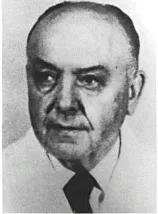
FIGURE 1.1 John Caffey, M.D., the father of pediatric radiology and first to describe the radiologic manifestations of child abuse. (From the Arc...
Table of contents
- COVER PAGE
- TITLE PAGE
- COPYRIGHT PAGE
- DEDICATION
- PREFACE
- ACKNOWLEDGMENTS
- EDITORS
- CONTRIBUTORS
- SECTION I: ABUSE
- SECTION II: TORTURE
- SECTION III: TERRORISM
- SECTION IV: MISSILE-FIRING PERSONAL WEAPONS
- SECTION V: INFLICTED TRAUMA
- SECTION VI: RADIOLOGIC IDENTIFICATION AND EVALUATION
- SECTION VII: BORDER CONTROL AND INTERNAL SECURITY
Trusted by 375,005 students
Access to over 1.5 million titles for a fair monthly price.
Study more efficiently using our study tools.
Frequently asked questions
Yes, you can cancel anytime from the Subscription tab in your account settings on the Perlego website. Your subscription will stay active until the end of your current billing period. Learn how to cancel your subscription
No, books cannot be downloaded as external files, such as PDFs, for use outside of Perlego. However, you can download books within the Perlego app for offline reading on mobile or tablet. Learn how to download books offline
Perlego offers two plans: Essential and Complete
- Essential is ideal for learners and professionals who enjoy exploring a wide range of subjects. Access the Essential Library with 800,000+ trusted titles and best-sellers across business, personal growth, and the humanities. Includes unlimited reading time and Standard Read Aloud voice.
- Complete: Perfect for advanced learners and researchers needing full, unrestricted access. Unlock 1.5M+ books across hundreds of subjects, including academic and specialized titles. The Complete Plan also includes advanced features like Premium Read Aloud and Research Assistant.
We are an online textbook subscription service, where you can get access to an entire online library for less than the price of a single book per month. With over 1.5 million books across 990+ topics, we’ve got you covered! Learn about our mission
Look out for the read-aloud symbol on your next book to see if you can listen to it. The read-aloud tool reads text aloud for you, highlighting the text as it is being read. You can pause it, speed it up and slow it down. Learn more about Read Aloud
Yes! You can use the Perlego app on both iOS and Android devices to read anytime, anywhere — even offline. Perfect for commutes or when you’re on the go.
Please note we cannot support devices running on iOS 13 and Android 7 or earlier. Learn more about using the app
Please note we cannot support devices running on iOS 13 and Android 7 or earlier. Learn more about using the app
Yes, you can access A Radiologic Atlas of Abuse, Torture, Terrorism, and Inflicted Trauma by B. G. Brogdon,Hermann Vogel,John D. McDowell in PDF and/or ePUB format, as well as other popular books in Medicine & Forensic Medicine. We have over 1.5 million books available in our catalogue for you to explore.