This sixth volume of Advances in Criminological Theory is testimony to a resurgent interest in anomie-strain theory, which began in the mid- 1980s and continues unabated. Contributors focus on the new body of empirical research and theorizing that has been added to the anomie tradition that extends from Durkheim to Merton. The first section is a major, 75-page statement by Robert K. Merton, examining the development of the anomie-and-opportunity-structure paradigm and its significance to criminology., The Legacy of Anomie Theoy assesses the theory's continuing usefulness, explains the relevance of Merton's concept of goals/means disparity as a psychological mechanism in the explanation of delinquency, and compares strain theory with social control theory. A macrosociological theoretical formulation is used to explain the association between societal development and crime rates. In other chapters, anomie is used to explain white-collar crime and to explore the symbiotic relationship between Chinese gangs and adult criminal organizations within the cultural, economic, and political context of the American-Chinese community.

eBook - ePub
The Legacy of Anomie Theory
- 450 pages
- English
- ePUB (mobile friendly)
- Available on iOS & Android
eBook - ePub
The Legacy of Anomie Theory
About this book
Information
PART ONE
Merton Reflects on Anomie Theory
Opportunity Structure: The Emergence, Diffusion, and Differentiation of a Sociological Concept, 1930s–1950s
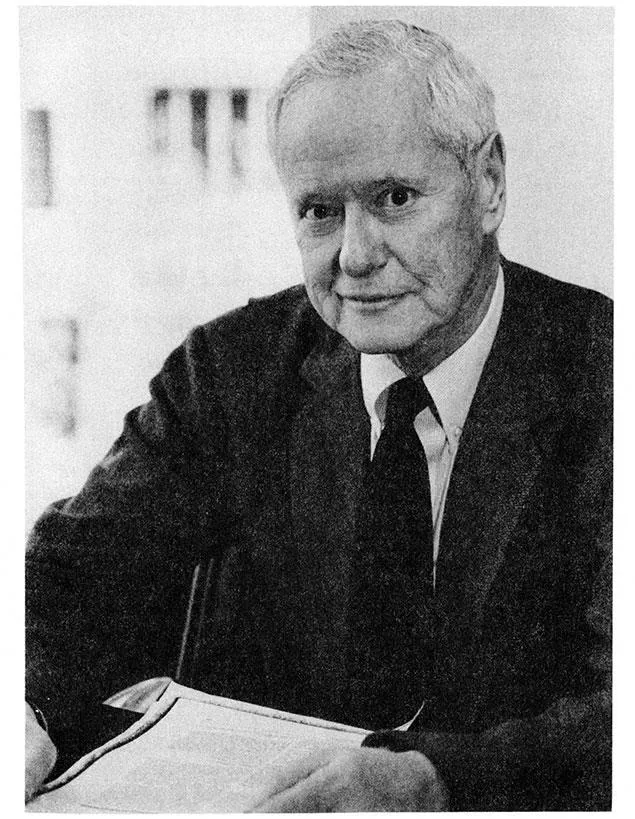
Robert K. Merton
for James S. Coleman my onetime student, longtime colleague, enduring friend and teacher
Writing in her capacity as editor of Advances in Criminological Theory, Freda Adler reminds me that “Social Structure and Anomie” (SS&A) appeared more than half a century ago. And, she went on to say, Volume 6 of Advances would consist largely of papers focused on the tradition of sociological and criminological thought to which it and my further elucidating papers on SS&A have given rise. Hence, the invitation to have me do an introduction. She made it clear from the start that this would not call for a dialogue with what I soon found to be a wide array of pointed critical commentaries and nicely constructive extensions of that theoretical tradition in this volume. Instead, it would call for reflections on the paradigm of SS&A as it evolved over its early decades. That obliged me to warn that such an assignment will exact a considerable price from the reader, for suitable documentation of even the early phases of that still ongoing theoretical development would entail a relentless series of references to my own work and a good number of quotations from it and from commentaries on it; worse still, a detailed biography of the paradigm would surely include a good many footnoted asides as well.
At that point, coincidence took over. For it happens that I have long been intermittently at work on a paper with the provisional title “Opportunity Structures: A Brief Biography of the Concept”1—a paper that, as the years move on, promises (or threatens) to develop into a rather more differentiated monograph with the current working title, “Opportunity Structure: On the Emergence, Diffusion, and Differentiation of a Social Science Concept, 1930s- 1990s.” That comparatively extensive work is a specimen case study of a developing concept examined from the theoretical framework of the historical sociology of scientific knowledge. The present, mercifully shorter conceptual reprise, in the form of a retrospective confined to its first three decades, draws heavily on that work-in-exceedingly-slow-progress and on previously unpublished correspondence as well as on earlier publications in print and on “oral publications in the form of lectures, seminars, workshops and kindred arrangements.”2
The inclusion of oral publications, which in the nature of the form are often ephemeral, is in this instance essential, since the successive publications of the evolving paradigm of SS&A in print were invariably preceded by extensive discussions in lectures and seminars. As I have observed elsewhere in some detail, such direct interaction among teachers, students, and colleagues makes for cognitive micro-environments in which new ideas emerge and develop.3 And, as we shall see in the case of SS&A, it also leads to primary diffusion and development of those ideas in the local micro-environments as distinct from their secondary diffusion and manifold elucidation in the cognitive macro-environment that occur after publication in print. (I resist the temptation to advance conjectures about the patterns of intellectual diffusion that follow from the rapidly increasing use of E-mail and electronic publication.)4
The evolving character of the SS&A paradigm has proved to be central to its historical study by Stephen Cole. As he observes in a sociology-of-science inquiry into the social and cognitive processes through which knowledge grows:
It would be an error to see the theory of SS&A as a single paper. The theory is in fact a research program which Merton developed over a thirty-year period. If one compares the initial 1938 paper with a more recent statement such as the Merton essay in the [1964] Clinard collection, one can easily see that the theory has been added to and modified. It has been a dynamic rather than a static theory, developing in response to its environment.5
I shall not attempt to re-examine all the modifications in the paradigm over the past half-century—an enterprise beyond the limits of this introductory piece. Instead I shall center on the emergence, early diffusion, and initial differentiation of the concept of opportunity structure, primarily in its interaction with related concepts basic to a structural sociology.6
The 1930s: A Key Structural Component in the SS&A Paradigm
Central to the first, 1938, formulation of the SS&A paradigm7 in print was the sociological idea of a continuing interplay and frequent tension between the cultural structure (the distribution and organization of values, norms, and interests) and the social structure (the distribution and organization of social positions or statuses). This, of course, has been generally recognized in the ensuing critical examination of the paradigm. However, a correlative structural idea has often been overlooked. As some of the papers in this volume recognize, the hypothesis of the social distribution of adaptations to the interaction between culturally defined goals and institutionally acceptable means is closely linked to the basic structural concept of differential access to opportunities among those variously located in the social structure.
To avoid the kind of sincere but anachronistic interpretation invited by a long-term retrospect, I return to the condensed 1938 formulation of this conceptual linkage:
For our purposes, this situation involves two important features. First, such antisocial behavior is in a sense “called forth” by certain conventional values of the culture and by the class structure involving differential access to the approved opportunities for legitimate, prestige-bearing pursuit of the culture goals. The lack of high integration between the means-and-ends elements of the cultural pattern and the particular class structure combine to favor a heightened frequency of antisocial conduct in such [disadvantaged] groups. The second consideration is of equal significance. Recourse to the first of the alternative responses [in the fourfold set of adaptations], legitimate effort, is limited by the fact that actual advance toward desired success-symbols through conventional channels is, despite our persisting open-class ideology, relatively rare and difficult for those handicapped by little formal education and few economic resources…. Within this context, Capone represents the triumph of amoral intelligence over morally prescribed “failure,” when the channels of vertical mobility are closed or narrowed in a society which places a high premium on economic affluence and social ascent for all its members.8
It is the evolution of the concept of “differential access to opportunities” into the concept of opportunity structure that holds primary interest for us in this abbreviated biography of a sociological idea. As we now see anew, that 1938 formulation goes on to emphasize without a pause that the paradigm centers on the interaction between aspirations for upward mobility being normatively defined as legitimate for all—”the American Dream”—and on structural differentials in the probability of actually realizing those aspirations; thus:
This last [italicized] qualification is of primary importance. It suggests that other phases of the social structure … must be considered if we are to understand the social sources of antisocial behavior. A high frequency of deviate behavior9 is not generated simply by ‘lack of opportunity’ or by this exaggerated pecuniary emphasis. A comparatively rigidified class structure, a feudalistic or caste order, may limit such opportunities far beyond the point which obtains in our society today. It is only when a system of cultural values extols, virtually above all else, certain common symbols of success for the population at large while its social structure rigorously restricts or completely eliminates access to approved modes of acquiring these symbols for a considerable part of the same population, that antisocial behavior ensues on a considerable scale…. The same body of success-symbols is held to be desirable for all. These goals are held to transcend class lines, not to be bounded by them, yet the actual organization is such that there exist class differentials in [their] accessibility….10
Oral Publication of SS&A in the 1930s Harvard Micro-environment
As this conceptual retrospective leads me to recognize anew, these conjoint ideas of the tension between cultural and social structure were first set forth in lectures before their 1938 appearance in print. And I like to think that their oral publication in a Harvard classroom was truly consequential. For the students in that class not only included the then youngish investment banker Paul H. Nitze (present as a first-year graduate student in a private sabbatical of his own making) but, more in point, the manifestly talented undergraduates Bernard Barber and Albert K. Cohen. And, as we have ample reason to know, while Paul Nitze elected to return for a time to the world of banking and then to remain in the worlds of diplomacy and strategic arms negotiation and Bernard Barber elected to pursue research in sociological theory and the then barely emerging field of the sociology of science, beginning his many contributions to that now rapidly developing speciality with its first comprehensive overview in the early 1950s,11 Albert Cohen saw the criminological light. To the lasting benefit of both disciplines, he elected to devote himself to sociology in general and criminology in particular, leading initially in the mid- 1950s to his classic monograph, Delinquent Boys,12 a seminal work, which, as we also know and as I shall document at some length, has played a crucial role in the evolution of the SS&A paradigm.
The composition of that Harvard class provides self-exemplifying evidence of a basic but often neglected commonsense and sociological theorem: Access to a designated portion of the opportunity structure need not mean realization of that opportunity. Or, put more briefly, access need not mean accession. For that same class happened to include a son of the President of the United States then in the second of his unique four terms in office, but there is not the slightest indication that any part of those oral publications affected John Roosevelt in the least. Thus we see that what the sociologist or the policymaker may identify as prime access to opportunity may not be perceived or defined by the acting individual as opportunity at all or, in the event that it is, that the opportunity may not be sought or again, if sought, may not actually be realized.
Next in point, differential access to opportunity is a probabilistic, not a deterministic concept. As we shall see, the structural sociology that derives from the paradigm for functional analysis noted from the start that the correlative concepts of structural constraints and opportunities provide for individual variations in choices among socially structured alternatives. When George Homans memorably declared that sociology must “bring men back in,” structural sociologists of the probabilistic rather than deterministic variety responded in effect by saying that “individual men and women were never left out.” As Arthur Stinchcombe for one notably put it, in this mode of structural and functional analysis, individuals (“actors” as we described them then or “agents” as they have come to be described increasingly and usefully since) are seen as making (sometimes consequential) choices but choices constrained though not fully determined by social structure.13
We shall be returning to the basic point that the SS&A paradigm centers on rates of structurally generated and constrained behavior, not on the behavior of this or that individual. Still, differing access to options does affect rates of outcomes. It is true that John Roosevelt and Albert Cohen were both subjected to oral publication of the “same” set of sociological ideas and responded rather differently to them. But it is also true that “fully 50%” of the two undergraduates in that Harvard classroom who became sociologists did proceed to extend the SS&A paradigm, as we shall see in the section of this chapter dealing with the evolution of that paradigm in the 1950s. It was then that Albert Cohen went on to extend and deepen the paradigm by showing how social interaction among those subjected to structurally induced pressures leads to patterned collective responses and the emergence of a delinquent subculture.
We will come upon similar patterns of selective response to oral publication of the developing SS&A paradigm in the Columbia cognitive microenvironment over the years. In probabilistic terms, such early access makes for, rather than ensures, the primary diffusion and local development of ideas. Thus, it remains unclear whether the composite social and cognitive texture of vis-à-vis oral publication increases the relative (not, of course, the absolute) extent of primary local diffusion and theoretical development beyond the relative extent of secondary diffusion through interpersonal socio-cognitive networks, or in turn, beyond the relative extent of the manifold cosmopolitan diff...
Table of contents
- Cover
- Half Title
- Series Page
- Title Page
- Copyright Page
- Dedication
- Table of Contents
- Editor’s Note
- Part One Merton Reflects on Anomie Theory
- Part Two The Legacy of Anomie Theory
- Part Three General Articles
- Comments
- Contributors
- Name Index
- Subject Index
Trusted by 375,005 students
Access to over 1.5 million titles for a fair monthly price.
Study more efficiently using our study tools.
Frequently asked questions
Yes, you can cancel anytime from the Subscription tab in your account settings on the Perlego website. Your subscription will stay active until the end of your current billing period. Learn how to cancel your subscription
No, books cannot be downloaded as external files, such as PDFs, for use outside of Perlego. However, you can download books within the Perlego app for offline reading on mobile or tablet. Learn how to download books offline
Perlego offers two plans: Essential and Complete
- Essential is ideal for learners and professionals who enjoy exploring a wide range of subjects. Access the Essential Library with 800,000+ trusted titles and best-sellers across business, personal growth, and the humanities. Includes unlimited reading time and Standard Read Aloud voice.
- Complete: Perfect for advanced learners and researchers needing full, unrestricted access. Unlock 1.5M+ books across hundreds of subjects, including academic and specialized titles. The Complete Plan also includes advanced features like Premium Read Aloud and Research Assistant.
We are an online textbook subscription service, where you can get access to an entire online library for less than the price of a single book per month. With over 1.5 million books across 990+ topics, we’ve got you covered! Learn about our mission
Look out for the read-aloud symbol on your next book to see if you can listen to it. The read-aloud tool reads text aloud for you, highlighting the text as it is being read. You can pause it, speed it up and slow it down. Learn more about Read Aloud
Yes! You can use the Perlego app on both iOS and Android devices to read anytime, anywhere — even offline. Perfect for commutes or when you’re on the go.
Please note we cannot support devices running on iOS 13 and Android 7 or earlier. Learn more about using the app
Please note we cannot support devices running on iOS 13 and Android 7 or earlier. Learn more about using the app
Yes, you can access The Legacy of Anomie Theory by Freda Adler, William S. Laufer, Freda Adler,William S. Laufer, Freda Adler in PDF and/or ePUB format, as well as other popular books in Social Sciences & Criminology. We have over 1.5 million books available in our catalogue for you to explore.