![]()
Chapter 1
The Design Technology Curriculum
Design Technology is a subject that has undergone dramatic changes over the past 15–20 years. These changes have made a significant impact on the dyslexic person and other learners who require some form of differentiation. The changes were based on the belief that the introduction of a design-led syllabus could result in the raising of pupils’ attainments, and also enhance students awareness of career possibilities in a design industry. No longer was Design Technology to be perceived as only a practical craft skills subject, intended mainly for pupils who would pursue apprenticeships in a manual trade. Indeed, the recession throughout the United Kingdom during the 1980s had a dramatic effect on the number of these apprenticeships available. There was, therefore, a need to raise the profile of the subject of Design Technology in schools in order to meet the new demands of industry.
Design Technology can be seen as a creative and a practical subject. This applies to all levels of the examination system and, in order to understand the impact that dyslexia can have on a learner in Design Technology, it is useful to understand the rationale of the curriculum and the challenges it can set for both learners and teachers today.
The Design Technology curriculum
Although the Design Technology curriculum differs between Scotland and the rest of the United Kingdom, the reasons for the change and adaptation of the courses have the same background.
One of the main changes and challenges within the syllabus of craft and design was to introduce a design-led course. This concentrated on exploring the design process from the initial conception of an idea through to the completion of the manufactured product. The courses which pupils can sit involve a combination of practical craft skills and a knowledge and understanding of the design processes, including the appropriate theory for the applications of manufacturing methods and theory required for use of materials and tools.
It is important to understand the historical background to Design Technology in order to see how much the subject has progressed over the last two decades. One of the individuals who was involved in Scotland with this huge transition over the years is Peter Barret, programme coordinator of the BEd (Hons) Design Technology in Education at Moray House, Edinburgh University. He gives an insight into why changes happened and what is the current reality of Design Technology and differentiation of learning within the curriculum.
Reasons for change of direction
When did the change take place within the subject?
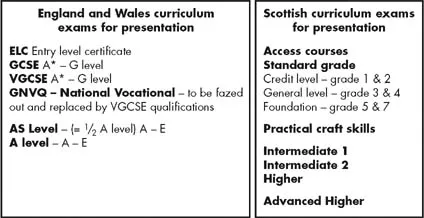
The subject has undergone quite a transition from 1977 to 2003 throughout the United Kingdom. In 1977 the curriculum was called (and concentrated on) Practical Craft Skills and the 1980s saw the development of new qualifications which created an opportunity for change. In 1986, England, Wales and Ireland introduced the GCSEs followed by the introduction in Scotland of Standard Grades in 1987. The introduction of these new syllabuses provided an opportunity to create a Design Technology curriculum.
Why was it felt necessary to introduce new elements of the course?
It was felt that there were three main areas that could benefit from a change in strategy:
- Educational benefits. The introduction of the design process was a very important element of the new course. It gave an opportunity to raise the intellectual status of the subject and encourage the theory and investigation of design and the processes which were involved.
- Industrial benefits. Given the growing popularity of design within society and the rapidly progressing field of design in industry, it was felt that it would be very beneficial to start the educational process in school where processes and techniques could be learnt and then developed in higher education on design degrees. The skills learnt both in a practical and theoretical nature were being used in the ‘real’ world, and were considered to be relevant in industry.
- Equal opportunities. There has been a very positive encouragement from 1987 to recruit female teachers. It is also now possible for individuals who are themselves dyslexic to become teachers.
Transition of change
How difficult was it to bring about the transformation of a subject that was traditionally seen as a practical, skills-based curriculum?
There were changes which were happening within the subject area as a whole: Mechanical Engineering became Technological Studies; Technical Drawing became Graphic Communications; Wood- and Metalwork became Resistant Materials and Craft & Design.
During these changes the introduction of the design process was met with some resistance within schools from staff who had no previous background in design. They suddenly found themselves in a position of curriculum upheaval in their subjects and had to adapt, digest and teach a course whose profile was being raised in a more academic way than previously. This must have been tackled successfully as we now have within our education system some excellent Design Technology departments throughout the UK which embrace the whole design process including the manufacture of craft work. It is when the subjects are presented in a creative and exciting way that they offer the best potential for all learners. It is particularly useful for those pupils with a differentiated learning style, who will benefit from being challenged intellectually and also within their craft skills.
Was there a comparison made with the English/Welsh and Northern Irish curricula for the subject? Who and what were the deciding factors in altering the course in Scotland?
Historically there has been a difference between the Design Technology curriculum of England, Wales and Northern Ireland and that of Scotland. The Scottish system has always been independent and comes under the authority of the SQA (Scottish Qualifications Authority). It is this body that sets the examinations and the standards within them for the whole of Scotland. In the rest of the United Kingdom the examinations and courses are set by various organisations from which schools can choose and which are accredited by the QCA (Qualifications Curriculum and Assessment):
- AQA
- Edexcel Foundation (which joined with Pearson in June 2003)
- OCR
However, despite the difference of examination authorities and the curricula which they all present, there are common areas of study within Graphic Communications, Craft & Design and Technological Studies.
In Scotland there is not an inclusion of food or textile technology in the Design Technology curriculum; these subjects are covered by a different department.
There is an emphasis on the four-year BEd (Hons) course for student teachers to be aware of differentiation within a classroom. This should, hopefully, have a very positive effect for pupils with learning differences within our subject area. Was the department aware that the Scottish Office funded an HMI report, ‘Preparing to Teach Literacy’ (HMI 2002). This was published in March 2002 and quotes that it was ‘An aspect review of initial teacher education: the quality of the preparation of student teachers to teach literacy from pre-school to S2’.
What are your views on the challenges that can arise from the literacy aspects of design technology?
There is a very serious key issue of what should be taught and how to teach it. In England and Wales there is at present an emphasis devoting more time in the curriculum towards literacy and numeracy skills. The subjects within Design Technology provide an excellent context for numeracy and literacy:
- numbers for calculations
- literacy for reading and listening to instructions and also for research.
Relationship with industry
What have been the most positive points in the change of direction for Design Technology?
Schools that have a design led Design Technology department have embraced the positive aspects of the new type of courses, and some of the pupils in these schools have progressed to high-level design careers following higher education design courses offered in many universities in the UK.
The author's personal experience in the design industry has demonstrated to her that the techniques that are used in a pupil's craft and design folio are very relevant to industry. The folio consists of working on:
- briefs
- specifications
- cutting lists
- initial ideas
- evaluations
- concepts
- synthesis of concepts
- working drawings.
All of these are areas upon which pupils now concentrate in their design folio and are common practice within the design industry. Also the curriculum of Graphic Communications is very relevant to industry. Pupils are working with computer-aided design (CAD), computer-aided manufacturing (CAM) and computer-aided graphics (CAG) programs that are currently being used in design studios in industry and architectural companies.
Rising to the challenge of the Design Technology course
In your view are educational authorities and schools maximising the full potential of the curriculum on offer as it was envisaged?
Unfortunately, no they are not. There has been some excellent work by some education authorities; however, many Design Technology departments are simply trying their very best with the resources available. One of the immediate and main issues that appears to be felt by teachers is containing ‘problem’ pupils or ‘difficult’ classes.
In order for the subject to make real headway and help students fulfil their potential there is a need for teachers to work together with other Design Technology teachers to consider key issues and common approaches. It is necessary that this should be led by individuals who have expertise and/or successful experience.
From the perspective of initial teacher education, what is the most challenging aspect for pupils and teachers within the CDT curriculum?
Achieving a balance of theory and practice is the most challenging. There is a perceived view that pupils have to spend a lot of time out in the workshop. From our viewpoint, the rise of the subject's practical craft skills is a real concern because although pupils enjoy the practical work they apply no design knowledge and understanding. There is also a difficult issue for Technological Studies, and the biggest concern there is that there is no broader alternative for those pupils who do not have strengths in maths or science. It is no longer possible to sit this exam at foundation level, and this alienates pupils who may actually excel in a more practicaly based technological course. This, therefore, can present a barrier to some students achieving their potential in Design Technology.
Students undergoing initial teacher education
The biggest challenge for student teachers is to be able to teach all four subjects at all levels. If student teachers are coming directly from school to teacher training their experience of craft skills is very limited. There is a great deal of variation between these courses and they present challenges to both the logical and creative sides of our brains.
Government, local authorities and teachers
The biggest challenge of all is how to improve the learning and teaching while we continue to teach the variety of demanding subjects within the Design Technology curriculum across different levels of exams.
The focus will always remain on the content of lessons and the knowledge and skills that student teachers and teachers need to have. So much of the teaching time is taken up with managing resources and ‘fire-fighting’ problems with equipment and materials, and computers that do not work! All of these factors can prevent teachers from addressing pupils’ needs. If a class of 20 is working on individual projects, then this should maximise the individual learning experience. However, if this means that there are only two minutes of individual support given in a 50-minute lesson then the quality of learning is very limited. Providing real differentiation for groups of ability levels (let alone individuals) is very difficult. Most teachers would acknowledge the needs of pupils with learning difficulties, and despite an obligation to provide specific help, seen against this background there is little surprise that more is not being done. It is only recently that attention has been drawn by HMI to the equally i...