- 368 pages
- English
- ePUB (mobile friendly)
- Available on iOS & Android
eBook - ePub
About this book
The text argues that cities are open to many forms of order and disorder both from within the city and outside. They represent cities potentials as well as their problems. It challenges the assumption that cities are threatened by disorder from below and that they might be ruled by 'order' imposed from above.
Information
CHAPTER 1
The heterogeneity of cities
by Steve Pile
1 Introduction: living with difference
2 From the city…
2.1 Is city life ruled by disorder?
2.2 Harlem: isolated ghetto or global city?
3 …to sweet suburbia
3.1 Suburban escapism: haven or hell?
3.2 Ideal homes: paradise or prison?
3.3 Whose suburbs?
4 Conclusion
References
Reading 1A from Elise or The Real Life Claire Etcherelli
Reading 1B ‘ 125th Street’ Sharon Zukin
Reading 1C ‘Introduction to Visions of Suburbia’ Roger Silverstone
Reading 1D ‘Women’s experiences and negotiations of suburban planning’ Deborah Chambers
1
Introduction: living with difference
In her novel, Elise or The Real Life, Claire Etcherelli writes about the relationship between a white Frenchwoman and an Arab man in Paris in the 1950s. For writer and critic Liz Heron, Etcherelli’s novel is significant because it describes the tensions and contradictions that arise out of cross-cutting class, ‘race’ and sexual relations in the city (Heron, 1993, p. 3). Indeed, it is these tensions and contradictions that make Paris life real for Elise, Etcherelli’s heroine. Once in Paris, Elise takes a job on a car assembly-line. There, she begins a love affair with a co-worker, Arezki, who is Algerian. The story is set in the late 1950s, at a time when the Algerians were engaged in a bitter and brutal anti-colonial struggle—against the French. As we read the following extract (which appears in Liz Heron’s anthology, Streets of Desire), we can glimpse how French colonial domination abroad reverberated around Paris: the heart of Empire.
EXTRACT 1.1
CLAIRE ETCHERELLI: FROM ELISE OR THE REAL LIFE
The assembly line came to a halt and the siren went off. Mustapha brought me the gasoline cloth Arezki had given him. It was a signal. He wanted to speak to me.
I picked up my coat and left for the Port d’Italie. I felt the need to walk and talk out loud. There were gusts of wind that raised your hair on end and sliced the skin of your face, beautiful girls in warm coats who, height of injustice, were made even more beautiful by the cold and their winter clothes, Algerians walking duckfooted in spring jackets with their collars turned up; there were cops at the entrances to the Metro checking identity cards, and the windows—from the Prisunic to the most dilapidated grocer—were caught up in a fever of garlands and lights. A happy throng, well-nourished, wearing fur-lined boots and interlined coats, who spent August by the sea and wore spring clothes at Easter, a throng that paid for its leisure with the sweat of its brow, walked, sat at café tables, and looked the other way when into its territorial waters slipped ill-nourished types who wore Easter clothes in November and who, for all their brow’s sweat, earned only enough for bread. These species just happened to gather in special neighbourhoods—shanty towns, run-down hotels—and, by nationalities: Algerian, Spanish, Portuguese, and, naturally, French. They also fell into other categories: alcoholics, idlers, tuberculars, degenerates. There is something to be said for the ghetto. But sometimes these types managed to sneak up on you in the Metro, in the café, and in addition, they were noisy, lost, or disgustingly drunk. And occasionally, in these caricatures of humanity, in these suffering bodies mutilated by misery, in the cold dark rooms, between the dirty laundry and the drying laundry, one of these dregs carried inside him—by luck or miracle—the gleam, the flame, the spark that made him suffer even more. The spirit breathed there as much as anywhere; intelligence either developed or died, crushed.
These thoughts, the cold, my hair blowing around my neck, Arezki’s disappearance, the Magyar’s blood and the smell of the factory, the four hours on the line stretching ahead, the still unread letter from Grandmother, all this is life. How gentle it had been, the previous one, a little blurred, far from the sordid truth. It had been simple, animal, rich in dreams. I said ‘one day…’ and it was enough.
I am living this day, I am living the real life, involved with other human beings, and I suffer.
Source: Etcherelli (undated) in Heron (ed.), 1993, pp. 224–5
This story evokes the powerful emotions of a woman seeking to come to terms with the real life Paris confronts her with. What is distinctive about this real life is the way in which the city, Paris, brings together people from diverse backgrounds and concentrates them in urban space. We can also see that Paris makes some people occupy the same space—in this instance, the spaces of the car assembly-line and the cold, wet streets. In this way, the city opens up the possibility for different people to meet one another. In this story, we can see just how exhilarating and how painful these experiences can be. But there is something more in this tale than the star-crossed love affair between people from different cultures.
ACTIVITY 1.1 Read the further excerpts from Claire Etcherelli’s Elise or The Real Life in Reading 1A at the end of this chapter. While you are reading, think particularly about what Paris—and its different neighbourhoods, such as Port ďItalie and Stalingrad—might have been like to live in.
In these stories, we can see that the city of Paris juxtaposes different feelings (Allen, 1999a). Here we can see Arezki’s fearful watching out for cops. And how the lovers’ happiness transformed the streets. Further, we can also see how, when confronted by the heterogeneity of Parisian people, Elise turns away and tends to caricature them: ‘alcoholics, idlers, tubercular, degenerates’. Though not indifferent to their plight, Elise cannot see them as individuals. ‘Cityness’—Paris life—seems to prevent people from being seen as individuals. Instead, they are ‘caricatures of humanity, in these suffering bodies mutilated by misery’. In these respects (and more), we can see that Elise’s feelings arise from the ways in which cities are heterogeneous, constantly mixing differences (Amin and Graham, 1999). However, the ways in which people react to the heterogeneity of the city are not easy to predict. Even while Elise falls in love with Arezki, the police are arresting and ‘disappearing’ Algerians, and there are murderous riots. Sure, city life can lead some people to be indifferent or more tolerant, but it can also intensify racist hatred.
It is not just people of different ethnicities and sexes whom Paris brings together, though. You can see how Etcherelli records, with some bitterness, the social polarities that exist between classes in 1950s’ Paris. Social polarities come in other forms too: Elise, herself, at the same time that she feels sympathy with social outcasts also feels disgusted by drunks. And these social polarities are mapped into social geography of the city. There are distinct neighbourhoods in Paris—and these are racialized: ‘Algerian, Spanish, Portuguese, and naturally, French’.
Clearly, the city brings different people together and mixes them up. Paradoxically, however, the city is also a machine for producing differences amongst people—differences which then become the basis on which they are kept apart from one another. In this story, Algerians arrive in Paris because they have links through French imperial connections. Once they are there, they are classified as foreigners and potential terrorists—and, therefore (dangerously) different. And they come to live in segregated parts of Paris. Like others. Like them. The question for us, in this chapter, is how we are to understand this paradox of mixing and separation.
From our reading of Etcherelli’s account of 1950s’ Paris, it is possible to make some preliminary observations about the heterogeneity of cities and the materiality of city life. We can make three key points.
First, we can note from this cross-section that Paris is a city of contrasts—from what we have read, we could list alcoholics, idlers, tuberculars, degenerates, writers (Etcherelli), communists, car workers, the police, shoppers, the dead and so on. There are also many different activities, from lovers strolling to acts of terrorism, from leisure to work. All the people, all the events, all the experiences, all the stillnesses and movements, all the chaos, all the dangers: it’s often too much to take in. So, paradoxically, cities are both exhilarating and depressing, enthralling and overwhelming. Nevertheless, these narratives point to the importance of recognizing the differences in people’s experiences of city life.
Second, cities combine people whose experiences have very different felt intensities. The idea of ‘felt intensities’ immediately evokes people’s subjective experiences—whether these are about the intensity of racism, or of love, or of danger. However, there is more to the idea of ‘felt intensities’ than this. The city is more than the backdrop for people’s feelings. Instead, the city itself—cityness—provokes felt intensities. For example, as Etcherelli has her characters thread their way through different parts of Paris, she brings to life the (romantic? violent? paranoid?) intensity and (class, racial, political) diversity of the city’s street life. This brings us to the next point.
Third, it is possible to discern from Etcherelli’s stories something of the intensification of social relationships in cities. 1950s’ Paris does not simply contain different histories and geographies, it also brings them together—and, indoing so, puts ‘differences’ into relation to one another. Differences might be ignored or exaggerated, avoided or embraced. Whatever, by concentrating and exaggerating different histories and geographies, cities intensify social relationships. And these social relations are also power relations. Their intensification, then, can aggravate social tensions: as workers and Algerians struggle for justice—supporting or clashing with each other, being supported or oppressed by other classes, other nationalities. This city, indeed, can be unruly. One consequence might be that governments impose order by diffusing the tensions that arise from the intensification of social relations. Thus, it is possible to see why a violent anti-colonial struggle in Algeria would provoke the authorities into excessive restrictions on people’s—especially Arab people’s—movements through the city. Or why class struggles in Paris might provoke urban planners into settling the working classes in estates on the urban periphery (see Chapter 2 of this book). In this way, we can begin to see how different spaces within the city might emerge; how it is that different histories and geographies might overlap or sit side by side or be kept apart.
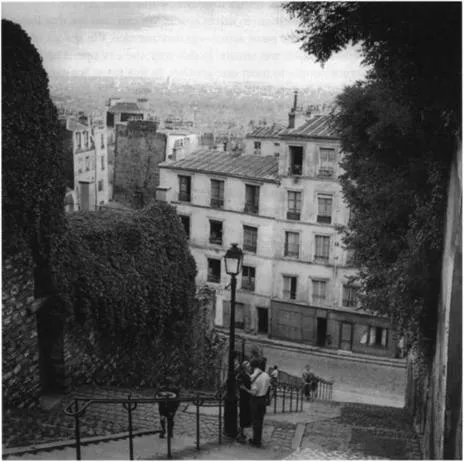
FIGURE 1.1 On the steps of Montmartre, Paris, 1950s
Let us think about this last point.
ACTIVITY 1.2 Look back over Reading 1A. This time, look for the varied experiences that Elise and Arezki have of Paris life. Can you pick out the ways in which different groups are brought together—or kept apart—in Paris? Think, too, about the ways in which certain relationships are intensified, moderated or suppressed.
Sometimes, as Elise and Arezki walk from neighbourhood to neighbourhood, different communities blend into one another and it is not at all clear where one has ended and the other begun. Sometimes, different people occupy the same place, but simply walk past one another, not even noticing that they are there. Other times, areas are sharply demarcated and some groups will have nothing to do with one another. By occupying—or avoiding—certain places, Elise and Arezki can negotiate the intensification of social relationships in certain places, either by occupying sites of pleasure or calm, or by avoiding those where racial hatred is concentrated. However, city spaces can rarely be mapped so clearly, so unambiguously.
Even if we take one of the clearest distinctions in the social geography of cities—between the inner city and the suburb—we cannot be sure that one necessarily represents order and the other disorder; one community, the other difference; one safety, the other danger. An argument that suggests that cities are heterogeneous begs questions about the relationships between order and disorder, community and difference, safety and danger that make different urban spaces different. In this way, we can glimpse the way in which urban spaces are produced through the negotiation of heterogeneity: whether people seek community or difference, whether they embrace the excitement of urban disorder or the calm of urban orderings. More than this, we might begin to understand how it is that the inner city and the suburb have come to be seen—and produced—as such different spaces within the city.
This chapter, then, seeks to re-interpret this social geography of the city by thinking about the ways in which heterogeneity creates distinctive urban spaces that are constituted by the ways people negotiate
- relationships with others
- the city’s spatial relationships (inside and out), and
- the tensions of city life.
However, the idea that the city mixes up people from different backgrounds and intensifies social interactions—thereby becoming a place of order and disorder, community and difference, of excitement and danger—leaves us with the question of how exactly differences between urban spaces are produced (a question that will concern us throughout this book). Let us start our analysis, then, with the supposedly most heterogeneous and disorderly parts of the city: the inner city.
2
From the city…
2.1
IS CITY LIFE RULED BY DISORDER?
In his classic concentric zone model, the urban sociologist Ernest Burgess detects an underlying order in the social pattern of the city (see Figure 1.2). And, despite its age, it is this image that continues to dominate conceptual understandings of the social geography of the city. In Zone I (titled Loop, after Chicago’s district), business is transacted. Mea...
Table of contents
- Cover Page
- Title Page
- Copyright Page
- The Open University Course Team
- Preface
- Introduction
- Chapter 1: The heterogeneity of cities
- Chapter 2: Urban ‘disorders’
- Chapter 3: Walled cities: surveillance, regulation and segregation
- Chapter 4: Divisive cities: power and segregation in cities
- Chapter 5: City politics
- Chapter 6: The unsustainable city?
- Chapter 7: Administered cities
- Chapter 8: On orderings and the city
- Acknowledgements
Trusted by 375,005 students
Access to over 1.5 million titles for a fair monthly price.
Study more efficiently using our study tools.
Frequently asked questions
Yes, you can cancel anytime from the Subscription tab in your account settings on the Perlego website. Your subscription will stay active until the end of your current billing period. Learn how to cancel your subscription
No, books cannot be downloaded as external files, such as PDFs, for use outside of Perlego. However, you can download books within the Perlego app for offline reading on mobile or tablet. Learn how to download books offline
Perlego offers two plans: Essential and Complete
- Essential is ideal for learners and professionals who enjoy exploring a wide range of subjects. Access the Essential Library with 800,000+ trusted titles and best-sellers across business, personal growth, and the humanities. Includes unlimited reading time and Standard Read Aloud voice.
- Complete: Perfect for advanced learners and researchers needing full, unrestricted access. Unlock 1.5M+ books across hundreds of subjects, including academic and specialized titles. The Complete Plan also includes advanced features like Premium Read Aloud and Research Assistant.
We are an online textbook subscription service, where you can get access to an entire online library for less than the price of a single book per month. With over 1.5 million books across 990+ topics, we’ve got you covered! Learn about our mission
Look out for the read-aloud symbol on your next book to see if you can listen to it. The read-aloud tool reads text aloud for you, highlighting the text as it is being read. You can pause it, speed it up and slow it down. Learn more about Read Aloud
Yes! You can use the Perlego app on both iOS and Android devices to read anytime, anywhere — even offline. Perfect for commutes or when you’re on the go.
Please note we cannot support devices running on iOS 13 and Android 7 or earlier. Learn more about using the app
Please note we cannot support devices running on iOS 13 and Android 7 or earlier. Learn more about using the app
Yes, you can access Unruly Cities? by Chris Brook,Gerry Mooney,Steve Pile in PDF and/or ePUB format, as well as other popular books in Social Sciences & City Planning & Urban Development. We have over 1.5 million books available in our catalogue for you to explore.