- 208 pages
- English
- ePUB (mobile friendly)
- Available on iOS & Android
eBook - ePub
Transnational Classes and International Relations
About this book
An exciting and original analysis of the development of capitalist classes, such as the Freemasons, that cross national boundaries in the global political economy. This innovative book focuses on:
* an historical perspective on class formation under capitalism and its transnational integration
* international relations between the English-speaking centre of capital and successive contender states.
The author develops a broad-ranging and thorough understanding of class in the process of globalization. He does so within several theoretical frameworks shedding much light on this important topic.
1
Commodification, socialisation and capital
The connection of the individual with all, but at the same time also the independence of this connection from the individual, have developed to such a high level that the formation of the world market already at the same time contains the conditions for going beyond it.Karl Marx
In this chapter, we will introduce the most abstract, general determinants of capitalist development, the inner structure of what is called ‘capital-in-general’. The above quotation from Marx's Grundrisse (1973:161) in fact refers to three of these in a nutshell.
First, the process of commodification. This means that the lives of ever more people are determined by tendentially world-embracing market relations (‘the connection of the individual with all’). Goods produced, services rendered, but also the raw material of nature and human beings as such, are thus subjected to an economic discipline which defines and treats them as commodities.
Second, the elementary exchange relations by which a market connection is established, in the course of their development create webs of complex, quasi-organic interdependence in which the initial division of labour implied in exchange becomes objectified in knowledge, machinery, and organisation (‘the independence of this connection from the individual’). This refers to the process of socialisation. Socialisation (Vergesellschaftung) comes about either by capital accumulation or by state action. However, under a commodity economy (ultimately, the capitalist economy), the growth of an interdependent, global social system remains subject to competitive strategies for profit and control. The planning of a partial structure of socialisation—say, a firm, or a social security system—cannot be generalised for the world economy as a whole, because it continues to be mediated by market relations and private appropriation. (Hayek's claim in The Road to Serfdom (1985) that large-scale economies cannot be planned at all due to lack of knowledge implies that, even within a single firm or state institution, internal exchanges should be of a market type.) Clearly, the system of multiple state sovereignty, which historically has emerged along with the world market, also rebels against unified direction.
Yet (and this is the third element), the ever-tighter imbrication of technical labour processes as a consequence of competitive profit strategies exerts a continuous pressure towards transcending the limits of the separate structures of socialisation. The more the particularity of separate firms (‘particular capitals’) is suspended by generalising the nature of the labour process towards the exploitation of abstract, polytechnic labour (which is one way of saying that particular capitals conform to capital-in-general), the greater the potential advantages of eliminating the waste of resources implied in head-on competition. In this sense, the world market ‘at the same time contains the conditions for going beyond it’. Social dislocation and the ongoing destruction of the biosphere must be expected to activate this potential at some point in the future. But there is no historical necessity which will assure that this will usher in a functioning new order to replace the old, or that it will do so in time. Powerful ideological processes such as fetishism, which turns the capitalist economy into a quasi-natural phenomenon that cannot be interfered with, stand in the way of democratic regulation. Likewise, pressures to integrate state functions run upon the reality of the unique ways in which countries and regions have historically developed sources of authority and internal cohesion and in that context, deal with the class conflicts provoked by the imposition of the discipline of capital.
All this will be worked out below. We begin with commodification as a historical process in its own right, without for the moment concerning ourselves with its dialectical opposite (which is socialisation).
Commodification and community
Our starting point is that commodification begins on the limits of hitherto closed communities, at their points of contact with other communities or members of other communities (by ‘community’, we mean the web of reproductive/affective relations crystallising around the household; see also Weber 1976: ch. 3). This applies to primitive, feudal, or patrimonial society, but also to e.g. state socialism. The idea can be found in Marx (MEW 23:102), Weber (1976:383), and Polanyi (1957:58). Trade according to the latter is intimately bound up with adventure, hunting, and piracy, so that the ‘economic’ is in reality embedded in patterns of behaviour highly charged with symbolic meaning; while geographic conditions and pre-existing patterns of sexual and age-related division of labour already determine who can be a hunter, adventurer, and hence, a trader, long before anything like a market economy has come into existence.1
As commodification proceeds, ever more aspects of community life are restructured by free, equivalent exchange relations. These in turn presume private property, the full ownership of the item to be exchanged. Thus one after another, qualities of people and of goods and services are turned into marketable items to be sold and bought, ultimately in the world market. The consequences for the cohesion of the community were analysed by Marx and Engels in the Communist Manifesto in terms of the destruction of idyllic and patriarchal community relations and their tendential replacement by the only remaining social bond, the cash nexus (MEW 4:465). In Polanyi's words, the commodity form ‘was to annihilate all organic forms of existence’ and the freedom of contract ‘meant that the noncontractual organizations of kinship, neighborhood, profession, and creed were to be liquidated’ (1957:163).
Now, even apart from a consciously protective reaction of society to this trend, human beings will never entirely be substituted by what Marx and Engels in an earlier work called ‘world-historical, empirically universal individuals’ (MEW 3:35) as a consequence of commodification. There remains a community substratum on which commodified relations continue to rest, even if much of the actual community has become an ‘imagined’ one, such as nationality (Anderson 1983). Henri Lefebvre's notion of ‘everyday life’, by which he means the set of relationships and popular notions which most directly relate to natural/organic existence, such as living space, family and sexuality, the temporality of life, etc., also refers to this (quasi-)community substratum (Leithäuser 1976). Economically, this is the sphere of use values, ordered by their own logic of material and mental reproduction rather than by the (market) logic of exchange value, which is the vantage point of commodification. Here the regeneration of humanity takes place in all its aspects; it is the source of energies and potentialities which are subject to commodification and, eventually, to exploitation and appropriation. Hence everyday life contains an economy, too—one which Polanyi (1957:47–53) describes by such terms as reciprocity, redistribution, and householding. Commodification, however, tends to progressively stifle the instincts and emotions that structure everyday life, resulting in alienated, externally controlled, ‘functionalised’ behaviour and objectively pauperised human relations (Leithäuser 1976:52–3).
Still it is important to logically distinguish (quasi-)community relations from the commodity relations by which they are penetrated and transformed (but never entirely negated). The separation of private from public space in the nineteenth century, which demarcated the bourgeois home as a refuge from the harsh world of work and business, can be seen as an attempt to draw a line in this respect (Saisselin 1984:29). But psychoanalysis, too, has been interpreted as an attempt to rediscover intimacy, self-knowledge, sensuous and emotional satisfaction in a context of social relations one-sidedly moulded by commodification (Zaretsky 1977:102–3). In the 1970s, ‘flower power’ and Eastern religions performed a comparable function, and today, we may think of ‘New Age’ in the same way. Inevitably, however, such countermovements remain within the coordinates of the general trend. As Seeley (1962:198) rightly observes in his essay on the ‘Americanization of the Unconscious’, ‘the threats of manipulation from without are countered but fatally compounded by self-manipulation’.
While the subordination of social relations to the cash nexus, and the parcellisation of people's lives and capacities into marketable items, thus develop in a dialectical fashion, the unity of productive and reproductive existence is by and by destroyed. Wage labour may be employed per hour (or at piece-rates, which is an attempt to outpace the sixty-minute hour)—but whether this hour is embedded in a working life balanced by other concerns of human existence, care for the future, provision for childbirth, illness or retirement, is not necessarily part of capitalist calculation. The contemporary worker, Rosenstock-Huessy writes (1961:473–4), can no longer relate the contents of a job in any way to his/ her personal life, or even to the notion of a life-work. He/she is forcibly disinherited from reproductive responsibilities, which may be reconquered by forms of socialisation (welfare state or self-help arrangements), but which are not part of, and even are in principle at odds with a fully commodified existence and the tendency towards a twenty-four hour economy.
Commodified reality andfetishism
The spectre of an atomised society composed of disoriented, dehumanised individuals, obtained ample representation in the arts, especially in the early twentieth century. In Cubist painting and sculpture, human beings are depicted as robot-like recompositions of machine parts, cloth, and straight lines, from which organic vitality seems to have been removed (see Figure 1.1). In James Joyce's 1922 novel Ulysses, a kaleidoscopic panorama of the inner world of a group of Dubliners merges into snapshots of their aimless wanderings through the city. Is this really the human condition? Indeed, isn't it a miracle that there exists a mechanism by which the fragments of humanity are connected again into a functioning whole?
Here precisely the magical connotations of the market enter the picture. It is the market which supposedly reunites the fragmented human particles, whose inner world is as disjointed as their appearance, into a functioning totality. But the very fact that it is an invisible hand that supposedly brings order to life, if it is not the arbiter of life altogether, reveals the profound alienation underlying the market ethic and the implicit abdication of conscious direction of social reproduction at large. In this respect, contemporary society retains a primeval helplessness in relation to what it treats as forces of nature. As a result, even the wealthiest and most powerful inhabitants of the developed capitalist world, who have at their disposal all the accumulated technology of past centuries, turn into fearful, superstitious primitives when confronted with the vacillations of the Dow Jones index.
This phenomenon in which modern society resembles the most primitive community, is called fetishism. Fetishism is the ascription of animate spirit and magical powers to dead objects. It is a particular form of alienation—the process by which mental and material products are exteriorised and separated from the producers in such a way as to confront them as alien forces rather than as things or ideas of their own making (MEW 23:85; Hinkelammert 1985). Commodity relations presuppose the separation of the product from concrete social relations, disarticulating the commodities from the relations of production that still were
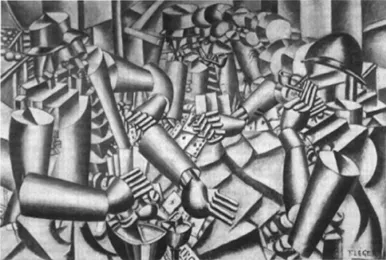
Figure 1.1 Fragmented humanity: Soldiers Playing at Cards (1917) by Fernand Léger (1881–1955). © 1998 Fernand Léger, c/o Beeldrecht Amstelveen.
largely transparent in earlier types of society. Commodities (consumer goods first of all) travel apparently on their own account, carrying with them certain qualities which evoke admiration and associations of happiness and fulfilment—rather than the traces of how and under which particular conditions they have been produced. But fetishism is not just mirages and miracles. It is also rational in the sense of clinging to the only acknowledged regulator of commodified society, the market mechanism. There is, in other words, a logic to economic orthodoxy which is however compounded by superstition.
Fetishism in cultural anthropology belongs to a complex of phenomena of which two are of particular importance for understanding the ‘magical’, fetishistic quality of commodity circulation (and, ultimately, of capital as its most developed form):mana and taboo. Taboo means that if there is direct contact with what is sacred, feelings of awe and fear will be awakened which narrowly circumscribe the behaviour that is considered appropriate (van Baaren 1960:123). In dealing with the world economy, governments and government officials indeed approach the swings of capital and commodity markets as tokens of the gods, which one may hope to placate but never should challenge. Those closest to the supernatural world even claim to speak in its name, as when the president of the German central bank, Tietmeyer, in a comment on EU countries trying to manipulate the books in order to qualify for monetary union, warned that they would be ‘heavily punished’ by the markets and that if a country were to sneak out of EMU later, ‘the markets will not forget that for a long time’ (FT, 8 October 1996).
Although the increasing concentration of capital renders the real players in the world economy perfectly visible (and Keynesian counter-orthodoxy of the 1950s and 1960s pioneered a managerial attitude to it), the taboo on imposing any form of regulation has been reaffirmed in the more recent period. The incantations of today's professional economists serve to keep alive the idea that the workings of the market economy are only interfered with at one's peril. Even obviously inhuman conditions of production, such as child labour, are declared beyond regulation in the name of the free market (e.g. by the current head of the World Trade Organisation, Ruggiero, FT, 31 May 1995).
Mana refers to a magical, supernatural force operative in things and persons because they have been touched by a holy spirit. Things or people which contain mana become ‘effective, true, real, remarkable, special’ etc., and exert a magical attraction as a consequence (van Baaren 1960:120). This should not be thought of as something which exists only in remote, unexplored outposts of civilisation. Secularisation, which we take for granted when it comes to contemporary society, in fact has redefined rather than obliterated the metaphysical. Today, the sphere of the magical and of aesthetic illusion (‘aura’) is increasingly functionalised to foster ostentatious, intensive consumption by means of advertising and life-style reporting (Saisselin 1984: ch. 3; Debord 1967: 17). Thus aestheticised and sanctified (but also, as we shall see presently, eroticised), commodities carry the spark of the divine to the consumer, bestowing mana on whomever owns an object marked by the right sign.2
People accordingly tend to view themselves as commodities in all respects, not just as labour power. Shaping their identity by what may be termed commodification of the self, they become the conscious subject of their own individuality, defined entirely from the viewpoint of its success in the universal marketplace that is life. In the spirit of Cubist painting, they are living assemblies of fashionable cosmetics brands, dress and dress-related attributes, means of transport, etc. Ultimately the commodity economy in this way encourages every individual to become a living advertisement of him/herself as a marketable item.3 The elementary life-cycle indeed is turned into a series of marketing events altogether. Thus a Dutch newspaper, commenting on the veritable advertising campaigns that increasingly replace the simple birth announcem...
Table of contents
- Cover
- Transnational Classes and International Relations
- RIPE series in global political economy
- Full Title
- Copyright
- Dedication
- Contents
- Series editors' preface
- List of tables and figures
- Acknowledgements
- List of abbreviations
- Introduction
- 1 Commodification, socialisation and capital
- 2 Capital accumulation and class formation
- 3 The Lockean heartland in the international political economy
- 4 Transnational class formation and historical hegemonies
- 5 Cadres and the classless society
- Notes
- References
- Index
Trusted by 375,005 students
Access to over 1.5 million titles for a fair monthly price.
Study more efficiently using our study tools.
Frequently asked questions
Yes, you can cancel anytime from the Subscription tab in your account settings on the Perlego website. Your subscription will stay active until the end of your current billing period. Learn how to cancel your subscription
No, books cannot be downloaded as external files, such as PDFs, for use outside of Perlego. However, you can download books within the Perlego app for offline reading on mobile or tablet. Learn how to download books offline
Perlego offers two plans: Essential and Complete
- Essential is ideal for learners and professionals who enjoy exploring a wide range of subjects. Access the Essential Library with 800,000+ trusted titles and best-sellers across business, personal growth, and the humanities. Includes unlimited reading time and Standard Read Aloud voice.
- Complete: Perfect for advanced learners and researchers needing full, unrestricted access. Unlock 1.5M+ books across hundreds of subjects, including academic and specialized titles. The Complete Plan also includes advanced features like Premium Read Aloud and Research Assistant.
We are an online textbook subscription service, where you can get access to an entire online library for less than the price of a single book per month. With over 1.5 million books across 990+ topics, we’ve got you covered! Learn about our mission
Look out for the read-aloud symbol on your next book to see if you can listen to it. The read-aloud tool reads text aloud for you, highlighting the text as it is being read. You can pause it, speed it up and slow it down. Learn more about Read Aloud
Yes! You can use the Perlego app on both iOS and Android devices to read anytime, anywhere — even offline. Perfect for commutes or when you’re on the go.
Please note we cannot support devices running on iOS 13 and Android 7 or earlier. Learn more about using the app
Please note we cannot support devices running on iOS 13 and Android 7 or earlier. Learn more about using the app
Yes, you can access Transnational Classes and International Relations by Kees Van der Pijl in PDF and/or ePUB format, as well as other popular books in Economics & Political Economy. We have over 1.5 million books available in our catalogue for you to explore.