Taking good photographs of people is a combination of many factors: What is the best light for the subject? How should they stand? What aperture should you use for maximum impact? This easy-to-follow, highly visual guide to portraiture explains the technical and aesthetic considerations of creating great images. Step-by-step instruction, tips from an experienced professional photographer, project assignments and gorgeous photography make learning how to take good photos of people quick and easy. Aimed at beginners or amateurs toting a DSLR and wanting pointers on how to make their people photography really shine, this book offers the basics on composition, lighting, posing, street photography and post-production techniques in a fun andconversational manner.
- 152 pages
- English
- ePUB (mobile friendly)
- Available on iOS & Android
eBook - ePub
About this book
Information
Subtopic
Digital MediaIntroduction
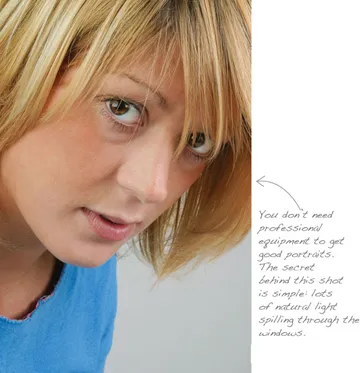
THE DAY I WAS BORN, my father took one look at me, and walked to the nearest camera shop. He bought his first SLR camera—a Canon A1— and a couple of lenses. I still have that camera, and it serves as my reminder of why photography is so important.
To me, photography is very closely linked with people. Don’t get me wrong, I love taking photos of landscapes, and I have been known to take the occasional still life and macro photo in my time. Nonetheless, for me, photography really comes alive when I’m taking photos of people, be it in a formal setting (like studio portraiture or wedding photos), a bit more relaxed (impromptu photo sessions with friends), or even if I’m sneaking around taking photos of complete strangers when I’m abroad somewhere.
People are ever-changing. We are all expressive, creative human beings in one way or another. Capturing the essence of a person can be a challenge, but it is incredibly rewarding to photograph someone and see a particular aspect of his or her personality shine through.
Key points in this chapter
Photographing people is challenging but incredibly rewarding. It doesn’t matter if you choose to photograph complete strangers or your very best friends: There is something intrinsically intimate and exciting about photos of people.
In this chapter, we will explore what it means to photograph someone, along with why and how you can get better photos. If you’re keen to improve your portraiture right away, turn to the end of the chapter, where I’ll share my top six tips for better photos.
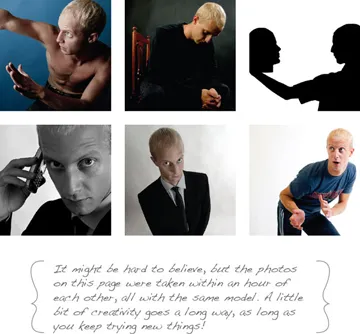
As an experiment, think about someone you hold dear: a partner, a boyfriend, girlfriend, or a lover. You might decide to photograph him or her in many different ways; a straight-up passport photo would look very different from a photo of him or her as a super-villain, a manga character, or a subject of your affection, for example.
In portraiture, you can take a documentary approach (“this is what they look like”), or you might decide to tell a story. Dig out some old clothes and play dress-up: Ask your models to dress up as pirates, bank managers, porn stars, Roman-era gladiators, or emo-kids on hot pink skateboards. Does that sound ridiculous? Are you laughing? Good. Photography is meant to be fun, and portraiture all the more so.
Let’s have some fun, while learning everything you need to know about how to take great pics of people in the process. Grab your camera, and let’s get started!
What is portraiture?
So, you’ve picked up a book on taking photos of people. Perhaps you’ve had a camera for a while, and you haven’t quite been able to get your pictures as good as you dreamed of. Or maybe you’ve only just bought a camera, and have just figured out which way to hold it. Don’t fret, weary traveler; we’ll cover all of that in due course.
I don’t have to tell you that portraiture is “taking photos of people”—that much is straightforward. But what are you actually looking for in a good portrait? To me, the most important element is personality. I don’t know about you, but I’m not interested in staring at a vacant, bored face. As a photographer, one of your challenges is to engage with your models and in the process immortalize them. No pressure!
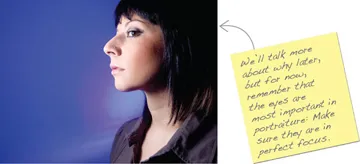
Is the person you’re photographing mischievous, sexy, funny, or harder than nails? Capture that mischief, sexiness, hilarity, or hardness. We’ll get to how to capture somebody’s true personality later on in this book, but before you can go and capture the essence of someone, you have to find out what defining characteristics you want to show. If you know your models quite well, you might be able to guess the key aspects of their personality yourself. If you don’t know your models, engage them. You may want to get a “feel” for who they are or how they want to be portrayed; spend time getting to know your subject.
Of course, you might instead decide to do the exact opposite: create a persona for your models, and ask them to act it out. For example, you can make someone who is quite shy look bold or sexy or make someone who is usually quite extroverted and extravagant look like a paper-shuffler at a local government office. People who know the model will find it hilarious: Imagine your class clown as a police officer or the wallflower in your group of friends as a can-can dancer! The possibilities are endless. Remain creative at all times.
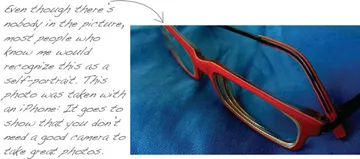
CAPTURING SOMEONE’S PERSONALITY
As an exercise, think about some of your favorite movie stars. It’s easy imagining Bruce Willis or Angelina Jolie looking hard toting guns, or Hugh Grant with a mindless-yet-charming smile plastered across his face.
When I first started out in portraiture, I spent a bit of time thinking about which actor my models would look like if they were in a Hollywood film. Check out some of the poses, some of the scenes, and some of the costumes they’d wear—and do your photo shoot as if it’s a scene from a film. It may be cheating, but it will get you thinking in the right direction!
How to use this book
Right now, you might be thinking: If a book comes with a user guide, can it be any good? Trust me, you’d be surprised how many people don’t finish a book about photography because the first couple of chapters didn’t work for them.
I’ve written this book to be as modular as possible. That means if you’re curious about knowing the basics of photography, turn to the chapter on Photography Basics. If you enjoy editing photos you’ve taken, Chapter 7, “Photo Editing,” is your new best friend. In each chapter, look for the little yellow sticky notes. If I’m talking about a concept you may have missed from another chapter, I’ll cross-reference it; so when I start talking about large apertures and fast lenses, I’ll include a sticky note to refresh your memory.
Of course, even if you feel you’re a world champion photographer, it may be worthwhile having a look at some of the chapters you would otherwise skip. I include tips and advice for all levels of photographers throughout. And even if you don’t learn anything new, a refresher can’t harm!
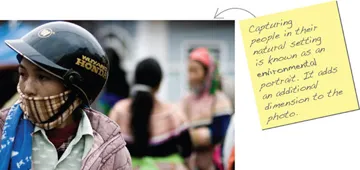
KEEP TRACK OF YOUR LEARING PROCESS!
Before you do anything else, head over to Flickr.com, set up a user account, and start uploading your best photos. You may not be overly proud of all of your photos right now, but there’s something to be said for keeping track of your own photographic progress.
When you’re working actively on improving your photos, it’s incredible how fast you’ll learn and improve your photography output. I’m actually quite embarrassed about some photos I was proud of only a few years ago. I occasionally go through my Flickr account and hang my head in shame.
When reviewing my photos today, I can see what I could have improved in photos that I took only six months ago. It feels great to know that I have developed a sharper eye: it means that I’m a better photographer today than I was yesterday. I’m sure I’ll feel the same in six months about photos I take today. It’s all part of the process of developing as a photographer. The best thing is that whenever I feel that I’m not getting any better, proof to the contrary is right in front of me.
So, have a look at the table of contents, find something that tickles your fancy, and dive right in.
Why take pictures of people?
Why would you want to take photos of people? Personally, I think people are one of the most versatile subjects you can photograph. They are an emotional subject. If you ask people what they love the most, they will usually say their friends, family, partner, children.… You get the idea.
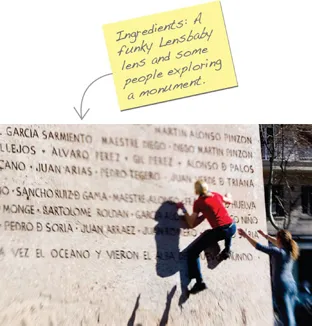
People are able to do absolutely incredible things: They overcome huge adversities, create beautiful art, and explore the world. The next time you walk past a street performance, take a close look at the performer. Look for incredible feats of human strength, agility, sense of humor, and physical expressions. Turn your camera on the crowd. You’ll see myriad expressions: slack-jawed awe, amusement, skepticism, and bemusement—all worthy of photographing.
Photographers have the power to make peo...
Table of contents
- Cover
- Halftitle
- Title
- Copyright
- Dedication
- Contents
- The Focus On Series
- Acknowledgements
- 1. Introduction
- 2. Equipment
- 3. Photography Basics
- 4. Composition and Making People Look Good
- 5. Getting Creative
- 6. Street Photography
- 7. Photo Editing
- 8. How to Learn More
- Index
Trusted by 375,005 students
Access to over 1.5 million titles for a fair monthly price.
Study more efficiently using our study tools.
Frequently asked questions
Yes, you can cancel anytime from the Subscription tab in your account settings on the Perlego website. Your subscription will stay active until the end of your current billing period. Learn how to cancel your subscription
No, books cannot be downloaded as external files, such as PDFs, for use outside of Perlego. However, you can download books within the Perlego app for offline reading on mobile or tablet. Learn how to download books offline
Perlego offers two plans: Essential and Complete
- Essential is ideal for learners and professionals who enjoy exploring a wide range of subjects. Access the Essential Library with 800,000+ trusted titles and best-sellers across business, personal growth, and the humanities. Includes unlimited reading time and Standard Read Aloud voice.
- Complete: Perfect for advanced learners and researchers needing full, unrestricted access. Unlock 1.5M+ books across hundreds of subjects, including academic and specialized titles. The Complete Plan also includes advanced features like Premium Read Aloud and Research Assistant.
We are an online textbook subscription service, where you can get access to an entire online library for less than the price of a single book per month. With over 1.5 million books across 990+ topics, we’ve got you covered! Learn about our mission
Look out for the read-aloud symbol on your next book to see if you can listen to it. The read-aloud tool reads text aloud for you, highlighting the text as it is being read. You can pause it, speed it up and slow it down. Learn more about Read Aloud
Yes! You can use the Perlego app on both iOS and Android devices to read anytime, anywhere — even offline. Perfect for commutes or when you’re on the go.
Please note we cannot support devices running on iOS 13 and Android 7 or earlier. Learn more about using the app
Please note we cannot support devices running on iOS 13 and Android 7 or earlier. Learn more about using the app
Yes, you can access Focus On Photographing People by Haje Jan Kamps in PDF and/or ePUB format, as well as other popular books in Media & Performing Arts & Digital Media. We have over 1.5 million books available in our catalogue for you to explore.