- 304 pages
- English
- ePUB (mobile friendly)
- Available on iOS & Android
eBook - ePub
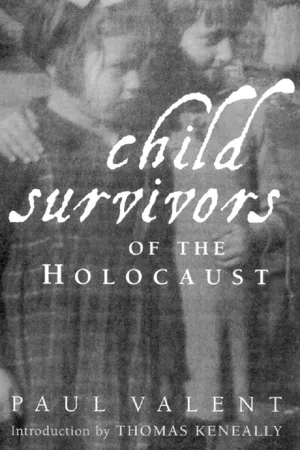
Child Survivors of the Holocaust
About this book
At the end of the Second World War approximately 1.5 million Jewish children had been killed by the Nazis. In this book, ten child survivors tell their stories. Paul Valent, himself a child survivor and psychiatrist, explores with profound analytical insight the deepest memories of those survivors he interviewed. Their experiences range from living in hiding to physical and sexual abuse. Child Survivors of the Holocaust preserves and integrates the personal narratives and the therapist's perspective in an amazing chronicle. The stories in this book contribute to questions concerning the roots of morality, memory, resilience, and specifc scientific queries of the origins of psychosomatic symptoms, psychiatric illness, and trans-generational transmission of trauma. Child Survivors of the Holocaust speaks to the trauma facing contemporary child victims of abuse worldwide through past narratives of the Holocaust.
Information
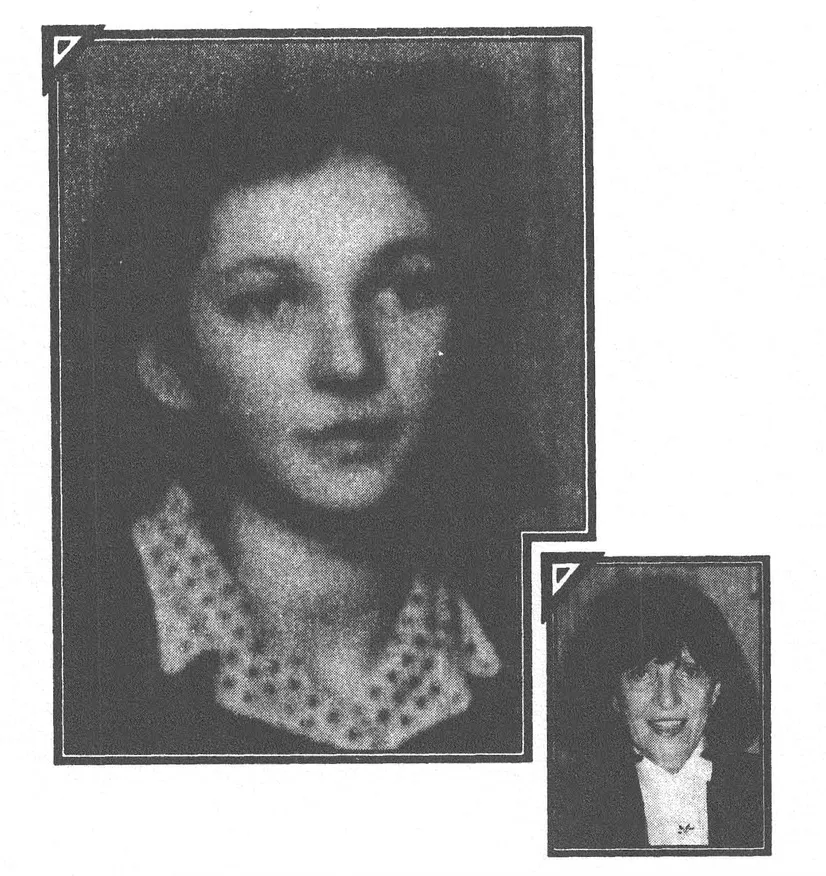
Eva S.
'UNLESS I TURN UP
IN ONE OF YOUR
TINS OF MEAT'
Eva Slonim had told her story briefly two and a half years earlier to the child survivor group, and then stayed away. It was a striking story of humiliation and pain told with dignity, but with only a thin protective skin. I suggested this interview with trepidation. However, Eva readily accepted, saying she had been preparing herself for years to tell her story. She said that she had not read anything about the Holocaust because she wanted her testimony to be 'pure'. She warned that for that reason her dates would be subjective and possibly inaccurate.
I arrived at a modern wealthy house in the centre of Caulfield. Eva herself was elegant, and looked younger than her age.

I was born in Bratislava, Czechoslovakia, on 29th of August 1931. For me life before the war was very much like life is now in Australia. We were very well off. We lived opposite the President's palace. My father had a large textile business. We had a maid and a German nurse in our household caring for us. I was molly-coddled, I suppose. For example, my nurse always accompanied me to school which was only ten minutes away. Though I attended the orthodox day school, I had many non-Jewish friends, with whom I felt totally equal. Our life was very nice until 1938 or 1939, when we started to receive word from my mother's parents in Austria that things were very difficult for them there.
'But even in Slovakia there started some anti-Semitic outbursts. I was seven or eight when my brother kept saying that he was assaulted on his way to school. My parents did not believe him. They blamed him for picking fights, and admonished him to be a good boy.
'I could not stand this any more, so one day I stole out of the house, and I saw to my horror that as soon as Kurtie turned the corner, four to six youths took his cap off, punched him, threw him to the ground, and left him. He was totally powerless. Then he just picked up his things. I had this terrible feeling, so I ran home and told my parents what I had seen. They said, "Ha, this could never happen in Czechoslovakia." My father said, "We were born here! My parents were born here!" "But I saw it!" I cried. "Oh, well, we'll report it to the police." This is how unprepared and unbelieving we were when this whole thing unfolded on us.
'And yet my mother's family escaped Austria to Israel. In 1939 my father paid for the departures to Israel of all his employees. My father stayed because my aunty, who was a partner in the business, refused to leave and "live as a pauper" elsewhere, and also my father did not want to leave his ill parents.
'One day I stood in our dining-room, and I saw Germans marching in the street. My parents were horrified, stunned, devastated. But our German nurse, with whom I had shared a bedroom, whom I trusted and cared for till that day, jumped with joy, and exclaimed, "I am glad that I have lived to see this day!" That was my first great disappointment and feeling of being betrayed.
'The Germans were singing, "Today Germany is ours, tomorrow the world." ' Eva said the words in perfect German, the language she had learnt from her nurse. 'Suddenly our whole life was transformed. Three days later the Germans and their Slovak collaborators barged into my grandparents' flat downstairs. They assaulted my seventy year old grandfather, knocked out his teeth, and twisted the chain of his pocket watch around his neck. They dragged him like this, bleeding profusely, into our part of the house, and warned, "This will happen to you if you don't toe the line". We were in total shock.
'Then they came to arrest my father. I was in the room in bed with diphtheria. I started to cry hysterically at them taking my father away. One of the soldiers started to dance to humour me. I think they had a plan, and they wanted it to go smoothly, with people cooperating with them. Later they shot hysterical people, but at this time they still wanted to quieten me down.
'They did take my father away. My mother, and others like her, received a ransom notice. My mother sold property and paid the money, and luckily my father was returned. Others only received the ashes of their relatives, with warning notes to toe the line.
'Next they confiscated money in the bank. Edicts ordered us to hand over all our gold, silver, and jewellery. They gave my father receipts which were to fob us into believing that after the war our goods would be returned. In fact they just facilitated a more orderly handover than would have occurred had they just grabbed our property.
'The next edict ordered all Jewish boys over the age of sixteen to go into a "voluntary" labour force. They even gave a list of what they should bring — rucksacks, boots, etc. Again, one could rationalise that going to work was not the end of the world, that labour was needed in war, but why only Jewish boys?
'The next edict was for young girls over the age of sixteen. That was already more frightening, but they had to comply, because everyone's age, sex and address had been registered right at the start. If anyone did not turn up, they took hostages. The next edict took married couples without children. So people were left with no money, no youths. We were powerless. We did not realise at the time, no human mind could conceive, that all this was part of a most sinister plan.
'Then they confiscated businesses. Any gentile, any peasant could say, "I want Mr Weiss's [Eva's family name] business". So a Mr Josef Krampl said that. But because he was illiterate, he needed the Jew to run his shop. There was a scheme where such so-called "arizators" could have their Jews, and they were exempt from deportation.
'Krampl also took over our house. We moved into a semi-ghetto. The President, Tiso, and the Prime Minister, Tuka, were Catholic priests. Tiso pronounced on the radio that Jews were inferior creatures. As such, it was permissible to do away with them, according to the Bible. He exhorted the population to collaborate in this, not that they needed much encouragement.
'At school we were not allowed to use maps, so we used parts of the body instead. We had no idea what we were taught. One day all our teachers were taken away and the school was closed down. My old friends did not want to see me. Bank managers, solicitors, taxi drivers, suddenly refused to have dealings with us and despised us. Everyone dobbed us in, hated us. Nobody loved us. I felt greatly deceived by those I thought were my friends.
'One day when I was twelve, and by then not in good physical condition, I was walking in the street, trying to hide that humiliating star we had to wear by tilting my head. I recognised Tuka, having seen him walk in the park opposite our home in the past. He grabbed my arm, and kicked me in the stomach with his boot, saying, "There, little Jewish girl, now go on". The physical and emotional hurt! There was a priest who hurt a little Jewish girl! I took a tram home. Jews were only allowed in the standing area of trams. Unwittingly, feeling sick from the kick I sat down. A woman screamed, "Look, a Jewish girl sitting, get out!" So I stood up, but they punished me for sitting down by ordering me off the tram. They were all in it together in their hatred of us.'
Eva's impassive face belied her feelings.
'What did you feel during this time?'
'I felt intensely rejected, abandoned, inferior, humiliated. I felt hopeless and helpless.' These were the feelings which Eva had to suppress at the time.
'By now my father had lost his unrealistic optimism. He found hiding places for us all, for when the time came. No one volunteered to hide us out of kindness or charity, only for a lot of money. We lived in the ghetto now, always in fear of razzias [roundups] .
'We had two rooms in the ghetto. My parents always helped others. At one stage we hid eighteen people in the two rooms, and we smuggled their excreta out in a bucket. On either side of all these people were my grandfather and grandmother dying on their beds. My grandfather was crying all the time, "My poor children are dead". My father forged letters in his brothers' names, but my grandfather saw through this ploy.
'My father also cared for the residents of an old age home in the ghetto. He even took away our milk to give it to them. I thought he was cruel to do that, I longed for that half a glass of milk a week. He gave away our clothes as well. I helped him to care for the old people.
'During this time I also became the clandestine messenger girl, working outside curfews, delivering money here and there. I was chosen because I had blonde hair, and did not look Jewish.
'This was in 1944, and I was twelve and a half. Things were very, very difficult. There were hardly any Jews left. My father had lost one hundred and eighty members of his family. My father's brother and family of four children, who had lived in the upper storey of our place, another brother with five children, all my father's cousins, they were all gone.
'I have never talked about how I felt at this stage. One day in the ghetto two men came dressed in SS uniforms. They told us they were Jews who had escaped from Auschwitz. They had worked in the Sonderkommando [body disposal unit], and they told us what was happening in Auschwitz. One of them lives in Melbourne now.
'So I knew things were very bad, and that the chances of us surviving were very, very small. Notwithstanding all that we were still religious, and I still had private lessons in German and in German literature. There was this strange dichotomy in my parents' minds. Crazy, from today's perspective.
'One night they came to get us. My father saw them coming and told my sister and me, in our nighties, to jump out the window into the garden, and to run wherever we could. But the house was surrounded and we were brought back into the house. My mother then faked a hysterical attack which convinced even us at the time. She was out of breath, apparently dying. They went to get a straitjacket for her. When the caretaker who guarded us went away for a minute, we all ran to our hiding place. My father had the foresight to get a flat, furnish it, and open a branch of his textile business in it for our German nurse. She was prepared to hide us temporarily now because my father threatened to tell the authorities if we were caught that her property was given to her as a favour by Jews.
'My father was issued another exemption paper because Mr Krampl still needed him, but he now called us all together. We were seven children. Kurti was the eldest and fifteen months older than I. Neomi was fifteen months younger than I, Marta three years younger than I. Then my mother lost two children, so Judith was six years younger than I, Renata and Ruth were ten and eleven years younger than I.
'My father said, "The chances of us all surviving are very, very minimal. I am sending the little children to Hungary with Mrs Tafon." We shaved their hair off, as they were officially boys, and drugged them with injections. I took off my star and accompanied them to the train. My six year old sister Judith was the next to go with Mrs Tafon. In those days people would report even a little child who displayed anxiety just in case he or she was Jewish. So we told Judith to look at Mrs Tafon when she waved to us. But she looked at us, and waved to Mrs Tafon.' This was one of the few times that Eva cried in the interview. 'That was the last time I ever saw her.
'By the time the Germans invaded Hungary, all the children were hidden there. Only I remained, to do my tasks. Father decided to gather the children back. He paid Mrs Tafon a lot of money, and she brought back Marta, Kurti and Neomi. We found out that the two little sisters were already interned. We told Mrs Tafon to look for Ruth, who had a birthmark on her leg, and bring her and the little girl with her back to us. She did manage to bribe her way into a camp in Budapest and got the two sisters out. However, Renata was dying of pneumonia. To show you the mercenary mind of the times, Mrs Tafon phoned my father and asked if she would still get her money for the child if she died. My father said, "Bring her back, dead or alive, and you'll get your money."
'I was put in a taxi to meet them at the border. I knew I was not allowed to display any emotions in front of the taxi driver. I arrived at the border and saw my very sick, emaciated, pock-marked sisters, and I must have displayed some emotion, because the taxi driver turned on me and said, "Oh, you're Jewish! I'll take you all to the Gestapo!" I protested, "I am not Jewish! They are my cousins, and they are not Jewish!" I managed to convince him. But there was this feeling, that he was after me. I was twelve, but they had to kill us all. He took us to near our place, and we walked home. After that we stopped lighting Sabbath candles, because we wanted to retrain the children to not know that they were Jewish. We nursed Renata back to health.
'But then I became very ill and the doctor said I had a touch of rheumatic fever. I had very inflamed tonsils and they needed to come out. Jews were not allowed to have hospital treatment, but there was an exempted Jewish doctor who was willing to treat me as an outpatient. I was put in this dentist's chair, and told to hold the tray for my blood. I could see in his glasses what he was doing. I was frightened of what was being done to me, and because I and my parents were there illegally.
'The nun passed him a needle for the local. The doctor said, "This needle is rusty." The nun ... the nun said, "So what, she is only Jewish." He threw the needle away and asked for another one. This time he complained that it was blunt. "So what, I told you she is only Jewish." I wanted to get up, but he pushed me back into the chair. He took his own needle and injected me. And then I saw him peel my tonsils out, and then,' Eva became agitated, 'he attached a hook to my adenoids and pulled them out. The blood just dripped and I collected it. Then suddenly the doors of the theatre opened, and two Germans came in. I did not know whether they came because of me, or for him, or because they were just sick themselves. But they dragged the doctor out. He was never seen again.
'The nuns just pushed me out of the chair, told me to wash myself at the basin, and get out. I felt very, very guilty because the doctor may have been taken away for trying to help me. I was in a bad state, and my parents begged the sisters to allow me to lie down for half an hour. "No Jews are allowed to lie down in this hospital. Get out!" We walked home for a good hour because we were not allowed on trams.
'My grandmother died and six months later my grandfather died. I helped to tie his jaw, dress him. Jewish burials were not allowed, so we buried him at night.' Eva breathed hard. 'There were few Jews left, and things became even worse. There were more surprise raids. My father gathered us again and said, "I don't think we have much time left, Kurt and Neomi you are going to hide in a place in the mountains, Eva and Marta, I found a place for you in Nitra [about one hundred kilometres away]." The two little ones were hidden in Ujlak, at the place of one of Count Esterhazy's servants.'
'How had you coped up to this time?'
'I coped day to day because there was so much to do, and it was urgent. I concentrated more on that than the fear I constantly felt. I was very scared that one day I would be taken away. Life was fear and something to do — look after grandmother, massage, feed, encourage grandfather to walk during his illness, help in the old age home, and work out how to share a chicken between eighteen people, giving my grandparents the best parts. I must have been traumatised when I buried my grandfather. But then I had to quickly help my mother with the children. And there was always something to cover up.
'When my father took us to the train to Nitra, he said, "You are on your own now. But we will keep in touch by you and me looking at the stars each night. And whatever hurts you or whatever you are afraid of, look at the stars, and I will listen to you, and answer you." And that was of very great help to me. Nevertheless, the separation felt final, terrible. And my father also said, "I have only one piece of advice, my child. If you are ever caught, don't admit that you are Jewish, however much you are tortured. Because if you admit it, you will surely die. Otherwise you may have a chance to live." These words came to be embedded in my mind.
'I had papers, extracted from the German nurse, documenting that I was her sister. We lived in a flat all alone in great fear and anxiety. The nurse visited us sometimes, but she took away the meagre food and clothing which we had, and she never delivered the letters we wrote to our parents, so we lost contact with them.
'Marta could not speak Slovak or German, so we could not communicate. She scratched me out of frustration. I had to hold on to her at night, because she sleepwalked. Eventually she learned enough Slovak for us to understand each other, but not enough for her to converse with others.
'We went to church, prayed, went to confession, and visited the little sisters in Ujlak each Sunday, paying the man who looked after them. But we were running out of money, food and clothing. We were hungry. As well, everyone watched us. The neighbours reported us because they noticed that I did the housework ...
Table of contents
- Cover Page
- Half Title page
- Title Page
- Copyright Page
- Dedication
- Contents
- Acknowledgements
- Foreword
- Preface
- Eva S.
- Bernadette
- Frankie
- Richard
- Juliette
- Eva G.
- George
- Eva M.
- Danial
- 'Anne'
- Conclusions
Trusted by 375,005 students
Access to over 1.5 million titles for a fair monthly price.
Study more efficiently using our study tools.
Frequently asked questions
Yes, you can cancel anytime from the Subscription tab in your account settings on the Perlego website. Your subscription will stay active until the end of your current billing period. Learn how to cancel your subscription
No, books cannot be downloaded as external files, such as PDFs, for use outside of Perlego. However, you can download books within the Perlego app for offline reading on mobile or tablet. Learn how to download books offline
Perlego offers two plans: Essential and Complete
- Essential is ideal for learners and professionals who enjoy exploring a wide range of subjects. Access the Essential Library with 800,000+ trusted titles and best-sellers across business, personal growth, and the humanities. Includes unlimited reading time and Standard Read Aloud voice.
- Complete: Perfect for advanced learners and researchers needing full, unrestricted access. Unlock 1.5M+ books across hundreds of subjects, including academic and specialized titles. The Complete Plan also includes advanced features like Premium Read Aloud and Research Assistant.
We are an online textbook subscription service, where you can get access to an entire online library for less than the price of a single book per month. With over 1.5 million books across 990+ topics, we’ve got you covered! Learn about our mission
Look out for the read-aloud symbol on your next book to see if you can listen to it. The read-aloud tool reads text aloud for you, highlighting the text as it is being read. You can pause it, speed it up and slow it down. Learn more about Read Aloud
Yes! You can use the Perlego app on both iOS and Android devices to read anytime, anywhere — even offline. Perfect for commutes or when you’re on the go.
Please note we cannot support devices running on iOS 13 and Android 7 or earlier. Learn more about using the app
Please note we cannot support devices running on iOS 13 and Android 7 or earlier. Learn more about using the app
Yes, you can access Child Survivors of the Holocaust by Paul Valent in PDF and/or ePUB format, as well as other popular books in Psychology & Holocaust History. We have over 1.5 million books available in our catalogue for you to explore.