![]()
Section 1
Introduction
![]()
Chapter 1
What is the book about?
David Kennard
This is not a book on new approaches in the treatment of severe mental illness, nor is it the account of one individual's journey into psychosis. You can find excellent examples of both types of book in the libraries. This book presents something that is commonplace and at the same time unique: the experiences of those who live on a daily basis with a psychotic break with reality – in themselves, in their family members, or in the people they work with – severe enough to lead to admission to a psychiatric ward. Commonplace – in that the accounts in this book are a small scoop out of an ocean of similar experiences. Unique – in that such a collection of voices from all the rooms and corners of the ward has never been assembled before. In this respect, the book is like a quilt made up from many individual pieces sown together. Each piece tells its own story, and although there are elements in common, the strength and impact of the quilt is in the combined effect of many different voices and experiences.
The idea for the book grew out of two conferences on making in-patient wards therapeutic, organised by members of ISPS UK. Out of these, the four co-editors evolved a format for the book to complement the policy and research literature on the in-patient care and treatment of severe mental disorders – in particular those with the label of psychosis or schizophrenia – by adding what we felt were the missing pieces of the jigsaw: what it is actually like to receive or provide these services.
The format we developed was to solicit first-hand personal accounts of in-patient care from those in the front line: from those admitted to a psychiatric ward; from those whose relative (usually a son or daughter) has been admitted; and from those who in some significant way provide or contribute to in-patient services. The format of the personal account was chosen as the most direct way of conveying vividly what happens on a ward and the feelings evoked. We then gave each account to two commentators coming from different perspectives, asking them to say what issues they felt had been highlighted by the account and what lessons could be learnt that would improve the quality of care. Some commentators have also contributed their own personal accounts to the book, others are experienced and in some cases leading figures in the mental health field. The aim was to get the best learning we could out of the accounts. Following each account and its commentaries we have posed a number of questions, and in some cases suggested exercises for the reader and teams to ponder, discuss or try.
The book can be used in a number of ways. It can be read by the individual practitioner looking for stimulating ideas and some recognition and validation of their own experience. It can be used as course reading material in the training of mental health practitioners, selecting an issue or topic relevant to a course module. Individual chapters can be used as the basis for a seminar or workshop, asking members to discuss the questions or do the exercise at the end of the chapter. We very much hope that the format of the book will enable it to be used in the training of mental health nurses, clinical psychologists, psychiatrists, occupational therapists, arts therapists and other professions such as social work who still need to know about in-patient services even if their work is largely community based. Although the book is aimed at a professional readership, we are also mindful that it may be read by service users and carers, and we hope that they may find not only some validation of their own experiences here, but may also find it helpful, or at least illuminating, to learn something of the feelings and experiences of those who provide their services.
Sufficient reference has been made to ‘we’, the editors, to suggest a brief introduction is in order. We come from four different mental health disciplines: nursing (Mark Hardcastle); clinical psychology (David Kennard); art therapy (Sheila Grandison) and psychiatry (Leonard Fagin). Our therapeutic orientations are a mix of cognitive behavioural and various psychodynamic models, both individual and group. This has ensured lively editorial discussion of and with our contributors, aimed at ensuring that the book remains relatively neutral and jargon-free in terms of its theoretical stance. It will be for the reader to decide how well we have achieved this.
It used to be said that mental health was the Cinderella service compared with the rest of the nation's health services. We would add that in the first decade of the twenty-first century in-patient care has become the Cinderella of the mental health services. While we applaud the effort that has gone into developing mental health care in the community, we believe the focus has become too one-sided. A consequence of the emphasis on early intervention, on reaching people in mental and emotional distress before they reach crisis point, is that being admitted to a psychiatric ward is now often seen only as a failure. To quote Quirk and Lelliott (2004), ‘Today there are no positive indications for admitting a person to a psychiatric ward.’ This view impacts on everyone involved: on the person admitted, on their family, and on the staff who work in the psychiatric wards. Lacking in adequate resources, managerial structure, team morale or motivation, the services provided have come to reflect this sense of being a holding situation for failure, where ‘too often the experience of acute inpatient care is felt to be neither safe nor therapeutic’ (Department of Health 2002b).
The purpose of this book is to help to change this situation, by recognising and exploring the experiences (good as well as bad) of all those involved in in-patient care. We seek to understand what creates or contributes to the negative experiences, and to encourage the reader who may work or train on a psychiatric ward to think about how things might be done differently with benefits all round. Although a number of reports have appeared in recent years on the shortcomings of in-patient care and how to improve it, for change to occur there needs first of all to be an appreciation and understanding of the experiences of those involved in the unpredictable, volatile, often anxiety-arousing and sometimes threatening environment of the psychiatric ward. We invite mental health professionals and trainees to hear what it is like to be a service user, a carer, or indeed a fellow-professional working in a different discipline. We want to introduce those who have contact with in-patient services, in all their different capacities, to see each other's point of view. We do not expect this always to make for comfortable reading, but we believe that if all those involved in in-patient services dipped into this book, the result could be a real improvement in the quality of the services provided, and also in the job satisfaction of those who provide them.
How the book is organised
The book is divided into five sections. The first section sets out the historical context of the book, drawing on personal accounts of the care and treatment of people variously labelled as mad, lunatics, insane and mentally ill, over the past two hundred years, and then the contemporary context of practice, guidelines and attitudes.
Sections Two to Four are the heart of the book. These present accounts of personal experience from, in turn, the perspective of the in-patient service user, the relative turned carer, and the service provider. We have given each account a title that highlights the predominant feeling conveyed by the writer, although in many cases the reality is more nuanced than a single feeling. Each personal account is followed by two commentaries written from different perspectives. For example, the account by a service user of being bored on the ward is commented on by a nurse and by an occupational therapist; the account by a junior psychiatrist of feeling helpless is commented on by a service user and by an experienced psychiatrist. The purpose of the commentaries is to highlight the issues raised by each account and identify what lessons can be learnt. Each chapter concludes with some questions or suggested exercises for the reader to consider, or to discuss if the book is being used in a group situation.
Section Two contains personal accounts from six service users of their experience of psychiatric wards. In approaching service users we aimed for a mix of men and women, different ethnic backgrounds, and experiences of voluntary and compulsory admissions. In the context of this book the psychiatric diagnosis given at the time of admission has not been considered relevant, although one writer chooses to open with this. What these accounts tell us most poignantly is that, alongside whatever degree of distress and disorder the individual may be experiencing during their stay on a psychiatric ward, there is nevertheless a still-functioning ‘normal’ observing part of the mind that reacts as any one of us might to feeling bored, misunderstood, patronised, scared or humiliated, and equally to feeling supported, listened to, befriended or just enjoying the momentary relief of a good laugh. The editors are grateful to our account writers for their courage and openness in sharing these experiences. As in the next two sections, the issues highlighted by the commentaries are summarised at the end of the section.
Section Three takes us into the experiences of five carers. Four accounts are by the mother or father of a young man or woman admitted at the point of crisis, – in two cases, against the individual's will. The fifth account is of a wife recently married to a man with a previous history of psychosis. These accounts do not pull their punches. They convey the gamut of feeling family members go through – anxiety, despair, guilt, relief, bewilderment, frustration, anger – as well as the determination to find a better way. The news is not all bad. There are accounts of kind and caring doctors. But the overall picture suggests that in many cases, as one writer puts it, carers are ‘not even on the horizon for consideration’ by the ward team. Of course it is not all like this. Our commentators represent the views and practices of those who are seeking a better way, involving the families as partners in care. But there are also important lessons about the small things that can make a big difference – information about what is happening, and why, when someone is admitted, and the offer of a cup of tea …
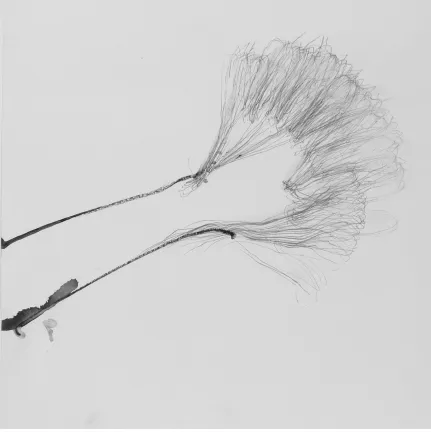
Section Four offers the accounts of ten service providers from (nearly) all the professions and supporting roles that make up what is a surprisingly large team. In addition to the obvious ones – psychiatry, nursing, clinical psychology, occupational therapy – we have also invited accounts from a hotel services assistant (a ward domestic in old speak), a nursing assistant, the chief executive of an independent hospital and a hospital chaplain. We are aware of some significant omissions and limitations. We sought but failed to obtain a personal account of the experience of an NHS senior manager, nor do we have a written account from an arts therapist, though we do have commentaries from both these perspectives, and a personal contribution from an art pyschotherapist of drawings made in visual response to her experience of in-patient settings. We did not seek an account from a facilitator of a support group for ward staff. It may also be pointed out that each account represents only one individual's experience and another member of the same profession might report a quite different situation. We cannot argue that these accounts are representative. We asked people we knew or who were known to people we knew. But we would argue that this collection of personal accounts brings alive in a way that has not been done before what it is actually like for those who work on or in close contact with the world of the psychiatric ward. They may not be fondly regarded by critics of the system, indeed they may be critics of the system, but if we want to see improvements we surely need to start by recognising and understanding the emotional impact of the work on the people we ask to do it. Our commentators include service users as well as the range of professionals involved. We think the reader will find their observations stimulating, challenging, discomforting, and we hope at times inspiring.
The final section offers the reader some ‘take home’ messages of how things might be done better. As one of our commentators says, it is not rocket science. If this book achieves one thing we hope it will be to help overcome the fear of open acknowledgement of how we really feel encountering our own or other people's madness. As another commentator reminds us, we are all much more simply human than otherwise.
![]()
Chapter 2
A brief narrative history of in-patient care in the United Kingdom
Leonard Fagin
The world is becoming like a lunatic asylum run by lunatics.
(David Lloyd George, 1933)
I have always depended on the kindness of strangers.
(A Streetcar Named Desire, Scene 11, 1947)
The thing psychiatric inpatients value most about being in hospital is their ability to leave.
(McIntyre et al. 1989)
Exploring the history of in-patient care through the written accounts of people associated with psychiatric institutions provides a rich seam of experiences, which often have fed the imagination of novelists, playwrights and the general population with descriptions that have created fascination, fear and prejudice about mental illness. Whilst it is difficult to give complete credence to many of these accounts as accurate reflections of what was happening in psychiatric care, in line with our aims in the rest of the book we have attempted to gather representative voices of those who provided or were in receipt of psychiatric care since institutions were set up in the United Kingdom. Needless to say, the collection is idiosyncratic and incomplete.
One way of looking at the history of psychiatric in-patient care is to see it as a recurring cycle of stages, moving from neglect to custodial, repressive regimes, on to enlightened liberal and humane care and then back to a mixture of neglect and highly regimented and controlled environments.
Prior to the mid eighteenth century, the deranged or mentally disabled patient in England was more likely to be assimilated into the group of society's outcasts, the poor, the vagrants, petty criminals and physically disabled. At that time there was no sense of public responsibility and mostly these wretched souls were left to fend for themselves and were at large, relying on almsgiving and Christian charity. The exception to this was the Bethlem, founded in the early fifteenth century with only a handful of inmates as its residents, as well as a small number of almshouses. By the early eighteenth century the rising population, coupled with the commercialisation of agriculture, created an ever-increasing ‘army of beggars and idlers … the disreputable poor’, and attempts to deal with this resulted in the development of houses of correction, ‘Bridewells’, or ‘tolerated prisons’, leading Daniel Defoe to comment in 1724:
there are in London, notwithstanding we are a nation of liberty, more public and private prisons and houses of confinement, than in any city in Europe, perhaps as many as in all the capital cities of Europe put together.
(Defoe, quoted in Scull 1979)
In the affluent classes, by contrast, those afflicted with mental illness were either cared for by their own families, placed with local ministers or medical men, or sent to private ‘madhouses’, small institutions run for profit. Although in some of these residences patients were well cared for, many such endeavours were set up by those solely seeking financial gain.
Few speculations can be more unpleasant than that of a private madhouse, and it is seldom if ever undertaken, unless with the hope of receiving large returns on the capital invested.
(Duncan 1809)
In evidence given to the House of Commons Select Committee in 1815, Thomas Monro, then physician at the Bethlem, described the regime imposed on the inmates of the asylum:
In the months of May, June, July, August and September we generally administer medicine; we do not in the winter season, because the house is so excessively cold that it is not thought proper … we apply generally bleeding, purging and vomit; those are the general medicines we apply … All the patients who require bleeding are generally bled on a particular day, and they are purged on a particular day … Thereafter, of course, patients were kept chained to their beds four days out of every seven.
(House of Commons Select Committee 1815)
John Perceval, brother of the assassinated Prime Minister Spencer Perceval, was first admitted under restraint in January 1831 to the Brisslington Asylum, near Bristol, run by a Dr Fox, an expensive institution which had to be paid for by members of his family. He was then transferred to other institutions, which he bitterly described later in a book on his experiences (Bateson 1974).
As I was a victim at first, in part of the ignorance or want of thought of my physician, so I was consigned afterwards to the control of other medical men, whose habitual cruelty, and worse ignorance-charlatanism became the severest part of my most severe scourge.
(1974: 3)
I do not recollect at any time medicine being given to me; neither to purify the blood; neither as tonics; except on two occasions. No! The cheap and universal nostrum was to be ducked in the cold bath; in the depth of winter or not, no matter.
(1974: 107)
An ex-patient, Urbane Metcalfe, mentions corruption among the staff at the Bethlem.
In each of the galleries the keepers pick out one of their patients whose strength fits him for the situatio...