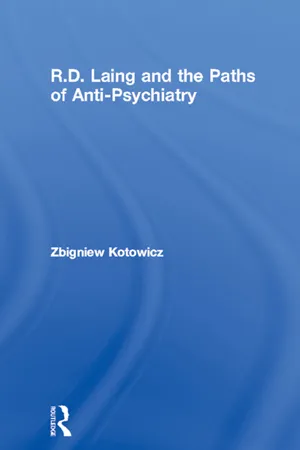
In the 1960s and 1970s, the radical and visionary ideas of R. D. Laing revolutionized thinking about psychiatric practice and the meaning of madness. His work, from The Divided Self to Knots, and his therapeutic community at Kingsley Hall, made him a household name. But after little more than a decade he faded from prominence as quickly as he had attained it.
R.D.Laing and the Paths of Anti-Psychiatry re-examines Laing's work in the context of the anti-psychiatry movement. Concentrating on his most productive decade, the author provides a reasoned critique of Laing's theoretical writings, investigates the influences on his thinking such as phenomenology, existentialism and American family interaction research, and considers the experimental Kingsley Hall therapeutic community in comparison with anti-psychiatry experiments in Germany and Italy. The book provides a much needed reassessment and re-evaluation of Laing's work and its significance for psychotherapy and psychiatry today.
- 144 pages
- English
- ePUB (mobile friendly)
- Available on iOS & Android
eBook - ePub
R.D. Laing and the Paths of Anti-Psychiatry
About this book
Information
Chapter 1
Introduction
I
It is rare for an intellectual to gain celebrity in such a short period as did Ronald D. Laing. And when this intellectual happens to be a psychiatrist then we are dealing with a very rare phenomenon indeed. His public presence was such that he became a household name. He was read widely by professionals and lay persons alike. Books were written about him, interviews with him were conducted and published, references to his works could be found everywhere. His works were almost immediately translated into major foreign languages and he became a voice heard throughout Europe and across the Atlantic.
Laing touched a raw nerve. To put it briefly, he attempted to politicize and spiritualize, so to speak, the discourse of madness and in the process, in a truly anarchic fashion, he questioned, doubted, Laing sought passages between the so-called normal and the insane; he fervently believed that the language of madness is a human language and that it can only be understood if it is accepted as part of the human experience. Laing was the celebrated psychiatrist, the visionary, the savage iconoclast who questioned the values of the developing capitalist society in general and the role of psychiatry in particular. He attempted to bring madness back to the public space, where it once was, before it was separated off, incarcerated, confined in lunatic asylums on the outskirts of the great conglomerations where normal citizens conduct their daily affairs.
And then, just as quickly as he rose to prominence, Laing faded away. A generation later he is a distant, almost irrelevant figure, and he needs to be introduced anew. It is quite amazing to think that had he been alive he would be, at the time of writing these lines, only sixty-nine.
Laing was born on 7 October 1927 in Glasgow in a lower middle-class Presbyterian family. He was the only child. His upbringing and education were fairly conventional—primary school, grammar school, university. He studied medicine, specialized in neurology and psychiatry. At the end of his studies Laing had arranged to continue his education abroad under the guidance of the famous German psychiatrist and philosopher Karl Jaspers. But the authorities did not concur, the Korean War was on, the Army needed medically qualified staff and so, instead of going to Basel to work with Jaspers, Laing landed in a British Army psychiatric unit in the rank of corporal. After two years he moved on to work in a general psychiatric hospital and another two years later, at the age of twenty-eight, he became a senior registrar in the Psychiatry Unit of Glasgow University. After a further two years Laing took up a post at the Tavistock Clinic in London and began training as a psychoanalyst.1
The rise in the professional hierarchy was swift, one could almost say spectacular, but well within the established channels. The one distinguishing feature in Laing’s career, up to this point, was his attempt to study under Jaspers. Quite unusually for someone educated at that time in Britain Laing felt drawn to the philosophical tradition of the Continent, chiefly phenomenology and existentialism. Most of the relevant writings were untranslated, they had the reputation of being obscure and were considered too far removed from the prevailing positivist stance of medicine and psychiatry. Shortly after settling in London Laing published his first book, The Divided Self (1960). This book signalled someone with a difference. On the one hand, The Divided Self is a straightforward monograph which brings close to the reader the experience of becoming schizophrenic; on the other hand, Laing puts all the clinical material within a framework made of categories derived from the existential thinkers. In the English-speaking culture a work of this kind was absolutely unique, almost alien. Despite (because of this?) The Divided Self became in time a spectacular success.
At the Tavistock Clinic Laing began research into interpersonal interaction and patterns of family communication. Two publications—Sanity, Madness and the Family (1964) (with Aaron Esterson) and Interpersonal Perception (1966) (with H. Phillipson and A.R. Lee)—were reports on this research. Other works—Self and Others (1961), Reason and Violence. A Decade of Sartre’s Philosophy. 1950–1960 (1964) (with David Cooper), The Politics of the Family (1969), and Knots (1970) are theoretical writings in which Laing’s vision of the interpersonal world comes through. This time, too, there was a large element of ‘imported’ thought, mostly coming from America, where research into family interactions had already been under way for quite a few years. Laing’s writings on the subject usually have a hard edge. He greatly highlighted the psychological violence that goes on in families and went on to argue that within the context of these families madness is quite intelligible. In the more popular perception it appeared that Laing was accusing families of driving their children mad, although he never explicitly expressed this view.
In 1967 Laing brought out The Politics of Experience and The Bird of Paradise. In some respects this has been his most notorious work and it marked a complete break with the norms of the psychiatric orthodoxy. What distinguished The Divided Self was the unusual perspective from which Laing approached the subject of mental illness; The Politics of Experience presented the public with a completely reversed picture. Laing questioned the actual value system on which our notions of ‘madness’ and ‘normality’ is based. He argued that the ‘mad’ were sometimes more sane than the ‘normal’. Moreover, Laing came to think that some psychotic experiences may have a healing dimension, akin to rituals of initiation, where through the loss of the sense of the ego and after a voyage into a mystical sphere a new, more enlightened person could emerge. The Politics of Experience elevated Laing into the realm of stardom and at the same time it divided public opinion. His first claim to fame had been that of a psychiatrist with a reputation for understanding the mentally ill and the family structures in which they grow up. After The Politics of Experience Laing came to be perceived as a maverick guru of schizophrenics, a leader of society’s vanguard who, through experiences of transcendental reality, would break out of the vicious circle in which the modern capitalist society imprisons its citizens.
Another venture which increased Laing’s fame was the Kingsley Hall therapeutic community, set up in 1965. This was an attempt to create conditions in which people going through a psychotic breakdown could overcome it in a non-medical environment. The patient/doctor structure was abolished, and all lived together under the same roof. Seminars and various workshops were held at Kingsley Hall and the place quickly became very famous. The community was part of the new counter-cultural scene in London and gossip of all manner about it circulated, adding to the aura that surrounded Laing.
In 1970 the five-year lease on Kingsley Hall came to an end. Laing took this as an opportunity to have a break. At the time he was becoming increasingly interested in Eastern religions and meditation and decided to go to the Orient. His destination was first a Buddhist monastery in Ceylon (now Sri Lanka) and then India. He was away for over a year.
After the return the pace slackened markedly. Laing was lecturing widely but no new substantial work was coming out. Also his interests seemed to go further and further away from psychiatry. For a period he took an interest in the birth techniques of Le Boyer. Out of this came The Facts of Life (1976), a collection of speculations about birth and pre-birth experience, some autobiographical reminiscences, and a scathing attack on the dehumanizing aspects of medicine. Over the next three years three slim volumes of very personal writings Do You Love Me? (1976), Conversations with Children (1977) and Sonnets (1979) appeared. These were literary efforts, little ditties and poems, as well as recordings of actual spontaneous conversations with children. The next ‘serious’ publication was The Voice of Experience (1982). The book has little to do with psychiatry. It is more a collection of observations on the mystery of it all, on mysticism, birth, out-of-body experiences and on the inadequacy of positivist science to deal with it. In 1985 Laing published a memoir Wisdom, Madness and Folly. The book covers Laing’s childhood, school, university and first three appointments as a psychiatrist and breaks off at the end of his time in Glasgow. Four years later, on 23 August 1989, in St Tropez, Laing died of a heart attack during a game of tennis. He was apparently a very keen player.
II
Many of Laing’s projects were collaborations with others. The studies of schizophrenic families in Sanity, Madness and the Family were done together with Aaron Esterson; with David Cooper he wrote Reason and Violence; in the Kingsley Hall project Esterson, Joseph Berke and Morton Schatzman were involved. Most of these collaborations were short-lived and each of the others mentioned developed their own independent careers but they were all associated with what came to be known as the movement of ‘anti-psychiatry’.
The term ‘anti-psychiatry’ was coined by David Cooper. Under this banner many different practitioners and theoreticians from different countries grouped. The anti-psychiatrists held various, sometimes conflicting views but one particular line of reasoning is attributable to all of them—they all pitched their arguments against the power of the psychiatric establishment. They argued that the psychiatric diagnosis is scientifically meaningless. It is a way of labelling undesirable behaviour, under the guise of medical intervention. Those who are diagnosed ill are subjected to treatment which is a violation of human rights and dignity. The situation amounts to psychiatry having a mandate to declare some citizens unfit to live in an ‘ordinary’ community. It claims to cure but the supposed beneficiaries of that cure are often held in hospitals against their will. Within a structure like this it is impossible to understand the real nature of mental suffering and it is just as impossible to develop a coherent system of help.
From within the anti-psychiatric group various responses came, and they developed along two different, but related, lines. First, the anti-psychiatrists set out to re-evaluate our understanding of madness. Their views differed but they all developed ideas completely opposed to traditional psychiatry. Second, they attempted to establish forms of help (therapeutic communities, experimental wards, etc.), for those who are in mental distress, without recourse to the figure of the Doctor, and without the Hospital. These two are the emblematic figures around which the anti-psychiatric debate revolved.
The anti-psychiatric debate attracted enormous public attention. Laing was perceived as the spiritual leader of the movement and to an extent Laing’s work is almost synonymous with anti-psychiatry. It is within this context that Laing will be presented here.
The term ‘anti-psychiatry’ has been criticized and rejected by almost all, including those that the term was meant to denote, Laing notwithstanding. According to one argument the psychiatrists working in hospitals are the actual anti-psychiatrists, as their function has nothing to do with healing. It has also been pointed out that the term ‘anti-psychiatry’ makes just as little sense as ‘anti-science’ or ‘anti-medicine’ to describe those that approach science or medicine differently. But although rejected, the term stuck. ‘Anti-psychiatry’ became very much part of the then current vocabulary. I shall also continue using it for three reasons. First, because of its wide usage at the time we find frequent references to it in literature; second, because no other term seems to quite fit (‘radical psychiatry’ or ‘alternative psychiatry’, for example, do not overlap with ‘anti-psychiatry’); third, because in one respect the term is accurate: it highlights the ‘anti-’ aspect of these thinkers. They were all against establishment psychiatry or against establishment tout court.
III
Looking back at Laing’s career it is obvious that his sabbatical year after Kingsley Hall was a turning point. In the time that followed Laing ceased to be engaged in any meaningful way in the field of psychiatry. He was no longer directly involved in therapeutic communities and his publications of the post-Ceylon period are in comparison to his earlier work trivial and do not add anything to his earlier career.
Furthermore, in some interviews he seemed to be backtracking from his previous position, or at least taking off the radical edge which was so characteristic of his approach. No, he did not share the views of the more politically minded psychiatrists, he did not belong to the left. Now he described his position as that of a sceptic. It was difficult to make out what actual views Laing did hold.
In a sense Laing’s last book, the memoir Wisdom, Madness and Folly, is a relief. To an extent it was a return to form. Laing was not saying anything particularly new but the clarity of his writing was at its best and, more importantly, it dispels any feeling that Laing ‘betrayed’ the cause. In the first chapter he states his views:
I never idealized mental suffering, or romanticised despair, dissolution, torture or terror. I have never said that parents or families or society ‘cause’ mental illness, genetically or environmentally. I have never denied the existence of patterns of mind and conduct that are excruciating. I have never called myself an anti-psychiatrist, and have disclaimed the term when my friend and colleague, David Cooper, introduced it. However, I agree with the anti-psychiatric thesis that by and large psychiatry functions to exclude and repress those elements society wants excluded and repressed. If society requires such exclusion then exclusion it will get, with or without the aid of psychiatry. Many psychiatrists want psychiatry to bow out of this function… Such a complete change of policy requires as complete a change of outlook, and that is rare.
(WMF:8–9)
Although Laing was no longer active in the field, these views were consistent with his early work.
Why someone who was the exemplary figure of dissent and radical thinking should so suddenly cease to be active is an enigma. The difference between the earlier work of Laing and his career that followed after his return from India is such that it is hard to believe it comes from the same person. It is not that Laing radically changed his views, that he moved from the left to the right, for example. After returning from his sabbatical Laing never engaged in anything with the same intensity. It is that the brilliant light, so characteristic of his first offerings, simply went out. This is how it feels. Perhaps while in India Laing had some experiences which contributed to this; perhaps it was a case of burn-out. On reviewing his work one is impressed by how much Laing managed to do in so little time. In just over a decade he had published eight books and had set up and been involved for five years in the Kingsley Hall therapeutic community. Then comes the list of the less publicized activities and the immense work that was done behind the scenes. He went through full psychoanalytical training; he took part in recording, transcribing and then analysing hundreds of hours of interviews with families; he carried out a research programme into interpersonal perception; he conducted a study on family therapy. For three years he was the director of the psychotherapy centre, the Langham Clinic. Perhaps the work of these ten years was all that Laing had in him, perhaps at the age of forty-five he had said all.
Those who knew Laing will attest to an unusual personality. It was a mixture of undeniable charisma, brilliance and quite a savage streak. His intellect, his personality, made a great impression on others. He always drank more than was good for him and as the years went on this habit began to take its toll. This became more marked after his return from India. Laing’s public appearances became quite often erratic or even disgraceful. There were occasions when he would appear drunk and abusive. To those who still cared for his views from the earlier days and hoped that the work would continue, this was a painful sight. One wonders if it was something to do with the pressure that his reputation exerted on him; whichever, the fire was not there any more. Whether that is what he experienced we cannot know, but there seemed to be some desperation in his inebriated public appearances, as though he was destroying, one could even say suiciding, his own image. One can speculate endlessly but finally this is not our concern. For those who are interested in the savage, murky side of Laing, there is a biography written by his son, Adrian (Laing 1994). There the reader will find an ample supply of stories about Laing’s complicated personal life, about his financial difficulties, about his drunken stunts, but, except for two or three interesting professional anecdotes, not much else. The reader may prefer Laing’s autobiography Wisdom, Madness and Folly and a recently published book of interviews with him which cover his personal as well as his professional career (Mullan 1995). One way or another, there is enough easily available material to speculate about Laing’s personality. There is no need to include it in this book.2
IV
The Laing that we shall be exploring here is Laing the anti-psychiatrist. Presenting Laing within this context means that some of his activities will not be considered. In addition to being a psychiatrist Laing was one of the principal figures of the counter-culture of the 1960s; he was interested in Eastern philosophies; he was at one time interested in birth trauma; he ran breathing workshops, re-birthing workshops; his book The Voice of Experience belongs in a territory normally associated with what has become kn...
Table of contents
- Cover
- Halftitle
- Title
- Copyright
- Contents
- Acknowledgements
- Abbreviations
- 1 Introduction
- 2 The world of a psychotic
- 3 Knots
- 4 The dialectics of liberation
- 5 Psychiatry and freedom
- 6 Response and legacy
- Chronology
- Bibliography
- Index
Trusted by 375,005 students
Access to over 1.5 million titles for a fair monthly price.
Study more efficiently using our study tools.
Frequently asked questions
Yes, you can cancel anytime from the Subscription tab in your account settings on the Perlego website. Your subscription will stay active until the end of your current billing period. Learn how to cancel your subscription
No, books cannot be downloaded as external files, such as PDFs, for use outside of Perlego. However, you can download books within the Perlego app for offline reading on mobile or tablet. Learn how to download books offline
We are an online textbook subscription service, where you can get access to an entire online library for less than the price of a single book per month. With over 1.5 million books across 990+ topics, we’ve got you covered! Learn about our mission
Look out for the read-aloud symbol on your next book to see if you can listen to it. The read-aloud tool reads text aloud for you, highlighting the text as it is being read. You can pause it, speed it up and slow it down. Learn more about Read Aloud
Yes! You can use the Perlego app on both iOS and Android devices to read anytime, anywhere — even offline. Perfect for commutes or when you’re on the go.
Please note we cannot support devices running on iOS 13 and Android 7 or earlier. Learn more about using the app
Please note we cannot support devices running on iOS 13 and Android 7 or earlier. Learn more about using the app
Yes, you can access R.D. Laing and the Paths of Anti-Psychiatry by Zbigniew Kotowicz in PDF and/or ePUB format, as well as other popular books in Psychology & History & Theory in Psychology. We have over 1.5 million books available in our catalogue for you to explore.