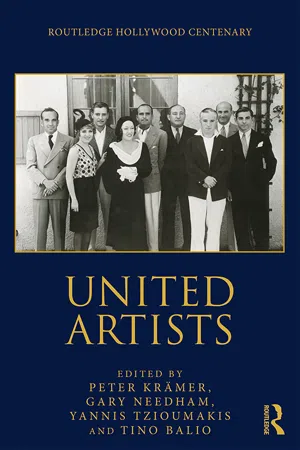
Established in 1919 by Hollywood's top talent United Artists has had an illustrious history, from Hollywood minor to industry leader to a second-tier media company in the shadow of MGM. This edited collection brings together leading film historians to examine key aspects of United Artists' centennial history from its origins to the sometimes chaotic developments of the last four decades. The focus is on several key executives – ranging from Joseph Schenck to Paula Wagner and Tom Cruise – and on many of the people making films for United Artists, including Gloria Swanson, David O. Selznick, Kirk Douglas, the Mirisch brothers and Woody Allen. Drawing on a wide range of primary sources, individual case studies explore the mutually supportive but also in places highly contentious relationships between United Artists and its producers, the difficult balance between artistic and commercial objectives, and the resulting hits and misses (among them The General, the Pink Panther franchise, Heaven's Gate, Cruising, and Hot Tub Time Machine). The second volume in the Routledge Hollywood Centenary series, United Artists is a fascinating and comprehensive study of the firm's history and legacy, perfect for students and researchers of cinema and film history, media industries, and Hollywood.
- 304 pages
- English
- ePUB (mobile friendly)
- Available on iOS & Android
eBook - ePub
United Artists
About this book
Information
PART 1
Introduction to Part 1
The history of United Artists can be periodised easily. As the main Introduction to the volume has shown, the company originally functioned as a distribution service run for the benefit of its founders and other top-ranked independent producers some of whom were later made partners. United Artists achieved at times significant success and became an integral part of the American film industry – a member of the Little Three – but was nearly bankrupt in the late 1940s. The Krim-Benjamin takeover of the company in 1951 transformed United Artists into an organisation that quickly became an industry leader. Krim and Benjamin accomplished this by devising a successful method of financing independent producers, something the old company was ill prepared to do. After buying out the interests of Charlie Chaplin and Mary Pickford in the company, Krim and Benjamin took United Artists public in 1957; UA now functioned both for the benefit of its stockholders and its producers. A decade later United Artists was taken over by Transamerica. Krim and Benjamin still maintained administrative control, but the merger was never a good fit. Krim and Benjamin quit UA over Transamerica’s restrictive policies in 1978 to form Orion Pictures. Their departure left an administrative vacuum in the company and marked the end of an era for United Artists. In 1981, Transamerica sold United Artists to Kirk Kerkorian and the company played only a marginal role in the industry thereafter. The editors of this volume have therefore divided United Artists history into two parts – before and after the Krim-Benjamin walkout.
The first period is consistent with Tino Balio’s two-volume history of the company (Balio 1976 and Balio 1987), with the former covering the period between 1919 and 1950 and the latter the period between 1951 and 1978. The 40-year period afterwards has not received corresponding in-depth scholarly attention (at least not in a monograph or an edited volume). Part 2 of this book deals with these later developments. Despite the presence of Balio’s volumes and a huge interest in various aspects of the company’s history by scholars, there are still areas that remain under-researched and under-examined, as the eight chapters that comprise Part 1 reveal. Chapters 1 and 2, for example, deal with stars (Buster Keaton and Gloria Swanson) and the independent production companies that supported them during the 1920s, in particular Joseph Schenck’s, while Chapter 3 looks at four major Hollywood stars who worked under David O. Selznick, a key producer for UA in the 1930s. Chapter 4 examines UA’s conflict with Chaplin regarding the distribution practice of roadshowing during the 1930s and the ways in which it practised roadshowing in the 1940s. Chapters 5 and 6 examine UA’s relationship with two key players beginning in the 1950s – one unsuccessful, Kirk Douglas, and one successful, the Mirisch brothers. Finally, Chapters 7 and 8 investigate the company’s relationship with two iconic figures: Woody Allen, who worked for the company in the 1970s, and the Pink Panther, one of the key UA franchises from the 1960s onwards.
Arguably, a main thread that runs through these chapters is the tension emerging from the company’s long-term goal of remaining profitable and UA’s producers’ short-term goals of operating with an unusual degree of control (and profit participation). This tension even existed in the company’s relationship to its founders whose financial interests as producers were repeatedly in conflict with UA’s. This was not necessarily a question of art versus commerce, with one or the other winning the upper hand at any given point in time. For much of the company’s history the question was whether United Artists could sustain itself (by at least breaking even) so as to be able to stay in business and thus, in principle, to support its independent producers.
In Chapter 1, Peter Krämer outlines this tension by looking at Buster Keaton’s treatment at the hands of Joseph Schenck. As Krämer points out, Keaton was in fact merely an employee of the production company named after him and its president and co-owner was Joseph Schenck who also ran United Artists. Schenck aimed to transform UA from a small distributor into a vertically integrated company. Although his efforts failed (mainly due to Chaplin’s resistance), Schenck stabilized the company by releasing a high proportion of hit movies. Keaton, unfortunately, did not measure up, which prompted Schenck to dissolve UA’s agreement with Keaton mid-contract and negotiate his migration to MGM. The episode raises fundamental questions about the concept of ‘independence’.
Chapter 2 examines a similar question but from a different perspective – the relationship between United Artists and Gloria Swanson, a star-producer and UA partner, during the late 1920s and early 1930s. As Mike Mashon argues, despite coming to UA in 1925 at the apex of her popularity with a view to take control of her career and star persona, and despite receiving ample creative freedom to produce her own pictures, Gloria Swanson failed totally as an independent producer. As a distributor with no financial involvement in production, UA, unlike the rest of the Hollywood majors had no control over the development of a star’s screen image. Swanson, unfortunately, found it difficult to manage her career, her production company and the films she produced. Swanson’s experience vividly confirmed some of the advantages the traditional studios had over companies like United Artists in nurturing new talent.
In Chapter 3, Emily Carman provides a more positive account of the benefits for freelance stars who became aligned with UA’s independent producers. David O. Selznick, she argues, allowed stars such as Ronald Colman, Janet Gaynor, Carole Lombard and Fredric March in the late 1930s to reinvent their star personas, find success and often parlay this success into better deals with the other studios. Even when their films performed less well than hoped, partly on account of United Artists’ alleged weak international distribution, Carman suggests that stars working freelance for an independent producer releasing through UA still represented the best option for talent to maintain some control of their careers.
An area where the tensions between United Artists’ financial objectives clashed with the founders’ surfaced with the practice of roadshowing. As Sheldon Hall notes in Chapter 4, UA’s founders insisted on keeping roadshow rights for their films from the very start, which deprived the company of significant distribution revenue. Hall shows how UA confronted the problem when Chaplin insisted on releasing City Lights (1931) as a roadshow and how the matter was resolved. Hall then presents two case studies demonstrating how United Artists handled two roadshows in the 1940s – Chaplin’s The Great Dictator (1940) and the Laurence Olivier import Henry V (1947) – with different levels of success.
Tensions between management and talent continued during the Krim-Benjamin era. UA was now able to provide full financing to independent producers, which enabled UA to emerge as a significant force in post-war Hollywood. It also had to deal with stars and directors who demanded more autonomy and better terms and were represented by talent agencies such as MCA. UA had mixed results dealing with the new circumstances. In Chapter 5 James Fenwick discusses UA’s dysfunctional relationship with Kirk Douglas’ Bryna Productions. Douglas clashed with UA almost from the beginning by deviating from his star image and wanting to produce a variety of off-beat projects. UA wanted him to produce star vehicles first. The unfavourable resolution of the dilemma resulted in the dissolution of the relationship and the departure of Douglas to other studios where he enjoyed better success.
In Chapter 6, Paul Kerr analyses United Artists’ relationship with the Mirisch brothers, a long-term collaboration that resulted in a remarkable 68 films and numerous Academy Awards from the late 1950s to the mid-1970s. The Mirisch operation mirrored United Artists’ image of a filmmaker-friendly company, says Kerr, which allowed for relative autonomy, a ‘dependent independence’, for its director-producers. The collaboration ended when Mirisch fell victim to the market upheaval of the turbulent 1970s.
United Artists’ collaboration with a zany, off-beat talent – the actor-writer-director Woody Allen – is examined in Chapter 7. Michael Petitti argues that Allen’s unique talents made him an anomaly in Hollywood, which allowed him space to operate with an unusual degree of freedom and minimal restraints, regardless of the box office or the critics. Allen made eight films for United Artists during the 1970s and 1980s (among them Academy Award winners), despite having cultivated an image of an anti-Hollywood auteur filmmaker. Petitti argues that Allen was perceived as emblematic of UA’s history (or perhaps its mythology) as a company that put talent above anything else, in this case even profits.
Finally, Oliver Gruner in Chapter 8 explores yet another tension between United Artists and independent producers – UA’s involvement in one of its first film franchises, the Pink Panther, starting with the titular first film in 1962. Hollywood companies expanded and diversified during the 1960s as the industry adjusted to the growth of commercial television. Gruner’s history of the Pink Panther franchise initially confirmed UA’s reputation as a company with its finger on the pulse of popular culture, but during the 1970s, the franchise declined. As Gruner suggests, UA was not always fully committed to the Pink Panther and had been locked out of some of the franchise’s profits from the start.
1
‘One of the United Artists’
Buster Keaton, Joseph Schenck and United Artists
On 5 February 1927, the day that the Civil War comedy The General (Keaton and Bruckman) premiered at the Capitol, the flagship cinema of the mighty Loew’s circuit in New York, an article in the Evening Post declared that the film was Buster Keaton’s ‘first independent production’ because ‘he is now one of the United Artists’.1 This referred to the fact that after seven years during which the comedian’s films had been released by First National and Metro Pictures, as well as the latter’s increasingly powerful successor companies Metro-Goldwyn and Metro-Goldwyn-Mayer, The General was distributed by United Artists.2
The article suggested that with this switch Keaton had come to operate at the same level as the other stars, directors and producers making films for United Artists – including the founders Mary Pickford, Douglas Fairbanks, Charles Chaplin and D.W. Griffith as well as, for example, Gloria Swanson and Samuel Goldwyn – because it allowed him to realise his ‘dream of doing something physically big’, that is a film which, according to the article, employed 2,000 extras, took eight months to make and cost more than $500,000, a huge budget by the standards of the time.3
The Evening Post also emphasised Keaton’s comprehensive control of the production process:
[he] now makes his own films. Not only does he star in those films, but he directs them and cuts and titles them with the aid of his own self-appointed specialists. He also selects his own stories and comedy constructionists (which term is Hollywooden language for ‘gag’ man).
The implication was that it was only through dealing with United Artists that someone like Keaton could become ‘independent’, making exactly the films he wanted to make, and thus, presumably, producing better films than ever before.
References to Keaton’s newly-found ‘independence’ also appeared in other articles about The General published at that time, one of which referred to a United Artists press release that appears to have made this point very strongly.4 It is understandable that UA, a company set up eight years earlier by leading stars and filmmakers so as to facilitate the distribution of films made (and financed) by their own production companies, would want to claim that its releases had a special quality due to the ‘independence’ of the people making them (as well as UA’s own ‘independence’ from the large, vertically integrated companies dominating the film industry) (Balio 1976: 3-29). But in Keaton’s case this claim was very questionable.
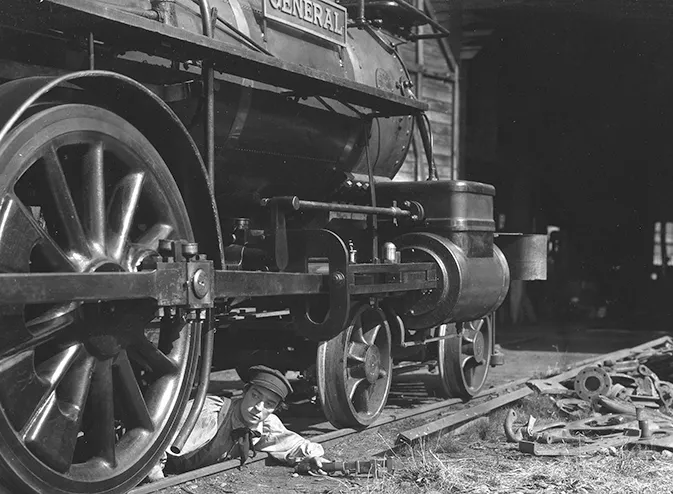
FIGURE 1.1 Buster Keaton in The General (1926)
To begin with, work on The General had started several months before United Artists had signed a distribution contract for this film and Keaton’s subsequent productions in May 1926, at which point principal photography for The General was about to start (Krämer 2016: 41-2).5 Hence it was by no means a project that was made possible by UA. Secondly, the distribution contract with UA did not change the production set-up for Keaton’s films. In particular, it was not the case that, with the help of this new deal, Keaton was able to move from employment at one of the big film factories to setting up his own production company. Instead, he had already had his own studio – initially called Comique and then, from 1922, Buster Keaton Productions – since the beginning of the decade (18-21). In other words, with the exception of The Saphead (Blaché), a star vehicle for Keaton made at the Metro studio in 1920, his films had been ‘independent productions’ all along. Thus, while it was true that, by and large, at Buster Keaton Productions the comedian (who was credited as the co-writer and co-director of The General) was able to select film projects and to develop and realise them with a team of trusted collaborators, this was not a new arrangement ...
Table of contents
- Cover
- Half Title
- Series Page
- Title Page
- Copyright Page
- Table of Contents
- List of figures
- List of contributors
- Series editors’ preface
- The Routledge Hollywood Centenary advisory board
- Introduction: United Artists in film history
- PART 1: Introduction to Part 1
- PART 2: Introduction to Part 2
- General index
- Index of titles
Trusted by 375,005 students
Access to over 1.5 million titles for a fair monthly price.
Study more efficiently using our study tools.
Frequently asked questions
Yes, you can cancel anytime from the Subscription tab in your account settings on the Perlego website. Your subscription will stay active until the end of your current billing period. Learn how to cancel your subscription
No, books cannot be downloaded as external files, such as PDFs, for use outside of Perlego. However, you can download books within the Perlego app for offline reading on mobile or tablet. Learn how to download books offline
We are an online textbook subscription service, where you can get access to an entire online library for less than the price of a single book per month. With over 1.5 million books across 990+ topics, we’ve got you covered! Learn about our mission
Look out for the read-aloud symbol on your next book to see if you can listen to it. The read-aloud tool reads text aloud for you, highlighting the text as it is being read. You can pause it, speed it up and slow it down. Learn more about Read Aloud
Yes! You can use the Perlego app on both iOS and Android devices to read anytime, anywhere — even offline. Perfect for commutes or when you’re on the go.
Please note we cannot support devices running on iOS 13 and Android 7 or earlier. Learn more about using the app
Please note we cannot support devices running on iOS 13 and Android 7 or earlier. Learn more about using the app
Yes, you can access United Artists by Peter Krämer,Gary Needham,Yannis Tzioumakis,Tino Balio in PDF and/or ePUB format, as well as other popular books in Media & Performing Arts & Business History. We have over 1.5 million books available in our catalogue for you to explore.