
eBook - ePub
The Elements of Photography
Understanding and Creating Sophisticated Images
- 404 pages
- English
- ePUB (mobile friendly)
- Available on iOS & Android
eBook - ePub
About this book
The greatly revised and expanded edition of The Elements of Photography is a new kind of textbook for a new generation of photographers. Moving far beyond the usual technical manual, Angela Faris Belt dives deep into merging technique and vision, allowing you to master craft while adding meaning to your images. Here you'll really learn to see photographically, expand your creative and conceptual use of apertures and shutter speeds, and choose the right media to create the look and feel you want.
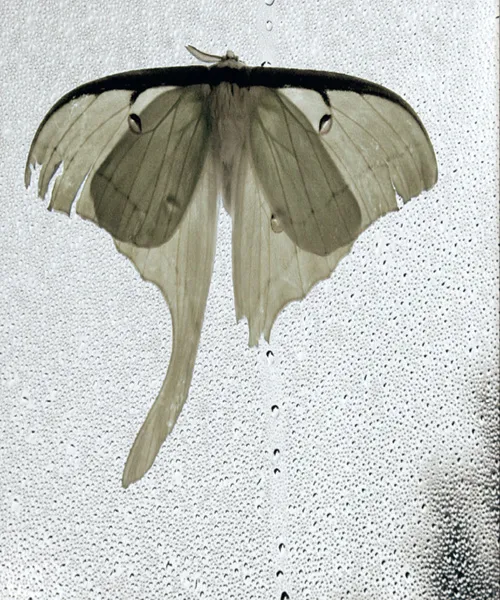
IMAGE © ANGELA FARIS BELT, Luna Moth.
BEFORE YOU BEGIN
TO ME, PHOTOGRAPHY IS AN ART OF OBSERVATION. IT’S ABOUT FINDING SOMETHING INTERESTING IN AN ORDINARY PLACE …. I’VE FOUND IT HAS LITTLE TO DO WITH THE THINGS YOU SEE AND EVERYTHING TO DO WITH THE WAY YOU SEE THEM.—ELLIOTT ERWITT
WHAT IS THE PHOTOGRAPHIC IMAGE?
Simply stated, the image is made of three components: subject, content, and form. In fact, they constitute every work of art—including other two-dimensional and three-dimensional art, music, literature, and performance. Although the naming conventions used to describe them vary, it’s understood that subject, content, and form combine to create the complete image or artwork.
The subject can be defined as what the image is about—its meaning or concept. In literature, the subject is often referred to as the theme of the work. A photographer’s interest in a particular subject is the reason he or she makes images to begin with; as photographer David Hurn says, “photography is only a tool, a vehicle, for expressing or transmitting a passion in something else.” Just as literature operates for writers, photographs allow artists to convey a message. If the subject is literal, such as a specific person, and you make that person’s portrait, it’s pretty straightforward for a viewer to interpret. But it’s possible for the subject of a photograph to not be visibly present in the image. An abstract or conceptual subject (such as hope or dreams or other things which are not nouns) might only be conveyed through skillful consideration of the other two components: content and form.
In art, the word “content” has traditionally referred to a work’s theme, and the word “subject” has referred to the work’s contents. But to me this usage seems contradictory, so I adhere to the words’ root definitions. Which terms you use matters less than understanding the three components that comprise the image.
While the subject is what the image is about, the content refers literally to the image contents. Image content (also referred to as subject matter) can be defined as persons, places, or things that are visibly present or identifiable in the image. Artists who understand subject and content as separate yet interdependent image components can combine them more thoughtfully to convey meaning. The best photographers closely consider how all image contents relate to their subject for several reasons. First, all content, like every word, carries meaning that operates on connotative and denotative, subjective and objective, psychological, intellectual, spiritual, cultural, political, and many other levels. Second, like individual words in a sentence, each piece of image content has the potential to either clarify or obscure meaning when juxtaposed. Therefore, consciously choosing and including content that refers to your subject is more likely to successfully communicate your message to a wider audience. However, like the subject of a work of art or literature, content can be abstract or nonrepresentational too. In these cases the remaining component of the image—its form—might itself be the subject or might afford the viewer a great deal of insight about it.
To illustrate the difference between subject and content as I define them, I ask students if they are familiar with the novel or film The Shawshank Redemption. Most are. Then I ask, “What is the subject of the work?” Invariably they reply that the subject is an innocent man who is sent to prison and escapes through “a river of … stuff.” Next I ask them to describe its content, and they’re stumped. I suggest that the subject of the work is something we can’t literally see—hope or perhaps the nature of redemption. The innocent man imprisoned, his experiences and the experiences of those around him, as well as his distinctly unpleasant path to freedom all fall under the category of content—the concrete, identifiable aspects of the work that carry its subject (theme, meaning) across to readers/viewers. Recognizing the distinction allows artists to choose and structure content to more accurately communicate about a subject. And how artists arrange and structure contents is almost universally called form.
The third component of the photographic image, its form, refers to all means through which various content is arranged, unified, and presented. Form encompasses the design methods used to compose a work of art. Since the formal arrangement of content dictates the appearance of an image, an intrinsic aspect of photographic form is “the elements of photography.” Also called composition, form in a photograph includes the traditional design elements (line, shape, value, texture, and color), to which I would add quality of light and vantage point. I would also add the media with which the image is made to the list of formal elements, as well as those things that characterize the way the object exists in the world (more on this in Chapter 6). Through conscious use of formal arrangement, successful photographers translate our three-dimensional, objective world into two-dimensional images of it. In so doing, we create subjective interpretations of the world imbued with new meanings.
The interrelationship between subject, content, and form denotes meaning, so it’s important to understand how. Specific to photography, form, is in large part created by the grammatical elements of photographic language, which is what this book is all about. We’ll study this interrelationship as we examine other photographers’ work, so that it comes to mind when you’re making your own photographs.
EXAMINING SUBJECT, CONTENT, AND FORM: THREE PHOTOGRAPHs
Just as content (words) and form (grammar and syntax) allow readers to interpret a subject, these same attributes allow viewers to understand and interpret photographs. By “reading” a photograph’s component parts we can derive meaning. Let’s read the content and form of three photographs and try to determine their subjects. Interpreting photographs can be a complex undertaking, but this method makes it easier.
Image Discussion 1: Interpreting a Subject by Examining Content and Form
Describing the contents and formal arrangement of an image provides a helpful basis for understanding and interpreting it. Throughout this text there are Image Discussions that use the chapter contents to help you analyze how the elements of photographic language communicate about the image subject.
In this case, photographer Dan Estabrook has created a diptych (covered in Chapter 3, Part 3) that is as meaningful as it is hauntingly beautiful. The most significant content of the image is two figures who could represent any of us, since both are dressed as the “Everyman” and neither face is recognizable. Because the image is not a portrait of the person depicted, we can assume he is not the subject. The sharper figure in the right-hand frame, his face scrubbed out in an act of permanent anonymity, is reaching outside his world (the world of the frame), his hand (we presume) extending into the left hand frame toward his twin figure. The twin, whose face is unrecognizably obscured by Estabrook’s use of shutter speed to blur, is fading behind the intruder’s forceful hand above his shoulder. The ghosted, blurred figure is essentially being hailed, though neither acknowledges the other overtly. It’s as though they exist on different planes, which is suggested through the use of two discrete frames. Materially, the diptych is distressed through Estabrook’s use of the tintype process, suggesting historic times; the angles of the prints are offset, not square, underscoring the sense of angst created by the interrelationship of content and the residual evidence of process. All of this I draw from simply describing the image content and form. Through this process we might interpret the subject as the weight of mortality bearing down upon us.
I do not believe there is a single correct interpretation, only more or less accurate ones, and without knowing the artist’s intentions, the proof can only be derived from the photograph. As you proceed through this text you’ll learn how the elements of photography affect subject, content, and form to create meaning, and you’ll begin to implement them more consciously in your own work. (See more of Dan Estabrook’s work in the Portfolio pages of Chapter 3.)
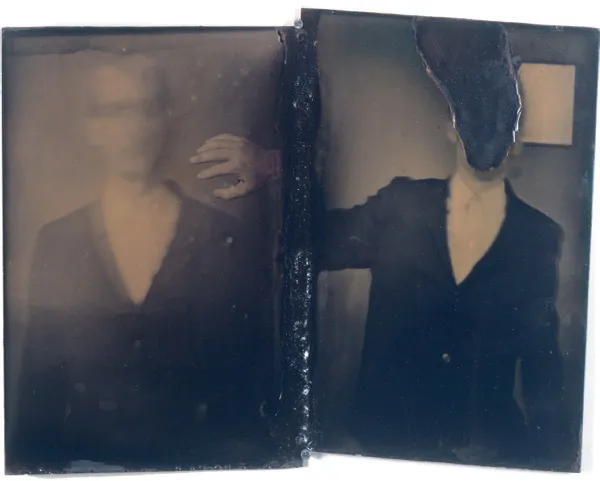
IMAGE © DAN ESTABROQK, UNTITLED TWINS (JOINED); TINTYPES ON STEEL, 10″ × 14″.
Image Discussion 2: Interpreting a Subject by Examining Content and Form
Some images seem more difficult to interpret than others; just remember to describe the identifiable contents you see in the frame, characterize them as best you can, and determine what they mean to you. Images like this one use photographic language metaphorically as opposed to documentarily, but being open to understanding all photographic practices (from commercial to fine art to documentary and everything in between) serves to inform your own practice.
In this still life by photographer Victor Schrager, the placement of objects reduces a sense of depth; they are textured but otherwise austere forms in bright colors (the only recognizable form being an illuminated light bulb). Schrager arranges nontraditional, abstract contents using relatively traditional still life sensibility. Beyond that, the most noticeable thing is that nearly all the contents are out of focus (deliberately so). There is nowhere sharp for our eyes to rest; even the mirrored surface prevents us from pinpointing a single focal point. What is all this about? Well, maybe that the artist avoided showing us detail—through his choice of nondescript objects, mirroring, translucence, and soft focus—indicates that it isn’t about anything seen in the image contents. As a more abstract image, with its attention to lighting quality, color interaction, and design, I might conclude that the subject is an exploration of aesthetics through formal arrangement, or something along that line. Victor Schrager’s images just feel like art, which also influences interpretation.
We might not understand every image we see, but the more images we examine this way, the more of them we do understand. As you move through the exercises in The Elements of Photography, your work will reflect increasingly more conscious, sophisticated use of photographic language and the ability to create meaning in your images. (See more of Victor Schrager’s work in the Portfolio pages of Chapter 4.)
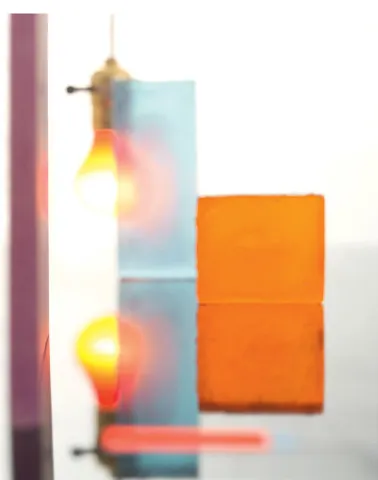
IMAGE © VICTOR SCHRGER, UNTITLED #325, 2008; FROM THE WHITE ROOM S ERIES.
Image Discussion 3: Interpreting a Subject by Examining Content and Form
Some images seem more straightforward to interpret than others, but don’t stop with a superficial reading. There is often more to a professional photograph than initially meets the eye. Image content and form not only imbue images with meaning, but they also affect our emotional and intellectual responses as viewers.
You now know that making successful photographs requires merging subject, content, and form in conceptual ways. This is as true for documentary images as it is for commercial and fine art work. This image by photojournalist Jill P. Mott expresses the feeling of the scene by purposefully structuring its framing, vantage point, depth of field, and motion (all aspects of photographic language). The vantage point from within the moving car includes a man in the corner of the frame—an anonymous driver, out of focus, nearly silhouetted in darkness—looking sideways at three women in an open window. Additionally, the instant the shutter was released one woman stares back at the man with a look of confident defiance. The slight motion and crooked framing of the image underscores the feeling of a “drive-by” that occurs regularly in this area of Lima, Peru, known for prostitution. It just looks like a documentary image, capturing people interacting in a particular place in time, and depicting an unsettling voyeuristic view from a vantage point we rarely see, as Mott places us viewers inside the car as well.
No matter what kind of photography you do, using the elements of photography will help you connect your viewers emotionally and intellectually with your subject. Practicing your recognition of photographic language in other peoples’ photographs reinforces your ability to consciously employ it in your own. Continue this practice on your own, and now that you know the basics of describing content and form, you can move on to the next steps: selecting your subject, and photographing it using each of the successive elements of photography.
HOW DO I SELECT A SUBJECT?
You are encouraged from the onset to choose a single topic, genre, or theme on which to concentrate throughout the exercises in this text. In considering topics or related themes, choose something that will interest and engage you both visually and conceptually, since you will spend considerable time building a body of work around ...
Table of contents
- Cover
- Title
- Copyright
- Contents
- Foreword
- Acknowledgments
- Preface: It’s Elemental
- Introduction: The Grammar of Photographic Language
- Chapter 1 Before You Begin
- Chapter 2 Metering and Exposure
- Chapter 3 Framing, Borders, and Multiple Frames
- Chapter 4 Apertures: Focus, Lenses, and Clarity
- Chapter 5 Shutter Speeds: Time and Motion
- Chapter 6 Materials, Processes, and Presentation: The Aggregate Image
- Conclusion
- Index
Trusted by 375,005 students
Access to over 1.5 million titles for a fair monthly price.
Study more efficiently using our study tools.
Information
Frequently asked questions
Yes, you can cancel anytime from the Subscription tab in your account settings on the Perlego website. Your subscription will stay active until the end of your current billing period. Learn how to cancel your subscription
No, books cannot be downloaded as external files, such as PDFs, for use outside of Perlego. However, you can download books within the Perlego app for offline reading on mobile or tablet. Learn how to download books offline
Perlego offers two plans: Essential and Complete
- Essential is ideal for learners and professionals who enjoy exploring a wide range of subjects. Access the Essential Library with 800,000+ trusted titles and best-sellers across business, personal growth, and the humanities. Includes unlimited reading time and Standard Read Aloud voice.
- Complete: Perfect for advanced learners and researchers needing full, unrestricted access. Unlock 1.5M+ books across hundreds of subjects, including academic and specialized titles. The Complete Plan also includes advanced features like Premium Read Aloud and Research Assistant.
We are an online textbook subscription service, where you can get access to an entire online library for less than the price of a single book per month. With over 1.5 million books across 990+ topics, we’ve got you covered! Learn about our mission
Look out for the read-aloud symbol on your next book to see if you can listen to it. The read-aloud tool reads text aloud for you, highlighting the text as it is being read. You can pause it, speed it up and slow it down. Learn more about Read Aloud
Yes! You can use the Perlego app on both iOS and Android devices to read anytime, anywhere — even offline. Perfect for commutes or when you’re on the go.
Please note we cannot support devices running on iOS 13 and Android 7 or earlier. Learn more about using the app
Please note we cannot support devices running on iOS 13 and Android 7 or earlier. Learn more about using the app
Yes, you can access The Elements of Photography by Angela Faris Belt in PDF and/or ePUB format, as well as other popular books in Media & Performing Arts & Digital Media. We have over 1.5 million books available in our catalogue for you to explore.