- 272 pages
- English
- ePUB (mobile friendly)
- Available on iOS & Android
eBook - ePub
Modern City Revisited
About this book
The supposed rationality of the urban planning of the Modern Movement encompassed a variety of attitudes towards history, technology and culture, from the vision of Berlin as an American metropolis, through the dispute between the urbanists and disurbanists in the Soviet Union to the technocratic and austere vision of Le Corbusier. After the Second World War, architects attempted to reconcile these utopian visions to the practical problems of constructing - or reconstructing - urban environments, from Piero Bottoni at the Quartiere Trienale 8 in Milan in 1951 to Lucio Costa at Bras'lia in 1957. In the 1970s, the collapse of Modernism brought about universial condemnation of Modern urbanism; urban planning,and rationality itself, were thrown into doubt. However, such a wholesale condemnation hides the complex realities underlying these Modern cities. The contributors define some of the theoretical foundations of Modern urban planning, and reassess the successes and the failures of the built results. The book ends with contrasting views of the inheritance of Modern urbanism in the United States and the Netherlands.
Information
PART 1
ALTERNATIVE VISIONS
The urbanism of the Modern Movement was not a fixed set of ideas: it varied from country to country and evolved over time. In Berlin in the 1920s, as Bernd Nicolai describes in his article, Modernism meant a vision of the city as an American metropolis, a business city with bustling sidewalks and fast-flowing traffic punctuated by skyscrapers. In the Soviet Union, according to Catherine Cooke, a disurbanist concept emerged virtually simultaneously in opposition to this equally desirable ‘American’ model. Both concepts were predicated on differing interpretations of Marxist social analysis, although neither bore much reality to the extraordinary backwardness of the Soviet Union in the 1920s.
James Dunnett’s article addresses how later solutions to the perceived failings of CIAM urbanism, and of Le Corbusier in particular, were themselves founded in contradictions which made them equally problematic, while the strong anti-urban bias in Britain, described in more detail by John Gold in his article on the MARS group, made the hyperactive and Metropolitan urbanism of New York unacceptable.
1 The symphony of the metropolis
Berlin as ‘Newlin’ in the twentieth century
Bernd Nicolai
In 1929 the journal Das Neue Berlin (The New Berlin) was established by Berlin’s chief town planner Martin Wagner and the famous art critic Adolf Behne, who in 1926 had published the programmatic book Der Moderne Zweckbau (The Modern Functional Building) (Figure 1.1).1 Behne, in a letter to the avant-garde Dada artist Hannah Hoech, ended with the words: ‘with best regards from Neulin’, which can be translated as ‘Newlin’.2 The New Berlin was an issue that people believed in, and it was the mirror of a city which had just started to find its own identity. In this sense, Siegfried Kracauer could claim that ‘Spatial images are the dreams of society. Wherever the hieroglyphics of any spatial image are deciphered, there the basis of reality represents itself.’3
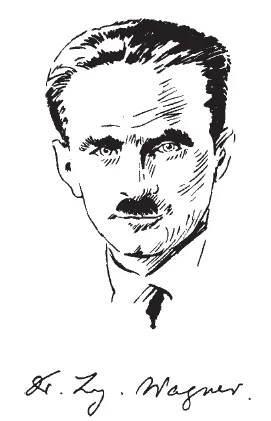
Figure 1.1 Martin Wagner, portrait of the 1920s
The reconsideration of the Modernism in Berlin during the 1920s also makes clear that the myth of the Weltstadt, the Metropolis, was part of the marketing strategy that Martin Wagner and others devised in the Neue Berlin. In the present debate about the architectural shape of unified Berlin, this myth reveals the platform for reconstructing the capital’s new identity for the last time this century. Nowadays, self-mystification and self-historicism go hand in hand. There is a undeniable lack of serious investigation of projects and conceptions of the 1920s and of questioning whether or not these are still relevant for current planning. Berlin is going to re-invent itself, without being aware of the modern heritage it actually has. This paper will focus on Berlin’s urban modernism as an early strategy of business architecture in twentieth-century architecture.4
We have to remember that fundamental changes had taken place in Berlin’s society before and after 1918, and new patterns in social, economic and political relationships had also emerged. Berlin, since the early 1920s, had been forced into modernisation, which was a mirror of a different society. The aesthetics of culture, one of the Werkbund principles before World War I, was no longer valid as the expression of the leading bourgeois class, but there arose a new idea of mass society, as Walter Rathenau and Hermann Muthesius claimed at the end of World War I.
This had consequences not only in terms of the political culture of the Weimar republic, where democracy was not rooted very deep, but was also influential on the ‘Gestalt’ – the overall form – of Berlin itself. The new practicability led to more ‘objectivity’ instead of ‘personal form’. In this sense Adolf Behne could claim the goal of architecture as the ‘fulfiller of reality’; not individual form, but shaped space and at least designed reality should be characteristic of Neues Bauen as an architecture of mass society, but nevertheless with an avant-garde approach.
The Weimar capital was Berlin under the town planner Martin Wagner, who became the conductor of the ‘Symphony of Metropolis’ between 1926 and 1933. Six short years were the incarnation of the ‘Golden Twenties’ and the fulfilment of modern architecture. The coherence between mass society and an austere mass architecture, especially in the Berlin housing estates like the famous ‘horse shoe’ of Bruno Taut, built between 1925 and 1931, was represented by the person of Wagner himself.5
But here we will not follow the cliché of housing as the only expression of modernity. We have to focus on the structural alteration of the city centre of Berlin as the neglected side of the unwritten history of urban modernism.6 The Berlin municipality was blocked on several projects, not only by private interests, but also because of the strong position that the German Reich and the Prussian State held in the town. For that reason the position of the Berlin city planner was not very strong. In comparison to Ernst May in Frankfurt, it was not possible for Wagner to establish one central planning department which could unify traffic, infrastructure and town planning. Only Albert Speer who was appointed directly by Hitler as chief city planner in 1937, with the rank of a Minister of the Reich, was an exception, a result of the centralised Nazi dictatorship.
The structural problems of the municipal town-planning administration since the 1920s remain valid today. The Federal government has tried to get control over central areas of the city and has installed a government quarter at the same site as the refurbished, or better, rebuilt, House of Parliament (the old Reichstag) by Norman Foster. This is the very site where Hitler’s congenial architect had planned the Great Hall and the Führer’s palace.7
In the ‘Golden Twenties’, Martin Wagner was the first who wanted to run the city like a company in a capitalist society. Town planning became part of the new city management: the town planner became a city engineer. This resulted also in a different meaning of architecture for the city: it should be a logical organic design for a new kind of business town, and no longer a piece of ‘Stadtbaukunst’ – town building art – which was a consequence of Otto Wagner’s manifesto ‘Großstadt’ (Metropolis), published in 1911.
Before we come back to Martin Wagner, we have to concentrate on the rise of the city’s modern architecture before 1925. The architectural avant-garde which left behind all Expressionist utopias after 1921–22 was now ready to start with an austere architecture, which combined vision and the paradigm of industry and technology. It was supported by the changed situation of the first German Republic.
After the dissolution of the old social order in the revolution of 1918–19 and the inflation that followed, the avant-garde, including the architectural avant-garde, epitomised Weimar culture. Art was provocative, but was also regarded by a wider audience. Culture was not only the art of the establishment, but a young, fresh, critical movement. This situation differentiated Berlin from the cultural situation of metropolises like Paris and London; only that of Moscow was comparable. The USA became an idol in terms of both technical progress and Broadway revue-culture. Berlin was in a fever of admiration for all things American.
Berlin became the melting pot of several avant-garde movements: the city itself was a ‘laboratory of the metropolis’. The vision of a glass skyscraper by Mies van der Rohe in 1921 was followed by a modern office building in 1922, ready to be built. But it was Erich Mendelsohn who started the sequence of modern buildings in the same year. His Mosse Haus, a reconstruction of a building damaged in the Revolution of 1919, brought a new horizontal articulation of fenestration and, as a metaphor of metropolis, the dynamic corner. The nervous atmosphere and the invention of speed should be responded to by buildings.8 These elements, like horizontality and the rounded corner, had been introduced in pre-war Berlin, for example the Nordstern building of Paul Mebes in 1914, or the office building of Paul Zimmerreiner of 1912, but Mendelsohn was the first to transform it into a unique creation of the modern metropolis.
In Berlin, Mendelsohn was one of the most successful business architects, but he had a singular position in that he focused on Jewish clientele. After 1925 he left dynamic forms to create the perfect architecture as an advertisement, like the Deukon Haus of 1927, which became a light-sculpture at night.
Another very progressive movement, which is now almost neglected, arose with the Trade Unions.9 It is important because of its social character and the link to the working class. While Mendelsohn embodied the bourgeois architect, Max Taut was called the socialist architect. The Trade Union office buildings became the first representative architecture of Weimar – Republican – Berlin.
Max Taut constructed the General Headquarters of the German Trade Unions in 1923–24 (Figure 1.2). Some expressionist elements can be seen, but the most remarkable feature was the reinforced-concrete framework which became the grid element of the facade. Although Max Taut can be described as chief architect of the Unions, other architects also received commission: Bruno Taut, his brother, designed the Public Transport Union building in 1929, and Erich Mendelsohn designed the Metal-Workers’ Union building, one of the few public buildings of Mendelsohn which survived.
Besides this, another topic was part of the debate about modern architecture in Berlin: the USA and the high-rise building. The ‘Germanification’ of the skyscraper had started around 1910. In 1912, the brochure Berlin’s Third Dimension was published with contributions by Peter Behrens, Bruno Möhring, Werner Hegemann and Walter Rathenau who all favoured skyscrapers in the inner city.10 In contrast to the United States and the conceptions of Le Corbusier, Werner Hegemann and other critics in the 1920s wanted to have only solitary skyscrapers which could accentuate the city skyline. In 1921, Otto Kohtz made a proposal for a new Reichs administration building which would house all the ministries next to the Reichstag.11 This is where the Federal Chancellery and the Parliament office block are currently under construction. The ziggurat shape of Kohtz was intended to bring Wilhelmine monumentality to the Weimar Republic, but the Reich could not afford those large-scale buildings. High-rise buildings were built only under private commission.
At the end of the 1920s, steel skeleton structures, which followed American models, were used for construction. Bruno Paul erected the Kathreiner building in 1928, which was located in the centre of a block. In 1930–2 Emil Fahrenkamp constructed a stepped-back building which followed the quay of the Landwehrkanal and became the symbol of modern Berlin. It was the time when Amédée Ozenfant made a remarkable statement about the international character of the city: ‘Paul Morand describes Berlin as a failed New York. Who knows if in twenty years time New York will be seen as a failed Berlin.’12
A more conservative, but most impressive vision, was the Karstadt departmentstore of Philipp Schaefer in 1927–9. It was called ‘Manhattan at the Hermann Square’ (Figure 1.3). Art Deco and paraphrased gothic elements, together with a hitherto unknown scale, made it famous. It was located, however, in one of the south-east working-class districts and not in the city centre, so there was no economic effect.
All these projects make clear that there was a wide movement of modernity with a highly-functional aesthetic in the 1920s. Various commissioners wanted to represent their companies or institutions in modern forms: an objective approach, a clear shape, the strength and dynamism of the city, and architecture as advertising were reflected through these buildings. But single buildings do not create a town.
Although the Baedecker in 1912 had spoken of Berlin as ‘the greatest purely modern city in Europe’, and even Paul Westheim had claimed Berlin as ‘the most objective under the European metropolis’, the city structure was the same as when Berlin was the Prussian residence in the eighteenth and nineteenth centuries. In 1870, when Berlin started to become a major city, the observation of Rumor was still valid: ‘Berlin is the country, Paris is the city, but London makes the world.’ This relationship would turn around after 1910. Berlin, however, had still to transform the achievements of the new university discipline of town pl...
Table of contents
- Cover Page
- Title Page
- Copyright Page
- Contributors
- Acknowledgements
- Foreword
- The Modern City Revisited
- Part 1: Alternative Visions
- Part 2: Vision Versus Reality
- Part 3: The Decline of Modernism
- Afterword
- The Modern City Revisited – envoi
Trusted by 375,005 students
Access to over 1.5 million titles for a fair monthly price.
Study more efficiently using our study tools.
Frequently asked questions
Yes, you can cancel anytime from the Subscription tab in your account settings on the Perlego website. Your subscription will stay active until the end of your current billing period. Learn how to cancel your subscription
No, books cannot be downloaded as external files, such as PDFs, for use outside of Perlego. However, you can download books within the Perlego app for offline reading on mobile or tablet. Learn how to download books offline
Perlego offers two plans: Essential and Complete
- Essential is ideal for learners and professionals who enjoy exploring a wide range of subjects. Access the Essential Library with 800,000+ trusted titles and best-sellers across business, personal growth, and the humanities. Includes unlimited reading time and Standard Read Aloud voice.
- Complete: Perfect for advanced learners and researchers needing full, unrestricted access. Unlock 1.5M+ books across hundreds of subjects, including academic and specialized titles. The Complete Plan also includes advanced features like Premium Read Aloud and Research Assistant.
We are an online textbook subscription service, where you can get access to an entire online library for less than the price of a single book per month. With over 1.5 million books across 990+ topics, we’ve got you covered! Learn about our mission
Look out for the read-aloud symbol on your next book to see if you can listen to it. The read-aloud tool reads text aloud for you, highlighting the text as it is being read. You can pause it, speed it up and slow it down. Learn more about Read Aloud
Yes! You can use the Perlego app on both iOS and Android devices to read anytime, anywhere — even offline. Perfect for commutes or when you’re on the go.
Please note we cannot support devices running on iOS 13 and Android 7 or earlier. Learn more about using the app
Please note we cannot support devices running on iOS 13 and Android 7 or earlier. Learn more about using the app
Yes, you can access Modern City Revisited by Thomas Deckker in PDF and/or ePUB format, as well as other popular books in Architecture & Architecture General. We have over 1.5 million books available in our catalogue for you to explore.